
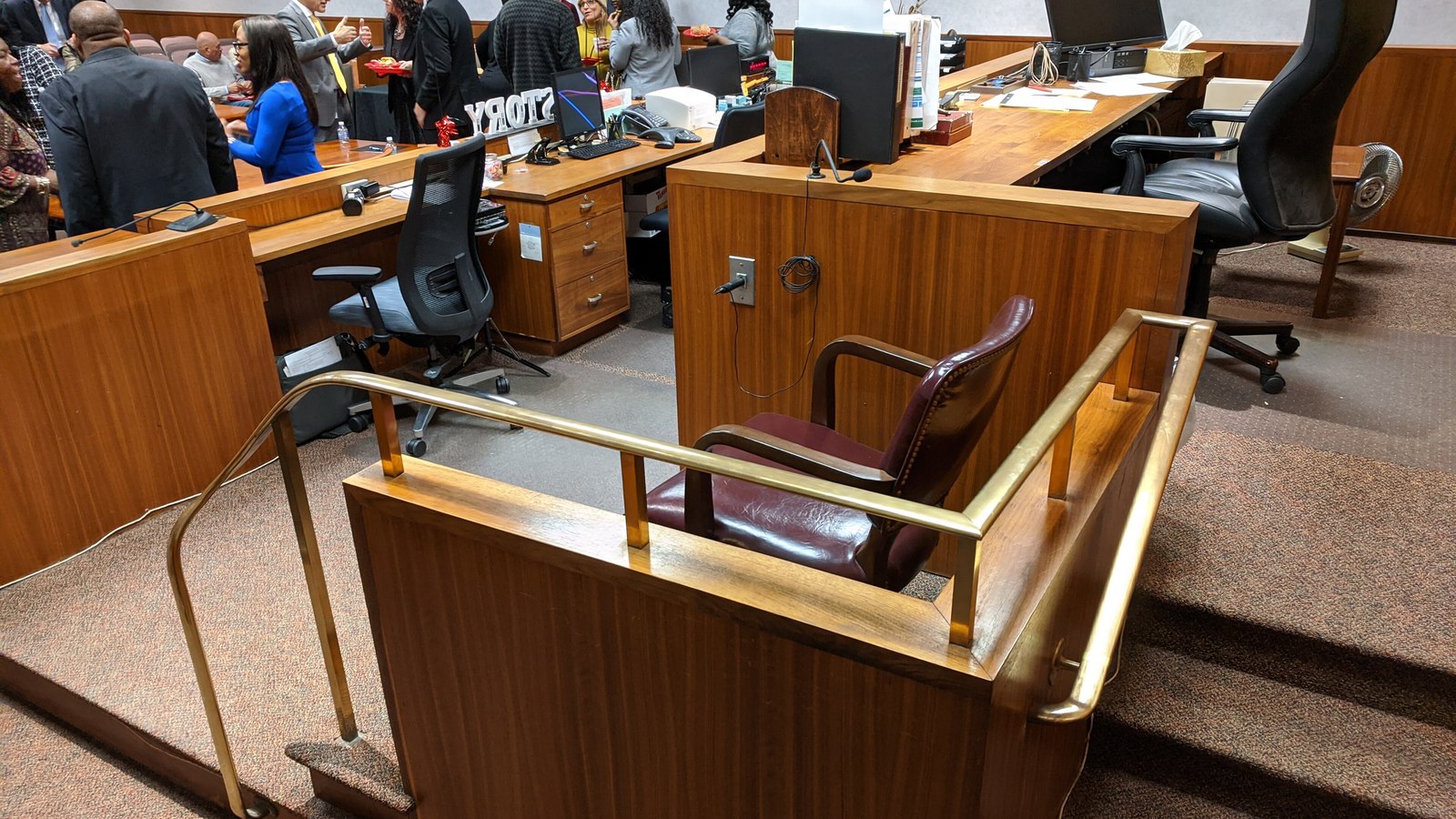
The U.S. Merit Systems Protection Board issued a Federal Register notice on November 23, 2026, requesting Office of Management and Budget reinstatement with change for OMB Control No. 3124-0017, covering its Initial Appeal Form (Form 185) and modernized e-Appeal platform. Authorized under 5 U.S.C. 7701 and 5 CFR Part 1201, the system establishes the mandatory procedural mechanism through which civil servants and federal research personnel challenge adverse agency actions, reduction-in-force decisions, and scientific whistleblower retaliation.
MSPB Submits e-Appeal and Form 185 Reinstatement Request to OMB
On November 23, 2026, the U.S. Merit Systems Protection Board (MSPB) published a 30-day notice and request for comments in Federal Register Document 2026-23760, seeking approval from the Office of Management and Budget (OMB) to reinstate with change its expired information collection, OMB Control No. 3124-0017. The collection governs the instruments used by federal employees, applicants, and retirees to file initial appeals: MSPB Form 185 (paper and PDF) and the agency’s electronic filing system, e-Appeal. It also includes the Law Firm Point of Contact Collection Form and the e-Appeal Technical Support Collection Form.
The prior OMB clearance expired on September 30, 2026. The submission initiates standard review procedures under the Paperwork Reduction Act of 1995 (PRA), opening a 30-day comment period. Authorized under 5 U.S.C. 7701(a) and 5 U.S.C. 1204, the MSPB adjudicates appeals of federal personnel actions, retirement determinations, and civil service violations. Gina K. Grippando, Clerk of the Board and Senior Agency Official for Privacy, serves as the agency contact.
As a quasi-judicial body of limited jurisdiction, the MSPB requires standardized intake data to determine whether it has statutory subject-matter jurisdiction and whether appeals meet mandatory filing deadlines, which generally require submission within 30 calendar days of an action’s effective date. Obtaining this information via Form 185 allows the Board to docket cases swiftly and assign them to administrative judges for formal adjudication.
Key Procedural Revisions, Jurisdictional Scope, and Burden Estimates
The proposed reinstatement incorporates targeted updates into Form 185. Filing instructions now remove references to field offices and update the Privacy Act Statement. Filers accessing MSPB appellate filing procedures will find revisions in Part 2 (Agency Personnel Action or Decision) reflecting regulatory changes effective September 2, 2026.
The updates remove check boxes for probationary terminations and negative suitability determinations, reflecting altered appeal pathways. The reduction-in-force option is now tailored to Reduction-in-force (RIF) action in the Foreign Service, while a new check box covers Failure to restore to duty from Uniformed Service or work-related compensable injury. Appendix B formally closes the Denver Field Office, reassigning ten western states—Arizona, Colorado, Kansas (excluding Kansas City), Montana, Nebraska, New Mexico, North Dakota, South Dakota, Utah, and Wyoming—to the Western Regional Office.
| Operational Parameter | Agency Specification | Statutory and Regulatory Authority |
|---|---|---|
| Collection Title | E-Appeal / U.S. MSPB Appeal Form (OMB Control No. 3124-0017) | 5 U.S.C. 7701; 5 CFR parts 1201, 1208, 1209 |
| Filing Mediums | e-Appeal web portal, fillable PDF, and printed paper Form 185 | Paperwork Reduction Act of 1995 (44 U.S.C. chapter 35) |
| Annual Respondents | 5,000 appellants (federal employees, applicants, and annuitants) | MSPB historic annual docketing volume tracking |
| Average Response Time | 1.5 hours per completed appeal filing | Information intake, statement drafting, and document upload |
| Annual Burden Hours | 7,500 total hours across all individual appellants | Calculated at 5,000 respondents multiplied by 1.5 hours |
| Total Estimated Cost | $294,075 across the affected respondent public | MSPB standardized economic wage-burden model |
| Comment Deadline | 30 calendar days, ending on December 23, 2026 | Office of Information and Regulatory Affairs docket review |
Evolution of Federal Personnel Adjudication and Electronic Filing Mandates
Created by the Civil Service Reform Act of 1978, the MSPB safeguards federal merit system principles. Under procedural rules at 5 CFR Part 1201, the Board adjudicates major adverse actions, including removals, suspensions exceeding 14 days, demotions, and furloughs of 30 days or less. The Board also administers claims under 5 CFR Part 1208 (USERRA and VEOA) and 5 CFR Part 1209 (whistleblower reprisal claims).
Recent technological modernization transitioned Board operations to an updated e-Appeal platform. The system provides dedicated portals for appellants, representatives, and agency counsel, integrating electronic service, real-time pleading logs, and digital case files. Procedural rules require designated agency counsel and registered e-filers to submit pleadings electronically, eliminating paper transit delays.
Reinstating Control No. 3124-0017 maintains statutory authorization for these digital workflows. Although appellants may submit appeals in letter format, Form 185 and e-Appeal structure the jurisdictional elements required under 5 CFR 1201.24, preventing defective filings and premature dismissals.
Stakeholder Perspectives and Protections for Scientific Whistleblowers
Civil service advocacy groups and federal employment practitioners consistently highlight the importance of clear, accessible appellate procedures. Analysis provided by public interest organizations, including the National Whistleblower Center legal resources on federal whistleblower rights, underscores that accessible adjudication systems are critical for safeguarding employees who expose administrative misconduct or public health threats.
For federal research scientists, the MSPB serves as the adjudicative venue for enforcing the Whistleblower Protection Enhancement Act (WPEA) of 2012. Under 5 U.S.C. 2302(b)(8) and (b)(13), federal statute prohibits retaliation against employees who disclose censorship, suppression, or alteration of scientific research or technical findings. When agencies retaliate through demotions, reassignments, or termination, scientists often seek relief before the Board through an Individual Right of Action (IRA) appeal.
Under statutory procedures, whistleblowers must first exhaust administrative remedies by filing a complaint with the U.S. Office of Special Counsel, as detailed in the U.S. Office of Special Counsel prohibited personnel practice guidelines. If OSC terminates its investigation without seeking corrective action, or if 120 calendar days elapse without resolution, the employee may file an IRA appeal using Form 185. Standardized check boxes and e-Appeal validation rules ensure that scientific whistleblowers properly document protected disclosures and jurisdictional prerequisites.
Implications for Federal Scientists and Institutional Research Compliance
Although the MSPB adjudicates federal employment disputes, the operational reliability of its appeal system directly influences university research administration and scientific integrity frameworks. Thousands of research scientists, laboratory directors, and clinical investigators work within federal intramural environments, including the National Institutes of Health, Centers for Disease Control and Prevention, Food and Drug Administration, and Department of Energy national laboratories.
When research integrity disputes arise, institutional compliance mechanisms intersect with civil service due process. An institutional research integrity officer (RIO) directing inquiries into allegations of fabrication, falsification, or plagiarism must understand the jurisdictional boundary between research oversight and personnel actions. In biomedical disciplines, research misconduct findings are overseen by the U.S. Office of Research Integrity (ORI). However, if an intramural federal scientist faces removal or disciplinary suspension following an integrity dispute, the MSPB provides the statutory venue for challenging the personnel penalty.
Adjudicatory safeguards align with international principles of research conduct, such as the institutional duties set forth in the Singapore Statement on Research Integrity (2010) and governance standards in the Concordat to Support Research Integrity. These frameworks emphasize that rigorous research requires robust protections for personnel reporting scientific irregularities. University offices managing federal cooperative agreements and joint research programs must maintain awareness of MSPB appellate channels to support affiliated researchers navigating adverse administrative actions.
Comment Deadlines, Docket Submissions, and Projected Implementation
The 30-day public comment window for the reinstated information collection closes on December 23, 2026. Public stakeholders, employee associations, scientific societies, and legal counsel may submit recommendations directly to the Office of Information and Regulatory Affairs (OIRA) within OMB. Submissions must be transmitted electronically through the Reginfo.gov PRAMain portal, referencing OMB Control No. 3124-0017.
MSPB is soliciting comments evaluating whether the collection is necessary for Board functions, the accuracy of its 7,500-hour burden estimate, opportunities to enhance data clarity, and methods to reduce respondent burden through automated systems. Questions regarding the procedural notice may be addressed to the Clerk of the Board.
Following the comment period, OMB will review submissions and issue a formal clearance decision under the Paperwork Reduction Act. During the clearance process, MSPB regional offices continue docketing and adjudicating appeals under established operational guidelines, ensuring uninterrupted access to e-Appeal and Form 185 across all regional jurisdictions.
Sources
- Federal Register: Agency Information Collection Activities: Reinstatement With Change of a Previously Approved Information Collection; Comment Request, checked 2026-11-29
- U.S. Merit Systems Protection Board: How to File an Appeal, checked 2026-11-29
- Electronic Code of Federal Regulations: 5 CFR Part 1201 Practices and Procedures, checked 2026-11-29
- U.S. Office of Special Counsel: Prohibited Personnel Practices Overview, checked 2026-11-29
- National Whistleblower Center: Whistleblower Protection Act FAQ, checked 2026-11-29
- Office of Information and Regulatory Affairs: Information Collection Review (OMB Control No. 3124-0017), checked 2026-11-29






