
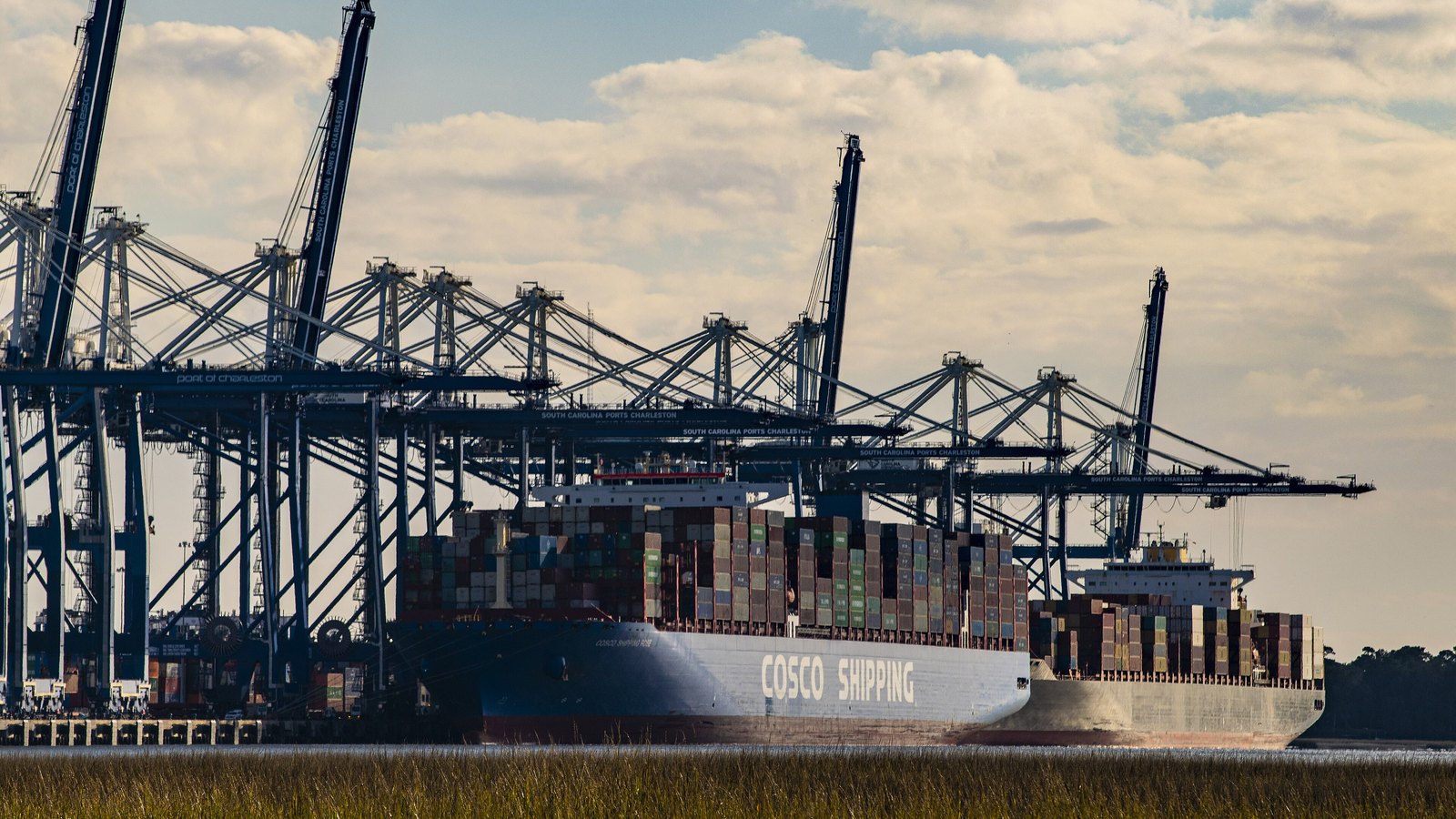
On November 24, 2026, the Foreign-Trade Zones Board under the U.S. Department of Commerce published an official notice confirming that the South Carolina State Ports Authority has formally applied to expand Subzone 21I on behalf of automotive supplier DMA Industries in Mullins, South Carolina, establishing regulatory review procedures that carry direct operational implications for university-affiliated logistics research and advanced manufacturing supply chain corridors.
Application to Expand Subzone 21I in Marion County
The federal notice, docketed as Notice S-508-2026 and published under document number 2026-23938 in the Federal Register (91 FR 75822), initiates an administrative review of the request submitted by the South Carolina State Ports Authority as the grantee of Foreign-Trade Zone 21. Formally docketed on November 17, 2026, the application proposes incorporating an additional 30.35-acre parcel located at 6424 East Highway 76 in Mullins, South Carolina, into Subzone 21I. DMA Industries, LLC currently maintains operations at the site, which supports distribution, quality testing, and warehousing for aftermarket automotive components.
Under the statutory framework of a foreign trade zone, designated areas are considered outside the customs territory of the United States for the purpose of duty assessment. The proposed subzone site in Mullins will operate under the existing activation limit of FTZ 21. Crucially, the filing explicitly states that no authorization for production or manufacturing activity has been requested at this stage. Should the applicant seek to conduct assembly, component alteration, or advanced processing that changes tariff classifications in the future, a separate notification and review process will be mandated by federal regulators.
Key Filing Provisions and Regulatory Parameters
The Foreign-Trade Zones Board designated FTZ staff examiner Juanita Chen to conduct the detailed administrative review of the filing and prepare technical recommendations for Executive Secretary Colin Agostisi. The application operates under the substantive authority of the Foreign Trade Zones Act of 1934, codified at 19 U.S.C. 81a-81u, and the governing regulations of the Department of Commerce set forth in 15 CFR Part 400. These statutory provisions define the boundaries of subzone designation, grantee oversight, and public interest evaluations.
The key specifications, operational parameters, and administrative milestones for the Subzone 21I expansion application are detailed in the comparison table below:
| Regulatory Parameter | Filing Specification | Governing Authority |
|---|---|---|
| Docket Identifier | Docket S-508-2026 (Doc. No. 2026-23938) | FTZ Board / 91 FR 75822 |
| Grantee Entity | South Carolina State Ports Authority | Grantee of FTZ 21 |
| Operator / Beneficiary | DMA Industries, LLC | Automotive parts supply chain |
| Facility Location | 6424 East Highway 76, Mullins, SC | Marion County Industrial Corridor |
| Site Footprint | 30.35 acres | Subzone 21I boundary amendment |
| Activity Scope | Storage, handling, and distribution | No production authorization requested |
| Designated Staff Examiner | Juanita Chen (FTZ Staff) | 15 CFR 400.32 review protocols |
| Public Comment Period | Closes January 4, 2027 | FTZ Board Executive Secretariat |
| Rebuttal Comment Period | Closes January 19, 2027 | Rebuttal submission window |
Automotive Supply Chains and Foreign-Trade Zone Framework
The administrative structure of Foreign-Trade Zone 21 is coordinated through the South Carolina State Ports Authority foreign-trade zone program, which connects deep-water terminal facilities in Charleston with inland logistics infrastructure across the state. When imported commercial goods enter an activated FTZ site, they remain exempt from formal customs entry and tariff payment until they are withdrawn for domestic consumption. Foreign goods that are subsequently re-exported directly to international markets bypass domestic customs duties entirely.
According to compliance standards established by U.S. Customs and Border Protection cargo control protocols, subzone operators maintain rigorous inventory tracking systems that segregate privileged foreign status, non-privileged foreign status, and domestic status inventory. For DMA Industries—headquartered in nearby North Carolina and operating major distribution centers in Marion County—FTZ designation provides critical working capital relief by deferring customs payments on automotive ride control assemblies, shock absorbers, struts, coil springs, and electronic brake wear sensors until customer delivery occurs.
These customs mechanics directly impact international trade logistics, where contracts governed by Incoterms rules determine transfer of risk, transportation responsibilities, and import duty clearance obligations between global manufacturers, domestic tier-one distributors, and end-market purchasers.
Trade Compliance and Manufacturing Assessment Context
Subzone designations present strategic compliance advantages while imposing stringent inventory control mandates. While standard FTZ distribution operations benefit from duty deferral and inverted tariff avoidance on damaged or scrapped goods, manufacturing activity inside a zone requires specialized approvals. Because DMA Industries has not applied for production authority in this docket, operations at the Mullins facility remain strictly confined to warehousing, testing, sorting, repackaging, and distribution.
In automotive supply chain networks where subzone sites eventually seek production authorization, regulatory agencies scrutinize component origin and substantial manufacturing changes. In such advanced operations, rules governing substantial transformation criteria dictate whether complex multi-origin subassemblies acquire domestic country-of-origin status or remain classified as foreign articles. These legal determinations carry significant consequences for downstream procurement contracts, including federal and institutional supply obligations evaluated under Trade Agreements Act compliance standards.
Stakeholder Perspectives and Regional Supply Chain Dynamics
Regional economic development stakeholders throughout the Pee Dee region of South Carolina have emphasized the expansion of logistics and manufacturing corridors linking rural counties to the coastal port system. The South Carolina State Ports Authority has pursued subzone expansions across its service territory to optimize freight velocity and lower total landed costs for industrial employers. By establishing activated subzone sites along major highway corridors like East Highway 76 in Mullins, regional operators can stage global inventory closer to regional automotive assembly plants across the Carolinas, Georgia, and Tennessee.
Industry trade specialists and customs compliance analysts note that automotive aftermarket suppliers face heightened pressure from shifting tariff schedules, maritime freight rate volatility, and just-in-time inventory demands from commercial repair networks. The administrative expansion of Subzone 21I reflects a broader industry pattern: mid-tier distributors increasingly adopt foreign-trade zone status to preserve operational liquidity, eliminate redundant customs filing fees through weekly entry aggregation, and insulate supply chains against sudden trade disruptions.
Implications for Advanced Manufacturing Research and Supply Chain Corridors
The expansion of FTZ Subzone 21I carries substantive relevance for university research institutions, academic research offices, and regional innovation corridors throughout the Southeast. Major academic centers—including the Clemson University International Center for Automotive Research (CU-ICAR), the McNAIR Center for Aerospace and Automotive Innovation at the University of South Carolina, and regional logistics research programs at Francis Marion University—actively investigate supply chain resiliency, tariff mitigation strategies, and automated distribution systems.
For university research administration and laboratory procurement professionals, foreign-trade zone developments highlight important compliance principles:
- Customs Status Tracking for Dual-Use R&D Components: Research institutions frequently import specialized mechanical prototypes, test equipment, and sensor arrays that require precise tracking under customs regulations. Understanding FTZ admission categories helps university compliance officers collaborate with corporate research sponsors operating within bonded or subzone environments.
- Supply Chain Modeling and Economic Data: Empirical studies examining southeastern logistics corridors rely on regulatory filings, activation limits, and port authority data to model optimal inventory buffering and nearshoring dynamics for critical mechanical components.
- Export Control and Federal Procurement Compliance: When academic consortia engage in public-private partnerships with advanced automotive suppliers, tracking component origin, bonded storage parameters, and foreign-trade zone rules prevents regulatory discrepancies during federally funded grant performance.
Comment Deadlines and Review Timeline
The administrative proceeding overseen by the Foreign-Trade Zones Board now enters its statutory public comment phase. Interested parties, including supply chain operators, municipal representatives, academic policy analysts, and industry competitors, may submit formal comments on the proposed Subzone 21I expansion. All public comments must be addressed to the Executive Secretary of the FTZ Board and submitted electronically to [email protected] by January 4, 2027.
In accordance with 15 CFR Part 400 review procedures, a subsequent rebuttal period allows interested parties to submit rebuttal materials responding to submissions made during the initial comment window. The deadline for rebuttal comments is January 19, 2027. Following the close of the comment periods, staff examiner Juanita Chen will finalize technical evaluations and submit a recommendation to Executive Secretary Colin Agostisi and the FTZ Board for formal determination.
Sources
- Federal Register: Foreign-Trade Zone Subzone 21; Application for Subzone Expansion; DMA Industries, LLC; Mullins, South Carolina (91 FR 75822, Doc. 2026-23938), checked 2026-11-28
- Electronic Code of Federal Regulations (eCFR): 15 CFR Part 400 — Regulations of the Foreign-Trade Zones Board, checked 2026-11-28
- Cornell Law School Legal Information Institute: 19 U.S. Code Chapter 1A — Foreign Trade Zones (19 U.S.C. 81a-81u), checked 2026-11-28
- U.S. Customs and Border Protection: About Foreign-Trade Zones and Contact Info, checked 2026-11-28
- South Carolina State Ports Authority: Foreign-Trade Zones (FTZs), checked 2026-11-28






