
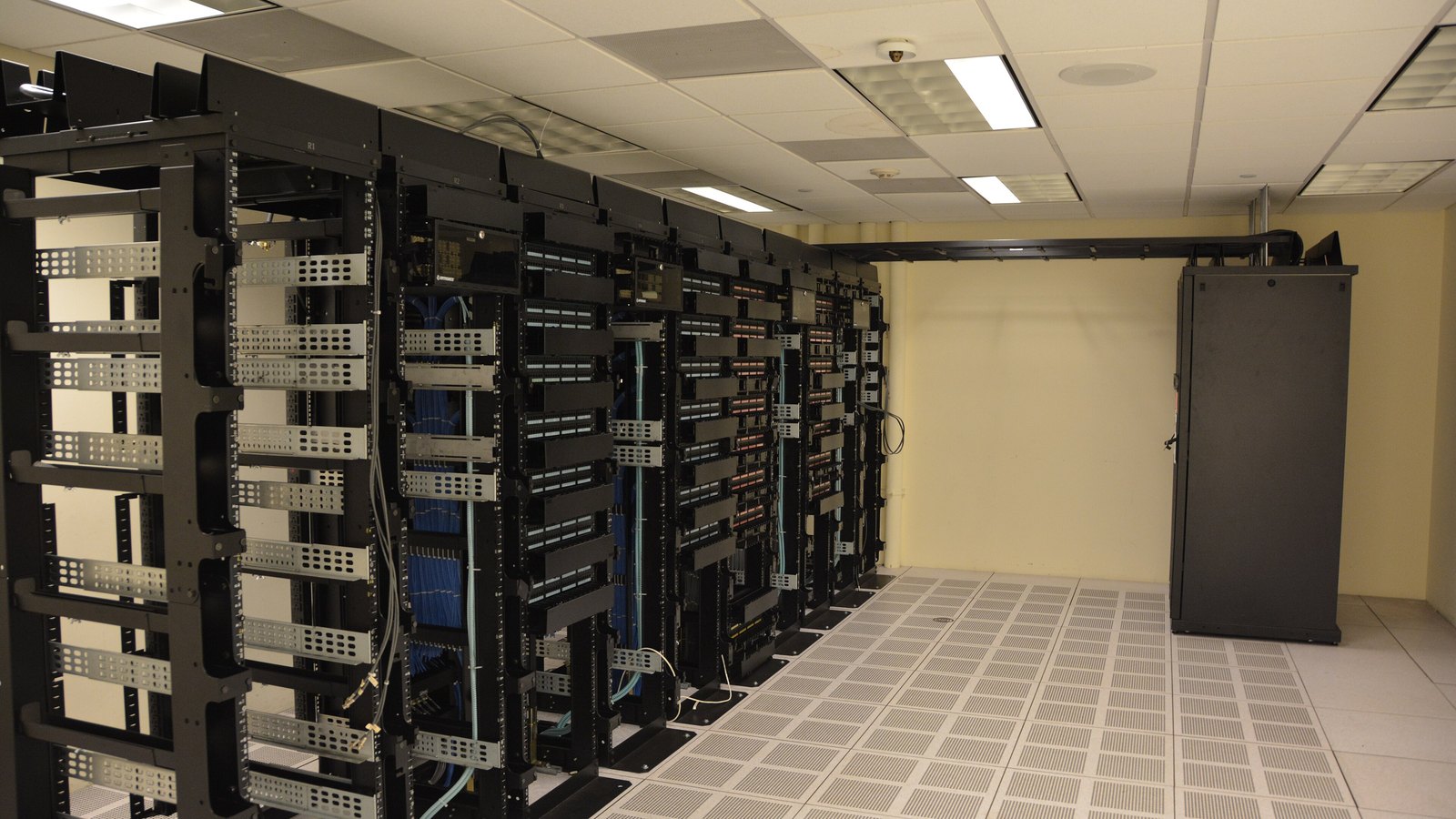
On November 24, 2026, South Korean defense prime Hanwha Aerospace announced plans to construct a 180-megawatt defense artificial intelligence data center in Changwon, committing 10 trillion won in first-phase capital to begin operations by July 2028. The initiative establishes sovereign, air-gapped compute infrastructure for military autonomous systems, prompting university defense laboratories and research offices to prepare for stringent compliance protocols governing dual-use algorithm training and classified hardware access.
What happened in Changwon
Hanwha Aerospace revealed its blueprint for the dedicated Defense Artificial Intelligence Data Center during an on-site briefing on November 24, 2026, at its Changwon construction site in South Gyeongsang Province. The presentation was delivered to Ha Jung-woo, Vice Chairman of the Presidential Committee on National AI Strategy, alongside technical officials from the Defense Acquisition Program Administration, as reported by Yonhap News Agency. The project represents one of the largest dedicated defense compute infrastructure investments globally, intended to support algorithmic autonomy across land, maritime, and aerospace domains.
Hanwha will deploy high-density graphics processing unit clusters configured for command-and-control modeling, electronic warfare simulation, and real-time sensor processing. The company underscored that South Korea faces an acute demographic contraction in military conscription cohorts, making algorithmic autonomy and manned-unmanned teaming operational necessities rather than experimental options, according to coverage by MoneyToday. General-purpose commercial clouds cannot host core defense workloads due to statutory state secrecy mandates, physical air-gapping requirements, and survivability standards during armed conflict.
Key technical specifications and investment details
The defense compute hub occupies a 43,000-square-meter site (approximately 13,000 pyeong) adjacent to Hanwha Aerospace’s main Changwon production facilities. The location provides direct access to South Korea’s heavy defense industrial cluster while utilizing dedicated electrical substation feeds. At peak buildout, the facility will support a total capacity of 180 megawatts—equivalent to roughly 13 percent of the output of a single 1.4-gigawatt commercial nuclear reactor—delivering high compute density for sovereign defense applications, as reported by ETNews.
Capital allocation for the initial phase is budgeted at 10 trillion won (approximately 7.1 billion US dollars). This expenditure is part of the broader 55 trillion won advanced manufacturing vision announced by Hanwha Group Vice Chairman Kim Dong-kwan in July in Jinju. Initial services are targeted to go online in July 2028, with compute capacity scaling progressively toward 180 megawatts through 2030.
The facility integrates liquid-cooling systems, multi-generator backup reserves, and isolated enclaves designed to support military foundation models alongside modern high-performance computing workloads.
| Metric | Changwon Defense AIDC | Commercial Hyperscale Benchmark | Standard Public Agency Data Center |
|---|---|---|---|
| Target Power Capacity | 180 MW (phased buildout) | 50 to 100 MW | 5 to 20 MW |
| Phase 1 Investment | 10 trillion won (~$7.1B) | 1.5 to 3.0 trillion won | 300 to 800 billion won |
| Initial Service Target | July 2028 | 24 to 36 months | 48 to 72 months |
| Network Security | Physical air-gap / closed network | Public internet / hybrid cloud | Government intranet |
| Operational Model | Contractor-operated, military data ownership | Multi-tenant subscription (IaaS/PaaS) | Direct civil service operation |
| Primary Workloads | Autonomous weapon systems, sensor fusion, MUM-T | Enterprise software, consumer web, LLM hosting | Administrative databases, civil records |
Background: South Korea’s defense AI transition and sovereign infrastructure
South Korea’s defense establishment has accelerated its structural modernization under the Defense Innovation 4.0 strategy. However, establishing sovereign high-performance computing through traditional state procurement has faced extended administrative timelines. If the Ministry of National Defense and the Defense Acquisition Program Administration were to construct an AI center through public channels, statutory feasibility reviews, environmental approvals, and public tenders would require six to eight years, delaying operational deployment until the 2030s, as highlighted by ZDNet Korea. Private investment compresses this deployment curve by four to five years.
Hanwha brings relevant operational experience to the Changwon undertaking. The company has operated the Jukjeon integrated data center since 2011 to manage information assets for its defense affiliates, and has participated in infrastructure engineering for advanced GPU facilities in Georgia in the United States. To reconcile private sector operation with national security secrecy, Hanwha is adopting an operational model where the Republic of Korea Armed Forces retains exclusive ownership, legal custody, and encryption authority over all defense data, while Hanwha operates the physical infrastructure under a custodial agreement.
This sovereign architecture aligns with international frameworks for compute governance and hardware-level oversight, ensuring sensitive defense calculations remain isolated from unauthorized networks within a certified secure data enclave that meets national defense security standards.
Industry and government reaction
The Changwon project received strong backing from national policy bodies and regional industrial leadership. Vice Chairman Ha Jung-woo of the Presidential Committee on National AI Strategy emphasized that computational infrastructure is the essential backbone of national defense AI transformation, noting that public-private coordination is critical to modernizing South Korea’s defense capabilities.
Hanwha Aerospace representatives stated that high-density computing infrastructure is emerging as the fourth pillar of sovereign defense readiness alongside shipping lanes, deep-water ports, and electrical grids, as reported by The Korea Economic Daily. The company noted that the Changwon facility will also serve as a commercial differentiator internationally. Rather than exporting stand-alone hardware, Hanwha plans to bundle combat vehicles and aerospace platforms with pre-trained tactical AI models and secure computing support suites for foreign defense customers.
Regional administrators in South Gyeongsang Province, which hosts more than half of the nation’s defense manufacturing base, observed that the 10 trillion won investment will stimulate regional demand for specialized electrical engineering, high-voltage power routing, and university talent recruitment.
What it means for researchers, universities and research offices
The launch of a dedicated 180-megawatt defense computing hub introduces practical operational shifts for academic researchers, engineering departments, and research compliance officers working on defense-related artificial intelligence. Academic teams engaged in dual-use robotics, drone kinematics, and computer vision face several specific administrative requirements:
- Data isolation and enclave compliance: University researchers collaborating with Hanwha or military research agencies cannot process combat telemetry or sensor datasets on shared campus clusters or commercial cloud platforms. Sponsored research agreements will mandate remote data execution inside air-gapped enclaves, requiring research offices to implement strict credential and physical access controls.
- Export control and dual-use classification: As defense models scale in capability, university technology transfer and compliance officers must verify whether algorithms and simulation code trigger export controls. Teams must evaluate research outputs against formal export control classification procedures and navigate legal requirements governing export-controlled artificial intelligence models, particularly when foreign national researchers participate in project tasks.
- Compute grant application and allocation: Academic access to the Changwon facility will be administered through formal defense research programs, such as Defense Innovation Lab initiatives. Research offices will need to assist principal investigators in preparing compute budget justifications, data retention plans, and security screening paperwork for GPU allocations.
- Intellectual property boundaries: The custodial operating model—where the military retains data ownership while a contractor operates the hardware—requires precise contractual language in university subawards. Institutional officers must ensure that university background IP remains separated from operational weights created within the defense enclave, preserving academic publishing rights.
What happens next
Site preparation and civil engineering for the 43,000-square-meter Changwon campus are scheduled to continue through the first half of 2027. Initial site works focus on high-capacity power interconnection lines with regional electrical distribution grids and structural preparation for liquid-cooling systems.
Equipment staging and acceptance testing for initial high-density server racks will occur across late 2027 and early 2028. Hanwha targets July 2028 for the commencement of initial operational capability, onboarding autonomous ground vehicle simulations and tactical mission datasets. Following initial operations, Hanwha and defense officials plan to scale computing capacity toward the full 180-megawatt envelope through 2030, integrating additional power distribution assets across the region.
Sources
- Yonhap News Agency: 한화, 창원에 국방 AI 데이터센터 구축…2028년 첫 가동 목표 | 연합뉴스, checked 2026-11-24
- MoneyToday: 한화에어로, 창원에 180MW급 국방 AI 데이터센터 구축 – 머니투데이, checked 2026-11-24
- ETNews: 한화에어로, 창원에 국방 AI 데이터센터 구축…1단계 10조원 투입 – 전자신문, checked 2026-11-24
- ZDNet Korea: 병력 감소에 커지는 AI 역할…한화, 국방 데이터센터 구축 – ZDNet korea, checked 2026-11-24
- The Korea Economic Daily: 김동관의 10조원 베팅…한화 국방 AI 주도권 노린다 │ 한경매거진&북, checked 2026-11-24






