
Neurotechnology developer Paradromics announced a technical collaboration with Nvidia on November 23, 2026, to integrate Nvidia Holoscan and edge-computing hardware into its Connexus brain-computer interface platform, aiming to shrink bulky neural decoding equipment into wheelchair-mountable enclosures while slashing speech restoration latency below ten milliseconds for individuals living with severe paralysis.
What happened in the Paradromics and Nvidia partnership
On November 23, 2026, Austin-based neurotechnology developer Paradromics Inc. announced a technical collaboration with computing provider Nvidia to advance edge computing infrastructure for high-data-rate brain-computer interfaces (BCIs). Under the agreement detailed in the official announcement released by Paradromics, the companies will integrate the Nvidia Holoscan sensor-processing architecture and edge artificial intelligence hardware into the Connexus BCI development stack.
The central objective is shrinking the external decoding electronics required for real-time speech restoration from a laboratory equipment cart down to a compact enclosure that mounts on a user’s wheelchair. As reported by financial and tech outlet Moomoo, the partnership represents Nvidia’s deepest expansion into direct intracortical neuroprosthetics, deploying optimized edge acceleration to handle complex neural signal streams.
The joint engineering roadmap initially prioritizes speech recovery for people who have lost the ability to speak due to amyotrophic lateral sclerosis (ALS), stroke, or spinal cord injury. Through the Paradromics Application Expansion (APEX) Program, the integrated architecture will also be distributed to academic medical centres to establish a standardized computing environment across clinical research sites.
Key technical specifications and latency targets
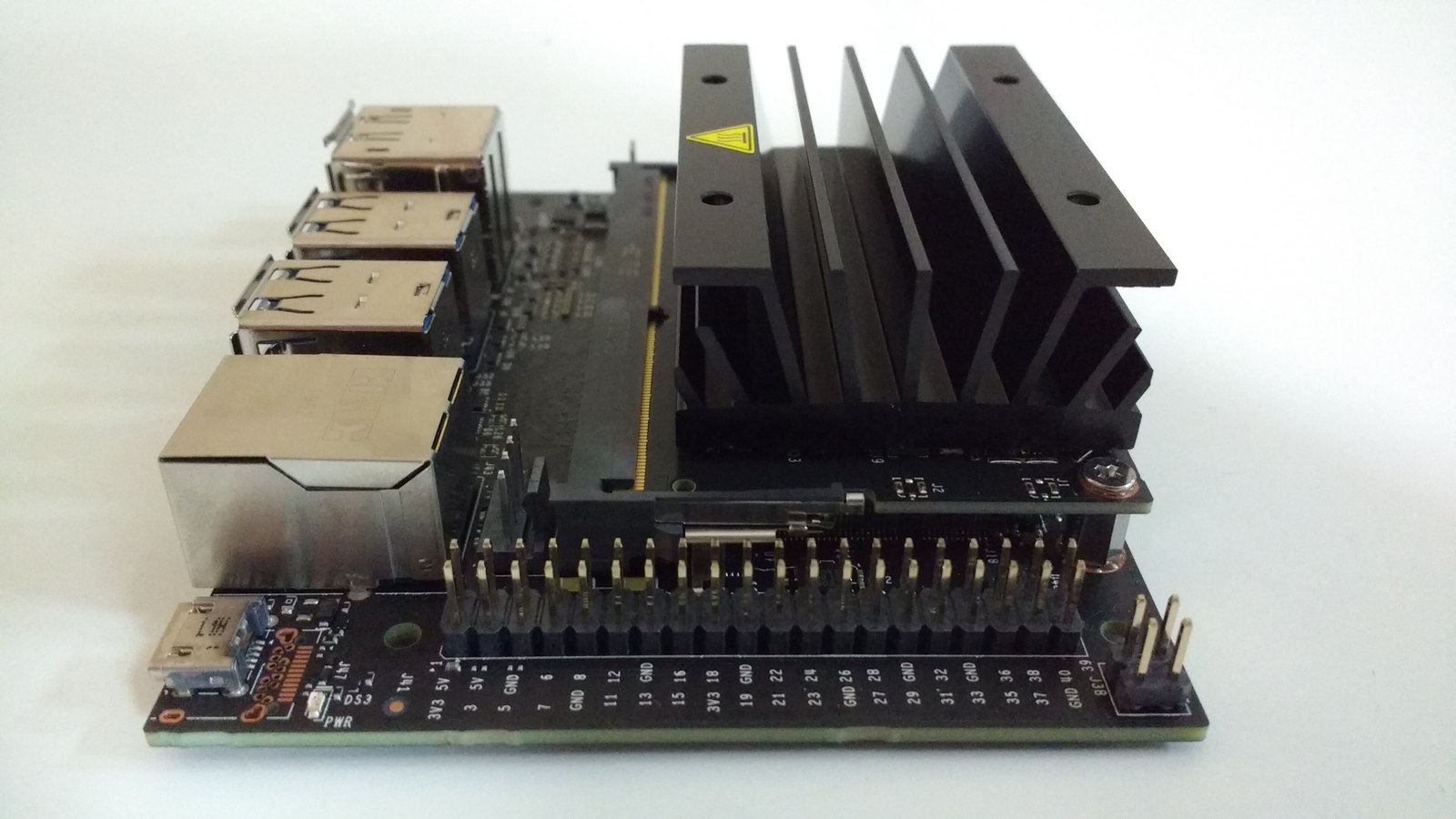
Intracortical BCIs generate massive data streams that create severe computational bottlenecks. Paradromics’ current clinical trial setup pairs an implanted microelectrode array with an external Connexus Control Unit housing an Nvidia Jetson Orin Nano module, which must tether to an auxiliary laboratory computer to run local machine learning decoding models. The collaboration moves this entire pipeline onto the Nvidia Holoscan SDK running on dedicated embedded hardware, eliminating the need for an external workstation.
The technical roadmap establishes aggressive latency targets intended to support natural conversational flow. Direct neural-signal-to-speech pipelines, which convert cortical activity straight into synthetic speech waveforms, target an end-to-end compute and data transport latency of under 10 milliseconds. Multi-stage pipelines—combining neural decoding, large language models (LLMs), and neural voice synthesis—target total latency under 100 milliseconds.
The platform also incorporates online background fine-tuning. Because neural signals naturally shift over time due to cellular changes and physical micro-motion, Holoscan will run adaptive background algorithms that recalibrate decoding weights without interrupting real-time communication.
To power these models in a mobile enclosure, Paradromics plans to adopt Nvidia’s Blackwell-based Jetson AGX Thor platform, which provides up to 2,070 TFLOPS of AI computing performance in a compact, energy-efficient package.
| System Parameter | Current Connexus Setup | Holoscan Target Architecture |
|---|---|---|
| External Form Factor | Control unit tethered to computer cart | Integrated wheelchair-mountable edge enclosure |
| Embedded Processor | Nvidia Jetson Orin Nano | Nvidia Jetson AGX Thor (Blackwell) |
| Peak Compute Throughput | Up to 40 TOPS (INT8) | Up to 2,070 TFLOPS (FP4/INT8) |
| Direct Brain-to-Speech Latency | Variable laboratory delay (>50 ms) | Sub-10 milliseconds end-to-end |
| Multi-Stage Speech Pipeline Latency | 150 to 300+ milliseconds | Sub-100 milliseconds end-to-end |
| Model Calibration | Manual offline calibration | Continuous background online fine-tuning |
| Software Framework | Custom multi-process Linux stack | Nvidia Holoscan SDK streaming container |
| Research Partner Hardware | Variable institutional workstations | Standardized Nvidia IGX and Holoscan kits |
Background and context on high-data-rate BCIs
Neural interfaces span non-invasive electroencephalography (EEG), surface electrocorticography (ECoG), and high-density intracortical arrays. While non-invasive caps avoid surgical intervention, their spatial resolution cannot resolve individual neuronal firing patterns. Paradromics’ Connexus BCI uses a high-density intracortical array designed to record action potentials from thousands of individual cortical neurons simultaneously.
Recording at single-neuron resolution yields the data richness needed for open-vocabulary speech decoding, but it generates gigabits of raw data per second. As neurotechnology analysis from CryptoBriefing observed, the computing bulk required to decode such streams has kept high-density neuroprosthetics tethered to stationary laboratory carts. Compressing these decoding pipelines into mobile form factors is essential for real-world independence.
Paradromics is currently assessing Connexus in its FDA-approved Connect-One Early Feasibility Study, testing the device under an Investigational Device Exemption (IDE) in patients with severe paralysis.
Industry and clinical research reaction
Leadership at both companies characterized the technical collaboration as a necessary step to transition high-data-rate neural interfaces into practical daily medical tools.
“High data rate brain computer interfaces are the ultimate application for edge computing,” stated Matt Angle, PhD, founder and chief executive officer of Paradromics. “Intracortical brain computer interfaces produce rich data streams from large networks of individual neurons. Extracting meaning from those signals requires powerful, low latency processors that fit in a small form factor. NVIDIA has built extraordinary infrastructure for demanding AI and edge computing applications.”
David Niewolny, Senior Director and Global Head of Business Development for Healthcare and Medical at Nvidia, highlighted the clinical importance of real-time responsiveness: “Helping people who have lost the ability to speak communicate naturally again requires AI that can translate complex brain signals into speech and adapt as those signals change. Through our work with Paradromics, we’re using NVIDIA Holoscan and NVIDIA Jetson to bring neural decoding and speech generation together in real time, advancing the computing needed to make brain-computer interfaces practical for everyday use.”
Vikash Gilja, PhD, Chief Scientific Officer of Paradromics, emphasized the streaming coordination challenges: “BCI applications place unusual demands on computing because the system has to process large amounts of neural data, coordinate multiple models, and continue adapting while someone is actively using it. For natural communication, even relatively small delays can change the experience. NVIDIA Holoscan provides a real-time framework that can help us bring neural decoding, adaptive learning, language models, and speech synthesis together within a common computational environment.”
Medical device publication MassDevice noted that relying on Nvidia’s commercial edge architecture allows Paradromics to avoid building custom silicon, accelerating its development timeline while meeting medical-grade latency standards.
What it means for researchers, universities and research offices
The collaboration directly influences academic neuroengineering teams, trial coordinators, and university research compliance offices.
Through the APEX Program, Paradromics will supply standardized Nvidia IGX and Holoscan hardware to academic partners. This shared environment removes the need for individual academic labs to build bespoke data acquisition computers, allowing investigators to focus on decoding models that run portably across clinical research centres.
However, running adaptive edge AI on human participants introduces regulatory oversight requirements. Academic institutions participating in BCI clinical trials must ensure that local protocol amendments are submitted when clinical teams apply for IRB review, confirming that adaptive decoding algorithms comply with institutional risk limits and FDA investigational device standards.
University technology transfer offices must also manage incoming hardware and intellectual property. Collaborating laboratories must execute formal material transfer agreements for vendor hardware kits and ensure licensing terms comply with their institutional university intellectual property policy regarding student- or faculty-developed decoding algorithms.
Finally, high-density neural recordings generate terabytes of physiological data. Participating research teams must establish rigorous protocols within their institutional data management plan DMP to guarantee secure storage, de-identification of biometric brain signals, and adherence to federal data sharing policies.
What happens next in clinical trials and deployment
The technical deployment follows a staged roadmap through 2026 and 2027.
Throughout late 2026, engineering teams will port Paradromics’ existing neural decoders and voice synthesis pipelines into Nvidia Holoscan. This phase includes power profiling, thermal optimization, and latency testing to ensure the enclosure operates safely without overheating in proximity to wheelchair users. Once validated, initial kits will be distributed to speech-focused APEX partners.
In 2027, the roadmap broadens to include high-degree-of-freedom motor decoding for prosthetic limbs and digital avatars. The companies also plan to test multimodal vision-language-action (VLA) models, enabling interfaces to incorporate visual environmental context into assistive movement and communication tasks.
In the longer term, the teams plan to explore further hardware miniaturization, aiming to shrink external computing units toward pocket-sized mobile form factors as BCI technology advances toward broader community adoption.
Sources
- Paradromics: Paradromics Advances High-Performance AI Computing for Brain-Computer Interfaces with NVIDIA, checked 2026-11-24
- NVIDIA: Holoscan SDK for Real-Time Multimodal AI Applications, checked 2026-11-24
- Moomoo: Brain-Computer Interface Momentum Accelerates as Nvidia Enters Speech Restoration Technology, checked 2026-11-24
- CryptoBriefing: Paradromics Taps Nvidia to Shrink Brain-Computer Interface Hardware, checked 2026-11-24
- MassDevice: Paradromics Taps Nvidia to Bring On-Device Speech AI to Brain-Computer Interfaces, checked 2026-11-24






