
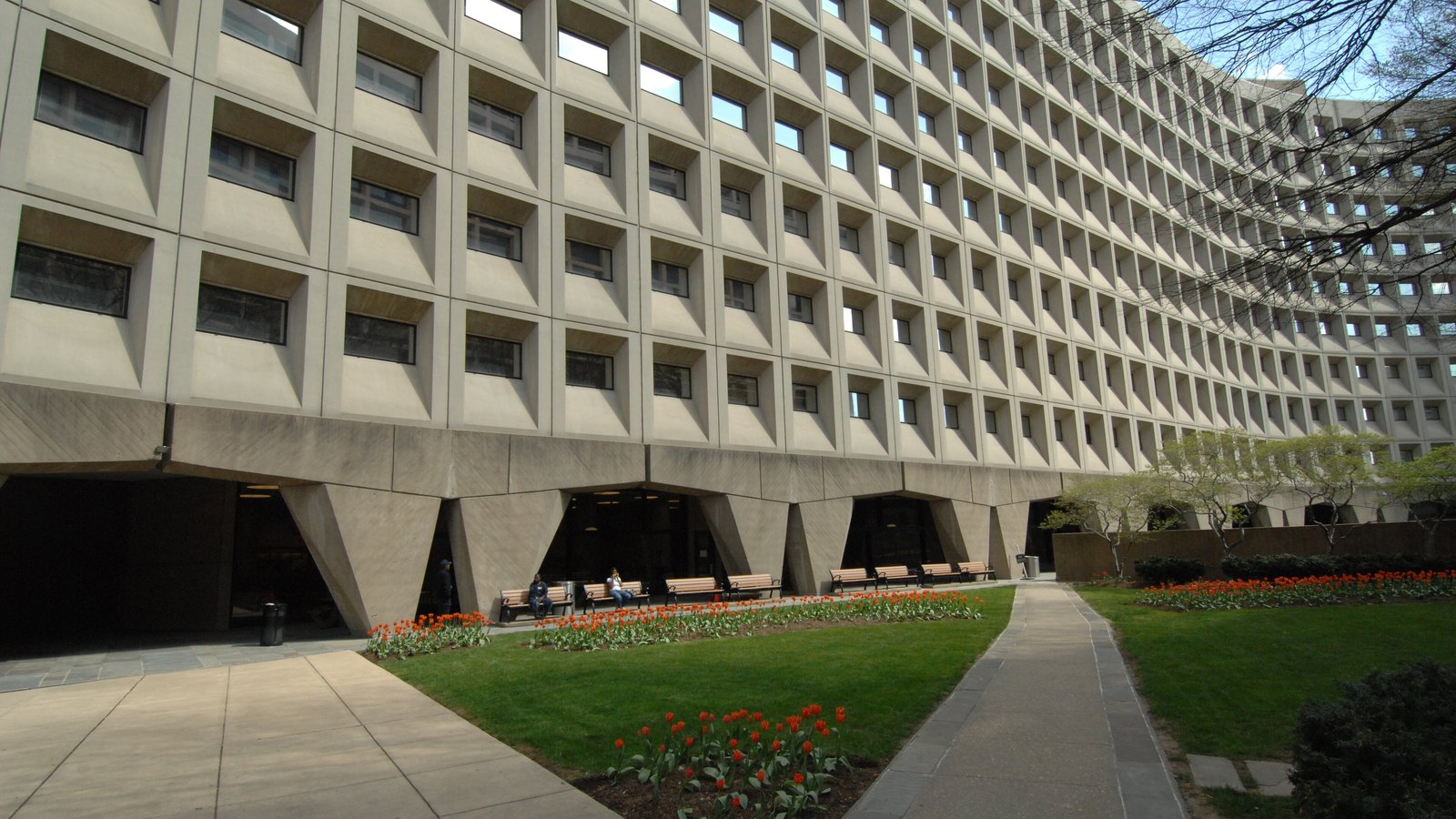
On November 25, 2026, the U.S. Department of Housing and Urban Development issued a sixty-day notice in Federal Register Notice 2026-24074 opening public comment on revised grant reporting, performance measurement instruments, and electronic closeout workflows for the Housing Opportunities for Persons With AIDS program, affecting university medical centers, research institutions, and community health administrators managing federal supportive housing awards.
What happened
The U.S. Department of Housing and Urban Development published a formal notice of proposed information collection under Docket Number FR-7094-N-13 and Office of Management and Budget Control Number 2506-0133, inviting public feedback on a comprehensive revision of reporting and recordkeeping instruments for the Housing Opportunities for Persons With AIDS (HOPWA) program. The action, signed by Assistant Secretary for Community Planning and Development Ronald J. Kurtz and scheduled for official publication on November 27, 2026, covers all formula, competitive, and renewal grantee reporting across the United States.
Under the proposed revision, HUD is restructuring core performance evaluation forms, adding newly standardized data elements to Form HUD-4155, retiring outdated metrics, and updating the statutory language in the grant closeout certification. Crucially, the notice mandates a shift in collection methodology: grantees will now submit final closeout certifications and documentation directly through HUD’s Integrated Disbursement and Information System (IDIS) rather than submitting standalone paper or email packages. According to the agency filing, the information collection supports statutory oversight under 44 U.S.C. 3507, enabling HUD to measure grantee performance against departmental benchmark goals, assess health outcomes, and communicate program contributions toward federal strategic targets.
Key details
The notice establishes revised annual burden estimates reflecting an overall compliance profile of 864 respondents, 806 annualized responses, and 29,980 total annual burden hours across all grantee categories. Total annual compliance costs are estimated at $898,508.60, calculated using an hourly wage of $29.57 corresponding to the GS-9 federal salary schedule for the Rest of the United States. While total compliance costs increased from prior clearance cycles due to updated federal wage rates, total annual burden hours and responses decreased as a result of streamlined closeout processing through IDIS and a calibrated baseline of competitive Special Projects of National Significance (SPNS) grants.
The revision affects multiple specialized reporting instruments governed by federal regulations in 24 CFR Part 574, including the Consolidated Annual Performance and Evaluation Report (CAPER) for formula jurisdictions and the Annual Performance Report (APR) for competitive grantees. The data collection framework also updates specialized demonstration reports for model interventions along the HIV care continuum.
| Information Collection Activity | Form Number | Annual Respondents | Burden Hours per Response | Annual Burden Hours | Estimated Annual Cost |
|---|---|---|---|---|---|
| Consolidated APR / CAPER Data Elements | HUD-4155 | 258 | 40.0 | 10,320 | $305,162.40 |
| HIV Housing Care Continuum Model Report | HUD-4154 | 30 | 20.0 | 600 | $17,742.00 |
| SPNS Grant Model Report | HUD-4153 | 30 | 40.0 | 1,200 | $47,484.00 |
| Grantee Ongoing Recordkeeping | Recordkeeping | 258 | 60.0 | 15,480 | $457,743.60 |
| Grant Amendments (Budget / Extension) | Amendments | 30 | 6.0 | 180 | $5,322.60 |
| Grant Closeout Package and SF-425 | Closeout / SF-425 | 258 | 11.0 | 2,200 | $65,054.00 |
| Total Information Collection Profile | All Forms | 864 | — | 29,980 | $898,508.60 |
Grantees must maintain detailed documentation of client eligibility, income verifications, housing plans, and housing stability milestones. For institutions administering multiple projects, recordkeeping constitutes the single largest operational commitment at 15,480 hours annually across 258 reporting entities.
Background and context
Enacted under the AIDS Housing Opportunities Act as part of the Cranston-Gonzalez National Affordable Housing Act of 1990, the HOPWA program represents the primary federal resource dedicated to addressing the housing needs of low-income individuals living with HIV and their families. HUD distributes funds through two distinct mechanisms: 90 percent via formula allocations to qualifying states and metropolitan statistical areas, and 10 percent through competitive awards for innovative permanent supportive housing models and Special Projects of National Significance.
Technical operational assistance provided through the HUD Exchange highlights that the program functions as a payer of last resort, delivering tenant-based rental assistance, short-term rent, mortgage, and utility assistance, permanent housing placement, and supportive case management. Federal oversight requires alignment between housing assistance metrics and longitudinal public health indicators, evaluating whether permanent housing access directly fosters adherence to antiretroviral therapy, continuous medical engagement, and community-wide viral suppression.
The integration of closeout reporting into IDIS modernizes an infrastructure that previously relied on fragmented paper submissions. Under federal post-award rules, integrating grant accounting and performance validation inside a centralized ledger decreases processing backlogs and provides auditable tracking of unexpended balances, closeout reconciliations, and property disposition.
Reaction and stakeholder perspective
Public health administrators and housing policy leaders have long stressed the indispensable connection between housing stability and biomedical HIV outcomes. Program analyses published by the National Alliance of State and Territorial AIDS Directors (NASTAD) underscore that housing represents one of the largest unmet needs for people living with HIV, observing that stable shelter is an essential structural intervention that enables individuals to maintain viral suppression and eliminate sexual transmission of the virus.
State and territorial public health officials emphasize that coordinating federal funding streams across agencies reduces administrative duplication. The statutory framework established under the Ryan White HIV/AIDS Program Legislation administered by the Health Resources and Services Administration operates alongside HOPWA to provide outpatient clinical care, medication access, and medical case management. Stakeholders note that aligning HUD’s annual performance indicators with Ryan White Services Report metrics allows municipal health departments and clinical partners to assess co-enrolled client trajectories without generating competing data collection burdens.
What it means for researchers, universities and research offices
The revision of HOPWA reporting instruments and the migration of closeout workflows into IDIS directly impacts academic medical centers, university health systems, and research administration offices that receive competitive HOPWA awards or serve as key project subrecipients. Sponsored projects teams managing these portfolios must integrate the revised requirements into their institutional compliance protocols across several core functional domains:
- Federal reporting integration: Sponsored programs offices must update their internal tracking calendars to reflect the revised HUD-4155 data elements and align annual performance submissions with institutional federal grant reporting requirements, ensuring that data feeds from electronic health records and case management software capture all newly required performance metrics.
- Subrecipient oversight and monitoring: University prime recipients partnering with community-based service organizations must update their subaward monitoring procedures under 2 CFR 200 Subpart D post-award requirements. Sponsored programs staff should conduct formal subrecipient risk assessment reviews to verify that community clinics and housing subgrantees maintain compliant client records and can export standardized annual metrics.
- Audit readiness and compliance: Research administrators must ensure that active files comply with established standards for subrecipient monitoring, tracking participant eligibility determinations, facility housing quality standards, and supportive services timesheets to withstand federal compliance reviews and single audits.
- Program income and financial reconciliation: HOPWA projects that collect client rent contributions or fee-for-service reimbursements must properly account for and reinvest those receipts in compliance with federal guidelines on program income, ensuring that earned revenue supplements authorized housing activities rather than displacing awarded grant funds.
- IDIS electronic closeout workflows: Principal investigators and central post-award accountants must coordinate closely during project closeout. Because HUD will require closeout certifications, final performance accomplishments, and the final SF-425 Federal Financial Report to be submitted through IDIS, research offices must ensure that designated financial administrators possess active IDIS credentials and complete all final reconciliations within the standard closeout window.
What happens next
The publication of the 60-day notice on November 27, 2026 initiates a formal public comment period that extends through January 26, 2027. Written comments, methodology assessments, and recommendations regarding the proposed collection instruments may be submitted through the Federal eRulemaking Portal at www.regulations.gov or addressed directly to Urnell Johnson, Paperwork Reduction Act Supervisor in HUD’s Correspondence Unit in Washington, D.C.
Following the conclusion of the 60-day comment window, HUD will review all public submissions, refine the information collection package, and submit the final proposal to OMB alongside a 30-day notice in the Federal Register. Research institutions, community housing coalitions, and academic medical centers holding HOPWA awards should evaluate their clinical data pipelines and financial accounting systems now to prepare institutional feedback and plan system updates ahead of final implementation in 2027.
Sources
- Office of the Federal Register: Federal Register :: Public Inspection: Agency Information Collection Activities; Proposals, Submissions, and Approvals: Housing Opportunities for Persons with AIDS Program, checked 2026-11-26
- National Archives and Records Administration: eCFR :: 24 CFR Part 574 — Housing Opportunities for Persons with AIDS, checked 2026-11-26
- U.S. Department of Housing and Urban Development: HOPWA: Housing Opportunities for Persons With AIDS – HUD Exchange, checked 2026-11-26
- National Alliance of State and Territorial AIDS Directors: Housing Support Systems | NASTAD, checked 2026-11-26
- Health Resources and Services Administration: Ryan White HIV/AIDS Program Legislation | Ryan White HIV/AIDS Program, checked 2026-11-26






