
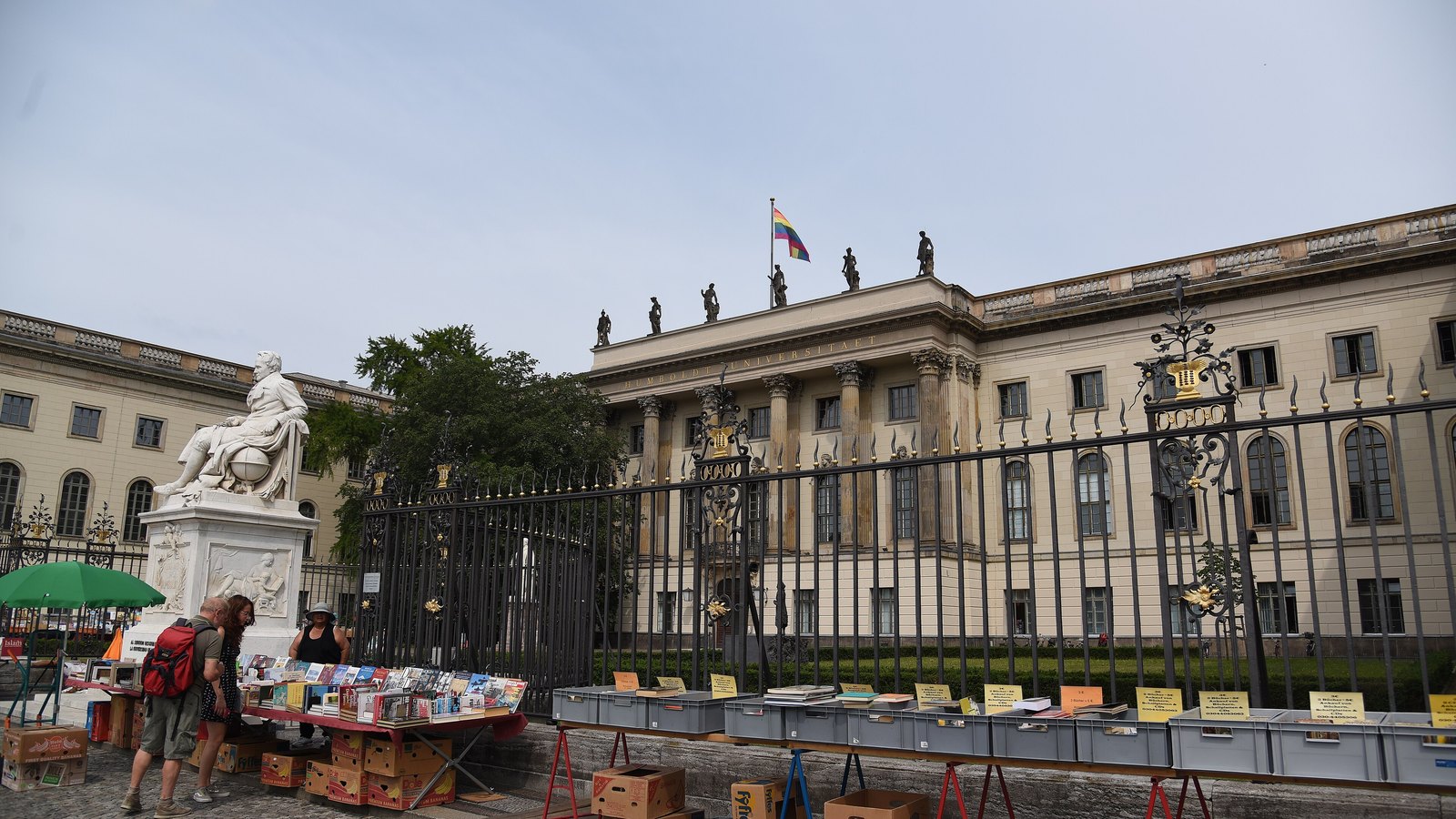
Germany’s Alexander von Humboldt Foundation abruptly shut its online submission portal on 15 November 2026 after its prestigious Humboldt Research Fellowship reached a newly established 800-application ceiling in just 21 hours. The premature closure locked out international applicants and host institutions worldwide, prompting foundation officials to issue an apology while highlighting how generative artificial intelligence and rising application volumes are compressing traditional fellowship submission windows across European funding programmes.
Surge in Fellowship Submissions Hits 800-Application Cap in 21 Hours
The Alexander von Humboldt Foundation opened its online application portal on Sunday, 15 November 2026, for the fellowship intake cycle feeding its July 2027 selection meeting. Within hours of opening, an unprecedented wave of completed submissions flooded the system. Scholars from across the globe who had spent months coordinating projects with German host laboratories found the portal closed to new entries before the end of the day. Foundation records confirmed that the newly instituted 800-application threshold—introduced earlier in 2026 to ensure timely administrative processing—had been reached in just 21 hours.
The sudden closure disrupted hundreds of submission timelines worldwide. Swastik Chowbey, an astrophysicist at the University of Milan in Italy, had spent three and a half months preparing his fellowship proposal. After staying up overnight through 14 November to finalize forms and coordinate reference letters across multiple time zones, Chowbey forwarded the complete packet to his prospective German host for final checks. When he logged into the portal at approximately 8:50 p.m. to submit the finalized application, intake had already closed.
Because the launch occurred on a Sunday, researchers who required weekend departmental sign-offs or host verification found themselves locked out before finalizing their submissions. The incident illustrates how automated submission caps, when paired with intense global demand, convert traditional merit evaluations into high-speed submission races.
Fellowship Terms, Selection Cycles, and the 800-Submission Ceiling
The Humboldt Research Fellowship, funded through the Federal Ministry of Research, Technology and Space under Germany’s Global Minds Initiative, supports international researchers undertaking collaborative stays at German universities and research institutes across all academic disciplines. The scheme operates two distinct tracks:
| Programme Dimension | Postdoctoral Researchers Track | Experienced Researchers Track |
|---|---|---|
| Target Career Stage | Doctorate completed within the last 4 years | Doctorate completed within the last 12 years |
| Monthly Fellowship Stipend | €3,000 per month | €3,600 per month |
| Fellowship Duration | 6 to 24 months (continuous stay) | 6 to 18 months (splittable into up to 3 stays over 3 years) |
| Annual Intake Cycles | 3 calls per year (March, July, November) | 3 calls per year (March, July, November) |
| Call Submission Ceiling | Strict 800-application cap across both tracks | Strict 800-application cap across both tracks |
| Subsequent Call Date | 15 March 2027 | 15 March 2027 |
Historically, the Humboldt Foundation maintained an open, continuous submission model where candidates could submit proposals at any point during the year for evaluation at one of three annual selection committee meetings. However, escalating submission volumes prompted the foundation to replace continuous intake with three discrete annual application windows, each capped at 800 applications. Under this framework, once 800 submissions are logged, the portal ceases accepting new accounts or finalized submissions, requiring incomplete applicants to wait for the subsequent intake round eight months prior to the next committee meeting.
Rising Application Pressures and the Impact of Generative AI
The introduction of the 800-application ceiling was driven by a sharp rise in submissions that began accelerating in 2024. A spokesperson for the Alexander von Humboldt Foundation confirmed that application volumes had grown substantially over the preceding two years, placing severe strain on administrative capacity and peer-review panels evaluating extensive research outlines.
Foundation officials explicitly noted that the proliferation of generative artificial intelligence tools has enabled applicants to assemble complex proposals, literature reviews, and project narratives far more rapidly than in earlier funding cycles. The Humboldt Foundation does not prohibit generative AI in fellowship applications, nor does it require candidates to declare AI assistance in drafting their research plans.
This posture contrasts with emerging policies across European research funding. The German Research Foundation (Deutsche Forschungsgemeinschaft) introduced specific guidelines governing artificial intelligence in proposal submission, establishing that while generative models may assist in drafting, their substantive contribution must be formally disclosed to safeguard research transparency. Concurrently, the European Research Area Forum issued living guidelines on generative AI in research to promote accountability and transparency during proposal preparation. These contrasting frameworks highlight how funding bodies are adapting different types of grants to digital drafting technologies.
European postdoctoral organizations, including the European Council of Doctoral Candidates and Junior Researchers, have tracked the changing landscape of individual fellowships in Europe, warning that strict intake caps risk shifting selection pressures from scientific quality to rapid administrative submission.
Applicant Frustration, Host Institution Concerns, and Foundation Apology
The sudden closure prompted widespread criticism across academic networks and social media platforms, as detailed in a Nature news analysis on the international reaction. Applicants and German host researchers questioned the equity of opening a capped portal on a Sunday, which disadvantaged candidates across international time zones and those balancing personal responsibilities.
Ida Skubis, an artificial intelligence researcher at Silesian University of Technology in Gliwice, Poland, voiced the frustration shared by international applicants on LinkedIn, remarking that spending months developing a strong scientific project only to find that opening a portal on a Sunday and closing it that same day placed scholars at an arbitrary disadvantage.
Prospective German hosts also expressed concern over the weekend opening. Simon Hammann, a chemist and host at the University of Hohenheim in Stuttgart, noted that Sunday launches disadvantage scholars with caring and family obligations, emphasizing that weekend openings should be eliminated from institutional grant calendars. Marcela Hernández, an environmental microbiologist at the University of Birmingham and former fellow, highlighted the stakes, describing a Humboldt fellowship as an internationally recognized mark of academic distinction with an exceptional global network.
In response to the outcry, an Alexander von Humboldt Foundation spokesperson acknowledged the procedural deficiencies and issued a formal apology. The foundation recognized that opening on a Sunday created serious obstacles for applicants coordinating with hosts and referees across time zones. The spokesperson apologized sincerely for the frustration caused and stated that the foundation will review internal processes to develop a fair, transparent application procedure.
Implications for Institutional Research Offices and Host Laboratories
The rapid closure of the Humboldt portal signals necessary adjustments for university research offices, sponsored project teams, and host departments within institutional grants management workflows. Traditional funding competitions operate on announced calendar deadlines where all dossiers submitted before the cutoff receive evaluation; submission caps convert those deadlines into operational bottlenecks.
To navigate capped competitions, research administrators and host laboratories must adjust submission schedules. Waiting for final administrative checks on the day of a portal launch is no longer feasible. Host institutional commitments, mentor statements, ethical approvals, and referee letters must be fully assembled and validated weeks before the intake opens. Universities increasingly rely on automated grant management systems to coordinate multi-part documentation ahead of competitive windows.
The episode also fuels broader debates regarding peer review fairness and equitable access. When application quotas fill within hours, grant mechanisms risk favoring researchers with extensive institutional infrastructure over scholars from under-resourced institutions. Under DORA and CoARA research assessment commitments, funding bodies are urged to prioritize qualitative merit over administrative agility, prompting calls for phased submission windows, expression-of-interest filters, or regional quotas.
Timeline and Scheduled Reopening for the 2027 Cycle
Following the portal closure, the Alexander von Humboldt Foundation clarified guidelines for affected researchers. Candidates who initiated and saved draft applications before the 800-application cap was triggered retain their saved material, but cannot submit their dossiers for the July 2027 selection meeting.
The portal is scheduled to reopen on 15 March 2027 for the next call, which corresponds to the November 2027 selection meeting. Scholars without registered accounts must wait until 15 March 2027 to create portal profiles. Internally, the foundation has initiated a review of submission logistics, evaluating potential bans on weekend launches and exploring staged intake mechanisms to prevent future portal shutdowns.
Sources
- Alexander von Humboldt Foundation: Humboldt Research Fellowship Programme Information and Application Cap Notice, checked 2026-11-21
- Nature: ‘Incredibly frustrating’: prestigious fellowship applications close in just 21 hours, checked 2026-11-21
- European Research Area: Living Guidelines on the Responsible Use of Generative AI in Research Published, checked 2026-11-21
- Deutsche Forschungsgemeinschaft: Artificial Intelligence in Proposal Submission and Review, checked 2026-11-21
- Eurodoc: Individual Fellowships in Europe and Abroad, checked 2026-11-21


