
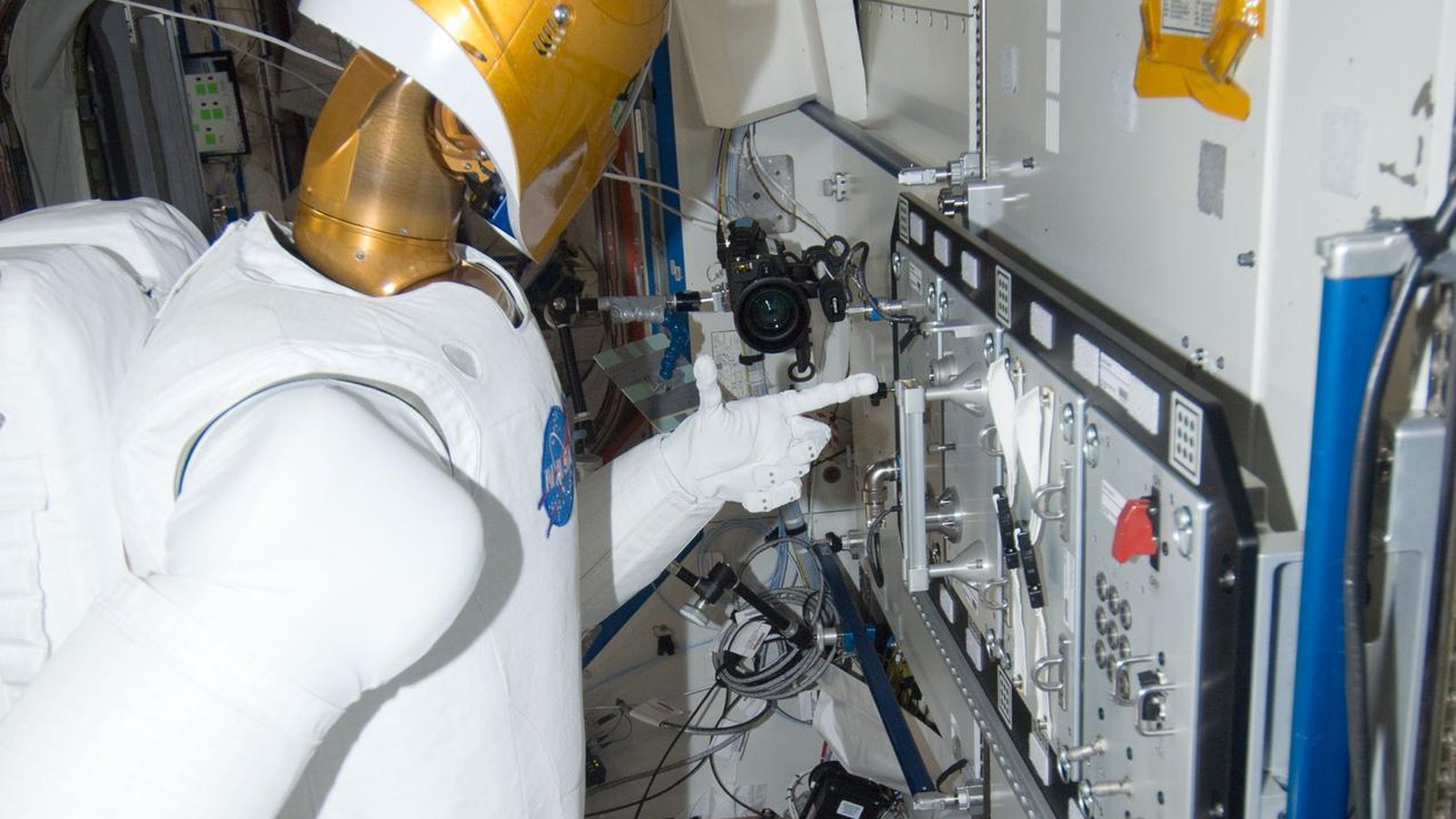
On November 19, 2026, the U.S. National Science Foundation published program solicitation NSF 27-501 for the Foundational Research in Robotics program, jointly managed by the Directorate for Computer and Information Science and Engineering and the Directorate for Engineering. The solicitation formally replaces standing program description PD 20-144Y, providing university investigators and sponsored-projects offices with updated responsiveness criteria for embodied computational intelligence, hardware autonomy, and federal grant oversight.
What happened
The U.S. National Science Foundation (NSF) officially issued program solicitation NSF 27-501 on November 19, 2026, establishing a formal solicitation structure for its Foundational Research in Robotics (FRR) program. Jointly managed across two core units—the Directorate for Computer and Information Science and Engineering (CISE) and the Directorate for Engineering (ENG)—the release replaces the longstanding program description PD 20-144Y. The formal solicitation defines foundational technical expectations, institutional eligibility rules, and compliance requirements for university robotics researchers.
The FRR initiative funds early-stage, high-risk investigations designed to expand the scientific foundations of robotics. NSF defines a robot under the solicitation as computational intelligence embodied in an engineered construct capable of perceiving, learning, sensing, adapting, and acting within physical environments, including interacting with humans. The agency identifies robotics breakthroughs as essential contributors to national productivity, security, and long-term reindustrialization across manufacturing, logistics, defense, and healthcare.
According to grant intelligence indexing by Atom Grants, the FRR program anticipates allocating 0 million annually across 20 to 30 new awards. Grant projects typically span three to five years, providing academic teams the multi-year support necessary to pursue foundational theoretical and physical advances.
Key details
Solicitation NSF 27-501 details baseline criteria for proposal structure, budget preparation, and technical responsiveness. A central requirement is that proposed work must advance the science of robotics rather than apply existing tools to routine applications. Reviewers evaluate submissions against a primary question: to what extent will the project enable important new robot capabilities beyond the current state of the art?
The table below summarizes key parameters and administrative provisions established under solicitation NSF 27-501:
| Funding Parameter | Solicitation Specification | Administrative and Compliance Provisions |
|---|---|---|
| Solicitation Number | NSF 27-501 | Replaces Program Description PD 20-144Y; posted November 19, 2026. |
| Managing Directorates | CISE and ENG | Jointly administered under CFDA 47.070 (CISE) and CFDA 47.041 (ENG). |
| Anticipated Program Budget | 0,000,000 annually | Subject to the availability of federal congressional appropriations. |
| Estimated Number of Awards | 20 to 30 awards | Issued as standard grants or multi-year continuing grants. |
| Award Duration | 3 to 5 years | Project scope and requested budget must be fully justified. |
| Proposal Submission Deadline | Proposals accepted anytime | Rolling submission window; proposals due by 5:00 p.m. submitter local time. |
| Eligible Organizations | Institutions of Higher Education and Non-profits | Defined under PAPPG Chapter I.E; unaffiliated individuals ineligible. |
| Collaborative Submissions | Research.gov required | Separate multi-institution proposals must be submitted via Research.gov. |
| Cost Sharing Requirements | Prohibited | Inclusion of voluntary committed cost sharing is strictly prohibited. |
Any qualified researcher eligible under home institution policy may act as principal investigator, with no solicitation limits on the number of submissions per organization or investigator. The program considers robots across all physical dimensions, from nanoscale devices to large-scale manipulators. Modular, reconfigurable, and swarm systems are eligible, provided proposals demonstrate convincing physical context and incorporate experimental validation on physical or high-fidelity simulated testbeds.
Background and context
The transition to NSF 27-501 marks the latest stage in federal robotics research administration. In 2011, the federal government inaugurated the multi-agency National Robotics Initiative (NRI), coordinating investments across NSF, NASA, the National Institutes of Health, and the Department of Agriculture. The initiative progressed through NRI-2.0 and NRI-3.0 before sunsetting.
Following NRI, NSF established the Foundational Research in Robotics program under program description PD 20-144Y in 2020. That move established rolling submissions and consolidated oversight within CISE and ENG. Faculty frequently coordinate these submissions alongside early-career opportunities such as the NSF CAREER award, which shares related directorate review priorities.
The strategic focus of the program aligns with community roadmaps. In its national robotics analysis, the Computing Research Association documented how federal agencies pivoted from application-specific demonstrations toward foundational inquiries integrating physical mechanism design with computational intelligence. NSF 27-501 embeds those recommendations into formal program requirements.
Reaction
University research administrators and funding analysts have closely analyzed the formal solicitation. Grant intelligence specialists at Granted AI highlighted that NSF 27-501 establishes strict boundaries against routine applications. Their review observed that proposals focusing solely on software algorithms without physical embodiment, or projects deploying commercial off-the-shelf robots for domain data collection, will be treated as non-responsive during initial screening.
Cognizant NSF program officers—Jordan M. Berg, Alexandra Medina-Borja, Veronica A. Newhart, Siddiq M. Qidwai, and Ralph F. Wachter—have emphasized that FRR seeks high-risk research where commercial incentives are insufficient to drive private venture investment. Program officers encourage prospective PIs to discuss concepts prior to submission to confirm program responsiveness.
Academic leaders noted that the solicitation explicitly aligns with the Administration Fiscal Year 2028 Research and Development Budget Priorities Memorandum, connecting foundational robotics to domestic manufacturing, critical infrastructure resilience, and national competitiveness.
What it means for researchers, universities and research offices
For university researchers and sponsored-projects offices (SPOs), solicitation NSF 27-501 creates specific administrative and compliance requirements:
- Submission Portals: Single-institution proposals can use Research.gov or Grants.gov. However, multi-institution collaborative proposals submitted separately must be submitted exclusively through Research.gov under PAPPG Chapter II.E.3.
- Subaward Compliance: Prime institutions executing an institutional subaward must adhere strictly to 2 CFR § 200.332 pass-through entity oversight standards, ensuring subrecipients comply with federal terms.
- Grantmaking Oversight: In alignment with Executive Order 14332 (Improving Oversight of Federal Grantmaking), awards under this solicitation may include termination for convenience provisions that university counsel should review.
- Research Security Vetting: As autonomous physical systems touch critical technologies, proposals must satisfy federal research security mandates, including current-and-pending support disclosures and foreign talent program restrictions.
- Cost Sharing Prohibition: Voluntary committed cost sharing is strictly prohibited; institutional budgets must reflect actual direct and negotiated indirect costs without match commitments.
- Officer Inquiries: Investigators are strongly encouraged to email a project summary to [email protected] before submission to verify technical alignment with the FRR scope.
What happens next
With solicitation NSF 27-501 officially active, proposals are accepted on a continuous rolling basis with no annual submission deadlines. Submissions enter the standard merit review pipeline, evaluated under National Science Board criteria by panel, ad hoc, or internal reviewers.
Sponsored-projects offices should anticipate approximately six months from submission to final award or decline notification. Successful grantees must submit annual project reports and project outcomes reports demonstrating publications, curated datasets, patent disclosures, and validated techniques over their three- to five-year award timelines.
Sources
- National Science Foundation: NSF 27-501: Foundational Research in Robotics (FRR), checked 2026-11-21
- Atom Grants: Foundational Research in Robotics by NSF, checked 2026-11-21
- Granted AI: Foundational Research in Robotics (FRR) (2026), checked 2026-11-21
- Computing Research Association: The CCC Releases Mid-cycle Update to the US National Robotics Roadmap, checked 2026-11-21





