
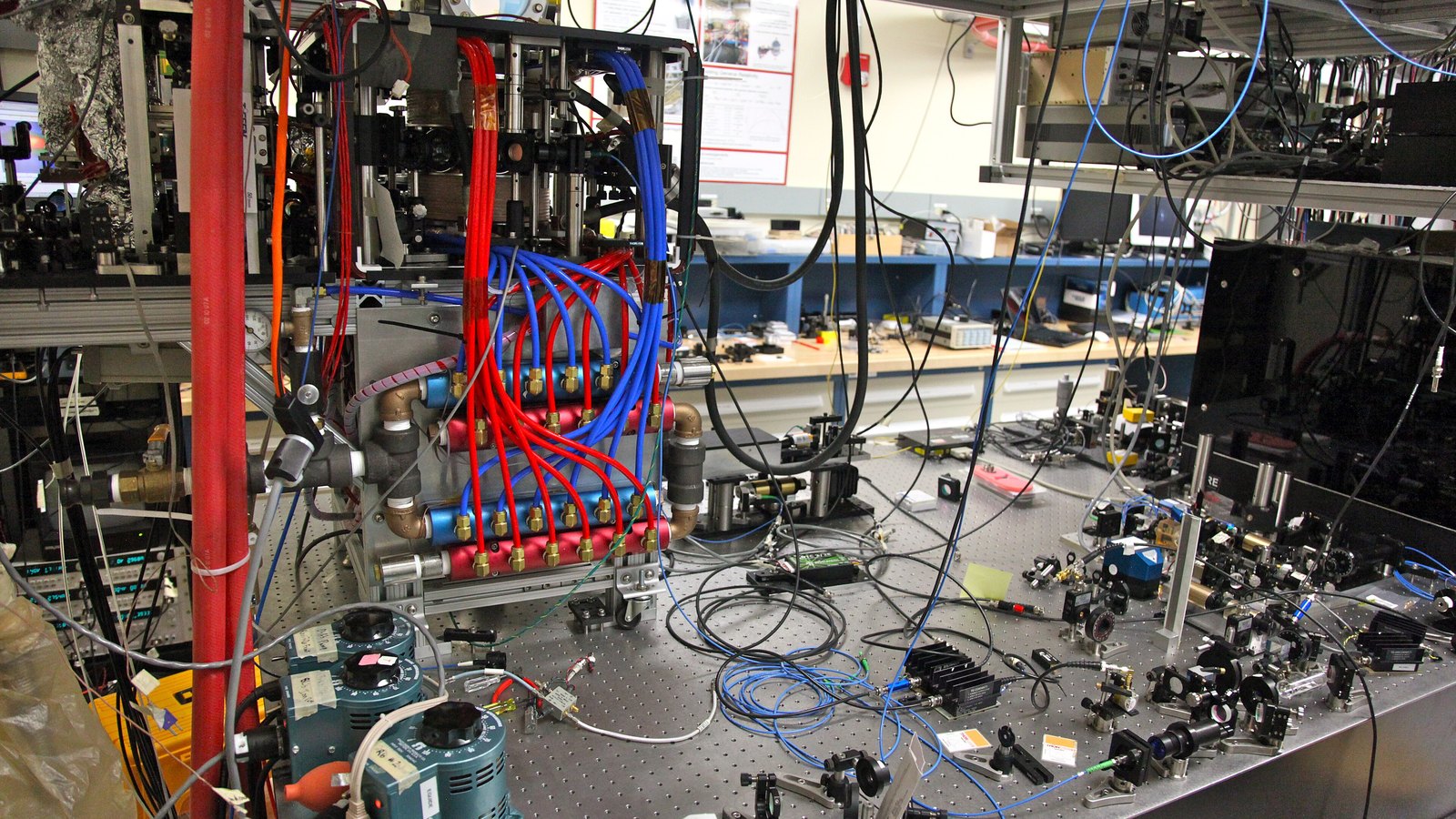
The U.S. National Science Foundation posted solicitation NSF 27-502 for its Physics Frontiers Centers (PFC) program on 20 November 2026, replacing NSF 22-592. Preliminary proposals are required by 6 June 2028 and full proposals by 15 December 2028. Each institution may submit no more than two of each, so physics departments and research offices will need an internal selection step well before either date.
What happened
NSF’s Directorate for Mathematical and Physical Sciences published NSF 27-502 on 20 November 2026. The solicitation’s document history lists it as replacing NSF 22-592, the 2022 version of the program. Joel Widder’s weekly federal science and technology update for 15 to 21 November 2026 describes it as the first refresh since NSF 22-592 and notes the new review criterion described below.
The PFC program funds centers that pursue advances in physics that individual researchers or small groups cannot reach alone. The solicitation says the centers’ goals align with the administration’s fiscal year 2028 research and development budget priorities memo, Ushering in a New Golden Age of American Innovation.
Key details
| Item | What NSF 27-502 says |
|---|---|
| Posted | 20 November 2026; replaces NSF 22-592 |
| Letter of intent | Not required |
| Preliminary proposal | Required; due 6 June 2028, 5 p.m. submitting organization’s local time; submitted through Research.gov |
| Full proposal | Due 15 December 2028, 5 p.m. submitting organization’s local time |
| Award type | Cooperative agreement, 72 months requested |
| Awards and size | 5 to 8 awards of about $2 million to $5 million per year; $12 million to $20 million per year across all centers, subject to available funds |
| Anticipated award date | On or around 1 August 2029 |
| Limit per institution | No more than two preliminary proposals and no more than two full proposals |
| Limit per individual | PI or co-PI on one preliminary proposal and one full proposal |
| Cost sharing | Voluntary committed cost sharing is prohibited |
Eligible applicants are two- and four-year accredited U.S. institutions of higher education with a U.S. campus, acting on behalf of their faculty. Where several institutions take part, one must accept overall management responsibility for the center. Separately submitted linked collaborative proposals are not permitted, so partner institutions take part through subawards. Institutions in EPSCoR states are particularly encouraged to apply.
What changed from NSF 22-592
The solicitation lists four revisions:
- The project description limit for the preliminary proposal rises to 17 pages.
- Proposers must explain the necessity and potential impact of the proposed center in light of any existing center-scale support for the same activities, and this is now a solicitation-specific review criterion.
- A separate section on prior NSF support is no longer required; prior support is discussed within the major activities and broader impacts sections.
- A current center seeking further funding must add a one-page statement explaining why continued support is necessary to advance the frontiers of physics.
Proposals from existing centers are evaluated in competition with new proposals. NSF may provide limited phase-out support for existing centers whose proposals are unsuccessful, and will make a new cooperative agreement for those that succeed.
Background and context
The previous cycle ran on a much shorter clock. For NSF 22-592, the sponsor’s preliminary proposal deadline was 1 August 2022 and full proposals, by invitation only, were due 27 January 2023, according to the Stanford Research Development Office page and the University of Colorado Boulder research innovation page for the program. The new solicitation sets both deadlines in 2028, roughly 18 months after posting.
The review section adds a point that research offices should read closely. In alignment with Executive Order 14332, Improving Oversight of Federal Grantmaking, the solicitation says that, all else being equal after merit review, NSF may give preference to institutions with lower indirect cost rates.
The program sits within a wider set of NSF Mathematical and Physical Sciences opportunities. Casrai has covered the Major Research Instrumentation solicitation NSF 27-500, which dropped institutional submission limits. PFC moves the other way on limits: it keeps a cap of two per institution.
How institutions handled the last cycle
NSF does not prescribe how an institution chooses its two proposals. The Stanford page for the previous cycle states that a university-wide selection process was required before submission to NSF, with internal proposals due on 8 June 2022, notice of internal status the following week and the sponsor preliminary deadline on 1 August 2022. The Boulder page for the same cycle set an internal deadline of 13 June 2022 and asked for a three-page project description, a biosketch and a one-page budget overview. Both pages describe local requirements for the 2022 solicitation, not for NSF 27-502, but they show the pattern: an internal call seven to eight weeks ahead of the sponsor date.
What it means for researchers, universities and research offices
- Treat it as a limited submission. With a cap of two preliminary proposals per institution and one per PI or co-PI, any institution with more than two interested groups needs an internal selection process. Because the first deadline is 6 June 2028, an office can set its own internal timeline early; NSF’s solicitation sets none.
- No letter of intent to plan around. The first required NSF submission is the preliminary proposal, so the internal deadline, not an NSF notice of intent, is the first gate.
- Current centers must make a case for continuation. Departments that host a PFC have to prepare the one-page statement and compete against new proposals; NSF says a successful existing center receives a new cooperative agreement.
- Check the cost position early. Budget offices should note both the ban on voluntary committed cost sharing and the stated possible preference for lower indirect cost rates.
- Plan the consortium structure. Because a single institution must carry overall management and partners enter by subaward, offices should settle who leads and how subawards are issued before drafting. See the cooperative agreement entry for how this award type differs from a grant, and the NSF PAPPG entry for the general proposal rules the solicitation builds on.
For the broader program picture, see the Casrai guides to NSF MPS grants and the NSF Science and Technology Centers program, another NSF center-scale mechanism with staged proposals.
What happens next
The next dated steps in the solicitation are the preliminary proposal deadline on 6 June 2028, the full proposal deadline on 15 December 2028 and an anticipated award date on or around 1 August 2029, subject to the availability of funds. Preliminary proposals go through Research.gov. The solicitation names [email protected] as the program contact for questions.
Sources
- NSF 27-502: Physics Frontiers Centers (PFC) program solicitation, U.S. National Science Foundation, posted 20 November 2026.
- Physics Frontiers Centers (PFC) program page, U.S. National Science Foundation.
- Periodic Update on Federal Science and Technology Developments, week of 15 to 21 November 2026, Joel Widder, 21 November 2026.
- NSF Physics Frontiers Centers, Stanford Research Development Office (previous cycle, NSF 22-592).
- NSF Physics Frontier Centers (PFC), University of Colorado Boulder Research and Innovation Office (previous cycle, NSF 22-592).


