
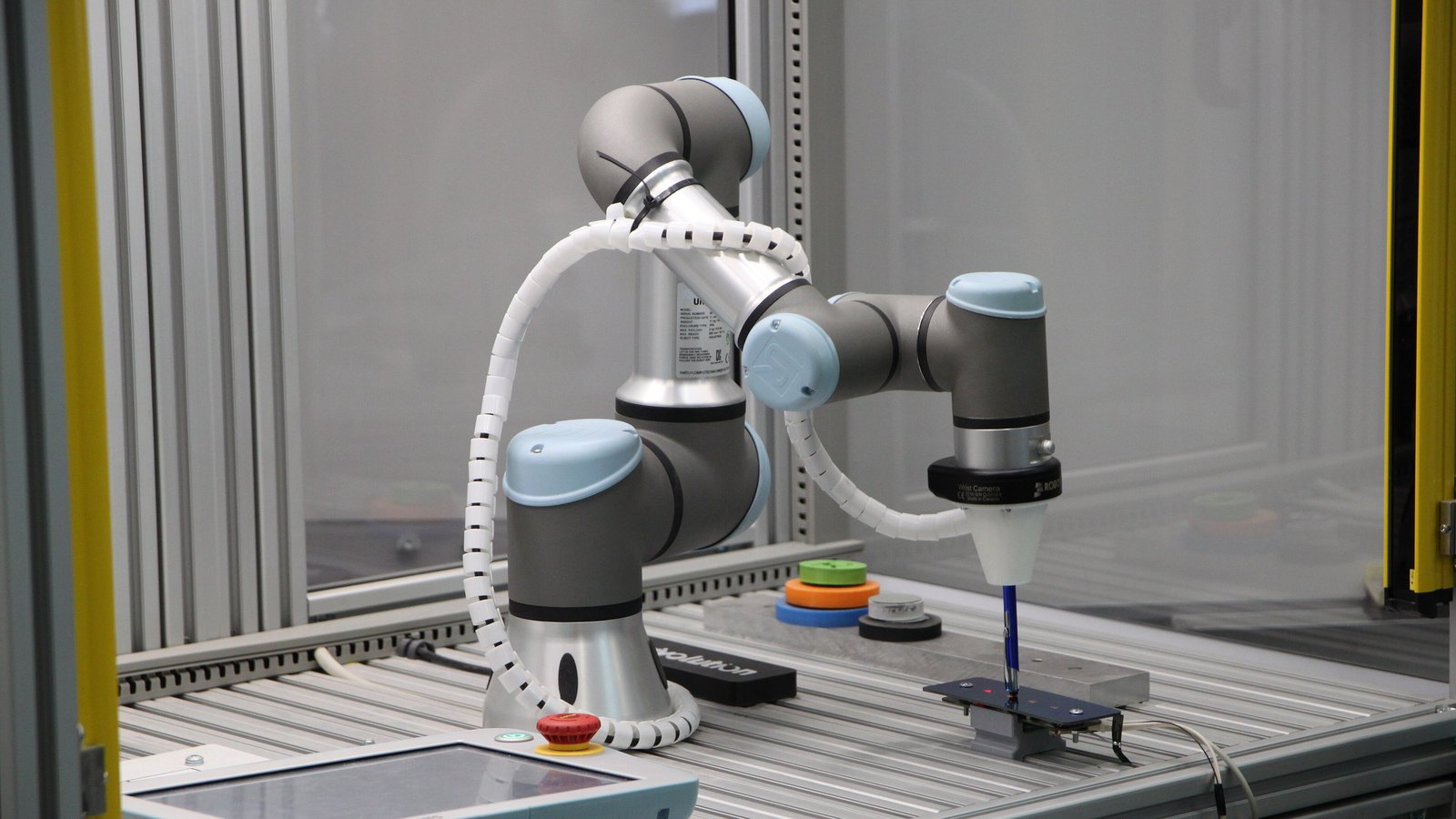
On November 20, 2026, the National Institute for Occupational Safety and Health filed a federal Request for Information to establish national research priorities and injury prevention benchmarks for humanoid robots operating in commercial and industrial workplaces. The consultation, managed by the NIOSH Center for Occupational Robotics Research, solicits empirical data from academic robotics laboratories, ergonomics researchers, and institutional safety offices to shape consensus standards and federal grant agendas.
Federal Register filing targets humanoid automation hazards
Federal safety authorities initiated a structured scientific inquiry into bipedal and anthropomorphic industrial machines with the formal filing of Document 2026-23799 on public inspection on November 20, 2026. Published officially by the Centers for Disease Control and Prevention and scheduled for entry in the Federal Register on November 23, 2026, the Federal Register notice launches an extensive inquiry led by the National Institute for Occupational Safety and Health (NIOSH). Under Director John J. Howard, the initiative coordinates federal health bodies to capture operational evidence before humanoid machines reach broad deployment across manufacturing, warehousing, and healthcare facilities.
The inquiry is directed by the NIOSH Center for Occupational Robotics Research (CORR), established in 2017 to assess automation impacts on worker safety and health. Rather than proposing binding regulations, this Request for Information (RFI) gathers technical data on human-robot interaction dynamics, biomechanical strain, and operational failure modes. These findings will guide future safety notices, shape federal research grants, and inform standard-setting collaborations with the Occupational Safety and Health Administration (OSHA).
Priority consultation questions and administrative docket specifications
NIOSH outlined eight research inquiries addressing the mechanical and cognitive complexities of human-robot coexistence. Unlike stationary arms behind interlocked cages or mobile units on fixed floor paths, humanoid robots combine bipedal mobility, multi-axis manipulation, autonomous obstacle avoidance, and adaptive artificial intelligence. The agency requests technical evidence across eight areas:
- Workplace Task Allocation: Practical industrial tasks for humanoid execution and comparative hazard profiles against traditional automation.
- Cognitive and Behavioral Effects: Worker situational awareness, cognitive workload, stress, and behavioral adaptations in shared workspaces.
- Hazard and Incident Surveillance: High-priority failure modes, physical pinch points, impact vectors, and near-miss documentation.
- Performance Testing and Validation: Methodologies to evaluate humanoid balance, sensor reliability, and collision mitigation under realistic conditions.
- Organizational Safety Culture: Operational factors, training regimes, and enterprise hurdles in sustaining safety practices.
- Sensor Systems and Wearables: Applications of vision arrays, proximity beacons, and wearable worker monitors for collision avoidance.
- Design and Control Priorities: Critical engineering controls, mechanical emergency stops, compliant joints, and algorithmic failsafes.
- Standards and Partnerships: Strategic research priorities, testbed consortia, and voluntary consensus standards.
Written submissions must cite Docket Number CDC-2026-1882 and NIOSH docket reference NIOSH-366, submitted through the Federal eRulemaking Portal at regulations.gov or mailed to the NIOSH Docket Office at Robert A. Taft Laboratories in Cincinnati, Ohio. Technical questions are directed to NIOSH contact officer Emily Haas at the agency’s Pittsburgh research campus.
| Administrative Metric | Agency Specification | Technical Scope |
|---|---|---|
| Federal Register Document | Document 2026-23799 | Unpublished notice filed Nov 20, 2026; publication Nov 23, 2026 |
| Federal Dockets | CDC-2026-1882 / NIOSH-366 | Joint tracking dockets on regulations.gov |
| Public Comment Period | 90 Calendar Days | Closes 90 days after official publication (February 21, 2027) |
| Lead Research Center | NIOSH CORR | Center for Occupational Robotics Research portfolio |
| Supporting Technical Center | NIOSH CDRST | Center for Direct Reading and Sensor Technologies |
| Regulatory Status | Non-Regulatory RFI | Evidence collection for future guidance and research priorities |
Evolution of workplace robotics and regulatory surveillance
Workplace robotics has progressed through distinct safety paradigms. First-generation industrial robots, governed by standards such as ANSI/RIA R15.06, relied on physical fences, light curtains, and interlocks to segregate workers from active machinery. The subsequent introduction of collaborative robots (cobots), guided by ISO/TS 15066, permitted shared workspaces through power-and-force-limiting joints and monitored stops, though systems remained largely anchored to fixed workbenches.
Bipedal humanoid systems alter this dynamic. Because these machines maintain dynamic equilibrium, conventional safety protocols such as sudden power cutoffs (“Safe Torque Off”) can cause unguided structural collapses, introducing acute impact hazards. Industry reporting from Safety+Health Magazine emphasizes that mobile machinery in shared pathways eliminates clear physical boundaries. To evaluate these hazards, NIOSH partners CORR with the Center for Direct Reading and Sensor Technologies (CDRST), assessing how lidar, ultrasonic sensors, and computer vision perform amid industrial dust, vibration, and variable lighting. Continuous verification, supported by metrological sensor calibration, is vital to ensure safety sensors operate reliably across operational environments.
Standards modernization and industrial safety frameworks
Rapid humanoid deployments have highlighted gaps in existing machinery rules. While OSHA lacks a standalone vertical standard for humanoids, employers remain legally obligated under the Occupational Safety and Health Act’s General Duty Clause to eliminate recognized hazards. Regulatory analysis from EHS Today notes that OSHA enforces compliance through horizontal machinery guarding rules (29 CFR 1910.212) while referencing voluntary consensus standards from ANSI and the International Organization for Standardization (ISO).
Standardization committees are expanding frameworks like ISO 10218 and ANSI/RIA R15.08 to address autonomous mobile manipulation. Federal metrology specialists at the Measurement Science for Robotics and Autonomous Systems Program at the National Institute of Standards and Technology (NIST) are developing test protocols for human-robot separation tracking. Concurrently, engineering teams integrating machine learning into control systems are adopting verification architectures modeled on an AI safety case to ensure autonomous systems operate dependably during complex manipulation tasks.
Implications for academic robotics laboratories and campus EHS offices
The RFI has direct operational relevance for university engineering programs, robotics testbeds, and institutional Environmental Health and Safety (EHS) offices. Academic facilities regularly pilot experimental systems without industrial safeguarding, requiring safety directors to align protocols with federal benchmarks.
Research offices and principal investigators should pursue four institutional priorities:
- Establishing Lab Hazard Registers: Laboratories should implement an AI risk assessment framework and risk register to document joint limits, algorithmic faults, and physical pinch points before personnel interact with unproven prototypes.
- Contributing Empirical Research: Universities conducting ergonomic, biomechanical, or sensor testing can submit observational datasets to Docket CDC-2026-1882 to help define federal research priorities.
- Targeting Federal Grants: Aligning upcoming research proposals with NIOSH CORR’s priority areas strengthens competitiveness for occupational safety and health funding across NIOSH and NSF programs.
- Verifying Safety Compliance: For federally funded facilities, investigators must maintain complete evidence of standards compliance confirming that experimental equipment meets relevant electrical, mechanical, and functional safety criteria.
Consultation roadmap and forthcoming safety guidance
The public comment period closes on February 21, 2027, marking 90 calendar days from the official publication date of November 23, 2026. NIOSH scientific teams will review submissions to compile an evidentiary summary and refine the institute’s robotics research agenda.
The findings will also support interagency initiatives, including the OSHA-NIOSH-A3 Robotics Alliance, in publishing hazard alerts and training guidance. Furthermore, NIOSH representatives on ANSI and ISO committees will apply the public feedback to formulate updated consensus standards, establishing clear safety baselines as advanced automation transitions into wider commercial use.
Sources
- Federal Register: Request for Information: Center for Occupational Robotics Research, National Institute for Occupational Safety and Health, checked 2026-11-20
- Occupational Safety and Health Administration: Robotics Overview, checked 2026-11-20
- EHS Today: Robot Safety: It’s Not Science Fiction, It’s the Law, checked 2026-11-20
- Safety+Health Magazine: Robots in the workplace, checked 2026-11-20
- National Institute of Standards and Technology: Measurement Science for Robotics and Autonomous Systems Program, checked 2026-11-20


