
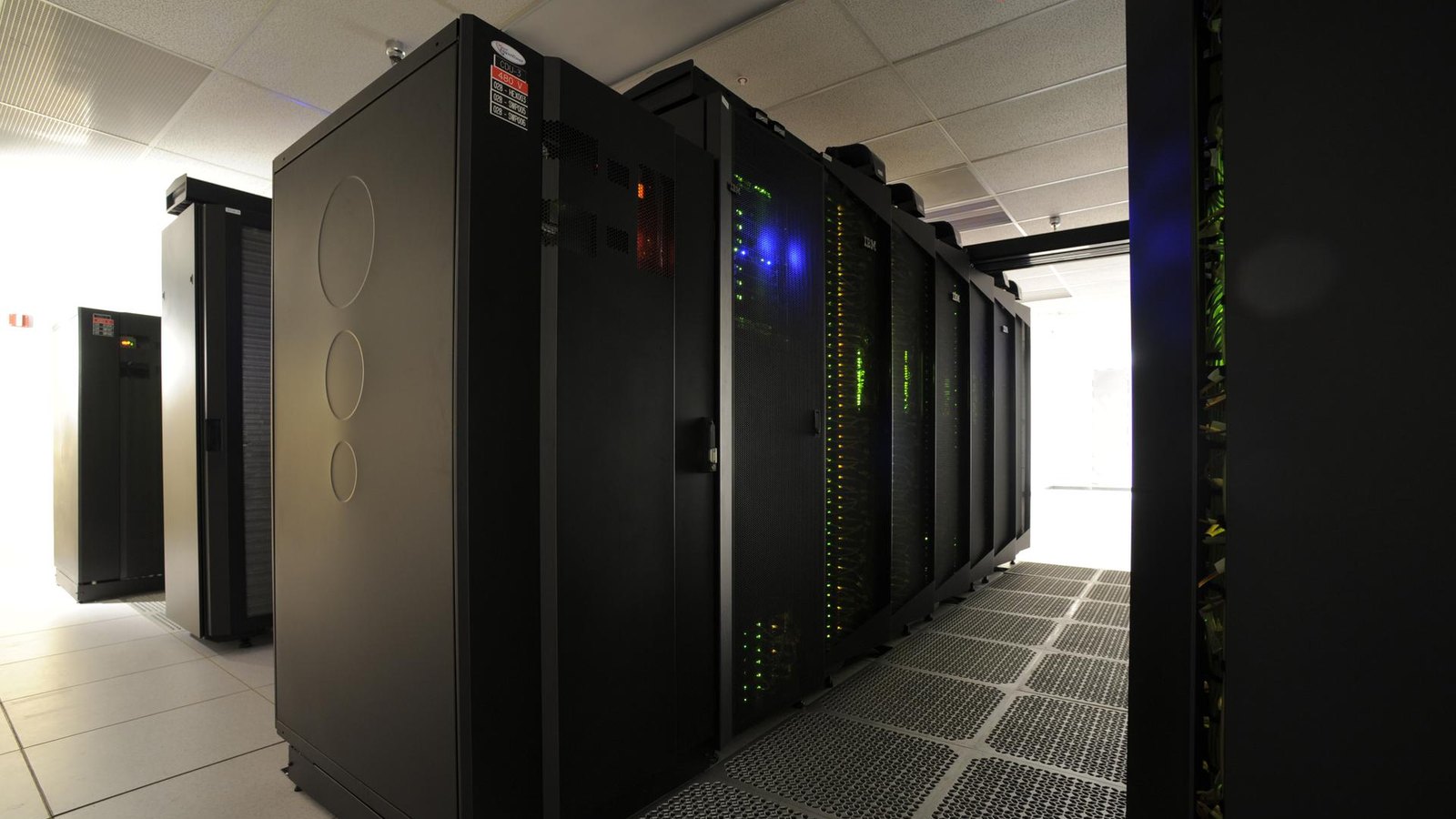
On November 25, 2026, India Ministry of Electronics and Information Technology (MeitY) Secretary S. Krishnan confirmed in New Delhi that tightened United States export curbs on advanced artificial intelligence semiconductors under the Bureau of Industry and Security Framework for Artificial Intelligence Diffusion will not disrupt Indian academic research supercomputers or commercial data centers, as India remains designated as a trusted international partner.
What happened
Speaking to journalists in New Delhi on November 25, 2026, Ministry of Electronics and Information Technology (MeitY) Secretary S. Krishnan addressed growing international scrutiny over technology supply chains and high-performance computing export curbs. Krishnan stated that recent regulatory revisions introduced by the United States government targeting advanced artificial intelligence graphics processing units (GPUs) and remote data center compute access will have no adverse effect on India’s expanding computational landscape. According to reporting by ANI and published across national media including The Times of India and NewsBytes, Krishnan emphasized that the restrictions placed on the international shipment of advanced accelerators do not apply to verified Indian data centers.
‘I do not think there is any significant impact on India… The restrictions on the supply of chips to data centres do not apply to Indian data centres, and I think India is seen as a trusted partner,’ Krishnan explained. The remarks directly assuaged concerns within Indian universities, scientific laboratories, and commercial cloud providers that the latest American trade measures might restrict domestic access to high-end accelerators such as Nvidia, AMD, and Intel AI platforms.
Beyond addressing import curbs, Krishnan highlighted rapid progress under the India Semiconductor Mission (ISM) 2.0, reporting that more than 200 semiconductor design and manufacturing companies have formally registered expressions of interest and are actively preparing detailed project applications for capital support. He also commended sovereign foundational model initiatives, pointing to Chariot One, a breakthrough text-to-speech AI model developed by two Indian graduates of Stanford University, and continuing national support for Sarvam AI, which is building sovereign foundation models ranging from 105 billion to 1 trillion parameters under the IndiaAI Mission, as reported by ThePrint. Maintaining robust research security safeguards while enabling open scientific collaboration remains central to these initiatives.
Key details
The regulatory backdrop centers on the U.S. Department of Commerce Bureau of Industry and Security (BIS) interim final rule establishing the Framework for Artificial Intelligence Diffusion (Docket No. 2025-00636, 90 FR 4544). The measure revises the Export Administration Regulations (EAR) to impose targeted worldwide restrictions on advanced computing integrated circuits (ICs) and establishes export licensing thresholds for frontier closed-weight AI model weights. Crucially, the BIS framework was crafted to prevent the unauthorized diversion of advanced computing power to restricted destinations through third-country intermediary data centers, particularly across parts of the Middle East and Southeast Asia.
Because India maintains rigorous bilateral technology security agreements and verified end-user frameworks, Indian scientific compute hubs and commercial data facilities operate under validated end-user mechanisms rather than restrictive country caps. This trusted status allows major national facilities—such as those orchestrated by the IndiaAI Mission—to procure high-end accelerators directly. Technical thresholds under U.S. regulations evaluate both Total Processing Performance (TPP) and interconnect bandwidth, topics analyzed in detail in Casrai’s guide on compute governance and export control FLOP thresholds as well as the dictionary entry on export control and AI models.
The operational landscape for advanced computing resources compares as follows:
| Regulatory Dimension | U.S. BIS AI Diffusion Framework (90 FR 4544) | India National Status (MeitY 2026 Confirmation) |
|---|---|---|
| Hardware Scope | Controls on advanced computing ICs exceeding performance thresholds (TPP ≥ 4800 or interconnect density). | Direct access permitted for verified Indian academic and commercial data center installations. |
| Data Center Safeguards | Enhanced due diligence, reporting requirements, and diversion prevention for third-country cloud hubs. | India recognized as trusted partner; facilities exempt from third-party diversion licensing embargoes. |
| Sovereign Infrastructure | Country-specific allocation tiers and validated end-user (VEU) administrative oversight. | IndiaAI Mission scaling domestic capacity to over 10,000 GPUs via public-private partnerships. |
| Foundation Model Research | Export license requirements for transferring dual-use closed-weight foundation models exceeding compute caps. | Active state funding for indigenous multimodal architectures (e.g., Sarvam 105B to 1T parameters). |
Background and context
Over the past four years, the United States has systematically expanded trade controls on semiconductors and semiconductor manufacturing equipment. Beginning with the landmark Commerce Department rules in October 2022 and subsequent interim updates in October 2023, Washington sought to restrict advanced semiconductor manufacturing capabilities and supercomputing access in strategic competitor nations. These controls were enacted under statutory authorities outlined in the Export Control Reform Act, which balances legitimate international commerce against dual-use national security risks.
In response to international demand for computing capacity, the January 2025 BIS rule codified formal diffusion pathways, distinguishing between destinations that demonstrate robust research integrity and end-use tracking versus jurisdictions vulnerable to illicit tech diversion. Concurrently, the Indian Union Cabinet approved the comprehensive IndiaAI Mission in March 2024 with a budget outlay of 10,371.92 crore rupees (.25 billion). A central pillar of this mission is the deployment of a shared public-private compute infrastructure comprising more than 10,000 high-performance GPUs available at subsidized rates to university researchers, start-ups, and national laboratories, augmenting existing installations documented in Casrai’s guide to high-performance computing in research.
Reaction and stakeholder perspective
MeitY’s clarification was warmly received across Indian academia, industry associations, and the startup ecosystem. Scientific leaders had expressed concern that broader global semiconductor restrictions might introduce procurement delays, complex licensing hurdles, or secondary sanctions on Indian computational clusters.
Academic researchers across the Indian Institutes of Technology (IITs) and the Indian Institute of Science (IISc) noted that confirmed continuity in GPU hardware supply is critical for ongoing research projects in climate modeling, molecular dynamics, and linguistic artificial intelligence. University research directors emphasized that clear regulatory status prevents disruption to multi-year doctoral projects and publicly funded research grants. Meanwhile, startup founders building foundational generative models underscored that domestic compute availability ensures sensitive training data remains securely held within sovereign borders, satisfying national data governance standards while maintaining commercial viability.
What it means for researchers, universities and research offices
The confirmation of India’s trusted partner status provides actionable clarity for academic research administrations, high-performance computing centers, and export compliance officers:
- Procurement and Hardware Requisitions: University procurement departments can proceed with scheduled acquisitions of advanced GPU clusters, accelerator modules, and high-speed networking switches without requiring specialized export licenses or experiencing administrative supply freezes from American semiconductor vendors.
- Access to Subsidized Compute: Academic principal investigators and research students can continue submitting project proposals through the IndiaAI compute portal to secure subsidized GPU time for intensive model training and scientific simulations.
- Research Security and Physical Governance: Institutional research security officers must maintain strict compliance documentation, facility visitor logs, and multi-factor access controls at high-performance computing facilities to substantiate India’s ongoing standing as a secure end-user destination.
- Collaborative Research Agreements: Sponsored projects offices negotiating international AI research partnerships can structure cross-border collaborations with American institutions without requiring complex export control carve-outs for standard computational workloads.
What happens next
Following Secretary Krishnan’s statements, MeitY and the India Semiconductor Mission will continue evaluating detailed project proposals from the 200 registered commercial applicants throughout early 2027, with capital subsidy approvals expected for advanced packaging and assembly units. Concurrently, the deployment of the IndiaAI Mission’s 10,000-GPU computational grid will proceed through ongoing public-private partnership tenders, expanding cluster availability for university consortia.
On the international front, bilateral technology dialogues under the U.S.-India Initiative on Critical and Emerging Technology (iCET) will periodically review supply chain security, export compliance protocols, and technical thresholds to ensure ongoing alignment between U.S. export standards and Indian institutional usage.
Sources
- Office of the Federal Register: Framework for Artificial Intelligence Diffusion, checked 2026-11-26
- The Times of India: ‘No significant impact on India’: MeitY secretary on US chip export curbs, checked 2026-11-26
- NewsBytes: MeitY Secretary S Krishnan: US chip export rules spare India, checked 2026-11-26
- ThePrint: Sarvam: No misuse of IndiaAI Mission support—MeitY Secretary, checked 2026-11-26
- IndiaAI: IndiaAI Compute Capacity Hub, checked 2026-11-26





