
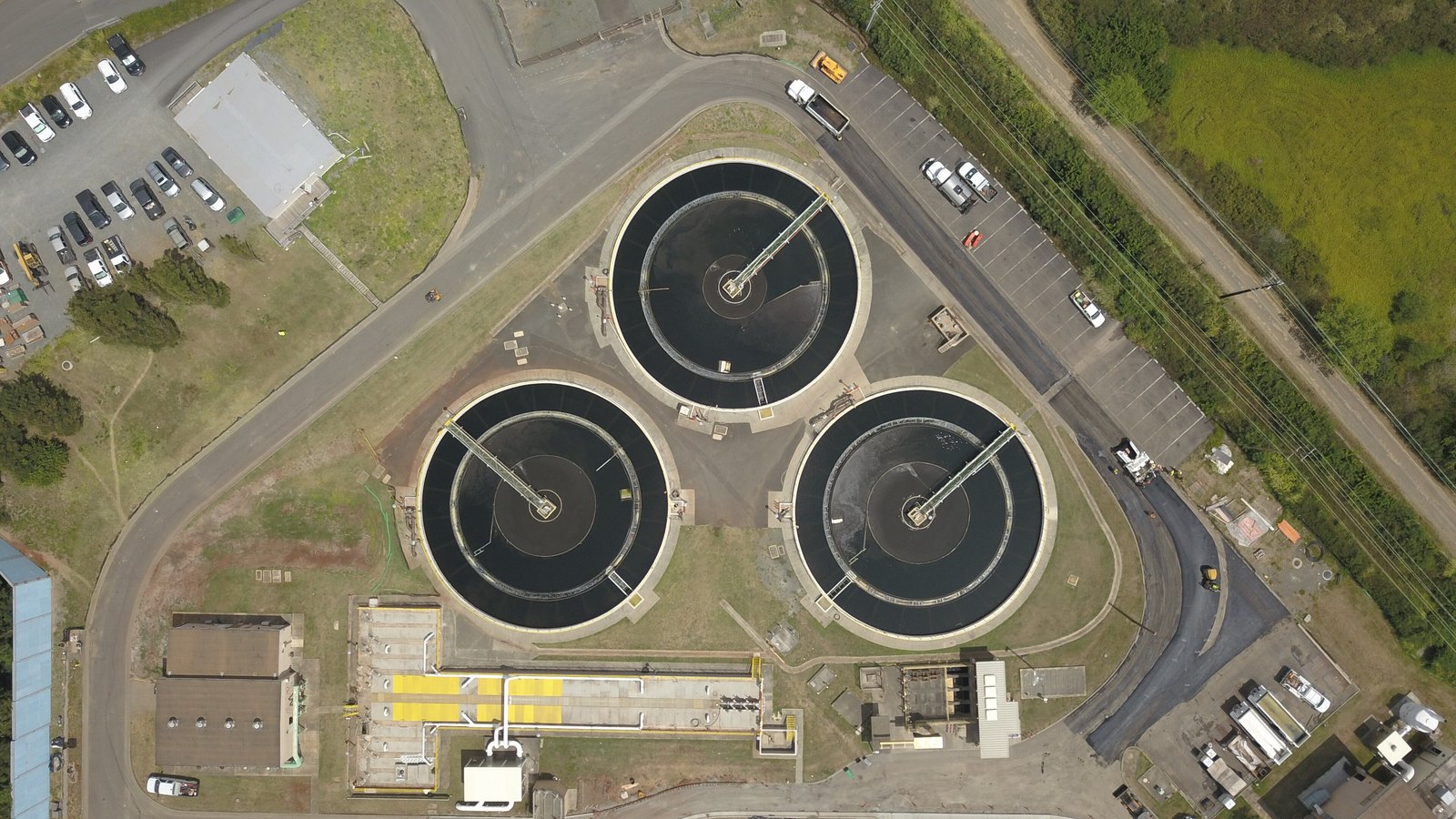
On November 25, 2026, the University at Buffalo announced that Earth Sciences Assistant Professor Yifan Cheng received a five-year, $875,000 Early Career Research Program grant from the U.S. Department of Energy Office of Science. The federal project applies physics-informed artificial intelligence to simulate subterranean water flows and predict combined sewer overflows across municipal utility networks in New York and Washington state.
Award details and research objectives
The five-year award provides $875,000 in dedicated early-career funding through the Department of Energy Office of Science, selecting Cheng as one of 67 academic and national laboratory researchers nationwide in the 2026 competitive cohort. Operating within the university’s Department of Earth Sciences, Cheng will direct the investigation as principal investigator in partnership with two major municipal wastewater authorities: the Buffalo Sewer Authority in western New York and the King County Wastewater Treatment Division serving greater Seattle. According to independent trade coverage published by Environmental Protection, the project focuses on overcoming computational bottlenecks that currently hinder rapid hydrological emergency response during heavy precipitation events.
Combined sewer systems carry municipal sanitary sewage and surface stormwater runoff inside a single network of underground conduits. During extreme cloudbursts or rapid winter snowmelt, stormwater inflows rapidly outstrip pipe capacity and wastewater treatment plant thresholds. When conduit capacity is breached, automated relief gates divert millions of gallons of untreated effluent directly into nearby rivers, canals, and lakes to prevent urban street and basement flooding. Cheng’s research program aims to transform how utilities anticipate these critical discharge events by substituting slow numerical solvers with high-speed neural surrogates.
Computational architecture and municipal testbeds
The research methodology couples deep learning architectures with the EPA Storm Water Management Model (SWMM), the standard computational software engine maintained by the U.S. Environmental Protection Agency for dynamic hydrologic and hydraulic routing. SWMM calculates dynamic open-channel and pressurized conduit flow using 1D Saint-Venant hydraulic differential equations. While SWMM yields precise flow depth and velocity estimates, computing full-scale urban catchment models incorporating tens of thousands of pipe segments and junction nodes requires minutes or hours of computer processor time per storm simulation.
To overcome this computational latency, Cheng’s team is generating synthetic libraries containing tens of thousands of SWMM storm scenario simulations mapped to real network topographies in Buffalo and Seattle. Machine learning models trained on these hydrodynamic datasets learn spatial backwater surcharge patterns, pipe bottleneck propagation, and overflow weir thresholds. Once calibrated, the AI surrogate estimates sewer discharge timing and overflow volumes within fractions of a second, enabling real-time emergency decision support. Establishing these data pipelines involves formalized inter-agency data-sharing agreements and rigorous subrecipient monitoring protocols between academic researchers and municipal sewer district operators.
| Project Parameter | Buffalo Testbed (New York) | Seattle Testbed (Washington) | Federal Modeling Integration |
|---|---|---|---|
| Municipal Partner | Buffalo Sewer Authority | King County Wastewater Treatment Division | U.S. Department of Energy (DOE) |
| Receiving Water Bodies | Lake Erie, Niagara River, Lake Ontario | Puget Sound, Lake Washington, Duwamish River | Continental hydrologic basins |
| Baseline Hydraulic Engine | EPA SWMM 5.2.4 hydrodynamic routing | EPA SWMM 5.2.4 hydrodynamic routing | Energy Exascale Earth System Model (E3SM) |
| Key Environmental Threat | Drinking water intake contamination, algal blooms | Estuarine marine pollution, shellfish closure | Urban surface flooding forecast inaccuracies |
| Primary Data Streams | Supervisory control and sensor telemetry | Interceptor flow meter and rain gauge logs | Coupled atmospheric and land-surface fluxes |
Infrastructure vulnerability and environmental stakes
Combined sewer systems represent a legacy engineering challenge dating back to the late nineteenth and early twentieth centuries. According to EPA regulatory surveys, more than 700 communities across the United States operate combined sewer networks, predominantly concentrated across the industrial Northeast, the Midwest Great Lakes basin, and the Pacific Northwest. As climate variability elevates the frequency and intensity of short-duration precipitation extremes, these century-old networks regularly face volumetric surges far exceeding design capacity.
In Great Lakes cities such as Buffalo, the ecological stakes of untreated sewer discharges are acute. Raw sewage overflows introduce pathogens, organic solids, and elevated nitrogen and phosphorus loadings directly into Lake Erie and the Niagara River. These nutrient loads degrade municipal freshwater supply quality and exacerbate seasonal cyanobacterial harmful algal blooms, which can release microcystin toxins and foul cooling water intake structures at regional thermal power plants. In Seattle, intense Pacific Northwest winter storm fronts produce similar discharges into sensitive marine and estuarine ecosystems. While faculty awards such as the NSF CAREER award broadly support early-career scholars in foundational engineering, the DOE program explicitly targets foundational energy and environmental modeling challenges.
Integration with federal exascale earth system models
Beyond municipal emergency management, the grant’s overarching scientific objective is resolving a critical structural gap in federal climate and hydrologic modeling. The U.S. Department of Energy maintains the Energy Exascale Earth System Model (E3SM), a high-performance climate simulation framework engineered for exascale supercomputing systems. Although E3SM simulates complex atmospheric dynamics, land-surface energy balances, and river basin routing, its urban modules historically treated subterranean civil infrastructure as an unrepresented boundary layer, assuming overland precipitation runoff drains uniformly without accounting for pipe storage, backwater surcharges, or subterranean retention.
By incorporating trained neural surrogate models of citywide sewer networks, Cheng and collaborators will couple subterranean pipe hydraulics directly into E3SM’s land surface grid. Program guidelines established under the DOE Office of Science Early Career Research Program emphasize supporting innovative research methodologies in Earth and environmental system sciences. The research team will evaluate whether including subterranean sewer dynamics enhances the accuracy of macro-scale urban flood forecasting, backtesting model outputs against documented storm hydrographs from Buffalo, Seattle, and extreme benchmark events including Hurricane Harvey in Houston. The project adheres to federal open science policies, promoting open data sharing for validated simulation libraries and surrogate codebases.
What it means for researchers, universities and research offices
The launch of this multi-year initiative carries several operational and strategic implications for university research offices, academic departments, and environmental data managers:
- Utility data governance and cybersecurity: Negotiating data-access frameworks with municipal entities such as sewer authorities requires university sponsored programs offices to implement robust data security plans. Municipal utility telemetry often encompasses sensitive civil infrastructure locations that necessitate restricted data enclaves and secure access controls under institutional data governance policies.
- Interdisciplinary physics-AI funding competitiveness: Federal sponsors including the Department of Energy, the National Science Foundation, and the Environmental Protection Agency are increasingly directing computational awards toward hybrid physics-informed machine learning rather than unconstrained black-box models. Research development teams should encourage investigators to demonstrate domain-informed constraint satisfaction in computational grant proposals.
- Digital tracking and award attribution: Managing multi-institutional cooperative research requires adopting standardized metadata identifiers. Institutional repositories should register a persistent grant DOI to cross-link federally funded award notices with downstream simulation outputs, peer-reviewed journal articles, and open-source surrogate model repositories.
- Municipal-academic co-design: Research offices should cultivate structured liaison pathways with local public works departments, positioning university researchers to pilot computational models directly on regional municipal utility infrastructure.
What happens next
The five-year grant term will proceed across structured research phases. During the initial project year, Cheng’s research group will ingest historical precipitation sensor logs and hydraulic gauge records from the Buffalo Sewer Authority and King County Wastewater Treatment Division to calibrate high-resolution baseline SWMM networks. Subsequent project phases will focus on generating high-throughput synthetic storm libraries, training deep neural operators, and validating surrogate predictions against real-time sensor telemetry. In the final phases, the team will integrate the surrogate module into the DOE E3SM computational framework, releasing benchmark datasets and documentation to assist academic researchers and municipal planners nationwide.
Sources
- University at Buffalo: Buffalo and Seattle Sewer Data to Train AI That Predicts Sewage Overflows, checked 2026-11-26
- Environmental Protection: Buffalo and Seattle Sewer Data to Train AI That Predicts Sewage Overflows, checked 2026-11-26
- U.S. Department of Energy Office of Science: Early Career Research Program, checked 2026-11-26
- U.S. Environmental Protection Agency: Storm Water Management Model (SWMM), checked 2026-11-26






