
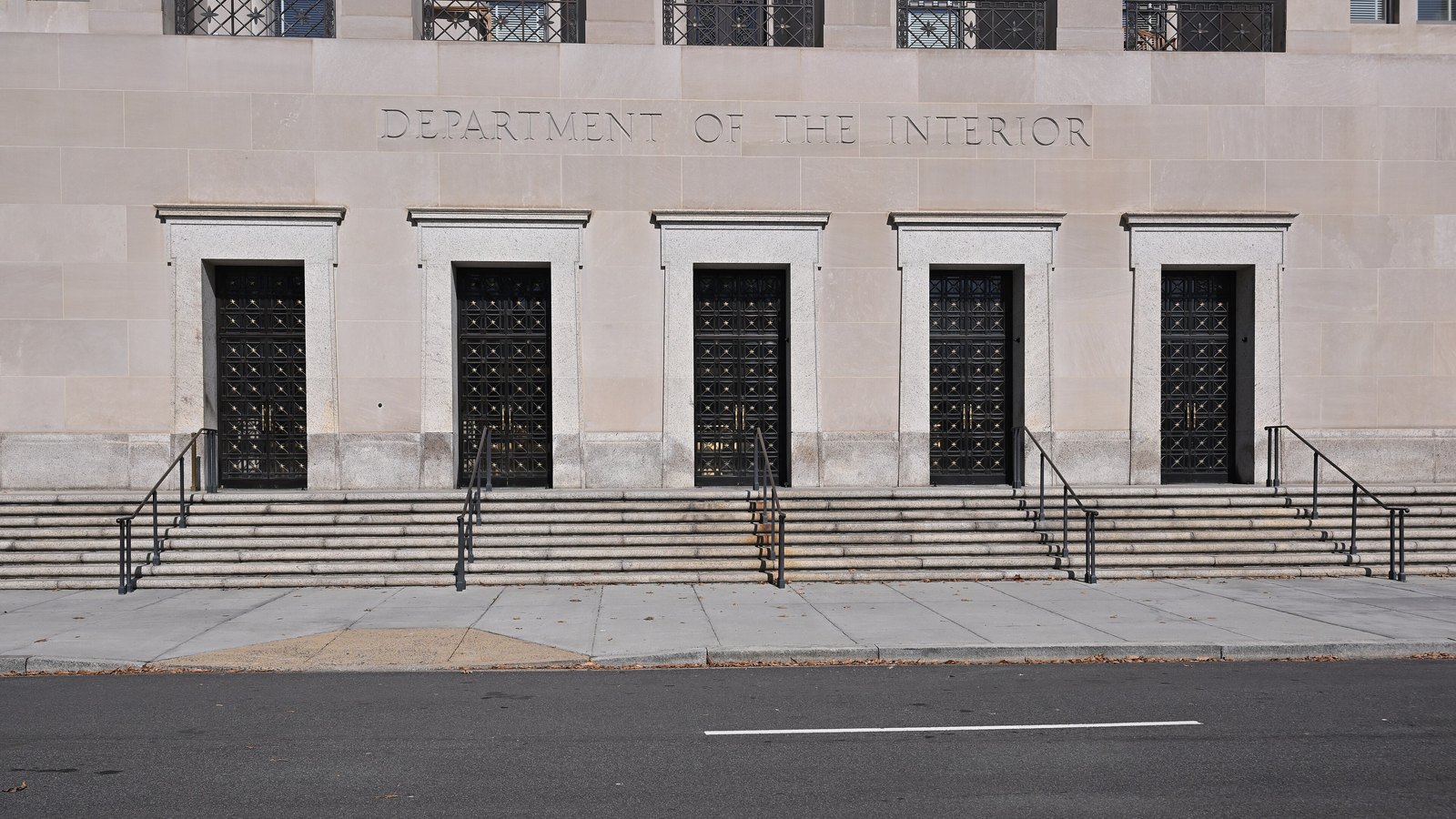
On November 23, 2026, the US Department of the Interior’s Bureau of Reclamation published a formal notice proposing to renew three major Paperwork Reduction Act information collections governing western agricultural water compliance under the Reclamation Reform Act of 1982, maintaining critical federal reporting channels that directly govern university agricultural experiment stations and provide empirical datasets for western resource economists.
Federal Register Notice and Proposed Collection Renewals
The Bureau of Reclamation issued the renewal proposal through Federal Register Notice 2026-23756, published in Volume 91, Number 224 of the Federal Register at pages 75554 to 75557. In the Federal Register notice 2026-23756, the agency announced plans to seek Office of Management and Budget approval to extend without change three core compliance collections: OMB Control No. 1006-0005, OMB Control No. 1006-0006, and OMB Control No. 1006-0023. These collections enforce statutory acreage limits, landownership caps, and water pricing rules across federal reclamation projects in 17 western states.
Signed by Heidi Morrow, Director of National Programs for Project Development and Program Execution, the notice opens a 60-day public comment period running through January 22, 2027. Under the Paperwork Reduction Act of 1995 and 5 CFR 1320.8(d)(1), agencies must periodically review existing information collections to ensure administrative utility and evaluate reporting burdens. Across all three collections, Reclamation estimates an aggregate annual burden of 11,102 hours across 5,789 respondents and 5,929 filings submitted by agricultural landholders, farm operators, water districts, trusts, and public entities.
Information Collection Details and Reporting Thresholds
The three renewed collections cover distinct regulatory functions across the federal reclamation water distribution network:
- OMB Control No. 1006-0005 (Individual Landholders and Farm Operators): Covers 20 compliance forms, including Form 7-2180, Form 7-2180EZ, Form 7-2181, Form 7-2184, Form 7-2190, Form 7-2190EZ, Form 7-2191, Form 7-2194, Form 7-21TRUST, Form 7-21PE (Public Entities), Form 7-21PE-IND, Form 7-21FARMOP, Form 7-21VERIFY, Form 7-21FC, Form 7-21XS, and Form 7-21XSINAQ. This collection encompasses 5,544 annual respondents, 5,654 responses, and 5,087 burden hours. Landholders holding 40 acres or less westwide are exempt, while qualified recipients report at 80 or 240 acres depending on district category. Farm operators managing over 960 acres in trusts or entities submit Form 7-21FARMOP.
- OMB Control No. 1006-0006 (Summary Forms for Acreage Limitation): Requires water districts to aggregate landholder filings using Form 7-21SUMM-C and Form 7-21SUMM-R. The agency estimates 120 annual respondents submitting 150 responses at 40 hours per response, totaling 6,000 burden hours.
- OMB Control No. 1006-0023 (Compliance by Certain Landholders): Administers discretionary screening forms for specialized entities: Form 7-2536 (Limited Recipients), Form 7-2537 (Trusts), Form 7-2565 (Public Entities), and Form 7-2578 (Religious or Charitable Organizations). It accounts for 125 respondents and 15 annual burden hours.
| OMB Control No. | Collection Title | Key Forms Included | Annual Respondents | Annual Responses | Burden Hours |
|---|---|---|---|---|---|
| 1006-0005 | Landholder and Farm Operator Certification | Form 7-2180, 7-2181, 7-21PE, 7-21TRUST, 7-21FARMOP | 5,544 | 5,654 | 5,087 |
| 1006-0006 | Acreage Limitation Summary Forms | Form 7-21SUMM-C, Form 7-21SUMM-R | 120 | 150 | 6,000 |
| 1006-0023 | Compliance Forms for Certain Landholders | Form 7-2536, Form 7-2537, Form 7-2565, Form 7-2578 | 125 | 125 | 15 |
Statutory Framework and Public Entity Exemptions
The reporting mandates originate under the Reclamation Reform Act of 1982 (RRA), codified at 43 U.S.C. 390aa et seq., which modernized early twentieth-century acreage limits on federal reclamation projects. Managed by the Bureau of Reclamation RRA program, governing rules are codified in 43 CFR Part 426 and 43 CFR Part 428. These rules set ownership entitlements at 960 acres for qualified recipients and 640 acres for limited recipients, assessing full-cost water rates on deliveries exceeding statutory limits.
Public entities receive targeted treatment under Public Law 91-310 and 43 CFR 426.10. Under 43 CFR 426.10(a), Reclamation does not apply acreage limitations or full-cost pricing to land farmed primarily for nonrevenue-producing functions. Public entities must still satisfy certification obligations to verify compliance with statutory reporting guidelines. Public bodies holding more than 40 acres submit Form 7-21PE, while those holding 40 acres or less submit Form 7-2565 upon request to confirm water delivery pricing.
Implications for University Agricultural Experiment Stations and Research Farms
The proposed collection renewals directly impact land-grant universities and state agricultural experiment stations across western states. University research farms in California, Washington, Arizona, Colorado, and Idaho often rely on federal reclamation project water. Under 43 CFR 426.10, agronomic trials, breeding nurseries, and student instructional fields qualify as exempt nonrevenue-producing functions, allowing institutions to receive project water at standard contract rates rather than full-cost pricing.
Maintaining exemption status requires detailed documentation. If a university leases surplus agricultural acreage to a commercial grower, that land loses its nonrevenue exemption and counts against the lessee’s RRA entitlement. University research administrators must monitor field trials and commercial leases through structured regulatory compliance frameworks to prevent compliance violations or retroactive full-cost assessments under 43 CFR 426.20.
Hydrological and Western Agricultural-Economics Research Utility
Beyond regulatory enforcement, annual RRA filings generate essential longitudinal data for research. Economists and hydrologists use aggregated compliance records to evaluate farm consolidation, water markets, and irrigation efficiency in major river systems such as the Central Valley Project and Colorado River Basin. Water district filings via Form 7-21SUMM-C and 7-21SUMM-R provide verified benchmarks of delivered water and irrigated land.
These compliance datasets complement streamflow and groundwater models developed by the U.S. Geological Survey Water Resources Mission Area. Furthermore, agricultural economists studying drought adaptation and irrigation efficiency rely on irrigation profiles documented by the USDA Economic Research Service. Scholars advancing agricultural water management research use these records to validate basin-scale water models.
Institutional Perspective and Public Comment Process
Reclamation’s notice solicits public input on four Paperwork Reduction Act criteria: whether the collections possess practical utility; the precision of burden estimates; opportunities to improve data quality; and methods to reduce respondent burden through automated or electronic filing. Irrigation districts have consistently favored electronic filing portals to reduce the 40-hour administrative burden of summary tabulations.
University agricultural research stations similarly benefit from streamlined compliance procedures. As federal agencies apply updated OMB regulatory review standards to evaluate regulatory paperwork, agricultural research institutions advocate for reporting mechanisms that minimize administrative overhead while preserving transparent accountability for federal water resources.
What Happens Next
Public comments on the proposed renewals must be submitted on or before January 22, 2027. Submissions should cite OMB Control Numbers 1006-0005, 1006-0006, or 1006-0023 and be directed via email to Janice Perez at Reclamation’s National Programs Directorate.
Following the comment period, Reclamation will review comments, update burden estimates if necessary, and submit formal information collection requests to OMB’s Office of Information and Regulatory Affairs for three-year extensions. Current reporting forms remain in effect for the upcoming 2027 irrigation season.
Sources
- Federal Register: Agency Information Collection Activities; Individual Landholder’s and Farm Operator’s Certification and Reporting Forms for Acreage Limitation; Certification Summary Form, Reporting Summary Form for Acreage Limitation; Forms to Determine Compliance by Certain Landholders; 43 CFR Part 426 and 43 CFR Part 428, checked 2026-11-29
- Bureau of Reclamation: RRA Home, checked 2026-11-29
- Electronic Code of Federal Regulations: Title 43 Part 426 – Acreage Limitation Rules and Regulations, checked 2026-11-29
- U.S. Geological Survey: Water Resources Mission Area, checked 2026-11-29
- USDA Economic Research Service: Irrigation and Water Use, checked 2026-11-29






