
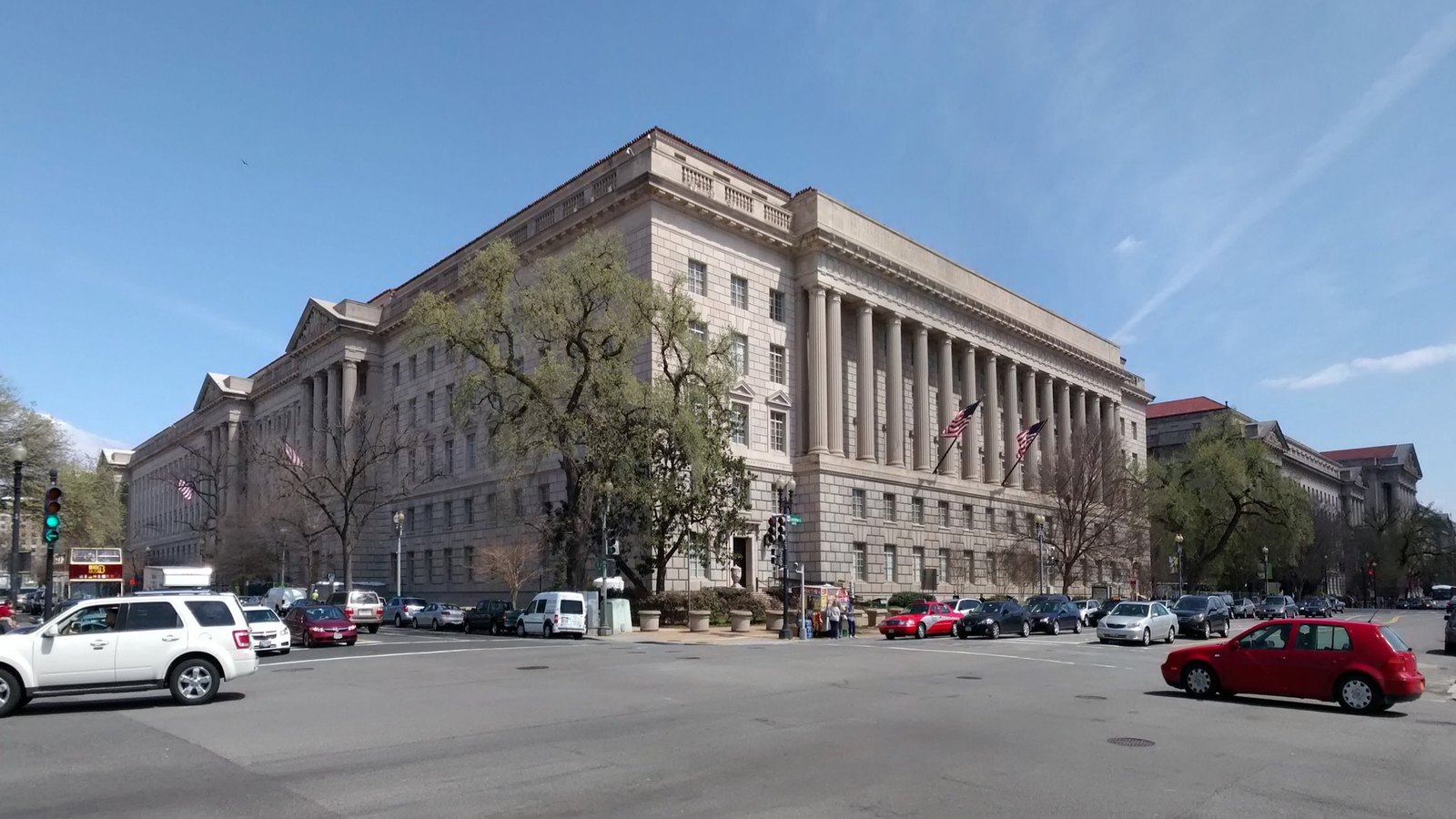
On November 24, 2026, the U.S. Department of Commerce’s International Trade Administration filed an official notice issuing an affirmative preliminary determination in its antidumping investigation on Tris(hydroxymethyl)aminomethane imports from China. The determination directs U.S. Customs and Border Protection to suspend liquidation and require cash deposits of up to 132.59% on Chinese Tris, creating immediate cost and supply chain repercussions for university biomedical laboratories, buffer preparation, and biopharmaceutical manufacturing.
Commerce Department Preliminary Antidumping Findings
The International Trade Administration issued its preliminary affirmative determination of sales at less than fair value in Federal Register Notice 2026-23983, covering Tris(hydroxymethyl)aminomethane (Tris or THAM) from China under docket A-570-230. Commerce established an official period of investigation from October 1, 2025, through March 31, 2026, to determine whether Chinese producers sold the biological buffer in the United States below fair value. The action follows the initial investigation initiation published May 18, 2026 (91 FR 28566), and a postponement notice published September 4, 2026 (91 FR 56860).
Executed on November 17, 2026, by Kasey O’Connor, Deputy General Counsel performing the non-exclusive duties of the Assistant Secretary for Enforcement and Compliance, the notice was filed on public inspection November 24 ahead of publication on November 25, 2026. Because Commerce classifies China as a non-market economy under section 771(18) of the Tariff Act of 1930, investigators calculated normal value under section 773(c) using surrogate factor inputs. Furthermore, under sections 776(a) and 776(b) of the Act, Commerce applied adverse facts available to the China-wide entity.
Dumping Margins and Customs Cash Deposit Instructions
Commerce determined specific preliminary weighted-average dumping margins for cooperating exporters that demonstrated independence from state control, while assigning the adverse rate to all other Chinese producers:
| Exporter | Producer | Dumping Margin (%) | Cash Deposit Rate (%) |
|---|---|---|---|
| Suzhou Yacoo Science Co., Ltd. | Jining Yacoo New Materials Technology Co., Ltd. | 9.07% | 9.07% |
| Hubei Grand Fuchi Import and Export Co., Ltd | Henan Sitong New Material Co., Ltd. | 129.46% | 129.46% |
| Suzhou Genemill Biotechnology Co. Ltd. (Separate Rate) | Shandong Haohai Pharmaceutical Co., Ltd. | 18.60% | 18.60% |
| China-Wide Entity (Adverse Facts Available) | All Non-Qualified Producers | 132.59% | 132.59% |
Under section 733(d)(2) of the Act, Commerce will instruct U.S. Customs and Border Protection to suspend liquidation of all entries of subject merchandise entered for consumption on or after November 25, 2026. Under section 733(d)(1)(B) and 19 CFR 351.205(d), importers must post cash deposits equal to the assigned margins upon entry. For third-country exporters handling Chinese-origin merchandise, customs officials will collect the deposit rate corresponding to the specific Chinese producer-exporter combination that synthesized the material.
Commerce also aligned these findings with companion countervailing duty case C-570-231. In that proceeding, preliminary determinations published September 24, 2026 (91 FR 60585) established subsidy rates between 20.63% and 117.39%, detailed in the International Trade Administration preliminary CVD determination. In the antidumping proceeding, Commerce found that no export subsidy or domestic pass-through offsets were warranted for Yacoo, Grand Fuchi, or Genemill under section 777A(f), leaving their cash deposit rates equal to their full dumping margins.
Scope and Chemical Specifications of Subject Merchandise
The product scope defined in Appendix I covers both base tris(hydroxymethyl)aminomethane (Tris, tromethamine, or THAM, molecular formula C4H11NO3, CAS Registry Number 77-86-1) and its primary salt derivative, tris(hydroxymethyl)aminomethane hydrochloride (Tris HCl, tromethamine HCl, molecular formula C4H11NO3·ClH, CAS Registry Number 1185-53-1). Both compounds are organic reagents synthesized through the condensation of nitromethane and formaldehyde.
The scope encompasses all grades, purities, and physical forms of Tris and Tris HCl—including technical, molecular biology, and pharmaceutical USP grades—regardless of whether sold as crystalline powder, granules, or liquid solutions. While subject imports enter under Harmonized Tariff Schedule of the United States (HTSUS) subheading 2922.19.9690, the written description remains legally dispositive across all HS codes for chemical imports.
Commerce established strict origin rules based on chemical synthesis: origin is defined by where the Tris molecule is manufactured. Consequently, Tris HCl synthesized in a third country using precursor Tris produced in China remains subject to antidumping duties. In addition, third-country reprocessing—such as recrystallization, retesting, blending, or repackaging—does not remove products from the scope.
Petition Background and Trade Law Reactions
The trade proceeding was initiated on April 24, 2026, when domestic manufacturer Advancion Corporation, headquartered in Buffalo Grove, Illinois, filed petitions with Commerce and the U.S. International Trade Commission. Advancion operates primary synthesis facilities in Sterlington, Louisiana, representing the primary domestic producer of Tris buffer.
Trade law practitioners at Faegre Drinker Biddle and Reath LLP highlighted in a Faegre Drinker trade petition analysis that domestic producers faced substantial volume displacement and price suppression from low-priced Chinese imports backed by state industrial subsidies. Counsel noted that unfair pricing forced domestic operations to absorb losses while losing market share.
Customs attorneys at Grunfeld, Desiderio, Lebowitz, Silverman and Klestadt LLP explained in a GDLSK trade bulletin that drafting the scope to cover both base Tris and downstream Tris HCl successfully closed loophole routes involving intermediate chemical conversion. In June 2026, the USITC voted unanimously in the preliminary injury phase of Investigation Nos. 701-TA-793 and 731-TA-1789, finding a reasonable indication that the domestic industry is materially injured.
Impact on University Laboratories and Biomanufacturing Supply Chains
Tris buffer is essential across life science research due to its stable buffering capacity near physiological pH (pKa 8.06 at 25 °C). In university biomedical laboratories, Tris is consumed continually for nucleic acid and protein biochemistry. Academic laboratories use Tris for agarose running buffers (TAE and TBE), nucleic acid storage (TE buffer), and protein separation, including standard Laemmli buffer formulations used in polyacrylamide gel electrophoresis.
Tris also provides the necessary ionic and pH conditions for enzymatic fidelity in molecular diagnostics and genomic sequencing, serving as a core component in PCR buffer chemistry and vendor formulations. In commercial biomanufacturing, ultra-pure tromethamine is an approved formulation excipient used to stabilize monoclonal antibodies, viral vectors, and mRNA vaccine lipid nanoparticles.
Because Chinese manufacturers have supplied a significant volume of raw bulk Tris imported into the United States for packaging by scientific supply distributors, cash deposit requirements reaching 132.59% will increase laboratory consumable costs. Combined with preliminary countervailing duties exceeding 20% to 117%, total tariff exposure on Chinese material reaches up to 250%. University purchasing offices and grant managers must assess vendor contracts and incorporate reagent cost increases into sponsored project forecasts.
Procurement departments must also manage vendor terms such as minimum order quantity procurement dynamics as distributors alter stockholding strategies. Facilities operating under Good Laboratory Practice standards must prepare raw material qualification and change-control documentation before switching from Chinese imports to domestic or European chemical manufacturers, ensuring experimental consistency and compliance.
Procedural Timelines and What Happens Next
Following publication of the preliminary determination, Commerce will disclose its calculations to interested parties within five days under 19 CFR 351.224(b). Parties may file ministerial error allegations under regulatory guidelines, after which Commerce analysts will conduct on-site verifications of questionnaire submissions under section 782(i)(1) of the Act.
Case briefs are due seven days after the issuance of the final verification report, with rebuttal briefs due five days later. However, the final determination deadline has been postponed. On November 16, 2026, mandatory respondent Suzhou Yacoo requested postponement of the final determination and extension of provisional measures under 19 CFR 351.210(e).
Under section 735(a)(2)(A) of the Tariff Act, Commerce granted the extension, prolonging provisional cash deposit measures up to six months and scheduling the final determination for no later than 135 days after publication of the preliminary notice (early April 2027). If Commerce affirms dumping, the USITC will issue its final injury ruling within 45 days. An affirmative injury determination will result in an Antidumping Duty Order.
Sources
- Federal Register: Public Inspection: Sales at Less Than Fair Value; Determinations, Investigations, etc.: Tris(hydroxymethyl)aminomethane from the People’s Republic of China, checked 2026-11-24
- International Trade Administration: Preliminary Affirmative Countervailing Duty Determination of Tris(hydroxymethyl)aminomethane from China, checked 2026-11-24
- Faegre Drinker Biddle and Reath LLP: New Antidumping Duty and Countervailing Duty Petitions on Tris from China, checked 2026-11-24
- GDLSK: Petition Filed Requesting the Imposition of Antidumping and Countervailing Duties on Imports of Tris(hydroxymethyl)aminomethane from China, checked 2026-11-24






