
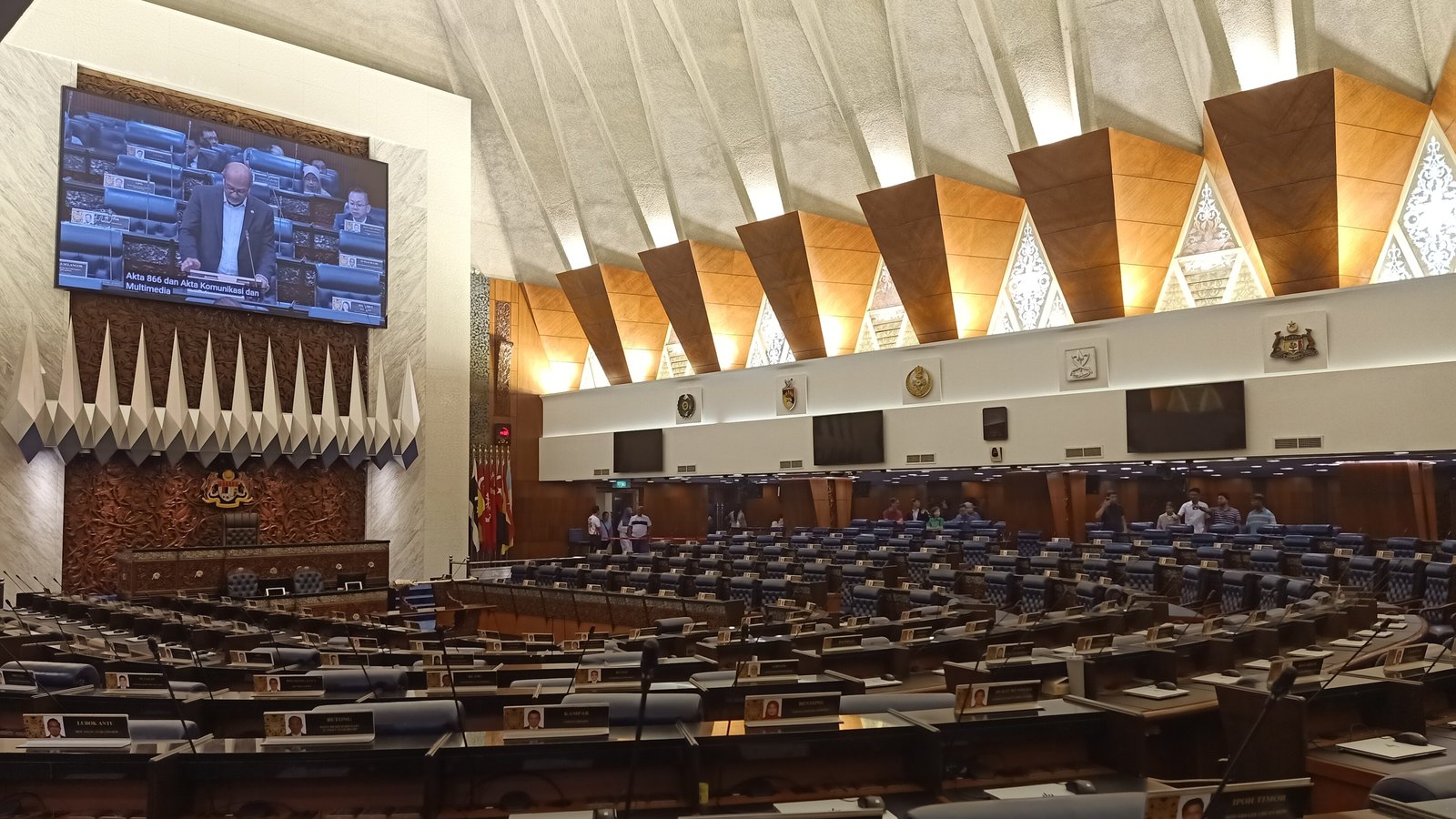
Malaysia’s Parliamentary Public Accounts Committee (PAC) tabled its report on the government’s research, development, commercialisation and innovation (RDCI) programme in the Dewan Rakyat on 24 November 2026. It says more than RM225 million of higher education ministry research funds sat idle for almost two decades and that 11 implementing agencies have not returned RM183.11 million in unspent grants, Malay Mail reported.
What happened
PAC chairman Mas Ermieyati Samsudin, the Masjid Tanah MP, presented the findings at Parliament on 24 November. Free Malaysia Today, citing Bernama, reported that the committee called the RDCI ecosystem “worrying”, citing weak governance, strategic planning and technical leadership, and said government had suffered “various leakages and losses” because agencies did not use funding instruments efficiently. Malay Mail quoted her describing the idle funds as a “betrayal of the nation’s trust” and saying that “the government can no longer simply approve allocations without monitoring the success and actual outcomes of a project”.
The headline figure on returns also appears in the New Straits Times report, headlined “11 agencies yet to return RM183.11mil in research grants, PAC finds”. The committee attributed the idle balances to the absence of clear refund policies and post-project assessments, according to Malay Mail.
Key details
| Finding | Figure or detail |
|---|---|
| Idle higher education ministry research funds | More than RM225 million, held for almost 20 years |
| Unspent grants not returned | RM183.11 million across 11 implementing agencies |
| Missing medical prototypes | 19 i-Breath units worth RM1.6 million, Universiti Teknologi Malaysia (UTM) |
| Mardi operating spending | About RM33.9 million (26.9% of its RDCI allocation) on items such as travel claims and contract-worker allowances |
| Abandoned study | More than RM2 million on a ketum (kratom) industry study stopped midway |
| Research building delay | 15 months at Universiti Kebangsaan Malaysia (UKM); 27 research projects disrupted; RM1.81 million extra for external lab rental |
| National research spending | Gross expenditure on research and development: 1.01% of GDP against a 2.5% target; 34th in the Global Innovation Index |
The committee found the i-Breath device’s intellectual property was registered in the name of the former principal researcher rather than the government. Malay Mail reports that Mas Ermieyati called the arrangement “rather bizarre”. The Malaysian Agricultural Research and Development Institute (Mardi) spending breached the 12th Malaysia Plan research funding guidelines, and the ketum study lacked early alignment with the health ministry, as both outlets reported. At UKM, the building was affected by mould and asbestos, per FMT.
The committee also said the system leans too heavily on basic research with weak industry links, so many local innovations never reach commercialisation.
Background and context
The unreturned-grants figure is not new. The Star reported on 23 February 2026 that the Auditor-General’s Report 1/2026 found RM183.11 million in unreturned research grant balances across 7,904 projects in four ministries: RM110.67 million at the Higher Education Ministry (7,823 projects, five research universities), RM55.64 million at the Investment, Trade and Industry Ministry, RM14.33 million at the Science, Technology and Innovation Ministry and RM2.47 million at the Agriculture and Food Security Ministry. About RM89.82 million (49%) had been outstanding for five to nine years and RM9.72 million for more than ten.
The auditors linked the balances to weaknesses in financial control, project monitoring and project closure, and warned that unmonitored funds risk being used for purposes other than those approved. The Star also reported that the investment ministry said implementing agencies had used balances for new 12th Malaysia Plan projects without approval from the finance and economy ministries.
Reaction and agency responses
In the February audit coverage, The Star recorded early responses: the Higher Education Ministry had formed a Research Fund Balance Management Committee, which met on 5 August 2025, and sent a proposal on using fund balances to the Finance Ministry on 4 December 2025, with implementation awaiting approval. The science ministry had returned RM140,000 and RM400,000 on two projects and applied on 16 December 2025 to repurpose RM13.79 million of uncommitted Cradle Fund balances. Mardi had returned RM2.10 million from its cannabinoid project and confirmed on 20 November 2025 that RM0.66 million was being transferred back from the ketum project.
What the PAC recommends
- The economy and finance ministries, with other ministries, should set standard operating procedures requiring higher education institutions and implementing agencies to return unspent project grants within three to six months of completing research.
- Non-compliance should bring strict budget penalties or restrictions on new grants.
- The economy ministry should restructure the central research management unit, giving it full authority to coordinate and to stop distributing public funds without clear commercialisation goals.
- Every commercialisation grant application should include an industry partner backed by a financial commitment agreement before approval.
- A national strategic investment platform should link research outputs with investors, government-linked investment companies and venture capital firms.
- The higher education ministry should require regular occupational safety and health audits at university research labs, with preventive maintenance plans and contingency funds.
- Malay Mail adds a recommendation that studies involving controlled substances such as ketum and cannabis get enforcement-agency clearance before funding.
What it means for researchers, universities and research offices
The report is a recommendation to ministries, not a rule, but its direction is plain for anyone holding public research money in Malaysia. Principal investigators and research offices should expect closure to be treated as a funding event: a three-to-six-month window for returning unspent balances would put weight on final financial reconciliation, much as grant closeout practice does elsewhere, and on a clean closeout phase.
Universities holding older balances, particularly the research universities named in the audit, face the prospect of those balances being returned, repurposed only with approval, or tied to future grant eligibility. Offices should reconcile legacy projects and document which have been formally closed.
On commercialisation, a financial commitment agreement from an industry partner would become a condition of funding, and the i-Breath finding shows why asset and intellectual-property registration matters: ownership recorded in an individual researcher’s name rather than the institution or government was treated as a governance failure. Offices handling technology transfer should check who holds title to prototypes and copyright, and that equipment and prototypes are tracked. The recommended occupational safety audits would also touch laboratory facilities management. For broader context on how audits examine grant spending, see how OIG audits of research grants work.
What happens next
The report goes to the ministries it names. The economy and finance ministries would write the return procedures, the higher education ministry would act on laboratory audits, and the economy ministry would restructure the research management unit. Agencies’ follow-up responses to the PAC will show which recommendations are adopted and on what timetable.
Sources
- Malay Mail, 24 November 2026: Hundreds of millions in idle research funds, missing medical prototypes: PAC flags betrayal of the nation’s trust
- Free Malaysia Today (Bernama), 24 November 2026: PAC flags governance failures in Malaysia’s research ecosystem
- New Straits Times, 24 November 2026: 11 agencies yet to return RM183.11mil in research grants, PAC finds
- The Star, 23 February 2026: Auditor-General’s Report: Higher Education Ministry tops list of unreturned research grants






