
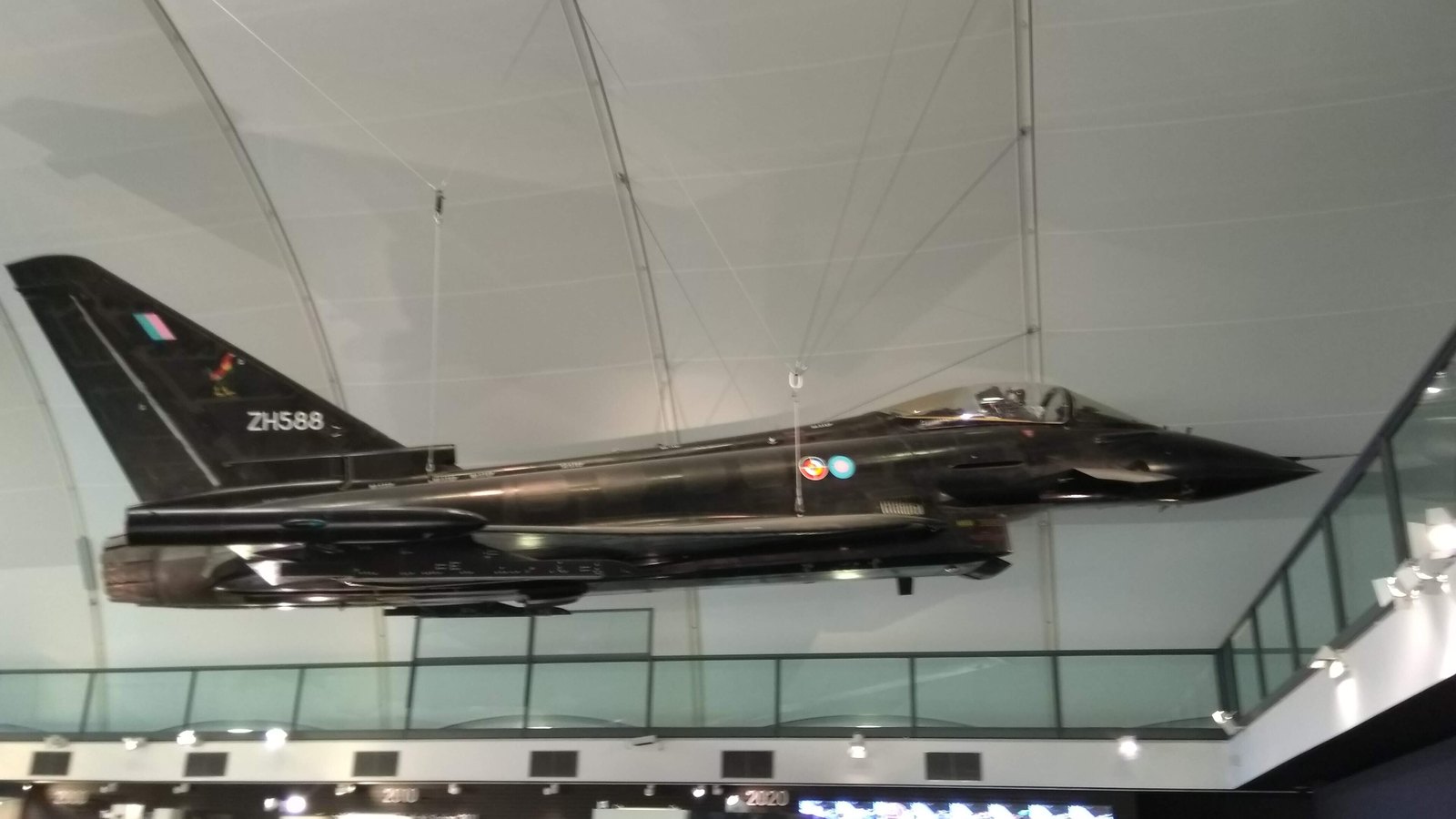
The UK Ministry of Defence published its Future Combat Air System Digital Engineering Strategy on 24 November 2026, setting out binding digital engineering and data architecture standards across the Global Combat Air Programme. The blueprint establishes digital thread, collaborative cloud, and agentic artificial intelligence frameworks that reshape how universities, research organisations, and defence contractors collaborate on advanced aerospace research.
Transition to sixth-generation digital combat air
On 24 November 2026, the UK Ministry of Defence published its Future Combat Air System Digital Engineering Strategy, establishing an overarching technical roadmap to modernize defence acquisition and lifecycle management. The strategy targets the digital transformation of the UK combat air enterprise as it develops sixth-generation capabilities through the Global Combat Air Programme (GCAP) alongside Japan and Italy. The Ministry identified historical barriers in defence aviation, noting that previous programmes suffered from fragmented software tools, isolated data silos, and disconnected engineering disciplines that inflated programme costs and extended delivery timelines.
Under the strategy, the Ministry mandates a shift to a software-defined, model-based engineering paradigm. Richard Berthon, Director FCAS at the Ministry of Defence, stated that advances in digital technologies and an increasingly software-defined and data-driven approach to digital engineering represent how the UK intends to deliver combat air capability faster than any previous generation. Berthon emphasised that transforming aerospace design and simulation drives innovation demand directly into the sovereign industrial and academic research base.
Air Commodore John Fortune, FCAS Chief Digital and Information Officer, noted that uniting systems engineering lifecycle activities within a secure, compliant, and fully traceable digital environment will dramatically compress development cycles. The strategy aims to reduce modification timelines for operational software from months to hours or days, ensuring rapid adaptability against emerging operational threats.
Core architecture and the eight strategic ends
The strategy frames its technical objectives across eight core strategic ends designed to establish a sovereign, fully traceable digital engineering enterprise across government and industry:
- Advanced Integrated Engineering Capability: Sovereign Model-Based Systems Engineering (MBSE) and synthetic verification environments to accelerate platform certification.
- GCAP Integration and Interoperability: Common digital workflows uniting the GCAP joint venture Edgewing, national industrial leads, and mission electronics consortia.
- Engineering Through Life: Transforming sustainment through digital twins, predictive logistics analytics, and rapid software deployment pipelines.
- Data and Information Architecture: Establishing an enterprise digital thread and authoritative sources of truth using open ISO and NATO data standards.
- Collaborative Working Environments: Deploying the GCAP Advanced Collaborative Working Environment (ACWE) across secure multi-classification cloud networks.
- Capability Innovation and Evolution: Sustaining an active innovation pipeline pulling emerging techniques from academia and defence laboratories into programmes.
- People and Skills: Joint workforce upskilling between the Royal Air Force and industry, training technical regulators in digital verification.
- Wider Applications and Benefits: Transferring sovereign digital engineering toolsets into broader defence procurement and the civil manufacturing base.
The document formally integrates agentic artificial intelligence into systems engineering. The Ministry specifies that goal-oriented digital software agents will assist engineers in developing architecture models, conducting verification, and executing automated testing, under strict requirements for human accountability and deterministic traceability.
The following table contrasts legacy combat air practices with the sixth-generation standards mandated under the strategy:
| Engineering Dimension | Legacy Combat Air Paradigm (Typhoon Era) | FCAS Digital Engineering Strategy (Sixth Generation) |
|---|---|---|
| Systems Methodology | Document-centric engineering with fragmented specifications | Integrated Model-Based Systems Engineering with virtual digital twins |
| Software Cycle | Monolithic avionics requiring multi-month test cycles | Modular open architecture enabling updates in days or hours |
| Data Architecture | Proprietary data silos across disconnected vendors | Enterprise digital thread based on open ISO and NATO standards |
| Infrastructure | Air-gapped on-premise networks with manual data transfers | Multi-classification collaborative cloud environments |
| Automation & AI | Isolated numerical scripts requiring manual translation | Audited agentic AI assisting architecture verification and code generation |
Background to the UK combat air enterprise and GCAP
The Digital Engineering Strategy builds on the UK Combat Air Strategy launched in 2018, which established Team Tempest—an industrial partnership comprising BAE Systems, Rolls-Royce, Leonardo UK, and MBDA UK. The initiative aimed to preserve sovereign industrial design capabilities ahead of the planned retirement of the Eurofighter Typhoon in the late 2030s and 2040s.
The programme transformed in December 2022 when the UK, Japan, and Italy launched the Global Combat Air Programme, merging Tempest with Japan’s F-X project. In December 2023, the partner nations signed an international treaty establishing the GCAP International Government Organisation (GIGO), supported by the joint industrial company Edgewing. Domestic capital backing has expanded alongside international governance, evidenced by reporting on the Ministry of Defence’s £708 million investment into advanced combat air manufacturing and digital engineering infrastructure. That investment delivered robotic assembly facilities and high-performance computing centers in northern England, establishing the physical foundation for model-based engineering.
Stakeholder perspectives across industry and academia
Industrial and academic partners have aligned technical facilities with the Ministry’s digital vision. In propulsion, engineering teams have implemented digital twin environments, demonstrated by digital power and propulsion engineering programs at Rolls-Royce, which utilise high-fidelity thermodynamic modeling to validate electrical generation systems before manufacturing physical prototypes.
In sensor systems and mission processing, manufacturers are adopting open hardware frameworks, exemplified by the integrated sensors and mission systems digital architecture spearheaded by Leonardo UK. Standardised digital interfaces allow updates to radar apertures and electronic warfare suites without recertifying flight-control computers.
Academic research centers contribute foundational digital tooling, highlighted by collaborative digital maintenance and inspection research co-piloted by BAE Systems and the University of Sheffield AMRC, which tests automated inspection and mixed-reality maintenance interfaces for frontline aircraft. Meanwhile, aerospace supply chain suppliers have engaged through digital strategy briefings convened by techUK to assess cloud compliance and data-sharing standards.
Implications for universities, research offices, and academic institutes
The FCAS Digital Engineering Strategy introduces operational considerations for higher education institutions and research offices supporting defence-related aerospace, computing, and advanced materials programmes. As research transitions to model-based qualification, academic workflows must interface directly with enterprise digital threads.
Institutional research security requires heightened governance. Multi-classification collaborative environments demand that university research offices enforce strict oversight under the national Trusted Research framework and institutional research security policies. Universities must manage project infrastructure, access controls, and research data repositories handling defence-linked digital models.
Export compliance and IP administration must account for GCAP’s trilateral structure. Academic teams working with international partners must navigate software export controls governing dual-use simulation models, neural networks, and engineering algorithms. Research contracts must clearly define IP boundaries before data is shared in collaborative digital environments.
Research data management protocols must align with defence data models. Grant submissions to defence bodies increasingly require data architectures structured around FAIR data principles. Research offices must ensure data management plans satisfy standards comparable to rigorous UKRI data management plan requirements, specifically for metadata schemas and long-term repository preservation. In addition, institutions face opportunities to update postgraduate curricula to prepare engineers in Model-Based Systems Engineering and digital verification.
Next steps, the FCAS Digital Plan, and the 2035 milestone
The Ministry of Defence highlighted that the strategy outlines the overarching policy vision. Detailed implementation mechanisms, resource plans, and procurement routes will be formalised in the upcoming FCAS Digital Plan, which officials confirmed will be released separately.
Flight test programmes will accelerate the physical validation of digital models. The Excalibur Flight Test Aircraft project—modifying a commercial Boeing 757 into a flight testbed—will begin airborne trials of integrated digital avionics and sensors, generating telemetry to validate virtual digital twins.
Multinational technical teams will continue refining shared digital architecture standards to support the target milestone of delivering the first sixth-generation combat aircraft into service by 2035.
Sources
- UK Ministry of Defence: Future Combat Air System Digital Engineering Strategy, checked 2026-11-27
- The Manufacturer: MoD commits £708m to accelerate UK combat air manufacturing and digital engineering, checked 2026-11-27
- University of Sheffield AMRC: AMRC co-pilots Future Air Support with BAE Systems, checked 2026-11-27
- Rolls-Royce: Tempest | Redefining Power & Propulsion, checked 2026-11-27
- Leonardo UK: Future Combat Air Systems, checked 2026-11-27
- techUK: Future Combat Air System digital strategy: briefing, checked 2026-11-27






