
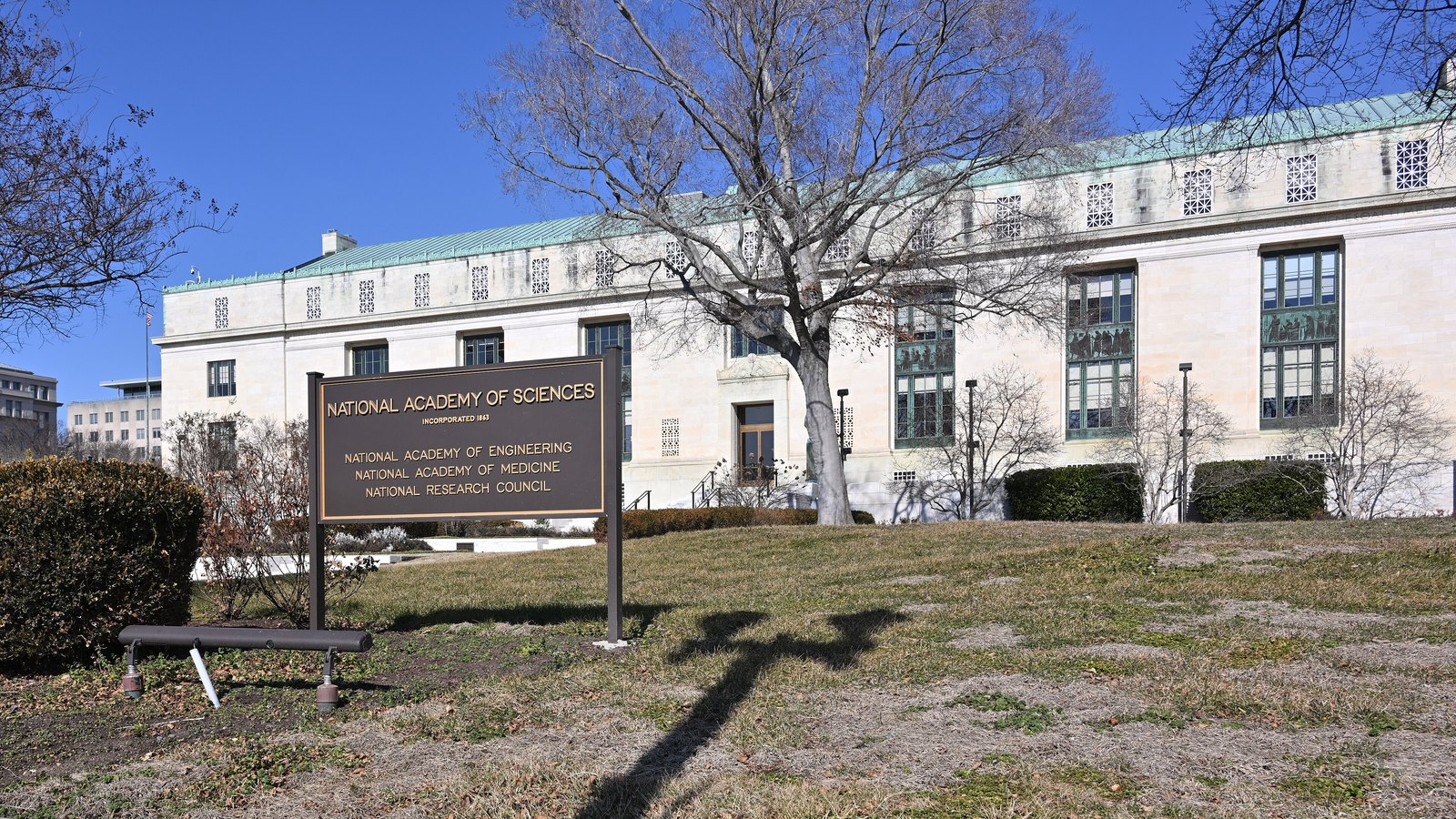
On November 20, 2026, the U.S. National Academies of Sciences, Engineering, and Medicine released a consensus study report, Maintaining the Reliability of the Scientific Record: Corrections, Retractions, and Other Postpublication Notices, recommending that scholarly journals complete post-publication validity assessments within 12 weeks. The 157-page framework establishes stringent benchmarks for publishers, universities, and funders, urging immediate editorial expressions of concern when inquiries stall and mandating raw data retention.
National Academies consensus calls for rapid post-publication resolution
The consensus study, conducted by an expert committee convened under the National Academies Center for Advancing Science and Technology, targets chronic delays in addressing flawed scholarly literature. Chaired by Nobel laureate and UC Berkeley molecular biologist Randy W. Schekman, the committee concluded that existing post-publication mechanisms are excessively protracted, inconsistently applied, and inadequate for safeguarding scientific integrity.
Reporting on the release, Nature highlighted that scholarly publishers take an average of nearly two and a half years to retract compromised papers, allowing unreliable findings to distort downstream research. Data evaluated by the committee indicate that global retractions exceeded 5,000 papers in 2025. Although retractions represent under 0.22% of papers published annually, their concentration in high-impact biomedical and physical sciences carries severe cumulative consequences.
The report asserts that editorial boards must abandon open-ended deliberations. When credible allegations regarding data integrity or methodological invalidity surface, journals must initiate structured reviews immediately. The committee outlined an enforceable 12-week operational cycle for standard challenges and a six-month ceiling for complex institutional inquiries, moving beyond traditional editorial discretion that has left disputed papers unannotated for years.
Key details of the twelve-week assessment framework and data retention mandates
The framework divides post-publication evaluation into strict four-week operational phases to prevent administrative stagnation. Under the recommended schedule, editorial offices have four weeks to complete an initial triage assessment of a complaint. If verified as credible, the journal enters a second four-week phase (Weeks 5 through 8) to issue a formal query to corresponding authors and audit submitted source files.
By Week 12, if the matter remains unresolved or authors fail to provide conclusive evidence, journals are urged to attach an Editorial Expression of Concern to the published article. This public notice alerts readers and citation indexers that findings cannot be trusted while inquiries continue. Understanding the distinction between notices is critical, as detailed in our analysis of retractions, errata, and expressions of concern.
The report eliminates the common “partial flaw” defense, where authors argue that compromised figures do not undermine broader conclusions; the panel established that errors or fabrication in any section cast doubt on the entirety of the work. Furthermore, the committee proposed that an author inability or refusal to produce original primary data upon request constitutes direct grounds for retraction.
| Review Milestone | NASEM Recommended Benchmark | Historical Baseline Practice | Mandated Procedural Action |
|---|---|---|---|
| Initial Intake and Triage | Weeks 1 to 4 | 3 to 9 months unlogged queue | Screen allegations for plausibility and log intake dossier |
| Author Inquiry and Evidence | Weeks 5 to 8 | 6 to 18 months informal exchanges | Deliver formal inquiry and audit original source data files |
| Provisional Notice Deadline | Week 12 | Rarely issued prior to final notice | Publish Editorial Expression of Concern if matter is unresolved |
| Complex Investigation Ceiling | 6 months maximum | 2.4 years average retraction delay | Issue final retraction statement or formal corrigendum |
| Primary Data Verification | Mandatory author production | Discretionary or unenforced | Retract publication if source data cannot be authenticated |
| Integrity Defense Standard | Zero tolerance for partial flaws | Partial corrections accepted | Retract paper if any core element exhibits integrity failure |
Background on escalating retractions and publication integrity challenges
The inquiry was sponsored by the Department of Energy, the National Science Foundation, the Gordon and Betty Moore Foundation, and Schmidt Sciences following mounting alarm over paper mills and manipulated datasets. Existing editorial frameworks, including the voluntary COPE guidelines and core practices, have provided flowcharts for editors since 1997, yet publishers frequently cite legal threats and jurisdictional disputes as justifications for multi-year delays.
In its policy overview, KFF Health News observed that biomedical literature has borne severe reputational damage from uncorrected errors, particularly in fields where clinical decisions relied on compromised data. While technical workflows such as the NISO CREC communication protocol exist for syndicating retraction metadata across discovery platforms, widespread adoption has stalled without unified enforcement deadlines.
The consensus panel, uniting university leaders, publishers, legal scholars, and integrity specialists, concluded that voluntary standards alone have failed to protect the literature. By establishing explicit operational schedules, the Academies seek to transform post-publication correction into a routine mechanism of scientific self-correction.
Stakeholder reaction across publishers, bioethicists, and editorial leaders
The recommendations have prompted active debate across publishing houses and academic leadership. As reported by STAT, bioethicist Lisa Rasmussen of the University of North Carolina at Charlotte observed that while the 12-week schedule represents an ideal target, journal editors already face severe staffing constraints and surging manuscript submissions. Rasmussen highlighted that while artificial intelligence tools assist in flagging manipulated figures, automated systems are also leveraged by paper mills to manufacture fraudulent papers at scale.
Committee member H. Holden Thorp, Editor-in-Chief of the Science family of journals, emphasized that academic journals must assert independence from slow institutional proceedings. Thorp underscored that while universities require extended timelines to determine personal culpability and employment consequences, journals bear a separate duty to alert readers promptly when findings are scientifically untrustworthy.
Committee chair Randy Schekman noted that researchers must no longer view retractions as personal catastrophes, but as normal quality control that preserves cumulative science. Academic societies noted that enforcing strict data retention will require enhanced institutional infrastructure, especially for multi-institutional international collaborations.
What the benchmarks mean for researchers, universities, and research integrity officers
For higher education institutions, the consensus recommendations require revisions to internal governance. Institutional Research Integrity Officers (RIOs) will no longer be able to maintain total confidentiality during multi-year inquiries. When a journal issues an inquiry, research integrity offices must coordinate transparently with editorial staff and provide status updates before the six-month ceiling expires.
Principal investigators face direct consequences regarding data custodial stewardship. Inability to produce original, unaltered raw data—including instrument output files, blot images, and analytical scripts—will lead directly to retraction under the guidance, regardless of whether failure stems from misconduct or poor record-keeping. Examining how a retraction actually happens illustrates why evidentiary documentation is essential from the day of initial submission.
Universities must also establish centralized repositories to safeguard research data beyond traditional three-to-five-year grant closeout windows. Because integrity challenges frequently arise years after publication, institutional compliance policies must align data retention with publication lifecycles rather than short-term project accounting.
Implementation roadmap and next steps for federal funders and journal boards
The release of the report initiates a series of briefings and policy reviews extending into early 2027. Outlining institutional implementation priorities, the University of Utah Office of the Vice President for Research announced that committee member Erin Rothwell will lead national workshops examining how universities can adapt inquiry procedures to interface with accelerated journal deadlines.
Major federal funding bodies, including the National Science Foundation and the Department of Energy, are reviewing the consensus findings to assess whether compliance with post-publication correction standards should be incorporated into federal grant award terms. Under proposed alignments, institutions that fail to cooperate with journal validity assessments within mandated timeframes could face administrative holds on sponsored awards.
Publishing associations and committee leaders will convene at international forums in early 2027 to draft harmonized editorial guidelines reflecting the 12-week benchmark. Journal editorial boards are expected to begin updating instructions for authors during 2027, integrating explicit data-production clauses and standardized expression-of-concern policies into submission agreements.
Sources
- National Academies of Sciences, Engineering, and Medicine: Maintaining the Reliability of the Scientific Record: Corrections, Retractions, and Other Postpublication Notices, checked 2026-11-21
- Nature: US science academy urges journals to fix errors more quickly, checked 2026-11-21
- STAT: Scientific publishing errors need to be corrected, retracted faster, checked 2026-11-21
- KFF Health News: Report Calls On Scientific Community To Correct, Retract Publishing Errors Faster, checked 2026-11-21
- University of Utah Office of the Vice President for Research: SVPR Rothwell helps chart a better path for scientific corrections and retractions, checked 2026-11-21


