
On November 25, 2026, the National Oceanic and Atmospheric Administration filed public inspection notice 2026-24151 scheduling Southeast Data, Assessment, and Review technical hearings for U.S. Caribbean fisheries in December 2026, establishing critical population modeling protocols for university marine laboratories, institutional researchers, and regional fisheries science centers.
Federal Register Notice Establishes SEDAR 103 Modeling Schedule
The National Marine Fisheries Service (NMFS), an operating agency of NOAA within the Department of Commerce, issued the administrative notice under Regulation Tracking Identification Number RTID 0648-XG214. The official filing establishes the public proceedings for the Southeast Data, Assessment, and Review (SEDAR) 103 assessment process, titled ‘Caribbean Alternate Assessment Methods.’ According to the filing signed on November 24, 2026, by Rey Israel Marquez, Acting Deputy Director of the NMFS Office of Sustainable Fisheries, the SEDAR 103 Assessment Application Webinar 2 will convene virtually on December 16, 2026, from 3:00 p.m. to 5:00 p.m. Eastern Time.
The formal scheduling follows a related administrative action filed earlier on November 25, 2026, where NOAA published notice 2026-24150 covering joint workshops for South Atlantic and Caribbean stocks. As detailed in CASRAI’s previous coverage of the South Atlantic and Caribbean SEDAR fisheries workshops, federal managers initiated parallel technical tracks for South Atlantic red snapper alongside Caribbean reef species. Notice 2026-24151 now isolates the operational schedule and methodological directives for the Caribbean alternate assessment process, coordinating data inputs across Puerto Rico and the U.S. Virgin Islands.
Key Technical Specifications and Assessment Stages
The SEDAR process operates as a formal cooperative framework governed by the Caribbean, Gulf of Mexico, and South Atlantic Fishery Management Councils in conjunction with NOAA Fisheries and regional marine fisheries commissions. Designed to produce rigorous scientific stock evaluations, the SEDAR framework divides assessment workflows into three distinct structural phases:
- Data Stage: Comprehensive compilation, filtering, and evaluation of potential biological and catch datasets to determine statistical suitability for modeling.
- Assessment Stage: Execution of quantitative population models, estimation of biological reference points and maximum sustainable yield thresholds, and mathematical projection of population trajectories under varying harvest regimes.
- Review Stage: Independent expert review conducted by the Center for Independent Experts (CIE) or Council-appointed peer panels to document strengths, uncertainties, and model limitations before management implementation.
SEDAR 103 specifically tackles the mathematical challenge of data-limited Caribbean tropical reef fisheries. According to official project documentation on SEDAR 103 alternate assessment methods, traditional age-structured population models frequently break down in the Caribbean due to multi-species artisanal landings, unstandardized catch-per-unit-effort series, and complex reef habitats. Following a foundational Development Workshop held in Miami, Florida, in August 2026, the December 16 webinar advances operational testing of length-based and ecosystem-based assessment models.
| Assessment Component | Technical Working Group Focus | Primary Methodology and Data Input | Regulatory Benchmark Target |
|---|---|---|---|
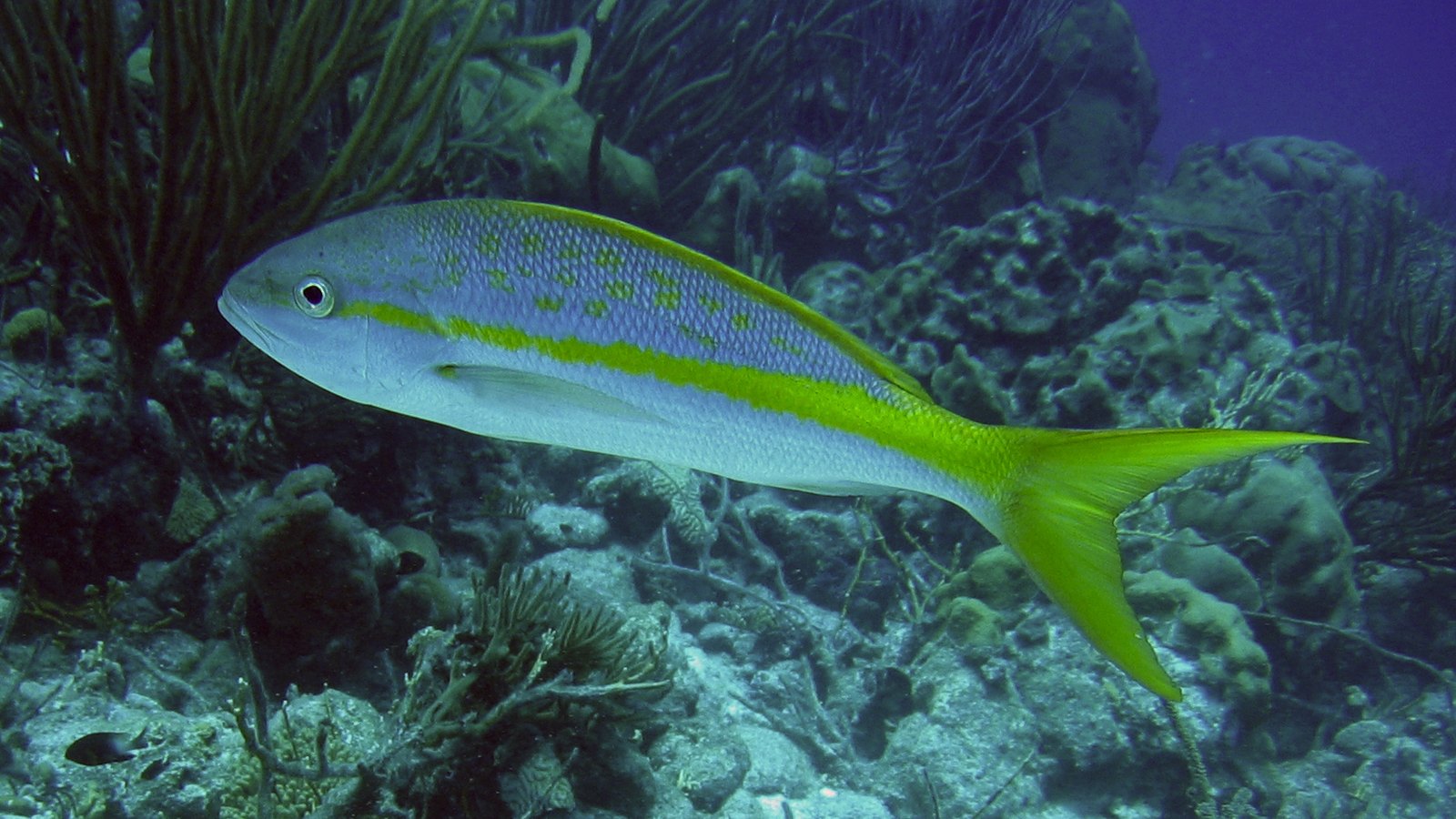
| Reef Fish Demographics | Yellowtail Snapper and Queen Triggerfish | Length-Based Risk Analysis (LBRA) and Management Strategy Evaluation | Spawning Potential Ratio (SPR 30%–40%) |
| Invertebrate Stocks | Queen Conch and Caribbean Spiny Lobster | Visual density transects and size selectivity surveys | Minimum reproductive density thresholds |
| Trophic Dynamics | Coral reef fish assemblages | Cumulative biomass-trophic level curves and ecosystem caps | System-wide trophic frontier bounds |
| Fishery-Dependent Inputs | Commercial and recreational fleets | Logbook landings and Trip Interview Program (TIP) records | Annual Catch Limits (ACLs) by island unit |
Statutory Authority and Island-Based Management Architecture
Federal management of U.S. Caribbean fisheries derives from statutory authority under the Magnuson-Stevens Fishery Conservation and Management Act, codified at 16 U.S.C. 1852. The statute establishes regional fishery management councils and mandates that conservation measures prevent overfishing while achieving optimum yield based on the best scientific information available. Under Section 1852(g), regional councils must maintain a Scientific and Statistical Committee (SSC) to review technical assessments, specify acceptable biological catch (ABC), and evaluate scientific uncertainty.
In the U.S. Caribbean, the Caribbean Fishery Management Council (CFMC) coordinates closely with NOAA Southeast Fisheries Science Center (SEFSC) through scheduled CFMC Scientific and Statistical Committee meetings. A central pillar of current scientific review is the transition away from historic Caribbean-wide species management to localized island-based fishery management plans. The Puerto Rico Island-Based Fishery Management Plan, implemented alongside companion plans for St. Croix and St. Thomas/St. John, establishes distinct biological baselines tailored to local insular shelves, fishing practices, and socioeconomic dependencies.
Stakeholder Perspectives and Scientific Deliberations
The transition toward empirical and length-based assessment models reflects broader priorities across NOAA Fisheries for sustaining complex marine fish stock assessments. In technical working papers prepared for SEDAR 103, agency biologists and academic cooperators emphasized that traditional equilibrium assumptions fail in small-scale tropical fisheries subject to acute climatic disturbances, including coral bleaching and hurricane impacts.
Scientific contributors from university laboratories and territorial natural resource agencies noted during earlier development sessions that empirical harvest control rules provide greater stability for artisanal fishers than fluctuating statistical catch-at-age outputs. By incorporating fishery-independent monitoring data—such as visual reef surveys from the National Coral Reef Monitoring Program—assessment scientists aim to decouple abundance indices from commercial trip reporting delays. However, Council advisory panel members have urged analysts to calibrate model sensitivity against local landing constraints to avoid setting unworkable annual catch limits.
What It Means for Researchers, Universities and Research Offices
The SEDAR 103 modeling proceedings create direct compliance, methodological, and operational requirements for university researchers and research administrative offices working in marine science and coastal ecology:
- FAIR Data Compliance for Sponsored Projects: Academic laboratories receiving federal research funding through NOAA, the National Science Foundation, or coastal Sea Grant consortia must ensure that observational and biological datasets conform to FAIR data principles. Stock assessment working groups require findable, machine-readable datasets with clear provenance before integrating external studies into SEDAR data packages.
- Standardized Technical Metadata Architecture: Institutional research offices must assist marine biology faculties in establishing rigorous protocols for technical metadata documentation. Field measurements—including otolith daily increment counts, diver survey transect geometries, and CTD hydrographic profiles—require standardized schema to allow cross-calibration with SEFSC databases.
- Data Management Plan Alignment: Research offices negotiating marine and environmental science awards should review institutional data management commitments against federal expectations, applying best practices comparable to the federal standards outlined in the research data management and sharing guide. Clear custodial agreements prevent disputes over proprietary rights during public stock review cycles.
- Cooperative Research and Working Group Participation: University faculty with expertise in tropical ecology, quantitative population dynamics, and resource economics can seek appointment to SEDAR assessment webinars and peer panels, establishing funded cooperative agreements with NMFS science centers.
What Happens Next
Following the publication of notice 2026-24151 in the Federal Register, the SEDAR 103 Assessment Application Webinar 2 will convene virtually on December 16, 2026, from 3:00 p.m. to 5:00 p.m. Eastern Time. The session is open to the public, though agenda items remain strictly focused on the mathematical application of alternate assessment models under the Magnuson-Stevens Act.
Members of the public and scientific community may submit technical comments and access webinar connection details through the SEDAR coordinator (Emily Ott, [email protected]). Individuals requiring special accessibility accommodations or sign language interpretation must contact the Council office at least five business days prior to the meeting. Additional application webinars will run through March 2027, culminating in a formal SEDAR 103 Review Workshop in spring 2027 to deliver final recommendations to the Caribbean Fishery Management Council.
Sources
- Federal Register: Fisheries of the Caribbean; Southeast Data, Assessment, and Review; Public Meeting (Document 2026-24151), checked 2026-11-26
- Southeast Data, Assessment, and Review: SEDAR 103 US Caribbean Application of Alternate Assessment Methods, checked 2026-11-26
- Caribbean Fishery Management Council: Scientific and Statistical Committee Meetings, checked 2026-11-26
- Caribbean Fishery Management Council: Puerto Rico Island-Based Fishery Management Plan, checked 2026-11-26
- Legal Information Institute: 16 U.S. Code § 1852 – Regional Fishery Management Councils, checked 2026-11-26
- NOAA Fisheries: Population Assessments: Fish Stocks, checked 2026-11-26






