
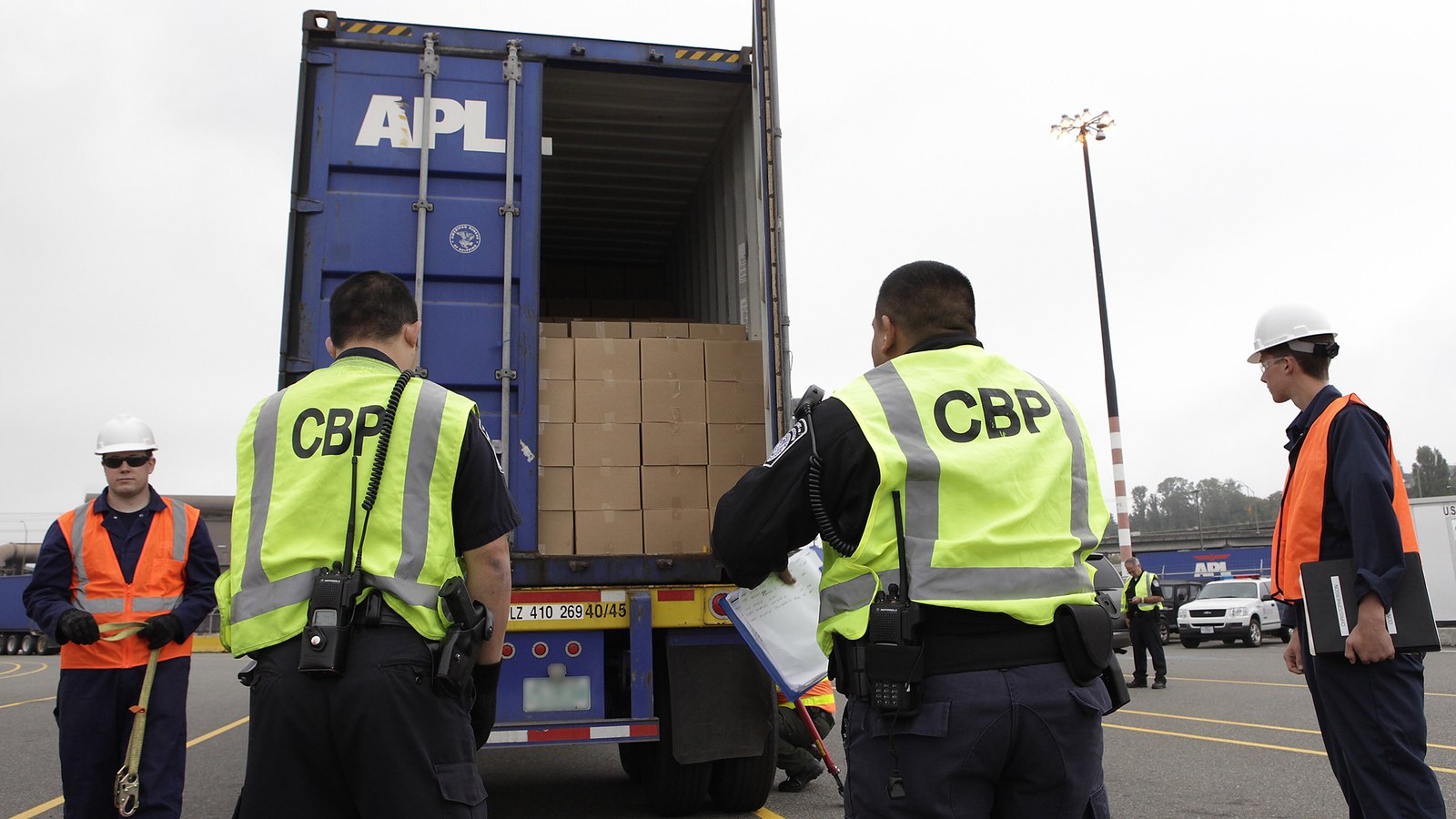
On November 25, 2026, U.S. Customs and Border Protection issued a 30-day notice and request for comments under Federal Register Document 2026-24147, submitting proposed revisions for information collection rules governing the export of used self-propelled vehicles to the Office of Management and Budget. Published under Federal Register Notice 2026-24147, the action affects research institutions and field expeditions shipping mobile laboratories, specialized tractors, and survey vehicles through U.S. ports of departure.
What happened
U.S. Customs and Border Protection (CBP) submitted a revised information collection request under Office of Management and Budget (OMB) Control Number 1651-0054. Scheduled for formal publication on November 27, 2026, after its November 25 filing, the 30-day notice invites public feedback on export documentation rules in 19 CFR Part 192, which require pre-departure ownership verification for outward vehicle shipments.
This proceeding follows a 60-day notice published at 91 FR 58909 on September 17, 2026. Under the Paperwork Reduction Act of 1995 and 5 CFR 1320.8, CBP is approving operational integration of the Document Image System (DIS). The digital portal allows exporters and customs brokers to submit digital copies of titles, salvage records, and manufacturer statements directly into automated processing queues rather than presenting physical paper at ports.
Key details
Under 19 CFR Part 192, exporters of used self-propelled vehicles must present the vehicle and authentic ownership documentation to CBP at the port of departure at least 72 hours prior to lading or export. The requirement covers original certificates of title, certified copies, salvage titles, and Vehicle Identification Numbers (VIN) or Product Identification Numbers (PIN). The mandate applies without value thresholds, covering automobiles, survey trucks, and off-road scientific machinery.
CBP processes approximately 1,400,000 annual export filings under OMB Control Number 1651-0054. The agency calculates that submitting supporting documents via DIS saves 5 minutes per filing, cutting average response time from 10 minutes to 5 minutes (0.0833 hours) and reducing total annual burden from 233,334 to 116,667 hours.
| Provision | Baseline Paper Workflow | Document Image System (DIS) | Authority |
|---|---|---|---|
| Submission Format | Physical original or certified paper copies at port | Electronic upload of scans via DIS portal | 19 CFR § 192.2(b) |
| Advance Notice | Presentation at port 72 hours before export | Electronic filing 72 hours before export | 19 U.S.C. § 1646(c) |
| AES Integration | Automated Export System (AES) filing for ITN | Unified AES filing paired with DIS upload | 15 CFR § 30.2 |
| Response Time | 10 minutes per filing | 5 minutes per filing | OMB No. 1651-0054 |
| Annual Burden | 233,334 total burden hours | 116,667 total burden hours | 44 U.S.C. 3501 |
| Noncompliance | $500 civil fine per vehicle; seizure risk | $500 civil fine per vehicle; seizure risk | 19 CFR § 192.3 |
Background and context
CBP enforces vehicle export controls under 19 U.S.C. 1627a and Section 401 of the Anti-Car Theft Act of 1992 (19 U.S.C. 1646(c)). Congress enacted these mandates to stop the illicit international trafficking of stolen vehicles by establishing documentary checkpoints before outbound transit.
Additionally, U.S. Census Bureau Foreign Trade Regulations under 15 CFR Part 30 mandate electronic export filing through the Automated Export System (AES). Unlike standard commercial equipment that may qualify for an exemption below $2,500, used self-propelled vehicles require mandatory AES filing regardless of value. Exporters must provide the Internal Transaction Number (ITN) with the 72-hour filing. Guidance on the official CBP motor vehicle export guidance page notes that mismatched filings cause port loading holds.
Reaction and stakeholder perspectives
Seth D. Renkema, Branch Chief of the Economic Impact Analysis Branch in CBP’s Office of Trade, Regulations and Rulings, noted that expanding DIS access modernizes customs processing while maintaining robust trade enforcement. Officials stated that digital documentation reduces terminal congestion and speeds reviews without weakening stolen-vehicle prevention measures.
University logistics officers and trade specialists welcomed the electronic option, noting that couriering physical paper titles to distant marine terminals frequently created scheduling bottlenecks. Trade attorneys noted that DIS submission does not relax underlying evidentiary standards, as customs officers retain full authority to inspect vehicles physically or demand original certificates of title if anomalies appear.
What it means for researchers, universities and research offices
While academic compliance teams typically focus export controls on deemed exports, software, and sensitive data, vehicle rules apply directly to international fieldwork. University earth science departments, polar expedition teams, and agricultural units frequently transport specialized utility trucks, tractor units, and mobile labs overseas. Under 19 CFR 192.1, self-propelled vehicles encompass all land vehicles not running on rail, including mobile research trailers and tracked rigs.
Research administration offices should establish four operational compliance safeguards:
- Verify Property Custody and Clear Title: Institutional asset managers must locate original certificates of title or certified state records well ahead of shipment. When field vehicles are recorded as capital equipment in university inventories, administrators must ensure titles list institutional ownership without unreleased commercial liens.
- Distinguish Capital Equipment from Project Supplies: Sponsored programs offices must classify expedition vehicles accurately under federal cost principles, maintaining the distinction between supplies vs equipment under 2 CFR 200.1 and adhering to the regulatory definition of equipment under 2 CFR 200.1.
- Account for 72-Hour Port Deadlines: Field researchers must deliver vehicle data to freight forwarders at least three business days prior to export. Failure to comply triggers mandatory $500 fines under 19 CFR § 192.3 and risks vessel offloading.
- Coordinate Export Control Classifications: If research vehicles carry integrated sensors, radar, or satellite gear, compliance teams must verify the proper ECCN classification. Teams managing export-controlled research must confirm that AES filings accurately report license authorizations alongside DIS title records.
What happens next
The public comment period for Federal Register Document 2026-24147 closes 30 days after publication on December 28, 2026. Comments may be submitted to the Office of Information and Regulatory Affairs via reginfo.gov Information Collection Review under OMB Control Number 1651-0054.
Following the comment window, OMB will evaluate the collection. Once approved, CBP will finalize administrative procedures for digital vehicle export filings nationwide.
Sources
- Office of the Federal Register: Federal Register: Agency Information Collection Activities; Proposals, Submissions, and Approvals: Exportation of Used Self-Propelled Vehicles, checked 2026-11-26
- National Archives and Records Administration: eCFR :: 19 CFR Part 192 — Export Control, checked 2026-11-26
- National Archives and Records Administration: eCFR :: 15 CFR Part 30 — Foreign Trade Regulations, checked 2026-11-26
- U.S. Customs and Border Protection: Exporting a Motor Vehicle | U.S. Customs and Border Protection, checked 2026-11-26
- Office of Information and Regulatory Affairs: Information Collection Review, checked 2026-11-26






