
On November 25, 2026, the National Oceanic and Atmospheric Administration published a federal notice evaluating permit applications for Canadian-flagged vessels to transship farmed Atlantic salmon from net pens in Maine to processing plants in New Brunswick. Issued under Section 204 of the Magnuson-Stevens Fishery Conservation and Management Act via Federal Register Notice 2026-24164, the notice initiates a statutory review affecting coastal aquaculture data governance, marine field research compliance, and cross-border fisheries logistics.
What happened
The National Marine Fisheries Service, an agency of NOAA within the Department of Commerce, placed Federal Register Document 2026-24164 on public inspection on November 25, 2026, with formal publication scheduled for November 27, 2026. Identified under docket RTID 0648-XG167, the notice was issued by Alexa Cole, Director of the NOAA Fisheries Office of International Affairs, Trade, and Commerce. The action solicits public review and comment on transshipment permit applications submitted jointly by True North Salmon Limited Partnership, Kelly Cove Salmon Limited, and 697002 NB, Inc.
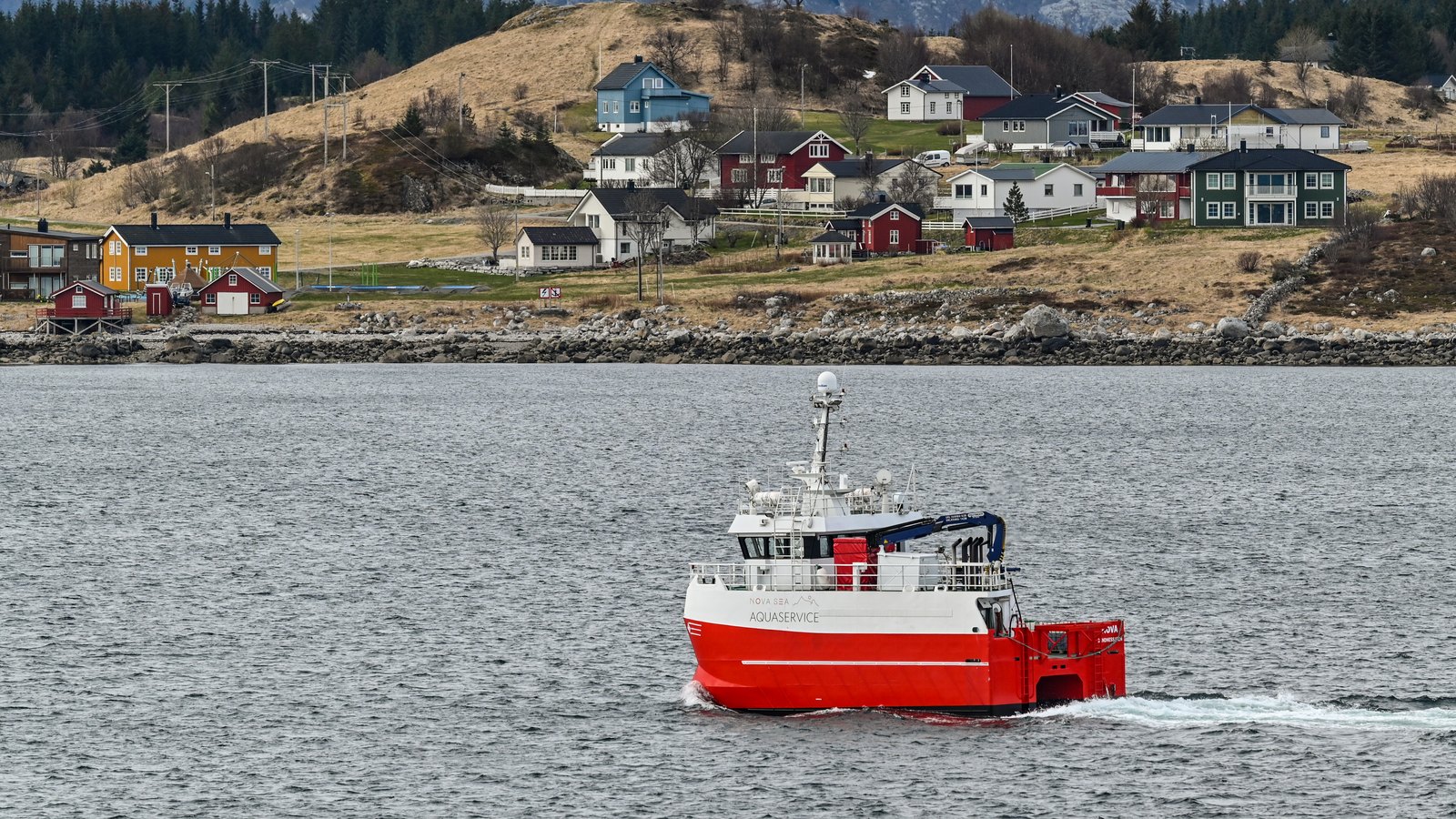
The applicants request federal approval to transfer farmed Atlantic salmon from aquaculture net pens in Maine coastal waters to five Canadian-flagged transport vessels for shipment to processing facilities in Blacks Harbour, New Brunswick. NMFS previously authorized the same five vessels to perform these transport operations in calendar year 2026 under permits that expire on December 31, 2026. The current filing seeks regulatory re-authorization for calendar year 2027.
Key details of the permit application and statutory criteria
Maritime transport of fish by non-U.S. vessels is strictly restricted by federal statute. Section 204(d) of the Magnuson-Stevens Act, codified at 16 U.S. Code § 1824, authorizes the Secretary of Commerce to issue transshipment permits for non-U.S. vessels to engage solely in transporting fish from points within the Exclusive Economic Zone or, with state concurrence, within coastal state boundaries to a point outside the United States.
Under 16 U.S.C. § 1824(d)(3)(D), an application to transship using non-U.S. vessels cannot be approved until the Secretary determines that no owner or operator of a United States vessel with adequate capacity has indicated an interest in performing the transportation at fair and reasonable commercial rates. NOAA published the notice to fulfill this statutory requirement and invite qualifying domestic maritime operators to submit expressions of interest.
The proposed operations take place entirely within Maine state waters and within 12 nautical miles of Maine seaward baseline. Authorized vessels must also adhere to 50 CFR Part 600 Subpart F, which establishes vessel monitoring, record-keeping, and observer requirements for foreign fishing vessels operating in U.S. jurisdiction.
| Provision | Citation | Requirement | Enforcement |
|---|---|---|---|
| Transshipment Permit | 16 U.S.C. § 1824(d) | Transport from U.S. waters to foreign destination | NOAA Fisheries |
| Domestic Capacity Test | 16 U.S.C. § 1824(d)(3)(D) | Secretary determines no U.S. vessel available at fair rates | Department of Commerce |
| Geographic Bounds | Notice 2026-24164 | Maine waters within 12 nautical miles of baseline | State of Maine and Coast Guard |
| Vessel Regulations | 50 CFR Part 600 Subpart F | Observer coverage, logbooks, and vessel tracking | NOAA Office of Law Enforcement |
| Comment Window | RTID 0648-XG167 | 14 days post-publication (closes December 11, 2026) | NMFS Trade and Commerce |
Background and cross-border regulatory context
Congress enacted the Magnuson-Stevens Act in 1976 to protect domestic fishery resources within the 200-nautical-mile Exclusive Economic Zone and phase out foreign harvesting fleets. Although commercial foreign fishing was eliminated decades ago, statutory provisions under Section 204 were preserved for specific cross-border logistics and scientific endeavors where domestic capacity is absent.
In the Gulf of Maine, commercial aquaculture operations maintain closely linked cross-border infrastructure. Net pens in Machias and Cobscook Bays harvest salmon within miles of Canadian waters, delivering fish directly to high-capacity processing facilities in Blacks Harbour, New Brunswick. Because domestic coastal carrier fleets rarely maintain specialized live-haul well-boats equipped with circulation and biosecurity systems, regional mariculture has historically relied on Canadian carrier vessels operating under annual Section 204(d) permits.
The transshipment framework operates alongside broader commercial compliance standards. Because the salmon is destined for foreign processing rather than a second domestic port, the transit constitutes international trade rather than domestic coastwise commerce under the Jones Act. Related legal standards govern institutional operations under Trade Agreements Act compliance, where research centers and agencies monitor the origin, transformation, and trade documentation of biological resources.
Stakeholder perspectives and industry reaction
The recurring transshipment review reflects the balance between domestic maritime preferences and specialized seafood supply chain logistics. Maritime industry advocates maintain that rigorous enforcement of Section 1824(d)(3)(D) is critical to ensure domestic vessel operators receive fair opportunities to bid on coastal shipping routes before foreign flag exemptions are renewed.
Aquaculture operators and regional seafood processors emphasize that uninterrupted vessel transport is essential for product quality, food safety, and operational continuity. Due to limited processing facilities in rural eastern Maine, cross-border vessel transport allows harvested fish to reach processing lines within hours, protecting coastal jobs and regional maritime infrastructure.
Policy researchers highlight that balancing commercial cross-border operations with statutory restrictions mirrors frameworks found across research governance, such as institutional controls for export control and international research collaboration, where regulatory authorities balance economic protection with practical transnational partnerships.
What it means for researchers, universities and research offices
While the permit application directly concerns commercial mariculture, NOAA notice carries operational relevance for academic marine researchers, university research offices, and coastal laboratory facilities. Marine science programs investigating aquaculture-wild fish interactions, fish pathology, and environmental dynamics across large marine ecosystems frequently conduct fieldwork adjacent to commercial lease tracts.
First, academic institutions executing field research or environmental monitoring near aquaculture leases must align charter vessel operations with state and federal maritime boundaries. Researchers deploying acoustic telemetry arrays, benthic sampling gear, or sensor buoys in Maine waters must ensure their craft operate in compliance with coastal state concurrence protocols and do not impede designated transshipment corridors.
Second, university data managers and research administrators tracking oceanographic baselines rely on federal data streams. Environmental observations collected across coastal New England regularly integrate with NOAA NCEI climate and ocean data access systems, supporting research into coastal circulation patterns, water quality parameters, and marine disease forecasting.
Third, research offices managing biological specimen procurement must verify compliance provenance. Laboratories acquiring fin tissue, genetic samples, or broodstock specimens from commercial aquaculture operations must ensure that legal chain-of-custody records reflect permitted harvest and transit compliance under Magnuson-Stevens Act frameworks.
What happens next
The publication of Notice 2026-24164 opens a 14-day public comment period following official publication on November 27, 2026. Interested parties and domestic vessel operators must submit comments by December 11, 2026. Written submissions citing docket RTID 0648-XG167 should be sent to Michael Abbey in the NMFS Office of International Affairs, Trade, and Commerce at [email protected].
Following the comment window, NOAA Fisheries will determine whether any qualified U.S. vessel operator has expressed an interest in conducting the transport at fair rates. Provided no domestic capacity is established and the State of Maine provides concurrence, NMFS will issue the transshipment permits prior to the December 31, 2026 expiration of the current permits, allowing the five Canadian vessels to operate through calendar year 2027.
Sources
- Federal Register: Public Inspection: Permits; Applications, Issuances, etc.: Foreign Fishing (Notice 2026-24164), checked 2026-11-26
- Electronic Code of Federal Regulations: 50 CFR Part 600 Subpart F — Foreign Fishing, checked 2026-11-26
- Legal Information Institute: 16 U.S. Code § 1824 — Permits for Foreign Fishing, checked 2026-11-26
- NOAA Fisheries: International Affairs, Trade, and Commerce, checked 2026-11-26






