
The National Oceanic and Atmospheric Administration (NOAA) initiated a formal federal performance evaluation of the Hudson River National Estuarine Research Reserve on November 27, 2026, under a notice filed in the Federal Register. The evaluation assesses state-level environmental stewardship, continuous monitoring networks, and academic research infrastructure along 100 miles of tidal estuary, establishing critical compliance and grant-eligibility benchmarks for university scientists and marine research offices.
Federal Notice Initiates Continuing Review of Hudson River Reserve
The notice, issued by NOAA’s Office for Coastal Management within the National Ocean Service, initiates a statutory review of the Hudson River National Estuarine Research Reserve. Signed by Acting Director Keelin S. Kuipers, the document outlines evaluation procedures under the Coastal Zone Management Act. The operational review is led by Carrie Hall, Evaluator in NOAA’s Evaluation and Compliance Program, assessing how effectively the reserve satisfies federal legislative objectives, environmental standards, and state management commitments.
The reserve operates through a cooperative partnership between NOAA and the New York State Department of Environmental Conservation (NYSDEC), which acts as the lead state managing agency. Filed under Federal Register Document Number 2026-24210 on November 27, 2026, the notice sets a formal public consultation process. Concurrently, NOAA published companion performance evaluation notices for the Washington Coastal Zone Management Program (FR Doc. 2026-24211) and Pennsylvania Coastal Zone Management Program (FR Doc. 2026-24212), reflecting coordinated federal coastal program oversight.
Federal performance reviews examine core administrative and scientific functions: reserve operations and resource management, public education and interpretive programming, coastal training for local officials, and scientific monitoring. The upcoming consultation will augment findings obtained during an initial public scoping meeting conducted in February 2026.
Key Evaluation Milestones, Reserve Sites, and Monitoring Metrics
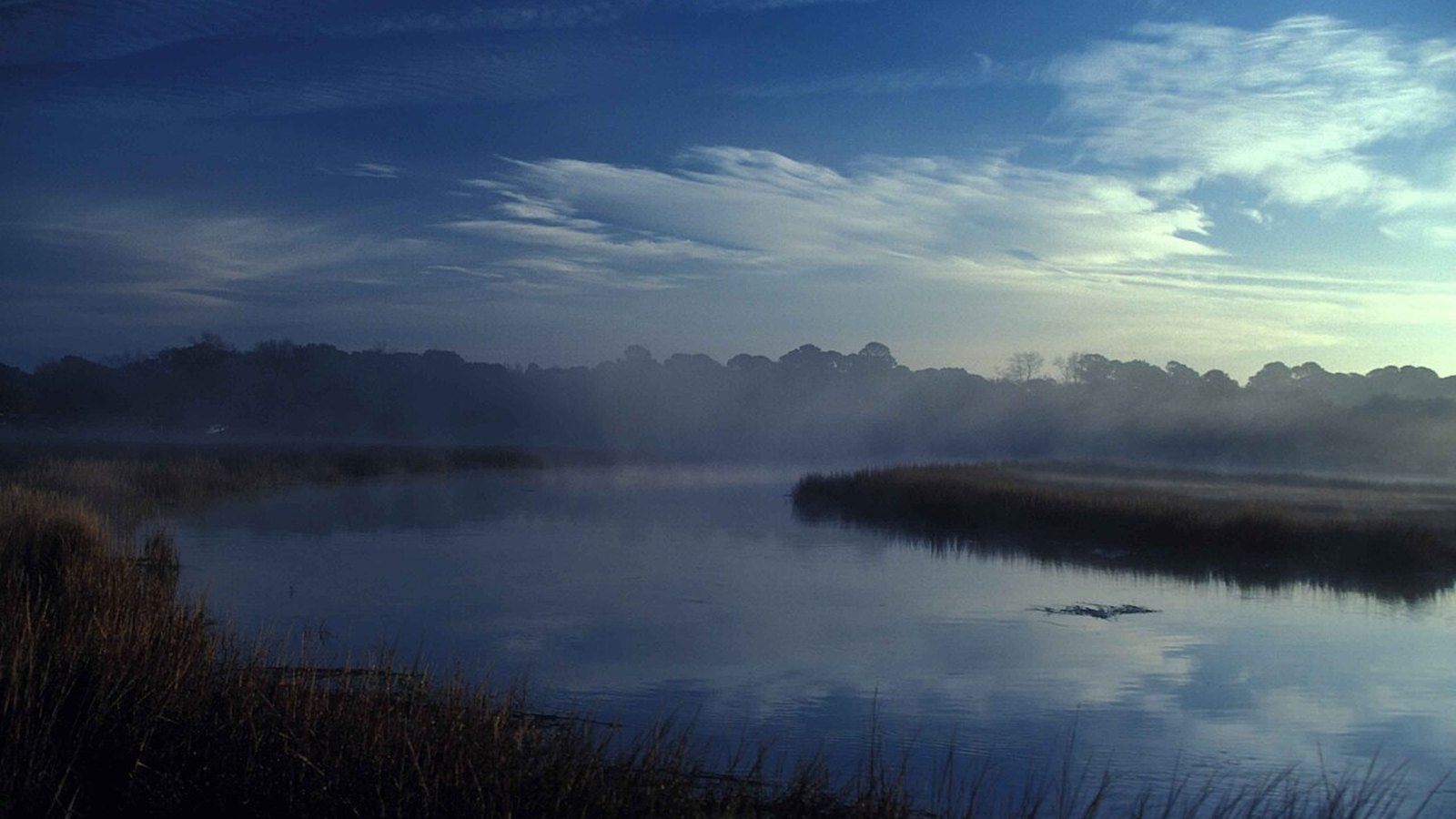
Covering approximately 5,000 acres of protected tidal wetlands, shallows, and upland buffers, the Hudson River National Estuarine Research Reserve spans a 100-mile reach of the tidal estuary. The reserve encompasses four distinct component sites between river mile 24 and river mile 124, representing the full freshwater-to-brackish estuarine continuum.
The table below outlines the four designated component sites subject to federal evaluation, their locations, and primary scientific monitoring roles:
| Component Site | County Location | River Reach | Wetland Acreage and Habitat Type | Primary Scientific Monitoring Focus |
|---|---|---|---|---|
| Stockport Flats | Columbia County | River miles 121–124 | 1,184 acres; freshwater tidal marsh, mudflats | Sediment transport dynamics, tidal freshwater vegetation, anadromous fish spawning |
| Tivoli Bays | Dutchess County | River miles 99–101 | 1,722 acres; freshwater tidal marsh, shallow bay | Continuous water quality telemetry, nutrient cycling, invasive plant ecology |
| Iona Island | Rockland County | River miles 45–46 | 556 acres; brackish tidal marsh, rocky islands | Surface elevation table (SET) accretion rates, brackish marsh transitions |
| Piermont Marsh | Rockland County | River miles 24–25 | 1,017 acres; extensive brackish emergent marsh | Storm surge attenuation, carbon sequestration, benthic community monitoring |
Across all four sites, the reserve maintains the System-Wide Monitoring Program (SWMP), a standardized national surveillance network. SWMP deployment features autonomous telemetry stations recording vital parameters—including temperature, conductivity, salinity, dissolved oxygen, pH, and turbidity—at 15-minute intervals. These stations are paired with meteorological towers tracking atmospheric pressure, solar radiation, precipitation, and wind vectors, providing baseline data for regional modeling networks.
Statutory Framework Under CZMA and Prior Review Findings
The statutory basis for NOAA’s evaluation rests in Section 312 of the Coastal Zone Management Act of 1972 (16 U.S. Code Section 1458), which requires continuing reviews of federally approved coastal programs and estuarine research reserves. In addition, Section 315(f) of the CZMA (16 U.S.C. 1461) mandates periodic reviews of reserve operations to ensure federal funds are used effectively and statutory goals are achieved.
Federal regulations governing these reviews are codified at 15 CFR Part 921. Under Subpart E (15 CFR Section 921.40), NOAA assesses whether state agencies adhere to approved management plans, fulfill financial agreements, and maintain research and education programs. When deficiencies are identified, Section 312 authorizes NOAA to issue recommendations, establish corrective milestones, or suspend federal financial assistance.
Designated in 1982, the Hudson River site represents the Middle Atlantic tidal river estuarine subregion within the 30-reserve network coordinated by the NOAA National Estuarine Research Reserve System. The reserve’s automated telemetry feeds into broader oceanographic and climate repositories. As examined in CASRAI’s reference on NOAA NCEI ocean and climate data access, multi-decadal observations collected under standardized protocols form the evidentiary foundation for regional environmental modeling and sea-level rise assessments.
Stakeholder Perspectives and Estuarine Research Priorities
Estuarine scientists view the federal evaluation as an important milestone for reinforcing the reserve’s research and stewardship mandate. The National Estuarine Research Reserve Association (NERRA), an independent non-profit organisation representing reserve directors, researchers, and educators nationwide, emphasizes the unique scientific value of the Hudson River reserve in its Hudson River reserve analysis. NERRA highlights that the reserve’s 100-mile freshwater-to-brackish gradient provides an exceptional natural laboratory for evaluating sediment transport, wetland accretion, and salinity intrusion.
Faculty researchers and graduate investigators from regional institutions—including Columbia University’s Lamont-Doherty Earth Observatory, the Cary Institute of Ecosystem Studies, Bard College, and Cornell University—rely on the reserve’s protected research waters and time series. Academic scientists note that without sustained operational support, maintaining automated telemetry arrays across expansive estuarine reaches would be cost-prohibitive under standard three-year academic grant cycles.
This cooperative structure mirrors federal-state environmental science partnerships nationwide. Just as researchers collaborating with the NOAA Great Lakes Environmental Research Laboratory benefit from sustained observation infrastructure in large freshwater systems, Hudson River researchers depend on reserve telemetry to contextualize short-term ecological experiments within multi-decadal environmental baselines.
Implications for Academic Research, Grants, and Data Governance
The federal evaluation carries direct practical implications for university research offices, sponsored project administrators, and principal investigators operating within the Hudson River Estuary:
- Research Permitting and Protocol Governance: University scientists deploying monitoring moorings, collecting benthic samples, or manipulating wetland vegetation within any component site must maintain valid research permits approved by NYSDEC and reserve management. Research designs must align strictly with approved management plans to safeguard sensitive habitats.
- Environmental Sensor Calibration and Quality Standards: Research teams integrating private or university-owned sensors into reserve monitoring nodes must follow rigorous calibration standards. These requirements mirror institutional best practices outlined in CASRAI’s guide to laboratory environmental monitoring systems, ensuring telemetry data integrity and cross-platform comparability.
- Automated Sampling Instrumentation Protocols: Projects deploying automated water samplers and continuous flow monitoring devices must adhere to certified field methods. Standardized operating protocols, such as those detailed in CASRAI’s guide to compliance monitoring autosamplers, prevent sample contamination and mechanical failures in demanding tidal brackish environments.
- Margaret A. Davidson Graduate Fellowships: The evaluation directly influences NOAA’s administration of the Margaret A. Davidson Graduate Fellowship program at the reserve. The fellowship provides two years of federal stipend and research funding to graduate students addressing coastal management priorities. Sponsored research offices must ensure that institutional compliance, mentoring plans, and sub-award documentation satisfy 15 CFR Part 921 standards.
- Open Data Mandates and Academic Publishing: Scientists publishing findings derived from Hudson River NERR monitoring arrays in peer-reviewed venues, such as journals surveyed in our guide to environmental monitoring journals, must deposit cleaned data with permanent digital object identifiers (DOIs) via the NERRS Centralized Data Management Office.
Upcoming Deadlines and Public Participation Timeline
NOAA has established a clear timetable for public engagement, stakeholder input, and written comment submissions on the reserve’s operational performance:
- January 15, 2027: Deadline for submitting requests for sign language interpretation or auxiliary accommodations to NOAA at [email protected] or (240) 410-3422, requiring at least 14 days advance notice.
- January 28, 2027 (11:59 p.m. ET): Deadline for advance speaker registration to present oral testimony during the virtual public meeting via NOAA’s online registration form.
- January 29, 2027 (12:00 p.m. to 1:00 p.m. ET): Virtual public meeting conducted via Google Meet. Registered speakers will be called in order of registration with a three-minute time limit; testimony must be delivered in English. Unregistered participants may speak as time permits after scheduled speakers conclude.
- February 5, 2027 (11:59 p.m. ET): Final deadline for written public comments submitted electronically through the Federal eRulemaking Portal at Regulations.gov under Docket ID NOAA-NOS-2026-3467.
Following the public comment window, NOAA’s Evaluation and Compliance Program will synthesize submissions, state documentation, and site assessment records into an evaluation findings report. The Office for Coastal Management will subsequently publish a Notice of Availability in the Federal Register, detailing final evaluation conclusions and any recommendations for NYSDEC.
Sources
- Federal Register: Evaluation of the Hudson River National Estuarine Research Reserve; Notice of Public Meeting; Request for Comments, checked 2026-11-27
- NOAA Office for Coastal Management: National Estuarine Research Reserve System, checked 2026-11-27
- National Estuarine Research Reserve Association: Hudson River Reserve Profile, checked 2026-11-27
- Cornell Legal Information Institute: 16 U.S. Code Section 1458 – Review of Performance, checked 2026-11-27
- eCFR: 15 CFR Part 921 – National Estuarine Research Reserve System Regulations, checked 2026-11-27






