
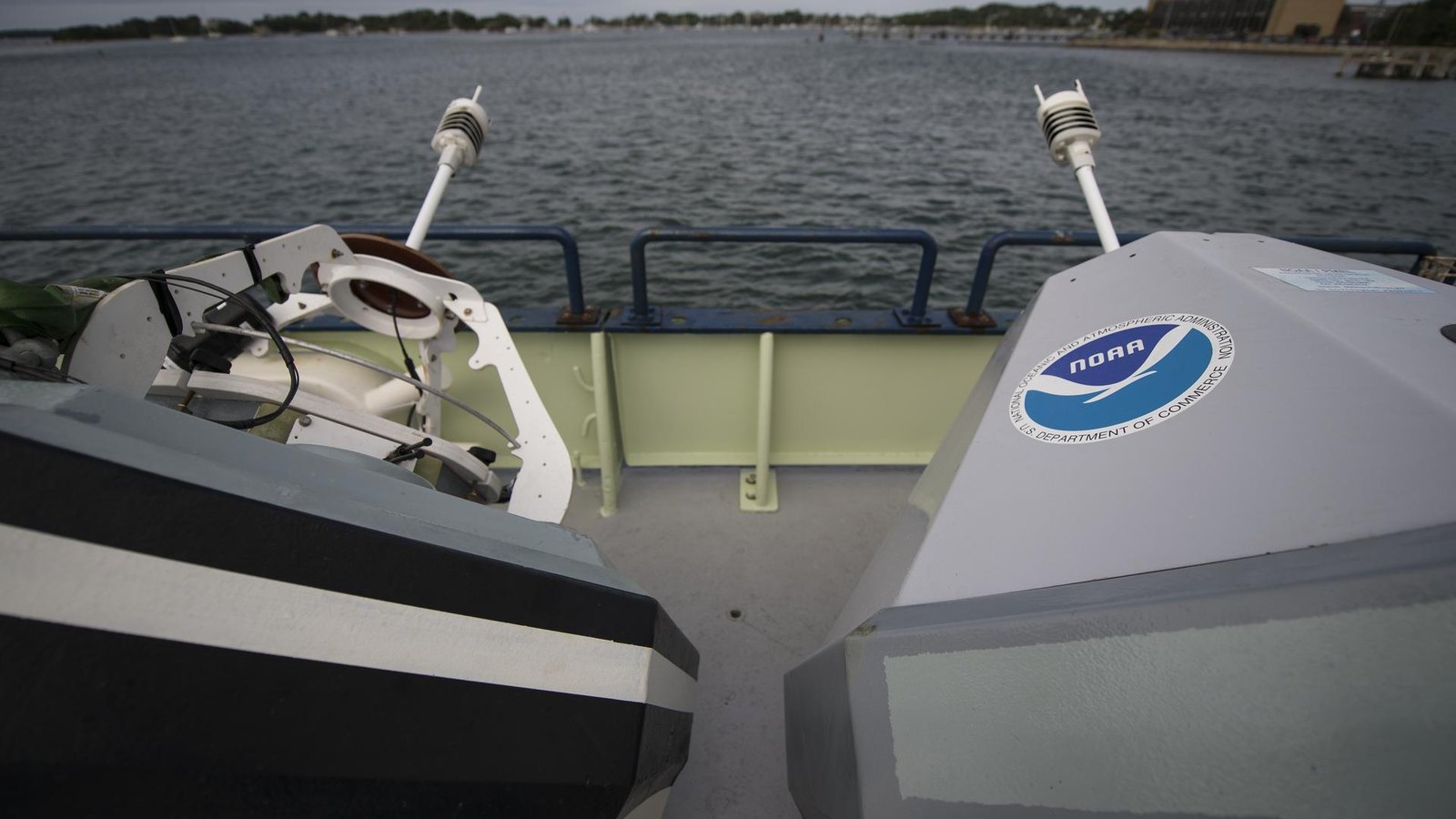
On November 27, 2026, the National Oceanic and Atmospheric Administration issued a formal notice soliciting nominations for membership on the National Sea Grant Advisory Board, initiating its annual statutory recruitment under the Sea Grant Program Improvement Act of 1976. The call invites marine scientists, university leaders, and coastal resource experts to shape federal research strategy, quadrennial program evaluations, and funding priorities across 34 university-based Sea Grant institutional partnerships nationwide.
Statutory Authority and the 2026 Nomination Solicitation
The solicitation notice, designated as Federal Register Document Number 2026-24223, was officially filed for public inspection on November 27, 2026, by NOAA Office of Oceanic and Atmospheric Research (OAR) under the leadership of Nikola Garber, Deputy Director of the National Sea Grant College Program. The formal publication in the Federal Register establishes the official window for institutions and qualified individuals to put forward candidates for secretarial appointment. Under Section 209 of the Sea Grant Program Improvement Act of 1976 (Public Law 94-461, codified at 33 U.S.C. 1128), the Secretary of Commerce is legally mandated to solicit nominations for the advisory board at least once annually.
The National Sea Grant Advisory Board functions as an independent federal advisory body governed by the Federal Advisory Committee Act (FACA) and its implementing regulations at 41 C.F.R. Part 102-3. Its primary mission is to advise the Secretary of Commerce and the Director of the National Sea Grant College Program on operational execution, strategic investment portfolios, and science policy. By statute, the board reviews the effectiveness of marine research and technology transfer, assesses educational and extension curricula, and conducts objective evaluations of participating collegiate programs.
Board Composition, Term Structure, and Governance Responsibilities
Federal statute dictates that the National Sea Grant Advisory Board consist of fifteen voting members appointed directly by the Secretary of Commerce. To maintain balanced governance, appointees are drawn from academia, commercial industry, state governments, and citizen advocacy organizations. Members serve four-year terms, which are staggered across successive appointment classes to preserve institutional continuity and long-term research oversight. Statutory provisions explicitly mandate that selections be conducted without regard to race or sex, focusing strictly on demonstrated scientific merit, administrative expertise, and regional geographic diversity across Atlantic, Pacific, Gulf of Mexico, and Great Lakes coastal ecosystems.
Board members undertake substantial governance duties throughout their tenure. These include reviewing the quadrennial strategic plans developed by individual Sea Grant college programs, assessing the allocation formulas for federal research appropriations, advising on workforce development initiatives, and submitting biennial reports directly to the United States Congress evaluating the overall vitality of the national network.
| Governance Dimension | Statutory Provision | Implementation Details |
|---|---|---|
| Statutory Basis | 33 U.S.C. 1128 and P.L. 94-461 | Mandatory annual secretarial solicitation of board candidates |
| Voting Membership | 15 Secretarial Appointees | Balanced across academia, industry, state government, and civic groups |
| Term Length | 4-Year Staggered Terms | Maximum of two consecutive terms upon secretarial reappointment |
| Advisory Scope | 34 Sea Grant College Programs | Strategic planning, research allocation, and quadrennial reviews |
| Submission Channel | Direct Electronic Filing | Curriculum vitae to [email protected] with optional cover letter |
| Ethics and Privacy | FACA and Privacy Act of 1974 | Vetting via SORN COMMERCE/DEPT-11 and Special Government Employee rules |
University Network Integration and Federal Research Infrastructure
Established under the National Sea Grant College and Program Act of 1966, the Sea Grant network operates as a federal-university partnership model inspired by the agricultural land-grant college system. Federal core appropriations allocated by NOAA require a matching commitment from non-federal sources, typically on a two-to-one federal-to-state matching basis. This structure empowers universities to direct sustained funding into coastal resilience, estuarine ecology, fisheries management, and marine aquaculture.
The advisory board oversees critical cross-institutional programs that integrate academic research with national federal initiatives. Chief among these is the prestigious Sea Grant Knauss Fellowship, which places highly qualified graduate students into executive and legislative offices in Washington to bridge ocean science and national policymaking. At the regional level, institutions such as California Sea Grant at Scripps Institution of Oceanography coordinate multidisciplinary research across public and private university systems, channeling federal investment into local coastal protection and marine resources.
Furthermore, Sea Grant research projects interface systematically with national oceanographic data repositories. Data management mandates ensure that oceanographic observations, biogeochemical measurements, and hydrographic datasets generated through Sea Grant awards are curated and integrated into the NOAA NCEI ocean data platforms. This open data continuity supports longitudinal climate modeling and coastal forecasting. In parallel, translational research discoveries originating in university laboratories leverage programs such as the NOAA SBIR mechanism to commercialize marine instrumentation, ecological monitoring sensors, and sustainable aquaculture technologies.
Academic and Intergovernmental Perspectives on Advisory Leadership
The national academic community and professional consortia place significant weight on the composition of the advisory board. The Sea Grant Association, a non-profit organization representing the executive directors and institutional leaders of all 34 university programs, regularly highlights the board as an indispensable safeguard of academic independence and merit-based allocation. Executive leaders point out that independent peer-reviewed prioritization prevents federal marine investments from becoming overly concentrated in narrow regulatory compliance projects at the expense of fundamental ocean science.
University program directors, including leadership at California Sea Grant, have noted that board reviews provide institutional validation that justifies continued state and institutional co-investment. Because state legislatures and university regents must approve institutional matching funds for federal Sea Grant awards, external evaluations by secretarial advisory panels demonstrate the quantifiable economic and ecological returns generated by campus-led research extension.
Operational Guidance for University Research Offices and Faculty Nominees
The 2026 nomination call carries direct strategic and operational implications for higher education institutions, marine laboratories, and research administration professionals:
- Candidate Profile Identification: Research deans and departmental chairs should identify senior investigators and program leaders with substantive records in marine ecology, oceanography, coastal resource economics, or tribal and community extension. Ideal nominees bring both academic rigor and proven capability in interdisciplinary committee deliberations.
- Institutional Endorsements and Administrative Approvals: Serving as a secretarial appointee requires a four-year commitment involving preparation for semi-annual public meetings, ad hoc working groups, and site visits to university Sea Grant colleges. University offices of research should coordinate institutional endorsement letters and confirm faculty release time before nomination packages are transmitted.
- Ethics Vetting and Conflict of Interest Protocols: Appointees to the National Sea Grant Advisory Board serve under federal advisory ethics guidelines. While board members provide overarching programmatic guidance rather than peer-reviewing specific grant proposals, university compliance officers must ensure nominees understand federal financial disclosure requirements and recusal standards governing their home institutions.
- Strategic Intelligence for Sponsored Programs: Sponsored research officers should track board deliberations, meeting minutes, and statutory reports. These documents provide early indicators of emerging federal research priorities, informing university strategy for upcoming national competitive funding opportunities in coastal resilience and marine biotechnology.
Submission Procedures and Administrative Timelines
NOAA has established straightforward electronic application procedures to ensure broad participation across geographic regions. Candidates may self-nominate or be nominated by universities, professional societies, state agencies, or civic organizations. The required application materials comprise a current resume or curriculum vitae outlining the candidate’s educational background, professional positions, research accomplishments, and advisory committee experience. While an accompanying cover letter highlighting specialized domain expertise relevant to the Sea Grant mission is optional, NOAA strongly encourages its inclusion to assist reviewers in evaluating committee balance.
All nomination packages must be submitted by electronic mail to the designated address: [email protected]. Prospective candidates should avoid sending paper filings. Submitted information will be processed in strict accordance with the Privacy Act of 1974 (5 U.S.C. 552a) under Department of Commerce System of Records Notice COMMERCE/DEPT-11 (Candidates for Membership, Members, and Former Members of Department of Commerce Advisory Committees) and COMMERCE/DEPT-18.
Following initial administrative screening by NOAA OAR staff, nomination dossiers will be reviewed by the Under Secretary of Commerce for Oceans and Atmosphere. Recommended slates will be transmitted to the Secretary of Commerce for final vetting and formal appointment. New appointees are expected to assume their governance duties ahead of the 2027 advisory board public plenary sessions.
Sources
- Federal Register: Notice to Solicit Nominations for Membership on the National Sea Grant Advisory Board (NSGAB), checked 2026-11-27
- Legal Information Institute: 33 U.S. Code § 1128 – National Sea Grant Advisory Board, checked 2026-11-27
- Sea Grant Association: About the Sea Grant Association, checked 2026-11-27
- California Sea Grant: About California Sea Grant at Scripps Institution of Oceanography, checked 2026-11-27





