
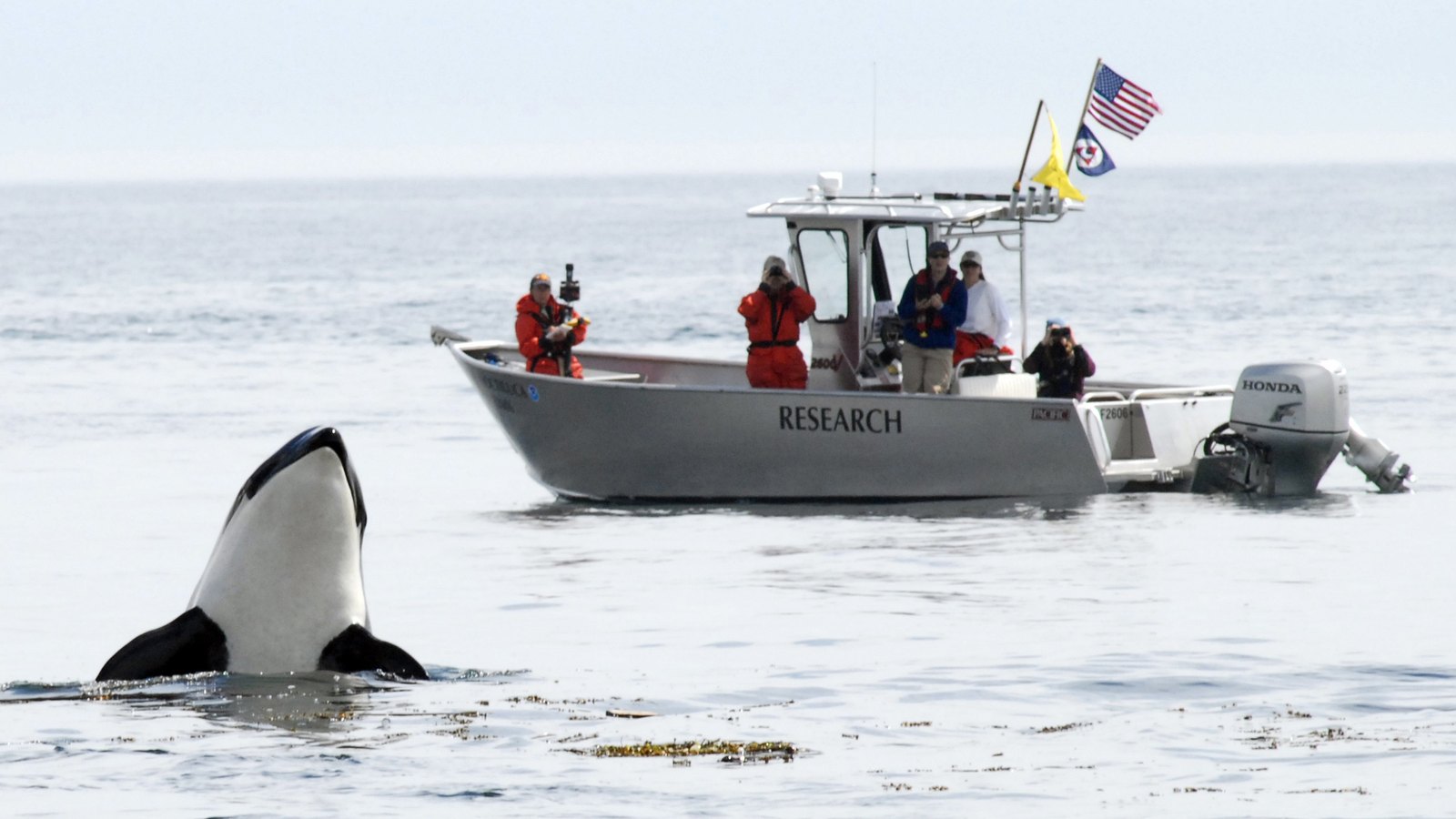
On November 20, 2026, the National Oceanic and Atmospheric Administration’s National Marine Fisheries Service published draft 2026 Marine Mammal Stock Assessment Reports spanning the Alaska, Atlantic, and Pacific regions alongside a five-year incidental harassment authorization application for seabird research in California’s Farallon Islands, establishing revised biological removal thresholds and regulatory compliance baselines for academic marine science programs.
What happened
The National Marine Fisheries Service (NMFS), an operating agency of NOAA within the U.S. Department of Commerce, published Federal Register Notice 2026-23682 (91 FR 75300, RTID 0648-XG131) on November 20, 2026, announcing the draft 2026 Marine Mammal Stock Assessment Reports (SARs). Signed by Jonathan Arthur Hare, Acting Director of the NMFS Office of Science and Technology, the notice opens a 90-day public comment window closing February 18, 2027. Public comments and survey data are being collected through docket NOAA-NMFS-2026-3499 on the Federal e-Rulemaking Portal.
Simultaneously, NMFS published Federal Register Notice 2026-23631 (91 FR 75299, RTID 0648-XG133), signed by Larissa Plants, Deputy Director of the Office of Protected Resources. The notice solicits review on an application from Point Blue Conservation Science for a five-year Letter of Authorization (LOA) to take small numbers of five marine mammal species by incidental Level B behavioral harassment during ongoing seabird monitoring at the Farallon Islands National Wildlife Refuge. Comments close on December 21, 2026.
Key details
Under Section 117 of the Marine Mammal Protection Act (MMPA), NMFS evaluated stocks under its domestic jurisdiction, revising or establishing new stock assessments for 42 populations: 16 stocks across five reports in Alaska, 8 stocks in the Atlantic, Gulf of Mexico, and Caribbean, and 18 stocks across five reports in the Pacific.
In Alaska, revisions address two strategic stocks—the Eastern North Pacific right whale and North Pacific sperm whale—and 14 non-strategic harbor seal stocks. In the Atlantic and Gulf of Mexico, updates cover eight stocks, featuring stand-alone reports for Northern Gulf of Mexico common bottlenose dolphin units and two proposed new stocks of Tamanend’s bottlenose dolphin (Mid-Atlantic Coastal and North Carolina Estuarine System stocks), alongside updated metrics for Gulf of Maine humpback whales.
In the Pacific, NMFS assessed 85 managed stocks, revising 18 stocks across five reports. Key strategic revisions include Hawaiian monk seals, Eastern North Pacific Southern Resident killer whales, three false killer whale stocks, and combined U.S. West Coast humpback whale stocks. Non-strategic Pacific updates include Eastern and Western North Pacific gray whales, three Washington inland harbor seal stocks, and six Hawaiian spinner dolphin stocks.
| Administrative Region / Action | Revised Stocks | Strategic Status | Key Species Covered | Comment Deadline |
|---|---|---|---|---|
| Alaska Region SARs | 16 stocks (5 reports) | 2 strategic | North Pacific right whale, sperm whale, 12 harbor seal stocks | February 18, 2027 |
| Atlantic and Gulf SARs | 8 stocks | 6 strategic | Tamanend’s bottlenose dolphins, Gulf of Maine humpback whale | February 18, 2027 |
| Pacific Region SARs | 18 stocks (5 reports) | 7 strategic | Southern Resident killer whale, monk seal, humpback whale | February 18, 2027 |
| Farallon Islands Seabird LOA | 5 pinniped species | Level B harassment | California sea lions, harbor seals, Steller sea lions, elephant seals | December 21, 2026 |
NMFS also introduced a modernized computational pipeline for SAR production. The agency applied reproducible HTML-first document generation to Alaska harbor seals, Gulf of Maine humpback whales, Hawaiian monk seals, Pacific false killer whales, and Hawaiian spinner dolphins. This methodology transitions legacy PDF reports into machine-readable data products, allowing external scientists to audit data dependencies directly in accordance with reproducible research practices.
Background and context
Enacted in 1972, the MMPA requires NMFS and the U.S. Fish and Wildlife Service to prepare stock assessment reports for every marine mammal stock in U.S. waters. First completed in 1995, SARs synthesize data on distribution, abundance, annual human-caused mortality and serious injury (M/SI), commercial fisheries interactions, and population trends. Strategic stocks—populations where human-caused mortality exceeds Potential Biological Removal (PBR), populations declining toward Endangered Species Act listing, or those listed as threatened, endangered, or depleted—must be reviewed annually, while non-strategic stocks are evaluated every three years.
Potential Biological Removal represents the maximum number of animals, excluding natural mortalities, that may be removed from a stock while allowing it to reach or maintain its optimum sustainable population. Because assessments require field survey synthesis and peer review by three independent regional Scientific Review Groups (SRGs), reports typically reflect data collected over preceding multi-year cycles, spanning 2019 through 2023 or 2024 for the 2026 draft package.
To address historical reporting backlogs, NMFS introduced a pilot concurrent review process in this cycle. While earlier draft SAR components underwent sequential SRG peer review prior to public release, remaining stocks are undergoing concurrent SRG review and public comment to test whether simultaneous review compresses publishing lags without diminishing scientific rigor.
The concurrent Farallon Islands notice highlights the link between seabird monitoring and marine mammal protection. Point Blue Conservation Science has maintained year-round ecological observation at Southeast Farallon Island since 1968 under cooperative agreements with the U.S. Fish and Wildlife Service. Because five pinniped species haul out along refuge shores, biologist movements, boat supply landings, and seabird banding can cause localized flushing. Under MMPA Section 101(a)(5)(A), such non-lethal disruptions require incidental take authorizations to confirm disturbance has a negligible environmental impact on local rookeries.
Reaction and scientific commentary
In agency release notices, NMFS leadership emphasized that modernizing the SAR compilation process is vital for responsive ocean governance. Acting Director Jonathan Arthur Hare noted that adopting standardized, reproducible HTML reporting workflows provides academic researchers, regional fishery management councils, and conservation bodies with immediate access to underlying population models and mortality estimates.
Scientific advisory bodies have long advocated for reduced delays in federal stock assessments. The Marine Mammal Commission has consistently highlighted that multi-year data lags hinder timely conservation interventions for critically endangered species, particularly the Southern Resident killer whale population, where nutritional constraints and vessel disturbance require immediate regulatory coordination based on current demographic counts.
Point Blue Conservation Science researchers noted that securing a five-year Letter of Authorization provides operational continuity for California Current ecosystem research. Point Blue field directors emphasized that long-term seabird surveillance delivers vital barometers of marine climate variability, while structured mitigation protocols ensure that field station logistics avoid adverse impacts on sensitive breeding pinnipeds.
What it means for researchers, universities and research offices
The draft 2026 SARs and the Farallon incidental take application carry operational implications for academic marine biology departments and university research compliance offices:
- Research Cruise Compliance: Academic research vessels operating under National Science Foundation, Office of Naval Research, or NOAA charters must verify whether active acoustic mapping or seismic profiling transects intersect revised strategic stock ranges. Updated PBR figures directly govern environmental assessments and incidental harassment permit applications reported in journals such as the Journal of Experimental Marine Biology and Ecology.
- Coastal Fieldwork Protocols: Academic field stations and university ecological teams monitoring coastal habitats must review proximity to marine mammal haulouts. If drone photogrammetry or small-boat supply runs risk flushing pinnipeds into the water, institutions must consult NMFS guidance to determine whether an incidental harassment authorization is legally required under MMPA Section 101.
- Data Standardization and Collaborative Governance: As federal agencies adopt reproducible data pipelines, university researchers contributing telemetry, photo-identification records, or stranding data to federal databases should align their repositories with structured FAIR standards and formalize multi-institution data governance using a data sharing agreement.
- Public Comment Window: University faculty specializing in marine mammalogy, fisheries statistics, and population dynamics have an open window through February 18, 2027, to submit technical corrections or regional survey data to shape final federal management baselines.
What happens next
The administrative timeline establishes concrete milestones across late 2026 and 2027:
- December 21, 2026: Public comments close for Point Blue Conservation Science’s five-year Farallon Islands seabird research Letter of Authorization application under MMPA Section 101(a)(5)(A).
- February 18, 2027: The 90-day public comment window closes for the draft 2026 Marine Mammal Stock Assessment Reports across Alaska, Atlantic, and Pacific regions on docket NOAA-NMFS-2026-3499.
- Early to Mid-2027: Regional Scientific Review Groups will conclude evaluations, and NMFS will review public input to finalize population estimates, PBR determinations, and strategic designations.
- July 1, 2027: Anticipated effective date for Point Blue’s final five-year incidental take regulations governing Farallon Islands research operations, extending through June 30, 2032.
- Ongoing 2027 Deployments: NMFS will expand reproducible HTML reporting to additional stocks via the official NOAA Fisheries stock assessment portal.
Sources
- Federal Register: Draft 2026 Marine Mammal Stock Assessment Reports, checked 2026-11-21
- Federal Register: Taking Marine Mammals Incidental to Seabird Research Activities in the Farallon Islands, California, checked 2026-11-21
- NOAA Fisheries: Marine Mammal Stock Assessment Reports, checked 2026-11-21
- U.S. Fish and Wildlife Service: Farallon Islands National Wildlife Refuge, checked 2026-11-21
- Marine Mammal Commission: Southern Resident Killer Whale, checked 2026-11-21
- Regulations.gov: Docket NOAA-NMFS-2026-3499, checked 2026-11-21


