
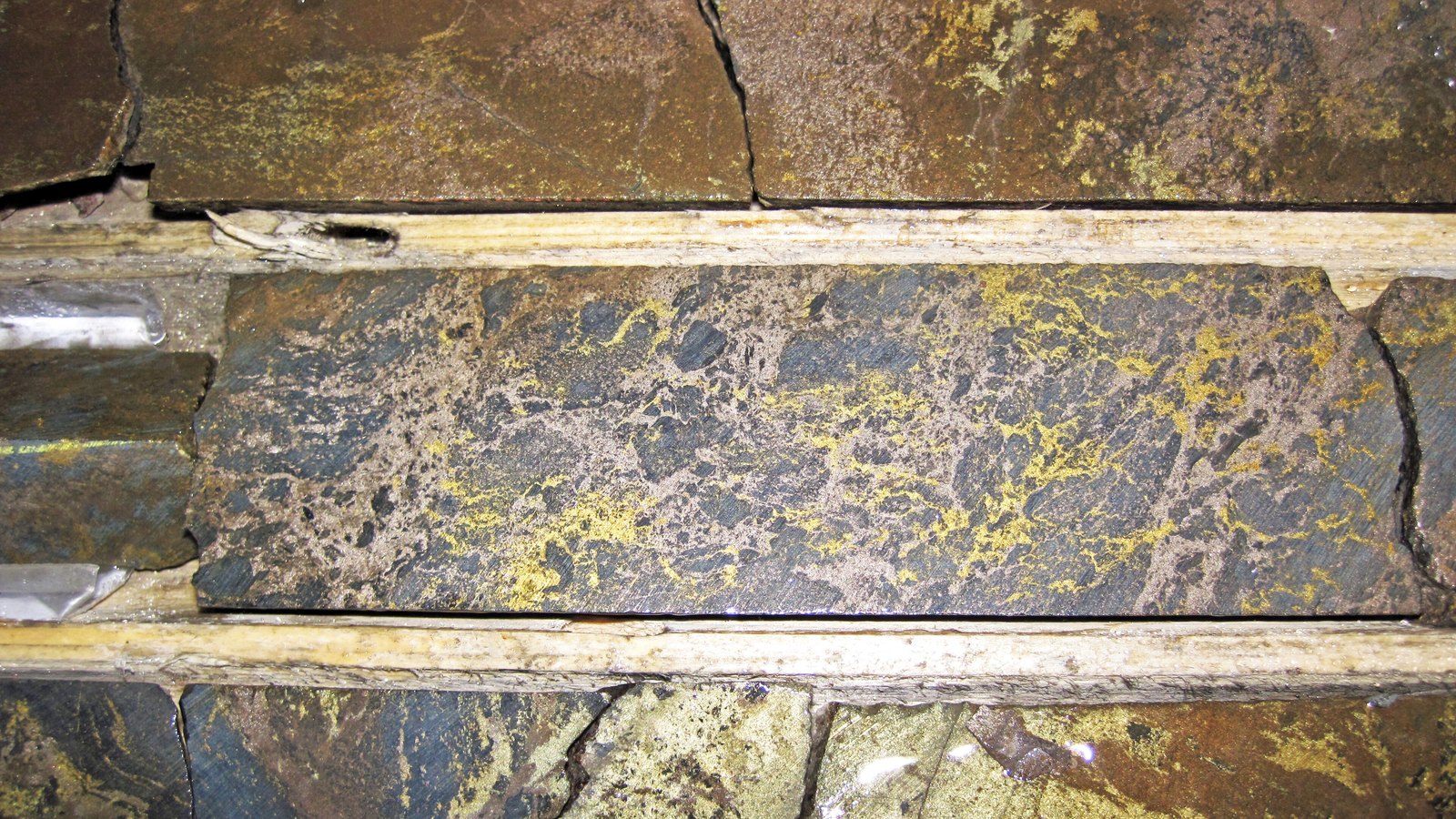
The Government of Kenya selected the United States-led Frontier Minerals Consortium on 19 November 2026 as the preferred bidder to develop the multibillion-dollar Mrima Hill rare earth elements and niobium deposit in Kwale County. The award establishes a domestic chromatographic refining framework outside Chinese supply chains, delivering critical non-ferrous metals essential for university particle accelerators, superconducting quantum magnets, and advanced alloy research laboratories.
Kenya Awards Preferred-Bidder Status to Frontier Minerals Consortium
Kenya’s Ministry of Mining, Blue Economy and Maritime Affairs issued formal notification on 19 November 2026 designating Frontier Minerals LLC as the successful bidder in the international tender for the Mrima Hill Rare Earth and Niobium Project. Detailed in a regulatory disclosure by consortium mining partner Bunker Hill Silver Corp., the decision grants the American consortium exclusive rights to negotiate a comprehensive mineral prospecting licence over the carbonatite complex in Kwale County, roughly 60 kilometres southwest of the Port of Mombasa.
Frontier Minerals LLC serves as consortium lead, while Bunker Hill Silver Corp. (TSX: BNKR / OTCQB: BHLL) oversees mining engineering, twin-drilling validation, and feasibility operations. Advanced refining technology is provided by ReElement Technologies Corporation in partnership with parent company American Resources Corporation (NASDAQ: AREC), deploying chromatographic separation to refine separated oxides within Kenya.
The competitive solicitation represents the first major resource tender completed under Kenya’s modernized Mining Act. According to sector coverage compiled by allAfrica, the Kenyan government selected the American grouping over competing bids from Chinese state-linked firms and Australian exploration consortia, prioritizing commitments to domestic industrial processing over raw mineral exportation.
Deposit Scale, Mineral Economics, and Work Program Milestones
Mrima Hill is recognized by economic geologists as one of the world’s largest undeveloped carbonatite-hosted lanthanide and niobium deposits. Historical drilling defined a weathered laterite mantle extending from surface. Resource modeling outlined in a 2013 National Instrument 43-101 technical report documented 48.7 million metric tonnes (Mt) of Indicated mineral resources grading 4.40% Total Rare Earth Oxides (TREO) and 110.7 Mt Inferred at 3.61% TREO at a 1.0% cut-off. The deposit hosts a high-grade surface zone containing 11.2 Mt Indicated at 6.93% TREO and 15.6 Mt Inferred at 7.12% TREO at a 5.8% cut-off grade.
The co-occurring niobium resource comprises 47.8 Mt of Indicated material at 0.66% niobium pentoxide (Nb2O5) and 94.4 Mt Inferred at 0.73% Nb2O5 at a 0.2% cut-off. Notably, critical permanent magnet inputs constitute approximately 21% of total Indicated rare earth volume. Government valuations estimate the gross in-ground mineral endowment at upwards of KSh 8.18 trillion (approximately $60 billion).
| Target Mineral Element | Historical Deposit Grade | Primary Scientific and Technological Applications | Global Supply Concentration |
|---|---|---|---|
| Niobium Pentoxide (Nb2O5) | 0.66% Indicated (47.8 Mt) / 0.73% Inferred (94.4 Mt) | Superconducting radiofrequency (SRF) accelerator cavities, MRI magnets, aerospace superalloys | Over 85% concentrated in Brazil (CBMM) |
| Neodymium and Praseodymium (NdPr) | High-grade domains up to 6.93% – 7.12% TREO | High-coercivity NdFeB permanent magnets for electric drives, cryo-coolers, lab vacuum pumps | Over 70% mining, over 90% refined in China |
| Dysprosium and Terbium (Dy/Tb) | High-temperature heavy magnet fraction (~21% magnet TREO) | Thermal stabilization of superconducting systems, defense optics, magnetostrictive sensors | Over 98% heavy rare earth separation in China |
| Yttrium and Europium (Y/Eu) | Dispersed throughout carbonatite weathered mantle | High-temperature superconducting ceramic tapes (YBCO), laser gain media, scientific phosphors | Over 90% global production tied to Asian refining |
Frontier outlined a phased 36-month work program to progress the asset toward commercial development. As reported by financial analysis from The Deep Dive, the initial 12-month phase focuses on twin drilling across historical drill collars to establish a current NI 43-101 compliant mineral resource estimate. The second phase incorporates expansion drilling, metallurgical process testing, and baseline socio-environmental evaluations, culminating in a definitive feasibility study within three years.
Geopolitical Supply Chains and In-Country Beneficiation
The selection of an American consortium reflects growing strategic alignment between Nairobi and Western capitals seeking to diversify critical mineral supply chains. The United States and European Union have introduced stringent supply chain mandates, prompted by Chinese export restrictions on critical mineral processing equipment, antimony, and heavy rare earths. Securing primary access to Mrima Hill’s mineral streams provides an alternative pipeline for Western research and manufacturing.
Kenya’s tender prioritized domestic value-addition over raw ore exports. Frontier’s engineering plan incorporates ReElement Technologies’ displacement chromatography platform. Unlike traditional solvent extraction, which requires hundreds of mixer-settler stages, vast volumes of kerosene carriers, and harsh organic solvents, chromatography utilizes multi-column resin separation. The closed-loop process operates with reduced chemical volumes, lower water footprints, and continuous separation of adjacent lanthanides and high-purity niobium.
The consortium is pursuing non-dilutive development capital through the U.S. Department of State’s U.S.-Africa Strategic Investment Program. This structure enables Bunker Hill to maintain its equity participation without incurring major corporate cash outlays throughout the feasibility phase.
Attributed Reaction and Community Engagement Concerns
Kenyan Cabinet Secretary for Mining Hassan Ali Joho stated that the tender marks a decisive turning point for national resource governance. Joho emphasized that Kenya’s mineral wealth must catalyze domestic value addition and employment rather than raw exports, adding that environmental stewardship and regulatory compliance will govern every phase.
Consortium representatives expressed confidence in the deposit’s economic viability. As covered by industry reporting in Mining Weekly, Frontier Minerals noted that combining surface-accessible mineral grades with modular chromatographic separation positions Kenya as a major supplier of separated rare earth oxides and niobium products directly into allied manufacturing ecosystems.
Despite national enthusiasm, the project faces local scrutiny in Kwale County. Elders representing the coastal Digo community and local agricultural groups have raised concerns regarding land tenure and environmental protection. Mrima Hill encompasses a 390-acre forested hill gazetted in 1992 as the Mrima Hill Sacred Grove National Monument, containing sacred cultural sites and ancestral graves. County leaders have stressed that free, prior, and informed consent must precede physical exploration.
Concurrently, unsuccessful tender participants have initiated administrative scrutiny. Regional analysis published by FurtherAfrica highlighted that runner-up bidders, including the Australian-backed RareX and Iluka Resources group, intend to petition Kenya’s Public Procurement Administrative Review Board regarding bidding procedural timelines.
Implications for Universities, Research Laboratories, and Compliance Offices
The commercialization and refining of Mrima Hill minerals carries direct operational implications for academic institutions, synchrotron facilities, and university research administration offices:
- Critical Materials Sourcing for Physical Sciences: University physics and engineering departments face persistent supply bottlenecks for research-grade niobium, which is required to fabricate superconducting radiofrequency cavities for high-energy particle accelerators. Sourcing refined niobium from outside Brazilian mono-source channels and Chinese processing hubs enhances material availability for national laboratory user facilities.
- Research Security and Sourcing Mandates: Institutional compliance teams overseeing federally funded defense and energy projects must adhere to stringent research security guidelines. Under Defense Federal Acquisition Regulation Supplement (DFARS) 252.225-7014 and National Defense Authorization Act provisions, investigators conducting export-controlled research face prohibitions on procuring rare earth permanent magnets derived from covered foreign nations. Alternative allied extraction pipelines directly support institutional compliance.
- Material Transfer and Access Benefit-Sharing (ABS): Academic geologists, geochemists, and metallurgists seeking geological drill core samples or mineral concentrates for characterization research must ensure strict alignment with ABS compliance for international material transfer agreements. Because Mrima Hill involves protected indigenous community land and national monument territory, researchers must secure Prior Informed Consent (PIC), negotiate Mutually Agreed Terms (MAT) with Kenyan authorities, and execute a formal material transfer agreement before moving samples across borders.
- Clean Technology Innovation: University chemical engineering faculties studying sustainable hydrometallurgy gain empirical benchmarks from ReElement’s continuous chromatography deployment, offering research pathways into solvent-free lanthanide separation techniques.
Project Milestones and Scheduled Next Steps
The formal development timeline sets specific regulatory and technical checkpoints over the next three years:
- Q4 2026 to Q1 2027: Frontier Minerals enters exclusive contractual negotiations with the Ministry of Mining and the Mineral Rights Board to establish binding fiscal terms, royalty rates, and local content obligations prior to the issuance of the official prospecting licence.
- First Half 2027: Mobilization of the dedicated Kenyan technical team, initiation of statutory public participation sessions in Kwale County, and commencement of confirmatory twin drilling at Mrima Hill.
- Late 2027: Delivery of a restated, current NI 43-101 compliant mineral resource estimate establishing modern Indicated and Inferred mineral categories across TREO and niobium blocks.
- 2028 to 2029: Infill and step-out expansion drilling, submission of an Environmental and Social Impact Assessment (ESIA) to the National Environment Management Authority (NEMA), bench-scale chromatographic refining piloting, and completion of the bankable feasibility study.
Sources
- Bunker Hill Silver Corp.: Bunker Hill Consortium Named Successful Mrima Hill Bidder, checked 2026-11-21
- allAfrica: Kenya Selects US-Led Consortium to Develop Rare Earth Minerals, checked 2026-11-21
- The Deep Dive: Bunker Hill Consortium Wins Kenya Tender for Mrima Hill Rare Earth and Niobium Project, checked 2026-11-21
- Mining Weekly: US consortium welcomes Kenya’s decision to choose it to develop Mrima Hill, checked 2026-11-21
- FurtherAfrica: US consortium wins Kenya rare-earth project at Mrima Hill, checked 2026-11-21


