
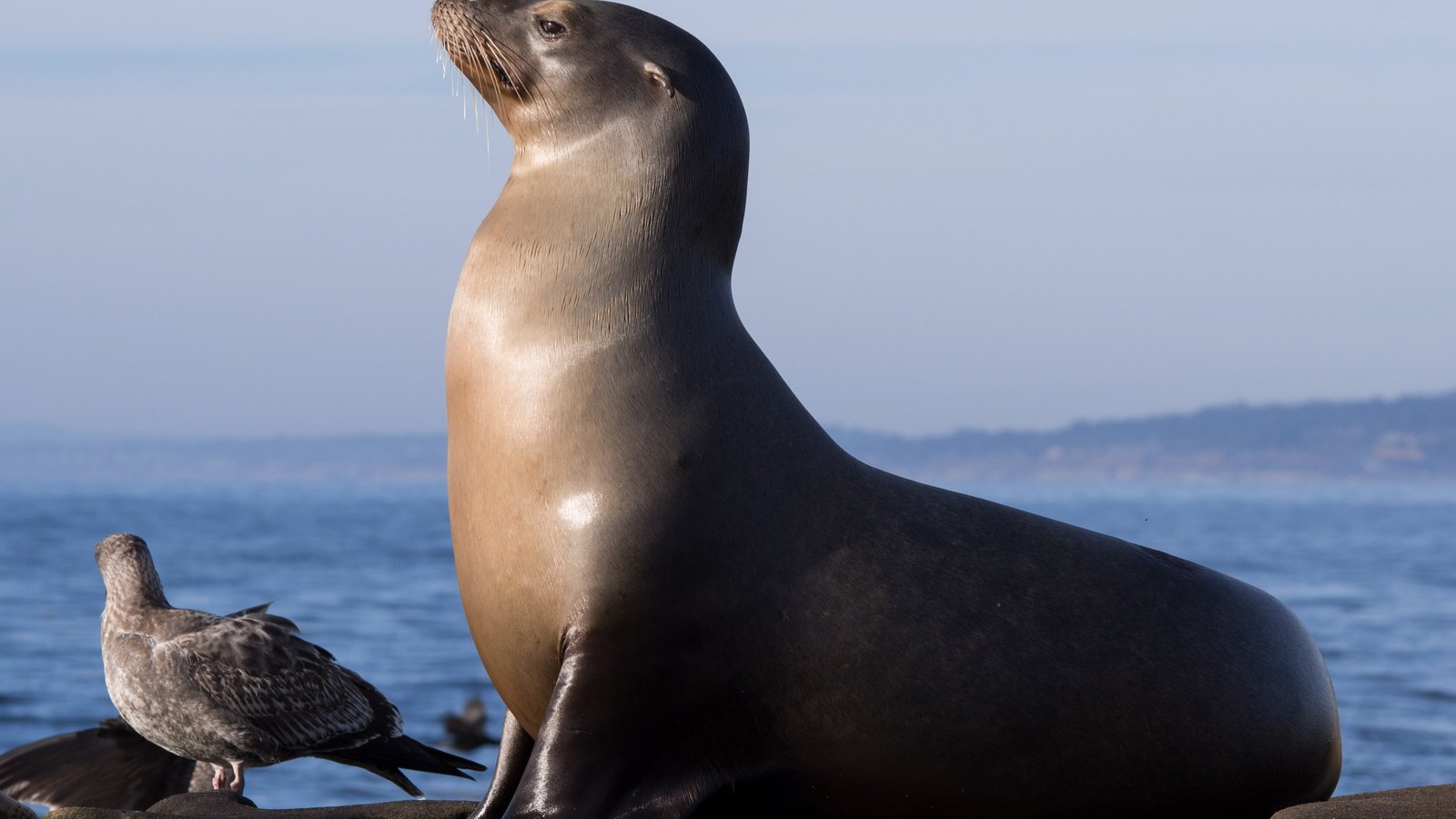
Widespread culling of marine mammals and seabirds fails to restore threatened Pacific Chinook salmon because competing predatory fish rapidly compensate across open marine ecosystems, according to a comprehensive food-web modeling investigation released on November 19, 2026, by NOAA Fisheries and academic partners, transforming recovery planning for university researchers, marine ecologists, and federal fisheries managers.
What the Northern California Current food-web model found
On November 19, 2026, quantitative fisheries scientists from NOAA Fisheries’ Northwest Fisheries Science Center and Oregon State University published an ecosystem-scale simulation in the journal Science evaluating whether broad ocean removals of predators could reverse long-term declines in Pacific salmon. The research team modeled trophic dynamics across the Northern California Current, spanning the coastal waters of Washington, Oregon, and Northern California, tracking direct predation and food-web feedbacks affecting Chinook salmon (Oncorhynchus tshawytscha) and coho salmon (Oncorhynchus kisutch).
The study demonstrated that lethal culling of pinnipeds—principally harbor seals (Phoca vitulina) and California sea lions (Zalophus californianus)—as well as seabirds like common murres, produces small and uncertain net changes in salmon biomass. While pinnipeds consume migrating salmon, they also eat mid-trophic fishes and squid, including Pacific hake (Merluccius productus) and jack mackerel (Trachurus symmetricus). Because these intermediate prey species compete with juvenile salmon for forage or prey on smolts, culling pinnipeds releases competing fish stocks, offsetting salmon survival gains.
As reported by ECO Magazine, the computational model accounted for multi-species feedback loops across dozens of biological groups. When simulations reduced seals and sea lions across open-ocean habitats, competing teleost fish surged to fill the ecological niche, maintaining high mortality pressure on out-migrating smolts and leaving adult returns virtually unchanged.
Trophic biomass ratios and ecological parameters
The ecological mechanism governing food-web compensation centers on the massive biomass disparity between marine mammals and mid-trophic fish predators. In the modeled California Current domain, standing biomass of Pacific hake exceeds total pinniped biomass by approximately 370 to 1. Even though juvenile salmon form only a minor fraction of an individual hake’s diet, the vast size of the hake stock generates aggregate predatory and competitive impacts that eclipse marine mammal consumption in open waters.
To quantify these competing pathways, researchers evaluated alternative scenarios incorporating historical diets, metabolic demands, harvest fleets, and climate anomalies. The following table contrasts key ecological parameters evaluated in the NOAA-led model:
| Ecosystem Functional Group | Biomass Relative to Pinnipeds | Primary Salmon Life Stage Impacted | Direct Diet Share of Salmon | Modeled Salmon Response to 50% Reduction |
|---|---|---|---|---|
| Pinnipeds (Harbor Seals, Sea Lions) | 1.0× (Baseline reference) | Smolts and returning ocean adults | Low to moderate (variable by run) | Small to negligible change (< 2% net gain) |
| Pacific Hake (Merluccius productus) | Approximately 370× | Juveniles and out-migrating smolts | Low per capita, substantial in aggregate | Moderate positive biomass response |
| Jack Mackerel and Epipelagic Squid | Approximately 45× | Early marine juveniles (forage competition) | Negligible predation; direct forage competition | Minor positive response via forage release |
| Commercial Fishing Fleet Removals | Variable across gear sectors | Adult ocean-phase Chinook and coho | Targeted commercial and recreational catch | Fleet-level shifts yielded minimal systemic change |
While theoretical simulations showed that reducing Pacific hake populations produced increases in salmon biomass, the authors emphasized that expanding hake harvests is not a viable conservation strategy. The hake fishery is already the largest commercial fishery by volume on the West Coast, and increased trawling would elevate salmon bycatch, conflicting with Endangered Species Act protections.
Predation controversy and marine mammal protection history
For decades, the decline of West Coast salmon runs has driven sharp friction among commercial fleets, tribal fisheries, and wildlife managers. Following the passage of the federal Marine Mammal Protection Act (MMPA) in 1972, harbor seal and sea lion populations recovered from historic lows, leading fishing groups to attribute low salmon returns to growing pinniped predation.
In response to localized predation at dams, Congress amended Section 120 of the MMPA in 1994 and enacted the Northwest Endangered Salmon Predation Prevention Act in 2018, granting states and tribal co-managers authority to remove habituated sea lions at freshwater chokepoints like Bonneville Dam and Willamette Falls. Industry coverage in SeafoodSource documented continuing legislative efforts in Congress seeking to extend lethal removal authorities to open marine waters.
However, the NOAA findings show that river bottlenecks differ fundamentally from open-ocean dynamics. While localized removals at fish ladders protect migrating adult spawners, broad ocean culls encounter rapid food-web compensation. Quantitative tools, including occupancy models and multi-species bioenergetic frameworks, confirm that open marine food webs resist simple top-down manipulation due to opportunistic prey switching.
Scientific and fisheries management reactions
The findings prompted widespread analysis across fisheries management and marine research circles. Lead author Dylan Gomes, who conducted the study with NOAA Fisheries’ Northwest Fisheries Science Center and Oregon State University, stated that ecosystem modeling provides a holistic perspective on whole-system consequences, noting that one management intervention can trigger unpredictable cascading effects throughout the food web.
Co-author Lisa Crozier of the Northwest Fisheries Science Center cautioned against assuming that visible surface predation represents the primary bottleneck for salmon. Crozier noted that climate change will alter trophic interactions throughout the California Current, underscoring the importance of integrating multi-decade survey datasets into comprehensive ecosystem models. In an environmental report from ECOticias, analysts observed that ocean warming and shifting forage bases increasingly govern salmon survival.
Jim Ruzicka, an ocean ecologist at NOAA’s Pacific Islands Fisheries Science Center and co-author of the study, emphasized that accounting for indirect trophic interactions equips managers to plan for both natural climatic shifts and human stressors. In their published evaluation in Science, Gomes and colleagues concluded that large-scale predator culling operations would be logistically difficult, expensive, and socially controversial while delivering negligible ecological return for salmon.
What the findings mean for researchers and marine research institutions
The NOAA study establishes concrete operational and compliance priorities for academic researchers, marine ecology laboratories, and university research offices administering federal conservation awards:
- Computational Model Architecture: Research teams conducting ecosystem-based fisheries management must incorporate indirect multi-species feedbacks into predictive models rather than relying on linear single-species predator equations. Research computing offices must configure high-performance clusters to handle coupled bioenergetic simulations.
- Restoration Policy Alignment: University conservation programs should harmonize regional salmon recovery targets with international ecosystem restoration initiatives, such as the UN Decade on Ecosystem Restoration, prioritizing holistic estuarine restoration and forage base enhancement over lethal predator management.
- Standardized Ecological Metadata: Investigators archiving California Current trophic data and diet matrices in open repositories must format digital assets in accordance with the Ecological Metadata Language (EML), facilitating reproducible integration across Ecopath with Ecosim platforms.
- Tribal Co-Management Consultation: Academic and agency scientists conducting research in treaty-protected waters must coordinate research protocols with sovereign tribal nations, integrating Traditional Ecological Knowledge (TEK) alongside quantitative numerical models.
- Scientific Integrity Compliance: Research administration staff must verify that ecosystem simulation workflows, parameter sensitivity tests, and underlying assumptions comply with federal scientific integrity standards before supporting Endangered Species Act status determinations.
Next steps in ecosystem modeling and ESA policy implementation
Following the publication, NOAA Fisheries and the Pacific Fishery Management Council will review ecosystem modeling applications during upcoming advisory cycles in early 2027. Scientists at the Northwest Fisheries Science Center plan to incorporate high-resolution acoustic telemetry tagging data into the California Current model to track fine-scale smolt migration through coastal upwelling zones.
Simultaneously, federal biologists conducting Endangered Species Act five-year status reviews for listed Chinook runs will incorporate the study’s food-web conclusions into recovery assessments. While Section 120 permits under the Marine Mammal Protection Act will continue at engineered river chokepoints, proposed open-water culls will face rigorous evidentiary thresholds. Federal and university modelers will convene a joint technical workshop in mid-2027 to deploy standardized open-source trophic modeling tools.
Sources
- NOAA Fisheries: New Research Finds Culling Seals, Sea Lions in the Ocean Unlikely to Benefit Salmon, checked 2026-11-21
- Science: Widespread marine mammal and seabird reductions are unlikely to benefit salmon due to indirect ecosystem effects, checked 2026-11-21
- ECO Magazine: Modeling Study Finds Predator Culls Unlikely to Restore Pacific Salmon Populations, checked 2026-11-21
- ECOticias: Culling seals and sea lions at sea is unlikely to help West Coast salmon, NOAA and Oregon State researchers find, because hake and other fish could fill the gap, checked 2026-11-21
- SeafoodSource: US House committee advances bill expanding culling of salmon-eating seals and sea lions, checked 2026-11-21


