
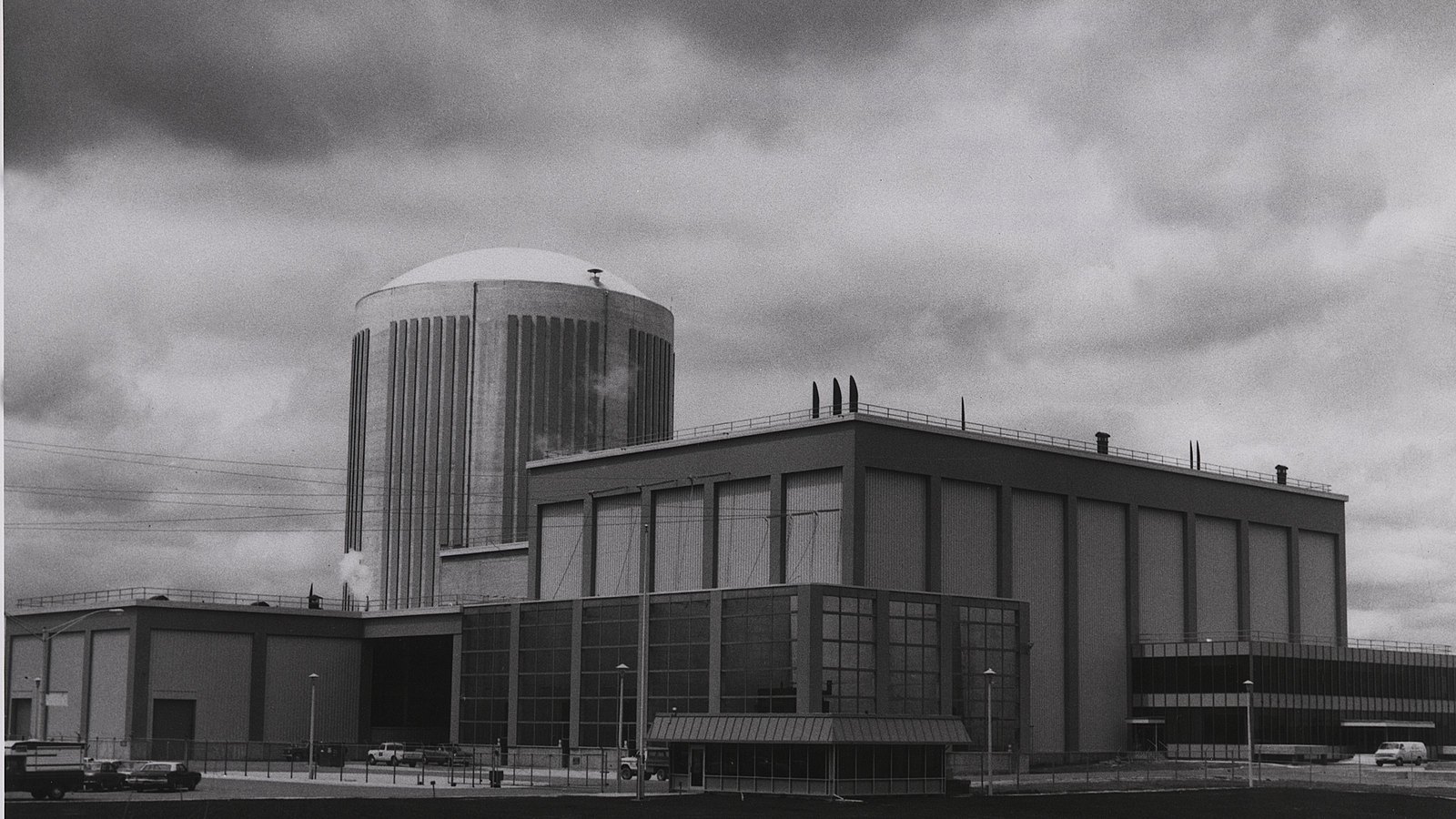
On November 27, 2026, the U.S. Nuclear Regulatory Commission published a license amendment notice and procedural order considering approval of the License Termination Plan for the decommissioned Kewaunee Power Station in Carlton, Wisconsin. The regulatory action establishes a proposed No Significant Hazards Consideration determination while issuing a binding procedural order that imposes a strict 10-day deadline for researchers, intervenors, and legal counsel to request Sensitive Unclassified Non-Safeguards Information.
Regulatory Filing and Proposed Hazards Determination
The federal notice (Document No. 2026-24217, Docket ID NRC-2026-5182) formally dockets an application filed by decommissioning operator Kewaunee Solutions, Inc., a subsidiary of EnergySolutions, to amend Facility Operating License No. DPR-43. The licensee submitted the request on June 30, 2026, and supplemented the dossier on September 24, 2026, under ADAMS Accession Nos. ML26181A302 and ML26280A004. If approved, the amendment incorporates the Kewaunee License Termination Plan as a formal supplement to the Defueled Safety Analysis Report, establishing the radiological criteria and final survey procedures required to release the 900-acre site for unrestricted use.
In conjunction with docketing the application, the commission published a proposed No Significant Hazards Consideration determination under standards codified in 10 CFR 50.92. The regulatory review evaluated whether the license termination activities could increase the probability or consequences of previously evaluated design-basis accidents, create novel accident mechanisms, or reduce existing plant safety margins. Because all irradiated fuel assemblies have been transferred from the wet spent fuel pool into dry cask storage at the on-site Independent Spent Fuel Storage Installation, the commission concluded that remaining dismantling, soil remediation, and concrete decontamination tasks present negligible risks of radioactive release to off-site populations.
Key Technical Provisions and Procedural Timelines
The Kewaunee License Termination Plan outlines site-specific Derived Concentration Guideline Levels across remaining structures, sub-surface soils, and local groundwater systems. Meeting these thresholds is mandatory under 10 CFR Part 20, Subpart E, which restricts total effective dose equivalent to 25 millirem per year for the average member of the critical group. To ensure transparent administrative review without compromising national security or proprietary industrial designs, the commission attached an administrative order detailing precise milestones for public intervention and security screening.
Potential intervenors seeking access to unredacted decommissioning calculations must satisfy procedural standing tests governed by 10 CFR 2.309. The table below summarizes the key operational parameters, statutory authorities, and legal milestones established in the filing.
| Regulatory Parameter | Governing Authority | Filing Specification |
|---|---|---|
| Facility Name & Location | Operating License DPR-43 | Kewaunee Power Station, Carlton, Wisconsin |
| Licensee & Operator | EnergySolutions Corporate Subsidiary | Kewaunee Solutions, Inc. |
| Primary Amendment Goal | 10 CFR 50.82(a)(9) & 10 CFR 50.90 | Incorporation of Site License Termination Plan |
| Radiological Release Standard | 10 CFR 20.1402 | Unrestricted release (< 25 mrem/year total effective dose) |
| SUNSI Access Request Window | 10 CFR 2.307 & Commission Order | 10 calendar days following Federal Register publication |
| NRC Staff Access Ruling | Procedural Target Schedule | 10 days following receipt of access request (Day 20 target) |
| Public Comment Period | 10 CFR 50.91(a) | 30 calendar days following official publication |
| Hearing & Intervention Petition | 10 CFR 2.309 | 60 calendar days following official publication |
Kewaunee Decommissioning History and Regulatory Context
The Kewaunee Power Station operated a single 566-megawatt pressurized water reactor on the western shore of Lake Michigan from 1974 until permanent shutdown in May 2013. Following defueling, the facility was placed into safe storage (SAFSTOR) under Dominion Energy. In 2022, regulatory approval permitted the license transfer to Kewaunee Solutions, initiating active decontamination and dismantling (DECON). EnergySolutions has undertaken comparable commercial reactor decommissioning programs across the United States, managing radioactive waste disposal logistics through specialized engineering and commercial decontamination services.
Transitioning from active dismantlement to final license termination requires rigorous characterization of structural surfaces and environmental media. Because the license termination dossier details sensitive physical layouts, facility security barriers, and proprietary decommissioning software models, substantial portions of the submission fall under the designation of controlled unclassified information. This classification encompasses Sensitive Unclassified Non-Safeguards Information (SUNSI), which warrants stringent safeguarding against public dissemination while remaining accessible to qualified stakeholders who demonstrate legitimate adjudicatory needs.
Security Classifications and Legal Review Framework
Federal policy governing sensitive government data requires uniform standards across defense, energy, and civil research. Under executive guidelines administered through the Controlled Unclassified Information program at the National Archives and Records Administration, civil agencies must prevent public disclosure of technical vulnerabilities without classifying them as national defense secrets. In reactor adjudications, the NRC balances public participation with information security by imposing formal non-disclosure covenants on independent technical analysts and academic researchers.
Legal scholars and administrative law specialists have noted that the commission’s 10-day window for SUNSI requests represents one of the tightest procedural turnarounds in federal administrative law. To satisfy the commission’s gatekeeping criteria, an applicant must demonstrate geographic proximity or tangible environmental injury to establish standing, while establishing that publicly available docket documents cannot provide adequate technical foundations for proposed legal contentions. Qualified experts granted access must adhere to rigorous controlled unclassified information handling controls to avoid civil enforcement actions or disqualification from administrative proceedings.
Implications for Nuclear Researchers, Universities, and Legal Counsel
The Kewaunee filing creates immediate technical and compliance obligations for academic departments, university environmental monitoring teams, and legal clinics involved in nuclear safety oversight. Research institutions analyzing Great Lakes radionuclide transport or independent radiation monitoring data must assess whether to intervene before the initial 10-day window closes. Waiting for the general 60-day intervention deadline precludes access to protected calculations concerning soil leaching, groundwater flow velocities, and residual activation in containment basements.
For university researchers acting as expert witnesses or consulting parties, compliance with the order requires executing formal non-disclosure agreements and securing protective orders before handling digital dossiers. Institutional research offices must ensure that technical data received under the order remains segregated from shared academic networks, strictly limited to named project investigators, and isolated from foreign national research assistants whose citizenship might trigger separate nuclear compliance frameworks governing nuclear technology export controls. Failure to maintain physical and digital security boundaries can compromise university eligibility for federal research agreements and nuclear regulatory research grants.
Mandatory Deadlines and Procedural Next Steps
Following formal publication of the notice in the Federal Register, stakeholders face several concurrent deadlines. Requests for access to SUNSI must be submitted in writing within 10 calendar days to the Office of the Secretary and the Office of the General Counsel at the NRC headquarters in Rockville, Maryland. Written submissions must detail the requestor’s standing under 10 CFR 2.309 and present specific technical justifications establishing why unredacted files are indispensable.
The NRC staff is directed to issue standing and need determinations within 10 calendar days of receiving each request. If an access request is denied, the petitioner has 5 days to appeal the determination to the designated presiding officer or the Atomic Safety and Licensing Board Panel. If access is granted, the licensee and requestor will finalize non-disclosure agreements within 3 days of the protective order. Contentions formulating challenges based on sensitive data must be lodged within 25 days of receiving document access. Concurrently, public comments on the proposed No Significant Hazards Consideration determination must be received within 30 days of notice publication, while general petitions for leave to intervene remain open for 60 days.
Sources
- Federal Register: Facility Operating and Combined Licenses: Applications and Amendments Involving Proposed No Significant Hazards Considerations, etc. (Document No. 2026-24217), checked 2026-11-27
- eCFR: Title 10 CFR 50.92 — Issuance of Amendment and No Significant Hazards Consideration Standards, checked 2026-11-27
- Legal Information Institute: 10 CFR 2.309 — Hearing Requests, Petitions to Intervene, Requirements for Standing, and Contentions, checked 2026-11-27
- National Archives and Records Administration: Controlled Unclassified Information (CUI) Program Registry and Guidance, checked 2026-11-27
- EnergySolutions: Commercial Nuclear Decommissioning and Environmental Decontamination Services, checked 2026-11-27






