
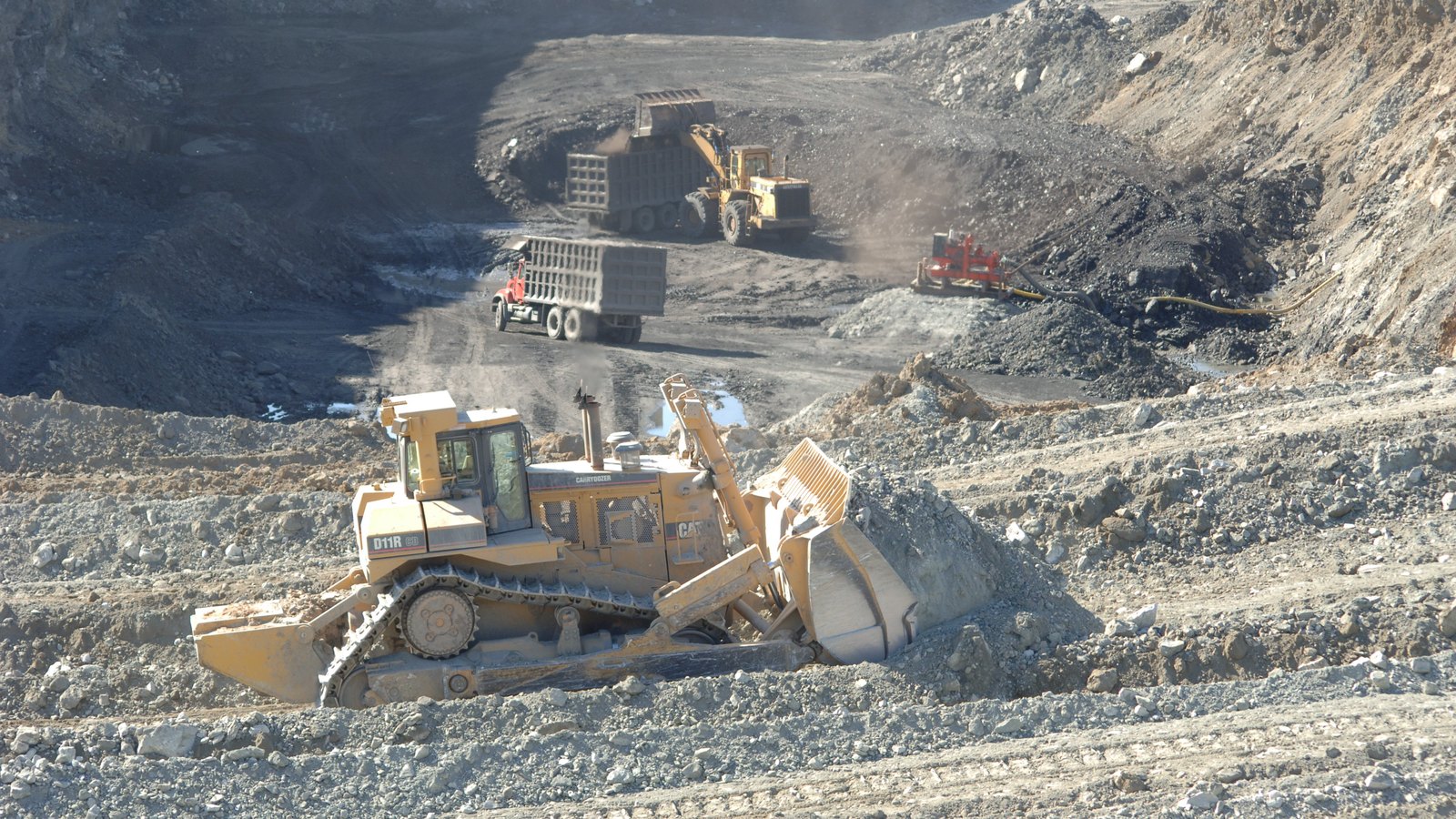
On 27 November 2026, the U.S. Department of the Interior’s Office of Surface Mining Reclamation and Enforcement filed a Federal Register notice to renew reporting frameworks under the Surface Mining Control and Reclamation Act. The updated information collection governs grant applications, financial tracking, and performance reporting for states, tribes, and university environmental research partners monitoring watershed restoration and abandoned mine land mitigation projects across the United States.
Regulatory Framework Renewal for Mine Reclamation Grants
The Department of the Interior’s Office of Surface Mining Reclamation and Enforcement (OSMRE) announced on 27 November 2026 that it is submitting an information collection request to the Office of Management and Budget (OMB) under the Paperwork Reduction Act of 1995. The notice, scheduled for publication in the Federal Register on 30 November 2026 under Document Number 2026-24267, proposes an extension without change of OMB Control Number 1029-0059. This regulatory framework transfers federal funds to state regulatory authorities and federally recognized Indian tribes.
Enacted in 1977, the Surface Mining Control and Reclamation Act (SMCRA) balances domestic coal production with environmental protection. The statute divides responsibilities between regulating active surface coal mining operations and remediating abandoned mine lands mined before 3 August 1977. Unlike historical open-pit mining practices that left unstable highwalls and toxic drainage, SMCRA standards mandate contemporaneous reclamation and vegetative restoration. State and tribal agencies submit project narratives, financial plans, and administrative cost allocations to manage annual awards, which also govern academic subrecipients performing environmental monitoring.
Mandatory Reporting Forms and Administrative Burden Metrics
Federal regulations under 30 CFR Chapter VII establish the administrative boundaries for state programs. Specifically, 30 CFR Part 735 governs grants for program development and administration, while 30 CFR Part 885 and Part 886 dictate reclamation grants for certified and uncertified states and tribes. Grantees must complete three standardized Department of the Interior reporting instruments.
Form OSM-47, the Budget Information Report, requires breakdowns of personnel salaries, equipment acquisitions, travel, and contracts. Form OSM-49, the Budget Information and Financial Reporting form, provides annual accounting of federal outlays, matching contributions, and program income. Form OSM-51, the Performance and Program Narrative, captures measurable outcomes, including reclaimed acreage, highwall elimination, acid mine drainage treatment installations, and water monitoring data.
| Form Identifier | Title and Function | Governing Regulation | Respondent Pool | Reporting Frequency |
|---|---|---|---|---|
| OSM-47 | Budget Information Report (Cost Allocation) | 30 CFR Part 735, 885, 886 | State & Tribal Authorities | Annual Application Cycle |
| OSM-49 | Budget Information and Financial Reporting (Outlay Reconciliation) | 30 CFR Part 735, 885, 886 | State & Tribal Authorities | Annual Reconciliation |
| OSM-51 | Performance and Program Narrative (Field Milestones) | 30 CFR Part 735, 885, 886 | State & Tribal Authorities | Annual Performance Cycle |
OSMRE estimates an active universe of 27 state and tribal governmental respondents generating 279 annual submissions. Completion time varies from 1 to 15 hours depending on filing complexity, totaling 2,423 annual burden hours with zero non-hour capital costs.
Statutory Context and Federal Financial Alignment
Financial management of surface mining grants aligns directly with federal grant reforms. While SMCRA Title IV and Title V authorize abandoned mine land fees and regulatory grants, award execution must conform to the Uniform Guidance (2 CFR 200) framework. Rules codified at 2 CFR Part 200 govern financial systems, procurement integrity, internal controls, and subrecipient monitoring.
Funding expanded substantially following the Infrastructure Investment and Jobs Act of 2021, which appropriated $11.3 billion over 15 years for state and tribal Abandoned Mine Land programs. This funding supports complex geochemical remediation, critical mineral recovery from mine drainage, and watershed restoration. For academic laboratories receiving sub-awards through state mining departments, compliance with 2 CFR 200 Subpart E cost principles is required for direct testing costs, specialized instrumentation depreciation, and negotiated indirect rates.
Intergovernmental Perspectives and Scientific Stakeholder Priorities
State regulators and mining consortia emphasize predictable grant administration. Through formal statements recorded in the Interstate Mining Compact Commission resolutions, member states have stressed that steady federal grant distributions are necessary to maintain inspection personnel, engineering specialists, and environmental monitoring infrastructure. The commission supports statutory provisions allowing states to place up to 30 percent of annual AML funds into dedicated acid mine drainage set-aside accounts to fund long-term water treatment facilities.
Scientific agencies work with state authorities to evaluate reclamation outcomes. The U.S. Geological Survey Water Resources Mission Area operates monitoring networks that track surface water chemistry, heavy metal attenuation, and groundwater recharge across coal basins. These data substantiate Form OSM-51 narratives documenting environmental recovery.
Institutional Compliance and Research Office Administration
University research administrators and principal investigators face defined operational requirements under this reporting framework. When academic researchers partner with state agencies on SMCRA projects, they operate as pass-through subrecipients subject to flow-down requirements. Research offices must ensure institutional accounting maps to Form OSM-47 and OSM-49 budget categories.
Key administrative considerations include:
- Milestone Alignment: Water testing and geological deliverables must synchronize with state fiscal deadlines to permit timely compilation of Form OSM-51 narratives.
- Cost Documentation: Laboratory analytical expenses and field equipment use must be documented with contemporaneous records consistent with federal cost principles.
- Subrecipient Audit Trails: Institutions must maintain auditable effort certifications and sample custody records for three years post-closeout.
- Award Analytics: Sponsored programs offices track federal award trends using resources like grant analytics platforms like Grantome to forecast state partnership opportunities.
Public Comment Timeline and Implementation Milestones
Filing of FR Doc. 2026-24267 initiates a 60-day public comment window under the Paperwork Reduction Act, closing on 29 January 2027. Regulators, tribal leaders, academic researchers, and public stakeholders may submit feedback on reporting burden and electronic submission methods.
Comments citing OMB Control Number 1029-0059 may be sent to William L. Frankel, Information Collection Clearance Officer, Office of Surface Mining Reclamation and Enforcement, 1849 C Street NW, Room 4512, Washington, DC 20240, or by email to [email protected]. Following the comment window, OSMRE will submit the collection package to OMB’s Office of Information and Regulatory Affairs for final approval.
Sources
- Office of the Federal Register: Federal Register :: Public Inspection: Agency Information Collection Activities; Proposals, Submissions, and Approvals: Surface Mining Control and Reclamation Act Grants to States and Tribes, checked 2026-11-27
- Electronic Code of Federal Regulations: eCFR :: 30 CFR Chapter VII — Office of Surface Mining Reclamation and Enforcement, Department of the Interior, checked 2026-11-27
- Electronic Code of Federal Regulations: eCFR :: 2 CFR Part 200 — Uniform Administrative Requirements, Cost Principles, and Audit Requirements for Federal Awards, checked 2026-11-27
- U.S. Geological Survey: Water Resources Mission Area | U.S. Geological Survey, checked 2026-11-27
- Interstate Mining Compact Commission: Resolutions – Interstate Mining Compact Commission, checked 2026-11-27






_Office_of_Surface_Mining,_Reclamation,_and_Enforcement_staff_(working_at_site_of_abandoned_coal_mine,_the_Horse_Creek_Mine,_near_Pinckneyville,_-_DPLA_-_b088c58b2f072628e2462dd71292875e.JPG)