
On November 25, 2026, researchers at St. Jude Children’s Research Hospital and San Diego State University published a structural biology study in Nature mapping the multi-protein assembly of type I-F3 CRISPR-associated transposases, achieving a 100-fold increase in RNA-guided DNA integration activity without compromising genomic targeting specificity.
Structural Determination and Engineered Activity Enhancement
The investigation, published in Nature detailing the complete structural reconstitution of type I-F3 CRISPR-associated transposase (CAST) complexes, resolves a long-standing mechanistic bottleneck in RNA-guided DNA integration. CRISPR-associated transposases combine RNA-guided Cascade surveillance complexes with transposition enzymes to direct site-specific DNA insertions. However, type I CAST architectures require the coordinated assembly of between five and nine distinct protein subunits. When reconstituted in heterologous systems, these multi-subunit complexes historically exhibited low catalytic activity, limiting their utility for molecular biology applications.
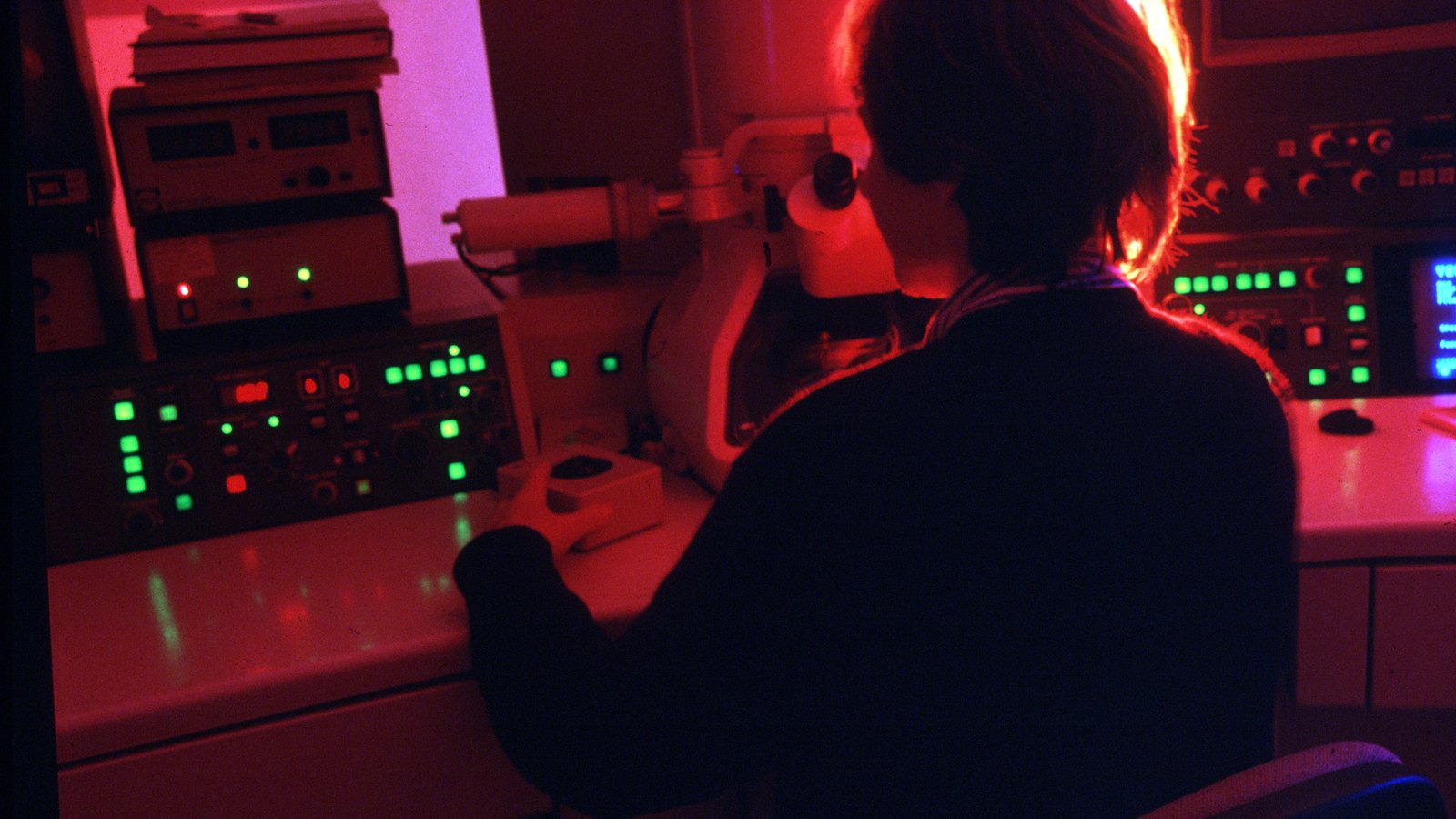
To address this structural instability, the research team led by corresponding author Elizabeth Kellogg, PhD, an Associate Member of the St. Jude Department of Structural Biology, combined cryo-electron microscopy with computational protein design. By resolving intermediate states on a modern cryo-EM microscope, the investigators mapped how Cascade surveillance modules interact with transposition proteins TnsA, TnsB, TnsC, and TniQ. Computational modeling was deployed to predict subunit interfaces, allowing the team to engineer targeted amino acid substitutions that stabilized the overall assembly and elevated targeted integration efficiency by 100-fold in bacterial assays while preserving on-target selectivity.
The study represents a collaborative effort among structural biologists and biochemists. Co-first authors Shirin Fatma, PhD, and Shubham Dubey, PhD, of St. Jude, alongside Vinh Truong of the St. Jude Graduate School of Biomedical Sciences, carried out the structural reconstitutions and mutagenesis experiments. Additional co-authors include Seong Guk Park, Hailey Wallace, and Alfredo Jose Florez Ariza of St. Jude, and Isabella King of San Diego State University.
Key Technical Specifications and System Comparison
Naturally occurring CAST systems diverge into distinct evolutionary classes with differing biochemical trade-offs. Type I CAST variants execute clean cut-and-paste transposition, completely excising genetic cargo from donor plasmids before insertion. This mechanism avoids the integration of superfluous plasmid backbone sequences. However, native type I systems suffer from fragile protein-protein interactions and low basal activity. Conversely, type V-K CAST systems possess fewer components but inherently execute replicative transposition, which frequently incorporates unwanted vector backbone elements into the target genome.
The engineered type I-F3 CAST establishes an optimal balance by maintaining cut-and-paste fidelity while boosting integration rates to levels suitable for practical genome engineering. Proper RNA guidance relies on precise sgRNA design protocols to direct Cascade binding, while the donor DNA requires careful boundary delineation to ensure seamless integration.
The table below summarizes the structural and functional attributes of the redesigned type I-F3 CAST against native type I systems and alternative type V architectures.
| Attribute | Native Type I-F3 CAST | Engineered Type I-F3 CAST | Type V-K CAST (e.g., Cas12k) |
|---|---|---|---|
| Subunit Composition | Cascade (Cas6, Cas7, Cas8) + TnsA, TnsB, TnsC, TniQ | Stabilized Cascade + Redesigned TnsA-TnsB-TnsC-TniQ Assembly | Cas12k + TnsB, TnsC, TniQ (Lacks TnsA) |
| Transposition Mechanism | Cut-and-paste (double-strand excision) | Cut-and-paste (stabilized interface excision) | Replicative transposition (single-strand transfer) |
| Integration Product Purity | High (clean cargo insertion without vector backbone) | High (clean cut-and-paste cargo insertion maintained) | Lower (frequent donor backbone cointegrates) |
| Relative In Vitro Activity | Baseline (1×, naturally constrained) | Enhanced (100× activity increase) | Moderate (variable dependent on host factors) |
| Structural Elucidation | Partially unmodeled dynamic contacts | Fully resolved cryo-EM complex in locked active state | Cryo-EM structures of Cas12k-transpososome |
Biochemical Mechanisms and Structural Locking Principles
A central finding of the research is the discovery of coordinated conformational transitions that govern CAST activation. When the multi-protein components assemble, they behave like interlocking molecular puzzle pieces that adapt to their neighbors. Binding of the Cascade complex to its RNA-programmed DNA target recruits the TniQ-TnsC regulator, which then coordinates the TnsA-TnsB transposase core. As the correct protein subunits engage, specific conformational rearrangements lock the complex into an enzymatically active transposition state, preventing premature DNA cleavage or off-target transposition.
Dr. Kellogg noted that beginning the project without an existing experimental structure required a hybrid approach combining predictive computation and biophysical validation. The researchers utilized computational modeling to generate candidate interface geometries, then engineered targeted mutations that strengthened inter-subunit stability. This approach allowed the team to isolate and visualize the fully assembled complex on cryo-EM grids, capturing the exact spatial orientation that drives cargo insertion.
Understanding how donor cargo behaves in these systems also requires evaluating plasmid DNA vs genomic DNA configurations. In native bacterial transposon biology, donor sequences are excised from circular plasmids and transferred into chromosomal DNA. The St. Jude structure demonstrates how TnsA and TnsB coordinate simultaneous cleavage at both transposon ends, ensuring that only the specified cargo sequence is integrated into the target locus.
Research Community and Institutional Reactions
Structural biologists and geneticists have welcomed the study as a significant milestone in expanding the molecular biology toolkit beyond conventional nuclease systems. As highlighted in institutional news analysis reported by Mirage News, the findings provide a rational blueprint for engineering multi-protein genetic machinery, shifting the field toward de novo predictive design.
The broader context of targeted insertion was previously synthesized in discussion on Springer Nature Research Communities, which documented the trade-offs between component minimization and product purity across divergent CAST families. While standard ribonucleoprotein complexes such as Cas9 RNP platforms efficiently induce double-strand breaks to stimulate host-mediated repair, they often produce heterogeneous insertions or indels. Transposase-mediated systems eliminate the requirement for host double-strand break repair pathways, generating predictable, scarless integration events.
The study was supported by extensive public and philanthropic research funding. Federal grant support included the National Institute of General Medical Sciences under grant awards 7R01GM144556 and F31GM151863, and the National Cancer Institute under award P30 CA021765. Additional funding was provided by the Pew Charitable Trusts, the Cystic Fibrosis Foundation, and the American Lebanese Syrian Associated Charities (ALSAC), the primary fundraising organization for St. Jude Children’s Research Hospital.
Implications for Academic Labs and Research Administration
The demonstration of a 100-fold activity increase in type I-F3 CASTs carries concrete implications for academic research institutions, shared core facilities, and research compliance offices. Academic investigators developing large-fragment genome insertion protocols can begin adapting transposon end sequences and Cascade-targeting guides for specialized molecular systems, reducing dependence on error-prone non-homologous end joining.
For institutional research administration and shared instrumentation cores, the research highlights the indispensable role of advanced cryo-EM and high-performance computational infrastructure. Research offices supporting structural biology programs must plan for computational workflows to simulate multi-protein dynamics alongside cryo-EM grid screening. Grant administrators should verify that budget justifications for advanced biophysical proposals adequately account for cryo-EM instrument time, computational modeling software licensing, and specialized cloning consumables.
Furthermore, Institutional Biosafety Committees (IBCs) overseeing genetic engineering protocols must update recombinant DNA review frameworks. While CAST systems do not generate uncontrolled double-strand breaks, their capacity to transfer multi-kilobase synthetic cargo into targeted loci necessitates rigorous characterization of donor plasmid boundaries, vector purity, and containment procedures under standard NIH recombinant DNA guidelines.
Next Steps for CAST Reconstitution and Development
While the study demonstrates robust transposition enhancement in bacterial models and in vitro assays, several research milestones remain before CAST technologies can be routinely applied in eukaryotic and mammalian systems. Transposase complexes must contend with chromatin structure, nucleosome barriers, and cellular delivery constraints that are absent in bacterial systems. Future investigations will evaluate whether the stabilized type I-F3 architecture can maintain target selectivity and integration efficiency within eukaryotic chromatin environments.
The St. Jude research team plans to extend their computational design methodology to explore whether similar structural stabilization principles can be applied across other transposase families. By systematically characterizing conformational transitions across diverse mobile genetic elements, investigators aim to construct modular, predictable genetic insertion systems tailored for complex biotechnology applications.
Sources
- St. Jude Children’s Research Hospital: Structural redesign of CAST system reveals mechanisms for targeted DNA integration, checked 2026-11-26
- St. Jude Children’s Research Hospital: Department of Structural Biology, checked 2026-11-26
- Mirage News: CAST Redesign Reveals How Targeted DNA Integration Works, checked 2026-11-26
- Springer Nature Research Communities: Precise cut-and-paste DNA insertion using engineered CRISPR-associated transposases, checked 2026-11-26






