
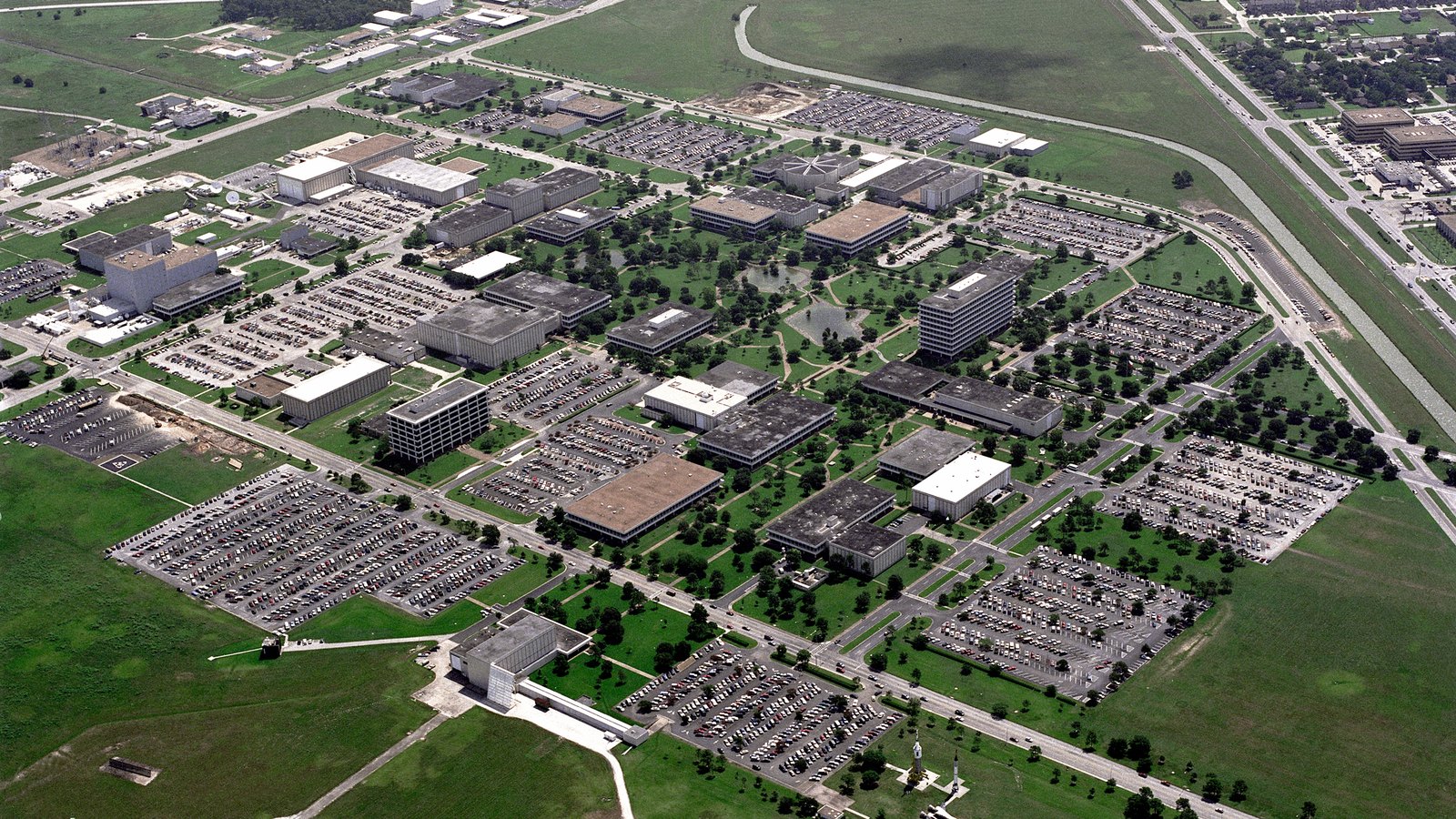
On November 20, 2026, Texas A&M University held the grand opening of its $200 million, 416,800-square-foot Texas A&M Space Institute at Exploration Park adjacent to NASA’s Johnson Space Center in Houston, creating the world’s largest indoor lunar and Martian terrain simulation testbeds to accelerate autonomous robotics, spacesuit evaluations, and collaborative university-industry space exploration research.
Opening of the Texas A&M Space Institute
The Texas A&M University Space Institute commenced official operations on November 20, 2026, opening a multi-story research and training complex situated directly outside NASA’s Johnson Space Center in Houston. Built with a $200 million legislative appropriation, the facility unites academic engineering teams, federal flight programmes, and commercial contractors. Reporting from Aviation Week underscores that the facility establishes a major terrestrial proving ground for surface operations supporting NASA’s Artemis campaign and commercial lunar missions.
The institute is directed by Dr. Nancy Currie-Gregg, a professor of industrial and systems engineering and former NASA astronaut who logged 1,000 spaceflight hours across four space shuttle missions. Working alongside her are associate director Dr. Robert Ambrose, former head of advanced robotics at Johnson Space Center, and assistant director Bill Bluethmann, a veteran NASA robotics engineer. The leadership team designed the 416,800-square-foot facility to bridge physical laboratory testing and real-world planetary exploration mechanics.
Facility Architecture, Planetary Simulants, and Research Bays
The facility’s centerpiece is a pair of massive indoor planetary simulation landscapes. Each landscape encompasses approximately 2.5 acres, offering continuous floor space equivalent to a football field. According to coverage from collectSPACE, the lunar enclosure can accommodate the entire operational footprint of Tranquility Base—the Apollo 11 landing site—while leaving more than half the floor area unobstructed for extended rover traverses.
To replicate planetary surface mechanics faithfully, the institute selected specific geological analogs:
- Lunar Terrain Testbed: The lunar landscape contains 16,000 cubic yards of gray basalt quarried near Uvalde, Texas, chosen for its fidelity to lunar regolith cohesion, abrasive wear, and particle packing. Operators can sculpt craters, boulders, and slopes to assess vehicle traction and excavation tooling.
- Martian Terrain Testbed: The Martian enclosure contains 6,000 cubic yards of iron-rich volcanic rock from New Mexico, reproducing the oxidation, dust behavior, and soil mechanics of Martian plains.
- Connecting Tunnel: A 100-foot-long enclosed transit corridor, known as the “wormhole,” links the two bays, enabling rovers and researchers to traverse between lunar and Martian conditions under continuous environmental containment.
- Lighting Gantries: Overhead lighting arrays replicate the high-contrast solar angles and deep shadowing of lunar polar regions, challenging autonomous stereo vision, LiDAR sensors, and optical hazard detection algorithms.
| Operational Parameter | Lunar Terrain Testbed | Martian Terrain Testbed |
|---|---|---|
| Surface Footprint | Approximately 2.5 acres (108,900 sq ft) | Approximately 2.5 acres (108,900 sq ft) |
| Simulant Volume | 16,000 cubic yards of basalt | 6,000 cubic yards of volcanic rock |
| Geological Source | Quarry near Uvalde, Texas | Volcanic formations in New Mexico |
| Simulation Focus | Craters, slopes, and polar shadows | Oxidized soil, dust, and rocky plains |
| Dedicated Research Bays | 4 customizable high-bay suites | 4 customizable high-bay suites |
| Surface Connection | 100-foot enclosed transit tunnel | 100-foot enclosed transit tunnel |
Flanking the extraterrestrial bays are 10 secure research suites. The facility features a central utility corridor that allows tenants to supply industrial gases, cryogenics, and high-voltage power into their workspaces without structural alterations. Outside, a concrete staging pad equipped with utility drops serves mobile cleanrooms and field support trailers.
Evolution of Exploration Park and Texas Space Strategy
The institute serves as the first operational anchor of Exploration Park, a 240-acre research and commercial district established on NASA Johnson Space Center property. In February 2024, NASA announced an agreement granting the Texas A&M University System long-term site development rights, as documented by NASA. The park was conceived to co-locate corporate aerospace suppliers, academic researchers, and flight operations to accelerate human spaceflight technology development.
Development was funded through House Bill 3447, passed by the 88th Texas Legislature in 2023. The legislation appropriated $350 million to establish the Texas Space Commission and its research fund, designating $200 million directly for Texas A&M’s facility. The state investment aims to anchor commercial aerospace manufacturing, robotics supply chains, and academic workforce training firmly in Texas.
Institutional and Aerospace Leadership Reactions
State and academic leaders highlighted the facility’s strategic role during the opening event, reported by Community Impact. Speakers noted that physical testing infrastructure strengthens regional academic aerospace initiatives, including the statewide Texas Space Grant Consortium.
Glenn Hegar, Chancellor of The Texas A&M University System, outlined the broader economic objectives:
“The Texas A&M Space Institute positions Texas at the forefront of the rapidly growing space economy and strengthens our state’s role as a national leader in innovation. It marks Texas’ commitment to leading the next era of space exploration, scientific discovery and economic growth.”
Texas A&M President Dr. Susan Ballabina emphasized engineering education and workforce training:
“This facility will elevate Texas A&M’s reputation as a global leader in space research, aerospace engineering and innovation. Few universities can match the depth of expertise Texas A&M brings to this effort. Students will learn alongside world-class researchers, NASA partners and industry leaders while helping solve real-world challenges.”
Dr. Nancy Currie-Gregg underscored the institutional mission for future exploration:
“With the opening of the Texas A&M Space Institute, we’re preparing the next generation of engineers to lead humanity’s return to deep space. The next era of exploration will be led by the engineers we’re preparing today, and I have every confidence in the paths they’ll forge.”
Dr. Robert H. Bishop, Vice Chancellor and Dean of Texas A&M Engineering, noted the core engineering necessity:
“This facility was designed around a simple idea. If we want to prepare for the future of space exploration, we need environments that closely replicate the conditions astronauts, technologies and missions will actually encounter. Most importantly, it ensures that when the next great chapter of space exploration is written, Texas A&M will be helping lead the way.”
Implications for Academic Researchers and Sponsored Projects
The commissioning of the Space Institute establishes immediate practical opportunities for university research offices, sponsored project administrators, and engineering investigators:
- Subsidized Access for Texas Universities: Two of the 10 research bays are permanently reserved for Texas public and private higher education institutions without lease charges. Faculty and student investigators gain facility access by submitting a one-page technical proposal evaluated by the Texas Aerospace Research and Space Economy Consortium (TARSEC).
- Shared Infrastructure Governance: Academic teams utilizing the terrain beds will operate under standardized core facility equipment sharing agreements. These agreements codify regolith handling rules, instrument cleaning standards, and contamination control across shared testing campaigns.
- Inter-Institutional Consortium Agreements: Collaborative programs involving commercial partners, including AstroLab and Intuitive Machines, require formal coordination. Research offices will manage intellectual property and data rights through a structured consortium agreement integrated into the university’s technology transfer process.
- Corporate Leases and Export Controls: Commercial aerospace tenants occupying the remaining eight bays will execute formal arrangements structured like a corporate sponsored research agreement. Due to the sensitive nature of dual-use rover guidance and autonomous navigation, facility operations enforce strict badging and physical segregation to maintain compliance with Export Administration Regulations (EAR) and International Traffic in Arms Regulations (ITAR).
- Human Factors and Spacesuit Research: The institute maintains dedicated rental spacesuits, enabling investigators to gather empirical biometric, ergonomic, and mobility data as human subjects evaluate tools and rovers across simulated extraterrestrial terrain.
Operational Rollout and Upcoming Testing Milestones
Following the grand opening, the Texas A&M Space Institute is advancing into full operational commissioning. Initial commercial tenants AstroLab—building the Flexible Logistics and Exploration (FLEX) lunar rover—and Intuitive Machines—operating commercial lunar landers—are completing bay fit-outs. Over the coming months, engineering teams will conduct baseline mobility validations, including trials of Texas A&M’s “Roboball” spherical rover. In early 2027, TARSEC will review initial academic applications, welcoming the first statewide university research cohorts into the facility.
Sources
- Texas A&M University: Texas A&M Space Institute brings other worlds to Texas, checked 2026-11-21
- collectSPACE: Texas A&M opens world’s largest indoor moon and Mars landscapes, checked 2026-11-21
- Aviation Week: Texas A&M Space Institute Opens With Moon, Mars Landscapes, checked 2026-11-21
- Community Impact: Texas A&M opens $200M Space Institute near Johnson Space Center, checked 2026-11-21
- NASA: NASA Selects Texas A&M as First Approved Exploration Park Facility, checked 2026-11-21


