
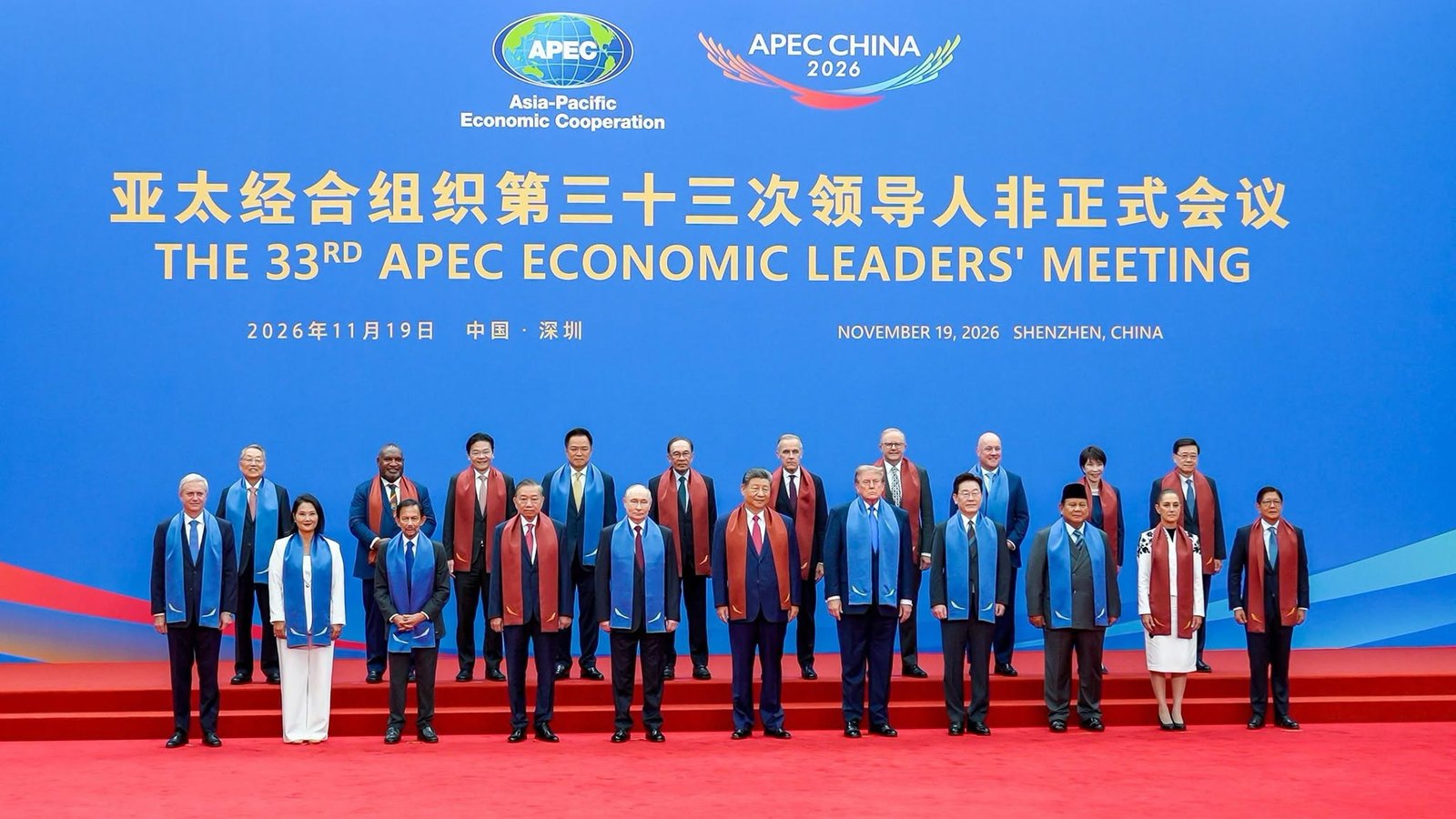
US Treasury Secretary Scott Bessent said on Friday 20 November 2026 that President Donald Trump and President Xi Jinping agreed humans should always be involved in military decisions that use advanced AI. He made the statement in a CNBC interview after the leaders met at the APEC summit in Shenzhen. It is a principle described by one participant, and it matters to AI safety groups and to universities running dual-use AI research.
What happened
Bessent spoke to CNBC’s Sara Eisen on “Squawk on the Street” on 20 November, after returning from Trump’s Asia trip. According to the CNBC transcript, he said: “President Xi agreed that humans should always be involved in any military decisions.” Asked whether such an agreement is hard to reach, he separated it from the rivalry between the two countries over AI leadership, calling the two “very different things”, and said both sides agree that “no major military operation should be launched without a human being involved.”
Reuters, in a report carried by Defense News, wrote that Bessent called the understanding one of the major achievements of the trip and said it would not be affected by the two countries’ competition for AI supremacy. Reuters quoted him saying AI, which he referred to as “SI” (superintelligence, the term the administration uses), should not be “allowed to be autonomous for major military actions.” SBS News in Seoul, working from the same interview, reported the same core statement.
Key details
| Item | As reported |
|---|---|
| Who made the statement | Scott Bessent, US Treasury Secretary, on CNBC, 20 November 2026 |
| What he said was agreed | Humans should always be involved in military decisions that use AI; no major military operation without a human involved |
| Where the leaders met | Shenzhen, China, on the sidelines of the APEC leaders’ meeting, 19 November 2026 |
| Source of the account | Bessent’s own description of the talks |
| Published text, enforcement, timeline | None cited in CNBC, Reuters or SBS reporting |
The reports present the understanding as a stated principle. They do not cite a joint text, a definition of what counts as a “major military operation”, a verification or enforcement mechanism, or an implementation date. Bessent also said the leaders had a “very robust discussion on what can be done in terms of containing the growth of nuclear weapons”, according to CNBC’s transcript, and Reuters reported on his remarks about Nvidia’s H200 chip, which he said remains the most advanced chip China can buy with licences.
Background and context
In September 2026, during Xi’s visit to Washington, the two governments agreed to set up a communication channel for AI incidents, as casrai reported in its coverage of the US-China AI talks before that summit. The Shenzhen meeting came a day after Trump told APEC leaders that the United States opposes “any form of globalist regulation” of AI, covered in casrai’s report on Trump’s APEC remarks. The two positions are distinct: opposition to global regulation of AI development, and an understanding, as described by Bessent, about human involvement in military use.
Multilateral work on the same question continues separately. The UN’s Convention on Certain Conventional Weapons review conference in Geneva, 16 to 20 November, considered how governments should proceed on lethal autonomous weapons, as set out in casrai’s report on the Geneva autonomous weapons negotiations.
Reaction
The Chinese account quoted by Euronews, citing Xinhua, has Xi saying the two countries should cooperate to keep AI “under human control” and strengthen communication and coordination on AI safety risks. That wording describes AI in general terms. Euronews noted that military use is among the potential flashpoints between the two countries. Bessent, for his part, said US AI labs must keep their lead as the best defence against “dangerous” Chinese models used in cyberattacks, according to Reuters, which shows the cooperation he describes sits alongside continued competition.
What it means for researchers, universities and research offices
For AI safety and evaluation groups, the statement is a political signal that human involvement in military AI decisions is something both governments are willing to say publicly. Until a text exists, it does not create a standard that a lab or university can be audited against, so it should not be cited in a compliance document as a rule.
For universities doing dual-use work, nothing in the reports changes existing obligations. Export controls, funder terms and research security policy remain the operative rules, and AI models and systems can fall under export control regardless of what the leaders said. Research offices reviewing collaborations with Chinese institutions should keep applying those screens; the statement is not an exemption or a relaxation. Earlier that week, Reuters reported, the US Commerce Department took further steps to restrict China’s access to advanced AI chips, including remote access through overseas data centres, which is the compliance change most likely to touch research computing.
For research that touches defence applications, such as decision-support, targeting or autonomy, the useful signal is the vocabulary. A principle that humans stay involved in “major military operations” leaves open what level of human involvement counts, which is the question institutional review processes and dual-use research screening will eventually have to answer for AI. Groups that evaluate frontier AI can prepare by documenting how human oversight is defined and tested in their own work.
What happens next
Euronews reports that details of the AI incident channel agreed in September are still being worked out. Whether either government publishes a text on military AI, or whether that channel produces a joint statement, will determine if the 20 November remarks become a documented commitment. The Chinese government’s own readout of the Shenzhen talks is the other document to watch.
Sources
- CNBC, “Transcript: U.S. Treasury Secretary Scott Bessent Speaks with CNBC’s Sara Eisen on Squawk on the Street Today”, 20 November 2026
- Reuters via Defense News, “Trump, Xi agreed that military AI decisions should involve humans, Bessent says”, 20 November 2026
- SBS News, “Bessent: US, China Agree to Human Oversight in Military AI Decisions”, 21 November 2026
- Euronews, “US President Trump rejects global AI regulation as China’s Xi calls for cooperation on safe AI”, 19 November 2026


