
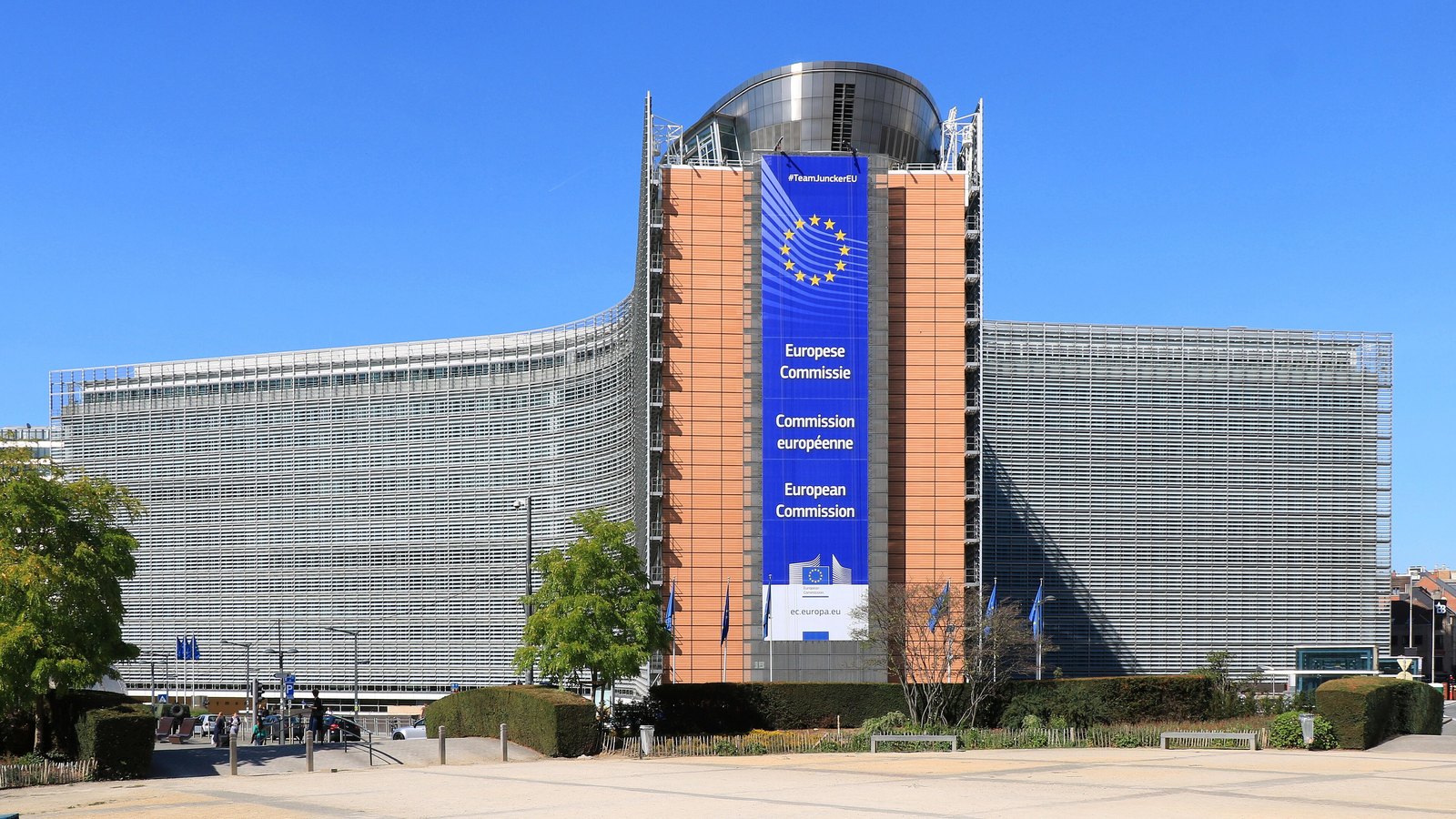
On November 23, 2026, British university leaders through Universities UK launched a high-level intervention calling on the European Union to grant associated third countries a formal governance role in Framework Programme 10, following an earlier joint statement on UK-EU research ties. The vice-chancellors argue that non-EU countries contributing billions to the successor research programme must participate in priority-setting to avert severe cross-border disruption.
Universities UK Calls for Third-Country Governance in FP10
In a newly released policy position, British vice-chancellors coordinated by Universities UK (UUK) and Universities UK International (UUKi) formally urged European policymakers to overhaul third-country association terms for Framework Programme 10 (FP10), the European Union’s next multi-year research framework scheduled to begin in January 2028. Setting out the higher education sector’s strategic priorities in Our vision for Framework Programme 10, the organisation argued that associated countries making massive financial and intellectual commitments cannot remain passive rule-takers excluded from programme governance.
The intervention was spearheaded by Professor Andrew Jones, Vice-Chancellor and President of Brunel University of London and UUK research and innovation policy lead. Jones warned that while the UK successfully re-entered Horizon Europe in 2024, the prolonged exclusion from 2021 to 2024 inflicted long-term damage on UK-based research groups. British university leadership is now demanding that the European Commission, European Parliament, and EU Council establish explicit mechanisms allowing associated partner states to participate in the strategic planning, work programme drafting, and thematic priority-setting of FP10.
The policy document outlines five guiding pillars for FP10: preserving a stable seven-year programming cycle; maintaining an uncompromising focus on scientific excellence and foundational research; expanding talent development through instruments such as Marie Skłodowska-Curie Actions; ensuring global openness with a structured governance voice for aligned partners; and applying a proportionate, evidence-based approach to research security that avoids unnecessary administrative hurdles.
Key Details and Proposed Trusted Partner Framework
Central to the vice-chancellors’ petition is the establishment of a formal “trusted partner” association status. Under existing Horizon Europe association regulations, third countries contribute financial capital based on gross domestic product ratios and receive access to pillar calls, yet they are barred from voting in programme committees and shaping call text specifications. UUK proposes that countries with established records of research excellence, shared democratic norms, and substantial budgetary commitments be granted structured observer and advisory rights within FP10 programme committees.
The proposal also demands guaranteed Day-One association for established partners. Under this mechanism, association agreements would be negotiated and ratified in parallel with the FP10 basic regulation, enabling researchers in associated countries to apply as coordinating entities from the very first call deadline in 2028 without interim domestic guarantee schemes.
| Dimension | Horizon Europe (2021–2027) Rules | Proposed FP10 Trusted Partner Model |
|---|---|---|
| Governance Voice | No formal role in programme committees or priority-setting; limited informal consultations. | Structured advisory and observer representation in programme committees and strategic planning. |
| Association Timing | Post-programme launch association after protracted bilateral delays (UK associated January 2024). | Seamless Day-One association ratified concurrently with the FP10 basic regulation before 2028. |
| Collaborative Calls | Full access to Pillar II collaborative calls, with specific exclusions on sensitive quantum and space topics. | Full participation across foundational and collaborative pillars with transparent, proportionate security thresholds. |
| Financial Mechanism | Net contributor correction mechanism balancing UK financial contributions against grant receipts. | Multi-year predictable contribution formula tied to transparent research outputs and overhead recoveries. |
| Consortium Leadership | UK entities permitted to coordinate consortia only after formal association entered force. | Guaranteed eligibility to coordinate consortia and lead work packages from initial draft call publication. |
Background: Post-Brexit Hiatus and Funding Gap Realities
The vice-chancellors’ public push reflects lingering anxieties across British universities over the three-year hiatus that followed the UK’s departure from the European Union. Although the EU-UK Trade and Cooperation Agreement envisioned UK association in 2020, political impasses over the Northern Ireland Protocol delayed final ratification until September 2023, with formal entry taking effect on January 1, 2024. During that three-year gap, British institutions suffered an estimated 50 percent decline in European research grant coordination, losing pivotal leadership positions across international consortia.
Furthermore, broader financial analyses have raised concerns regarding the fiscal affordability of full association. As reported by Times Higher Education, a recent financial assessment conducted by think-tank Science Works revealed that the UK government could face a multi-billion-pound funding shortfall if FP10 adopts the European Commission’s proposed €175 billion budget. CASRAI previously detailed this exposure in its review of the Science Works budget-gap analysis, which showed that the UK’s annual association fee could exceed £3.2 billion, far outstripping the current £2.2 billion domestic allocation and forcing difficult trade-offs across UK Research and Innovation budgets.
European and Sector Reactions to the Vice-Chancellors’ Proposals
The call for third-country governance reform has resonated across international higher education networks. Sector publication Research Professional News highlighted that university leaders from Switzerland, Canada, and New Zealand share British concerns regarding marginalisation from European policy architecture. In a parallel initiative reported by Times Higher Education, an international coalition comprising the Russell Group, Swissuniversities, Universities New Zealand, and U15 Canada submitted a joint petition to the Council of the European Union pressing for Day-One access.
Significantly, Brussels-based research bodies have also signaled support for novel association frameworks. In an official policy release, Science Europe endorsed the introduction of a new association category under Horizon Europe 2028–2034 designed to foster closer strategic ties with aligned international partners. Science Europe emphasized that while European strategic autonomy remains important, locking long-standing scientific collaborators out of agenda-setting weakens the European Research Area’s global competitiveness and dilutes scientific impact.
What the Governance Proposals Mean for Research Offices and Consortia
For university research offices, sponsored project directors, and faculty investigators, securing early governance clarity in FP10 is a matter of operational stability. When third-country participation is delayed or left ambiguous, institutional pre-award teams cannot accurately project staffing allocations or calculate person months for Horizon Europe proposals. Pre-award administrators frequently spent years drafting complex fallback budgets under domestic guarantee funds, which added friction and dissuaded European coordinators from inviting UK co-investigators.
Early association certainty also directly impacts regulatory compliance and consortium governance. Institutional research offices must establish cross-border compliance workflows covering data governance, intellectual property rights, open-science publishing mandates, and the stringent review procedures mandated under Horizon Europe Article 19 ethics reviews. If the trusted partner model is adopted, UK research managers will participate in stakeholder consultations during call development, allowing research offices to align institutional capabilities with European thematic clusters well before work programmes are formally published.
Next Steps in the FP10 Legislative Timeline
The legislative roadmap for FP10 will intensify throughout 2027 as European institutions negotiate the Multiannual Financial Framework (MFF) for 2028–2034. Following the EU Council’s partial general approach reached in mid-2026, the European Commission is expected to publish refined legislative drafts addressing third-country participation rules. British vice-chancellors plan to continue their advocacy campaign across Brussels and London, coordinating with national research organisations and European university associations.
Formal negotiations between the UK Department for Science, Innovation and Technology (DSIT) and the European Commission are anticipated to begin once the overall FP10 financial envelope and governance statutes are finalized. University leaders have urged British ministers to treat research association as a top priority in UK-EU relations, ensuring that British researchers can engage fully in collaborative research on the first day of the programme.
Sources
- Universities UK International: Our vision for Framework Programme 10, checked 2026-11-23
- Research Professional News: British vice-chancellors push to have more say in shaping FP10, checked 2026-11-23
- Times Higher Education: Give us ‘day one’ access to next Horizon, non-EU universities urge, checked 2026-11-23
- Times Higher Education: UK ‘will have to cut research budgets’ to join Horizon successor, checked 2026-11-23
- Science Europe: Position on Novel Category for Association to Horizon Europe, checked 2026-11-23






