
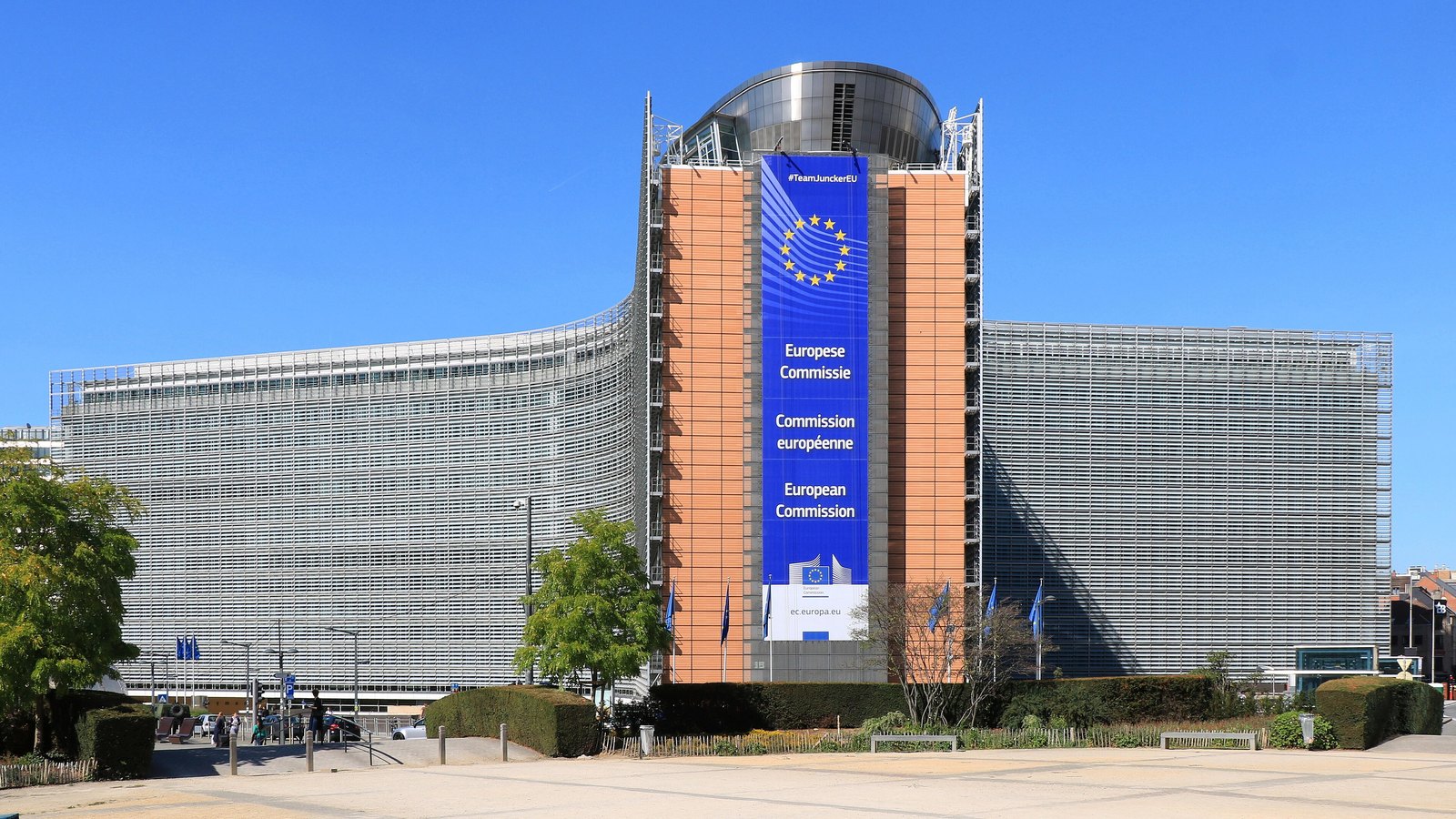
On November 19, 2026, the UK’s Russell Group and the Irish Universities Association issued a joint declaration urging European Union leaders to safeguard UK participation in Framework Programme 10, the upcoming successor to Horizon Europe. Representing 31 leading research universities, the coalition called ahead of the Brussels EU-UK summit for full association from day one, independent European Research Council funding, and the removal of restrictive preference rules.
Joint call ahead of the Brussels summit
On November 19, 2026, the Irish Universities Association (IUA) and the UK’s Russell Group released a joint statement calling on European Union institutions and member states to deliver an ambitious, open research framework programme that places scientific excellence and international cooperation at the centre of Europe’s future. Together, the two coalitions represent 31 of Europe’s foremost research-intensive higher education institutions, including eight Irish universities such as Trinity College Dublin and University College Dublin, alongside 24 leading UK institutions including Oxford, Cambridge, Imperial College London, and University College London.
The intervention comes immediately ahead of the EU-UK summit in Brussels, where prime ministerial and European Commission delegations are meeting to address bilateral ties, including youth mobility and scientific cooperation. With Ireland holding the Presidency of the Council of the European Union, Irish university leaders hold a strategic position to help shape European research policy and bridge diplomatic divides between London and Brussels.
Paul Johnston, Director General of the Irish Universities Association, emphasized the historical resilience of bilateral academic ties. “Our universities have worked together for decades, helped by the Common Travel Area and by shared research ties that held even through the uncertainty after Brexit,” Johnston stated. “Few Member States are better placed than Ireland to explain why these partnerships matter to Europe as a whole in these uncertain times. The EU-UK Summit is a chance for leaders to reaffirm their commitment to long-term research collaboration, and to lay the foundations for the UK’s association to FP10 on mutually beneficial terms.”
Libby Hackett, Chief Executive of the Russell Group, highlighted the strategic necessity of multilateral research instruments. “Horizon Europe gives our leading researchers a crucial way to collaborate on the big, shared challenges facing our nations,” Hackett said. “Ahead of the summit this week the UK government has set out clear ambitions for a closer relationship with the EU, and our research links can play a critical role in making this a reality. A framework programme that enables quick association would give universities in the UK and Ireland the confidence to deepen partnerships on everything from cancer treatments to cyber security and climate change.”
Key policy priorities and framework proposals
The joint statement outlines three core policy principles that the IUA and Russell Group insist must define Framework Programme 10 (FP10), running from January 1, 2028, through 2034:
- Safeguarding research excellence and governance independence: Retaining a fully autonomous European Research Council (ERC) with a ring-fenced budget dedicated to investigator-driven discovery across all disciplines.
- Supporting cross-border, multidisciplinary collaboration: Maintaining dedicated funding mechanisms that unite multinational consortia across science, technology, engineering, and mathematics (STEM) as well as the arts, humanities, and social sciences.
- Protecting openness and formalising a “trusted partner” model: Establishing explicit association pathways for like-minded third countries and rejecting protectionist “EU preference” clauses that would exclude associated non-EU nations from strategic calls.
Negotiations over FP10 architecture have intensified across Brussels amid debates on consolidating research funding into a European Competitiveness Fund. University leaders caution that subordinating fundamental research to short-term industrial targets risks eroding Europe’s scientific foundation. The table below compares current Horizon Europe rules with the university coalitions’ core proposals for FP10.
| Programme Dimension | Horizon Europe (2021–2027) | Proposed Framework Programme 10 (2028–2034) |
|---|---|---|
| Indicative Overall Budget | €95.5 billion (current prices) | €175 billion to €200 billion (target proposed by sector) |
| UK Association Timing | Associated mid-cycle (effective January 1, 2024) | Day-one association from launch (January 1, 2028) |
| ERC Autonomy | Independent Scientific Council under Pillar I | Fully ring-fenced, autonomous ERC insulated from Competitiveness Fund |
| Third-Country Participation | Ad hoc exclusions under Article 22(5) for sensitive calls | Formalised “trusted partner” status with minimal strategic exclusions |
| Consortium Scope | Mandatory minimum of three member states or associated countries | Preserved multinational consortia spanning STEM and humanities |
Background and post-Brexit research ties
The joint statement addresses a research relationship severely tested following the 2016 Brexit referendum. Although the UK-EU Trade and Cooperation Agreement envisioned UK participation, formal ratification was frozen for nearly three years due to disputes over the Northern Ireland Protocol. During this hiatus, UK participation rates in European collaborative consortia fell substantially, and UK researchers were temporarily barred from leading new projects.
The impasse was resolved following the 2023 Windsor Framework, enabling the UK to associate to Horizon Europe research funding and Copernicus on January 1, 2024. While the UK Research and Innovation (UKRI) guarantee scheme supported affected teams during the gap, domestic backstops could not fully substitute for European consortium leadership roles.
Throughout this period, academic cooperation between Ireland and the UK served as an indispensable bridge. Bolstered by the Common Travel Area, researchers preserved cross-border networks. Outside the United States and China, the UK’s ten largest research partners are all European nations participating in Horizon Europe. In Ireland, institutions including Trinity College Dublin, University College Dublin, and University of Galway routinely partner with Russell Group universities on collaborative health, climate, and digital initiatives.
Institutional reaction and sector perspectives
The joint declaration reflects broader concern across European academia regarding proposals to restructure framework funding. Groups such as the League of European Research Universities (LERU) and the European University Association (EUA) have similarly mobilized to defend basic research and demand an expanded FP10 budget.
In Dublin, university leaders emphasized that Ireland’s research system depends heavily on open European cooperation. In 2026, researchers across Europe secured €838 million in Advanced Grants from the European Research Council, with awards hosted at Irish institutions in artificial intelligence, neuroscience, and social sciences. University administrators noted that excluding international partners would weaken the scientific quality of collaborative bids.
University leaders also welcomed support from within the European Parliament, where members of the Committee on Industry, Research and Energy have called for stable association rules for trusted partners. Hackett noted: “We welcome proposals from MEPs that would help create a clear path to association for trusted partners like the UK. The Irish Presidency will have a vital role to play in getting a deal over the line that will deliver for Ireland, the UK and our shared continent.”
Implications for research offices and European consortia
For research administrators, sponsored project officers, and international liaison offices, the joint call highlights practical steps for current and upcoming proposals:
First, institutions should continue building consortia under Horizon Europe work programmes through 2027. UK institutions participate as full beneficiaries with identical rights to EU member state entities, eligible to host ERC grants and act as a project grant consortium coordinator. Sponsored project offices should actively encourage faculty to pursue collaborative bids.
Second, project teams must carefully negotiate institutional terms in each multilateral consortium agreement. Clear provisions covering intellectual property, data access, and liability allocation remain critical when integrating partner institutions across borders. Clarifying the administrative role of each institutional beneficiary in Horizon Europe helps prevent governance issues during grant execution.
Third, research offices must align with evolving research security standards. Under European Commission guidelines and Horizon Europe sensitive technology screening, projects involving dual-use capabilities, quantum systems, and advanced computing undergo foreign interference reviews. Research managers should coordinate with export control personnel early in proposal development.
Timeline and next steps for FP10
The Brussels summit initiates a multi-year legislative process governing European research through 2034. Following the summit, the European Commission is expected to publish its formal legislative proposal for FP10 in mid-2025 or 2026. That text will initiate inter-institutional trilogues between the European Parliament, the Council of the EU, and the Commission to agree on programme architecture, the overall budget, and third-country participation rules.
With Ireland holding the Council Presidency during crucial preparatory phases, the IUA and Russell Group urge that association negotiations run in parallel with internal legislative drafting. Timely agreement is essential to avoid funding gaps when Horizon Europe concludes on December 31, 2027, and FP10 begins on January 1, 2028. Both bodies confirmed they will sustain joint advocacy across Brussels, London, and Dublin to keep scientific collaboration central to the UK-EU relationship.
Sources
- Irish Universities Association: Irish and UK universities urge ambitious, open EU research programme, checked 2026-11-20
- The University Times: Irish, UK Universities Call on EU to Further Horizon Europe, Programme Inclusive of Israeli Universities, checked 2026-11-20
- Research Agenda: Russell Group pushes for an “open, research-led” Horizon successor, checked 2026-11-20
- Trinity College Dublin: LERU calls for research and innovation to be prioritised in the next EU budget, checked 2026-11-20
- UK Research and Innovation: Horizon Europe: help for UK applicants, checked 2026-11-20


