
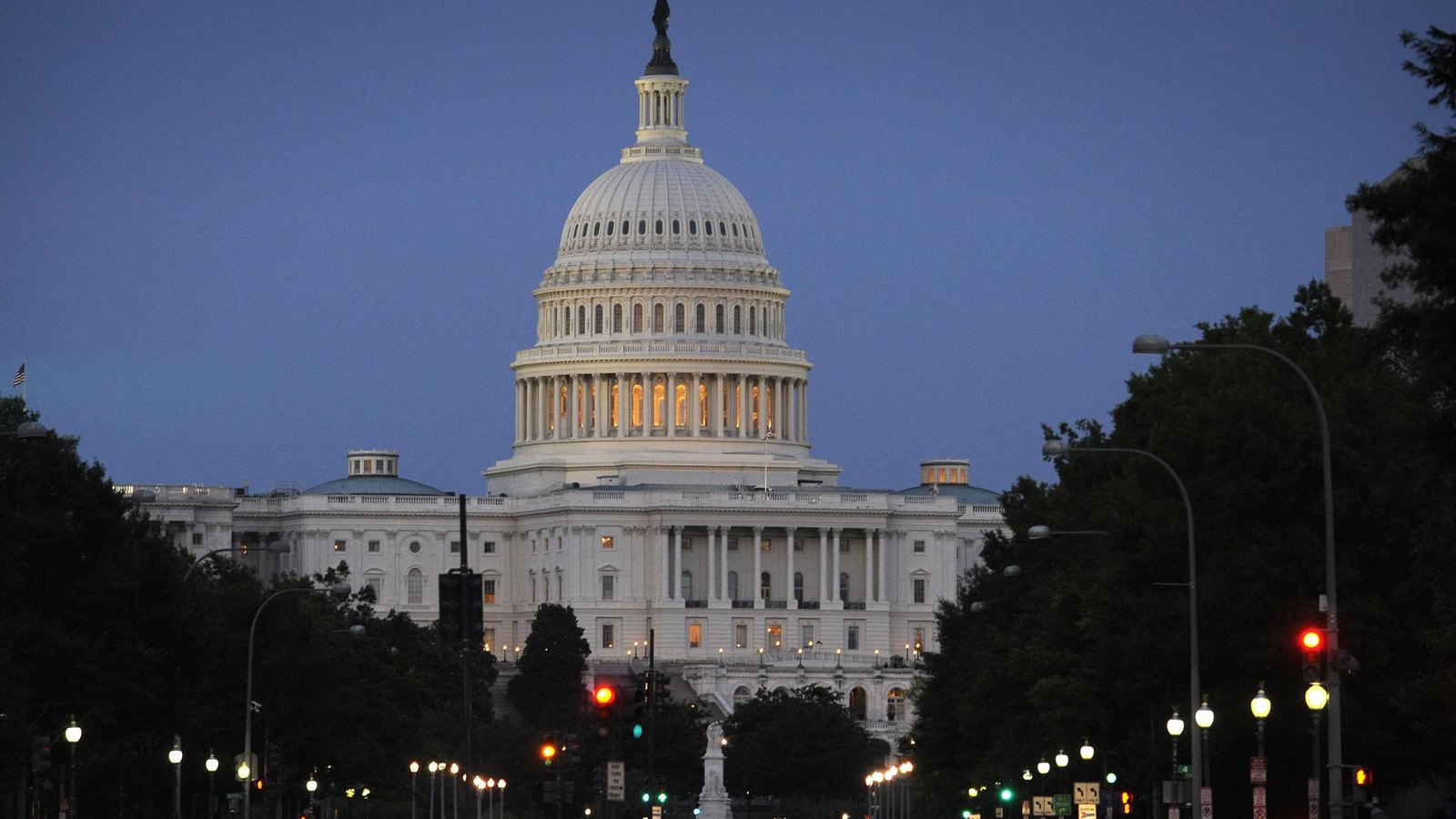
The U.S.-China Economic and Security Review Commission released its 2026 Annual Report to Congress on 18 November 2026, with 30 recommendations for lawmakers. The technology chapters call for conditioning AI chip exports on U.S. capacity, restricting Chinese open-weight AI models in sensitive uses, and an American Data Initiative, all of which touch how universities handle data, models and export-controlled work.
What happened
The Commission, a legislative branch body created on 30 October 2000 by the Floyd D. Spence National Defense Authorization Act for Fiscal Year 2001, published its annual report dated November 2026. The report is current as of 8 October 2026 and, according to its executive summary and recommendations, “includes 30 recommendations for congressional consideration.” The recommendations are organised by chapter and are also published as a standalone comprehensive list.
The technology material sits in Part III, “China’s Technology Ambitions”: Chapter 7 on data (“Collect, Steal, Buy, Fuse, Monetize”) and Chapter 8 on the AI stack “from wafer to weights.” Other parts cover India, Latin America, undersea cables, commodity markets, Taiwan and Hong Kong.
The executive summary says China “continues to face significant compute constraints due to U.S. export controls, yet its frontier AI capabilities have largely kept pace with advances in the United States,” and that Chinese developers are using techniques such as distillation to copy the methods and outputs of leading U.S. models. It also says Beijing is restricting AI researchers at frontier labs, and their families, from leaving the country.
Key recommendations on technology and data
The list below summarises the recommendations in Chapters 7 and 8 as numbered in the Commission’s comprehensive list.
| No. | Subject | What the Commission asks Congress to do |
|---|---|---|
| 15 | American Data Initiative | Make the General Services Administrator the Federal Chief Data Officer; make Data.gov the catalogue of federal data, open by default with registered access for non-public data; build “sectoral data foundries” producing AI-ready datasets, “beginning with biology and embodied AI”; codify the core bars of the Justice Department’s Data Security Program; create a national opt-in regime for data brokers. |
| 16 | ICTS authority | Codify the Commerce Department’s Office of Information and Communications Technology and Services and its supply-chain authorities, with dedicated funding. |
| 17 | Hackers for hire | Direct the National Cyber Director to publish an annual list of foreign persons that supply or monetise China’s state-sponsored cyber operations, with sanctions and procurement reviews within 180 days of each list. |
| 18 | Chinese open-weight models | Within 180 days, identify sensitive uses and bar new deployment of covered models there absent a time-limited authorization based on independently evaluated safeguards; require inventories, mitigation or replacement plans and independent security testing. |
| 19 | Disclosure | Require federal agencies and entities receiving federal funds or tax credits to disclose use of AI models developed by Chinese entities, including fine-tuned or derived models. |
| 20 | AI chip exports | Amend the Export Control Reform Act of 2018 to condition exports of advanced AI chips to China on an exporter certification that exports will not divert advanced semiconductor manufacturing or AI capacity from the U.S. market. |
Details that matter to research offices
Recommendation 18 would cover “systems controlling critical infrastructure, performing national security functions, or processing bulk sensitive personal data.” The Commission says the legislation should provide “narrowly tailored exceptions for security research and authorized national security activities” and require annual reporting to Congress on deployment exposure and mitigation.
Recommendation 20 would reach upstream capacity, including advanced-node wafer fabrication, high-bandwidth memory and advanced packaging, not only finished chips. It would require auditable capacity-allocation data submitted to the Bureau of Industry and Security, with criminal penalties for false certification, and bar waivers without a national security determination sent to Congress for a 30-day review.
Recommendation 15 includes accounting changes: data held by federal agencies and U.S. businesses would be recognised as an asset on the balance sheet, with the Financial Accounting Standards Board directed to set standards within two years, and data brokers would have two years to obtain consent for personal data they already hold or delete it.
Background and context
The executive summary describes data as a strategic asset for Beijing and says China is building “deliberate asymmetries,” most starkly in biotechnology, that maximise access to foreign data while denying reciprocal access to China’s data. It describes the 15th Five-Year Plan as confirming that China will mobilise the full weight of the state behind its technology sector and treats AI as a general-purpose technology connecting biotechnology, robotics and quantum.
Recommendation 16 builds on a 2024 Commission recommendation that Congress codify the ICTS supply-chain executive order, and cites the Connected Vehicle Rule as evidence that the framework can work. On chips, U.S. export controls are an existing tool: our guides explain the Export Control Reform Act that Recommendation 20 would amend and how compute governance and chip-level controls work.
Reaction and independent reporting
CNBC reported on 18 November that the report says China’s People’s Liberation Army has been “actively soliciting” Nvidia’s most advanced chips, and quoted the Commission as saying “China is seeking to evade U.S. export controls to gain the most advanced semiconductors.” CNBC also reported the Commission’s finding that the compute gap with the United States is “substantial, largely due to U.S. export controls,” and that Chinese companies have obtained remote access to Nvidia chips in third countries, including Malaysia. According to CNBC, the Commerce Department’s Bureau of Industry and Security issued a rule on the Tuesday before publication aimed at cutting off that remote-access workaround, after criticism from Treasury Secretary Scott Bessent and members of Congress that Commerce had not done enough to stop diversion.
Inside U.S. Trade reported the same day that the Commission recommends Congress amend the Export Control Reform Act so that advanced AI chip exports are allowed only if manufacturers show the sales will not reduce U.S. semiconductor manufacturing or AI capacity.
What it means for researchers, universities and research offices
- AI models in research systems. If Recommendation 18 became law, institutions that run Chinese open-weight models in systems handling bulk sensitive personal data, such as clinical or genomic datasets, could face authorization, inventory and replacement-plan obligations. The proposal’s exception for security research is the provision that would matter most to labs that study these models. Our dictionary entry on open weights models explains the term.
- Disclosure. Recommendation 19, as drafted, applies to “any state or local government or other entity that receives federal funds or federal tax credits.” On its face that language could capture federally funded universities, so research offices would need an inventory of where Chinese-developed or derived models sit in tools, platforms and vendor products. Whether universities are covered would depend on the final text.
- Datasets. Federal “sectoral data foundries” starting with biology, and a Data.gov catalogue open by default, would change how federally held biological data is released and who may access non-public data. Offices that manage data-sharing agreements should expect screening of buyers and users for ties to China and other foreign adversaries if exchange rules are adopted.
- Export and collaboration compliance. The chip-export proposal targets exporters, not universities, but the Commission frames the whole technology competition as a security issue. Export-control and research-security officers can map the report to existing duties under NSPM-33 and US-China research collaboration compliance.
What happens next
The Commission advises Congress; none of the 30 recommendations is binding. Where the recommendations set timelines, they run from enactment: 180 days for Commerce to identify sensitive AI uses and complete its consolidated assessment of open-weight models, 180 days after each annual list for sanctions and procurement determinations, and two years for accounting standards for data assets and for broker consent. Waivers of the chip-certification requirement would need a 30-day congressional review. The Bureau of Industry and Security remote-access rule that CNBC says was issued on 17 November is the nearest-term change already in force for institutions that use or host advanced AI compute.
Sources
- U.S.-China Economic and Security Review Commission, 2026 Annual Report to Congress, 18 November 2026.
- U.S.-China Economic and Security Review Commission, 2026 Report to Congress: Executive Summary and Recommendations, November 2026.
- U.S.-China Economic and Security Review Commission, Comprehensive List of the Commission’s 2026 Recommendations, November 2026.
- CNBC, China’s military seeks Nvidia’s advanced chips for AI capabilities, commission says, 18 November 2026.
- Inside U.S. Trade, U.S.-China Commission: Congress should ensure AI chip exports don’t hinder domestic capacity, 18 November 2026.


