
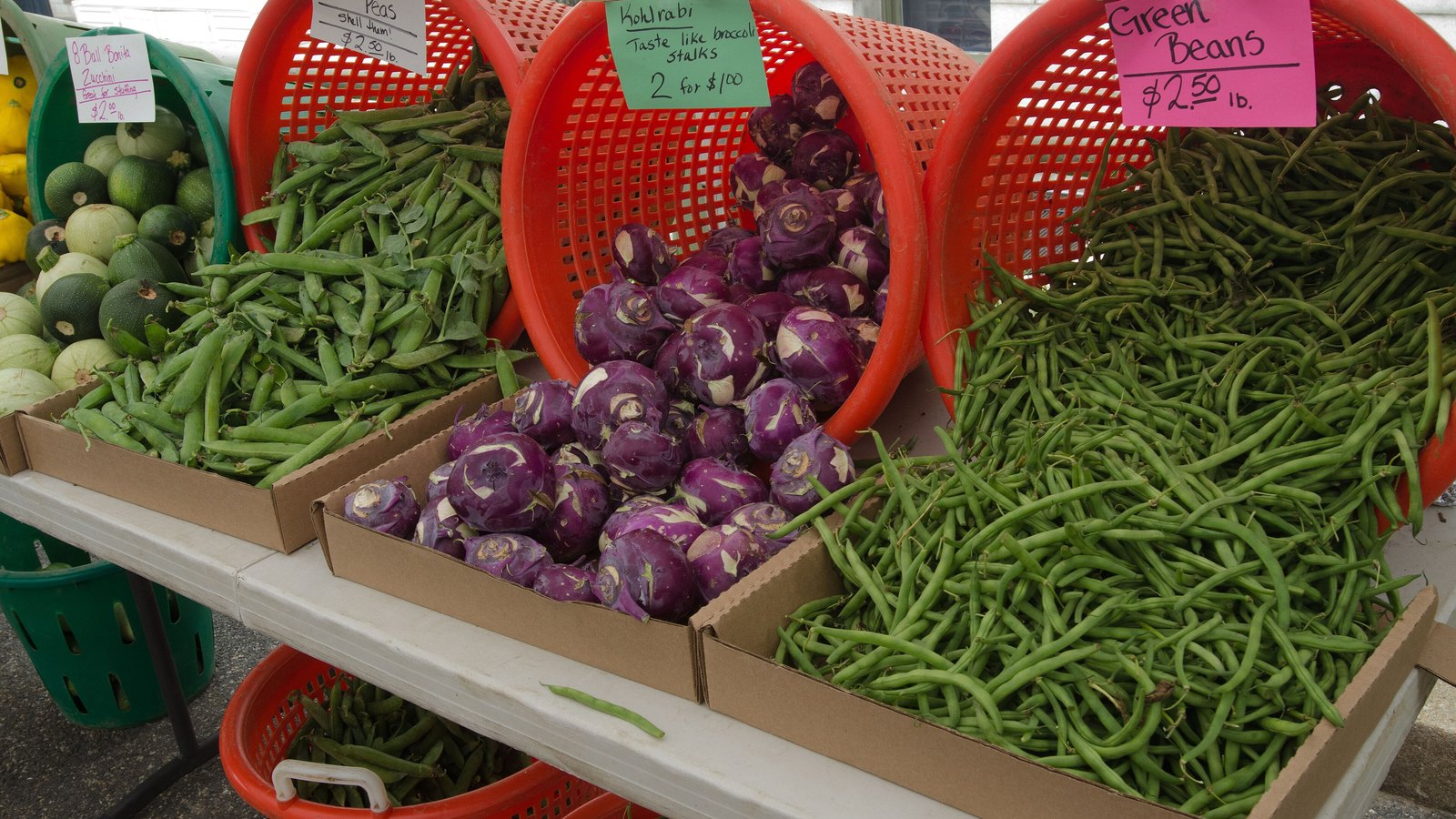
Following an earlier review of state nutrition assistance demonstration waivers, the U.S. Department of Agriculture has submitted an information collection revision under OMB Control No. 0584-0658 for the Turnip the Beet Summer Meals Program. Filed on public inspection on November 27, 2026, the submission establishes evaluation instruments and scoring rubrics for summer meal sponsors, providing critical administrative datasets for university nutrition and policy researchers.
Submission of the Turnip the Beet Information Collection to OMB
On November 27, 2026, the Food and Nutrition Service of the U.S. Department of Agriculture officially filed a proposed information collection notice for public inspection, scheduled for formal publication in the Federal Register on November 30, 2026 (Document No. 2026-24287). The submission requests Office of Management and Budget clearance for a revision of OMB Control No. 0584-0658, which governs the evaluation and recognition architecture of the Turnip the Beet High-Quality Summer Meals Program. The program operates across two primary federal child nutrition programs: the Summer Food Service Program and the Seamless Summer Option of the National School Lunch Program.
The revised collection provides a formalized mechanism for local sponsoring organizations and state administering agencies to submit and audit detailed operational data on summer meal quality. Under the Paperwork Reduction Act of 1995, USDA must demonstrate the practical utility, methodological validity, and reporting burden of the instruments used to evaluate meal composition, local food procurement, and participant engagement across thousands of participating summer feeding sites nationwide.
Departmental Information Collection Clearance Officer Rachelle Ragland-Greene certified the submission, opening a mandatory 30-day public comment window that runs through December 30, 2026. The submission highlights federal efforts to systematically document best practices in institutional meal service, ensuring children from low-income communities receive nutritionally dense, appealing meals when school is out of session.
Information Collection Architecture and Menu Evaluation Rubric
The operational core of the collection centers on the official nomination and evaluation packets published through the USDA Food and Nutrition Service Turnip the Beet portal. The evaluation instruments evaluate one month of continuous summer menus, detailed production records, and kitchen preparation logs to score sponsors against rigorous nutritional standards that exceed minimum statutory requirements.
State agencies first verify the completeness and integrity of nomination packets submitted by sponsoring organizations before forwarding qualifying files to FNS regional offices. The evaluation rubric establishes a multi-tiered point system that awards Bronze, Silver, or Gold recognition based on specific nutritional, sensory, and educational benchmarks. Key criteria include serving whole fruits and raw vegetables multiple times per week, integrating culturally relevant and local agricultural products, offering whole-grain-rich foods, and avoiding hyper-processed ingredients with excessive added sugars or saturated fats.
In addition to strict dietary metrics, sponsors earn bonus points by executing structured taste tests with participating children, collecting participant feedback, and integrating agricultural nutrition education. To ensure statistical reliability and measurement consistency across disparate site operations, state reviewers use standardized audit checklists that institutional researchers frequently compare against formal questionnaire validation techniques used in field evaluation studies.
| Metric or Parameter | Program Specification | Administrative and Research Significance |
|---|---|---|
| Collection Title | Turnip the Beet High-Quality Summer Meals Program | Voluntary evaluation and recognition protocol across SFSP and SSO |
| OMB Control Number | 0584-0658 (Revision of Approved Collection) | Standardized data collection under Paperwork Reduction Act oversight |
| Statutory Authority | 42 U.S.C. 1761 (Richard B. Russell National School Lunch Act) | Governs federal meal patterns, nutrition mandates, and state administration |
| Immediate Revision Cohort | 252 respondents reporting annually | Captures 500 annual burden hours for targeted nomination validation tranches |
| Comprehensive Program Scope | 1,419 total respondents (300 state staff, 1,119 sponsors) | Generates 5,451 annual responses and 2,369 total annual burden hours |
| Menu Review Interval | One month of continuous daily menus | Requires production records, recipes, and dietary specification sheets |
| Award Tiering Structure | Bronze, Silver, and Gold distinction | Establishes tiered benchmarks exceeding baseline federal nutrition floors |
Statutory Authority and Summer Meal Program Evolution
Federal summer nutrition programs operate under the statutory framework of Section 13 of the Richard B. Russell National School Lunch Act (42 U.S.C. 1761), supplemented by federal implementing regulations at 7 CFR Part 225. Historically, summer feeding initiatives struggled with substantial meal quality variance, where compliance with minimum meal pattern components did not consistently translate into appetizing or nutrient-dense food offerings for children.
Congress and administrative policymakers developed the Seamless Summer Option to permit school food authorities already participating in the National School Lunch Program to operate summer feeding sites under familiar school meal rules, while non-school entities rely on the Summer Food Service Program framework. Turnip the Beet was established to address persistent challenges surrounding summer food waste, low site attendance, and meal palatability by incentivizing culinary creativity without imposing unfunded regulatory mandates.
Over successive review cycles, USDA has steadily refined the evaluation rubric to reflect updated science in the Dietary Guidelines for Americans. By shifting from ad hoc recognition to a structured, audit-tracked information collection, the agency has created a continuous historical archive of menu design, cost allocation, and local food integration across urban, rural, and tribal operating environments.
Administrative Response and Nutrition Standards Alignment
State agencies and child nutrition advocacy organizations have responded positively to the structured revision of OMB Control No. 0584-0658, pointing out that standardized evaluation packets reduce paperwork confusion for municipal park districts, school nutrition departments, and non-profit youth organizations. In summer 2025, USDA evaluated and awarded 171 sponsors nationwide, comprising 47 Gold, 101 Silver, and 23 Bronze recipients across diverse regional jurisdictions.
Public health advocates emphasize that summer meal quality serves as a vital safeguard against summer learning loss and nutritional regression. Sponsoring organizations report that adopting the evaluation rubric prompts staff to establish partnerships with regional farm-to-school distributors, resulting in higher participation rates among older youth who frequently avoid standard summer meal sites.
The revised collection also eliminates redundant submission fields between state review checklists and federal scoring portals. This administrative streamlining decreases the friction that previously discouraged small, community-based non-profits in rural food deserts from pursuing formal federal quality recognition.
Implications for University Researchers and Evaluation Grants
For faculty, postdocs, and data managers at land-grant universities, agricultural extension services, and public health institutes, the Turnip the Beet data collection offers a rich administrative repository. Academic researchers studying federal nutrition interventions, child health outcomes, and local agricultural supply chains routinely incorporate FNS administrative datasets into econometric and nutritional epidemiology models.
University teams tracking child food security frequently merge FNS meal site data with census demographics obtained from American Community Survey data to identify neighborhood-level disparities in meal accessibility and dietary quality. Access to detailed four-week menu logs, local food procurement expenditures, and child taste-testing outcomes enables investigators to measure the real-world cost-effectiveness of farm-to-institution programs.
Furthermore, academic institutions operating community nutrition demonstration grants or evaluating USDA National Institute of Food and Agriculture (NIFA) awards must align their reporting mechanisms with federal compliance standards. Institutional project administrators managing federal subawards can reference established protocols for FSRS reporting when tracking programmatic expenditures and subrecipient performance across multi-site community feeding initiatives.
Public Comment Timeline and Federal Register Implementation
Following publication in the Federal Register on November 30, 2026, the information collection notice enters a statutory 30-day public comment window under the Paperwork Reduction Act. Stakeholders, including university researchers, school nutrition directors, state program coordinators, and public health economists, may submit written feedback and methodological recommendations through December 30, 2026.
Comments must be submitted electronically through the federal information collection docket hosted on the Office of Information and Regulatory Affairs PRAMain portal by searching for OMB Control No. 0584-0658. Reviewers are encouraged to provide evidence-based suggestions regarding burden hour calculations, menu logging tools, electronic submission interfaces, and ways to enhance the research utility of published program summaries.
Following the conclusion of the public comment period, OMB will evaluate agency responses and public feedback before issuing a final clearance determination. The finalized evaluation instruments will govern the 2027 summer meal award cycle, shaping nutritional benchmarking for thousands of community feeding sites across the country.
Sources
- Federal Register: Agency Information Collection Activities; Proposals, Submissions, and Approvals: Turnip the Beet High-Quality Summer Meals Program (Document No. 2026-24287), checked 2026-11-28
- USDA Food and Nutrition Service: Turnip the Beet! High-Quality Summer Meals Award Program Criteria and Nomination Materials, checked 2026-11-28
- Legal Information Institute: 7 CFR Part 225 – Summer Food Service Program Statutory and Regulatory Standards, checked 2026-11-28
- Office of Information and Regulatory Affairs: Information Collection Review Docket for OMB Control No. 0584-0658, checked 2026-11-28






