
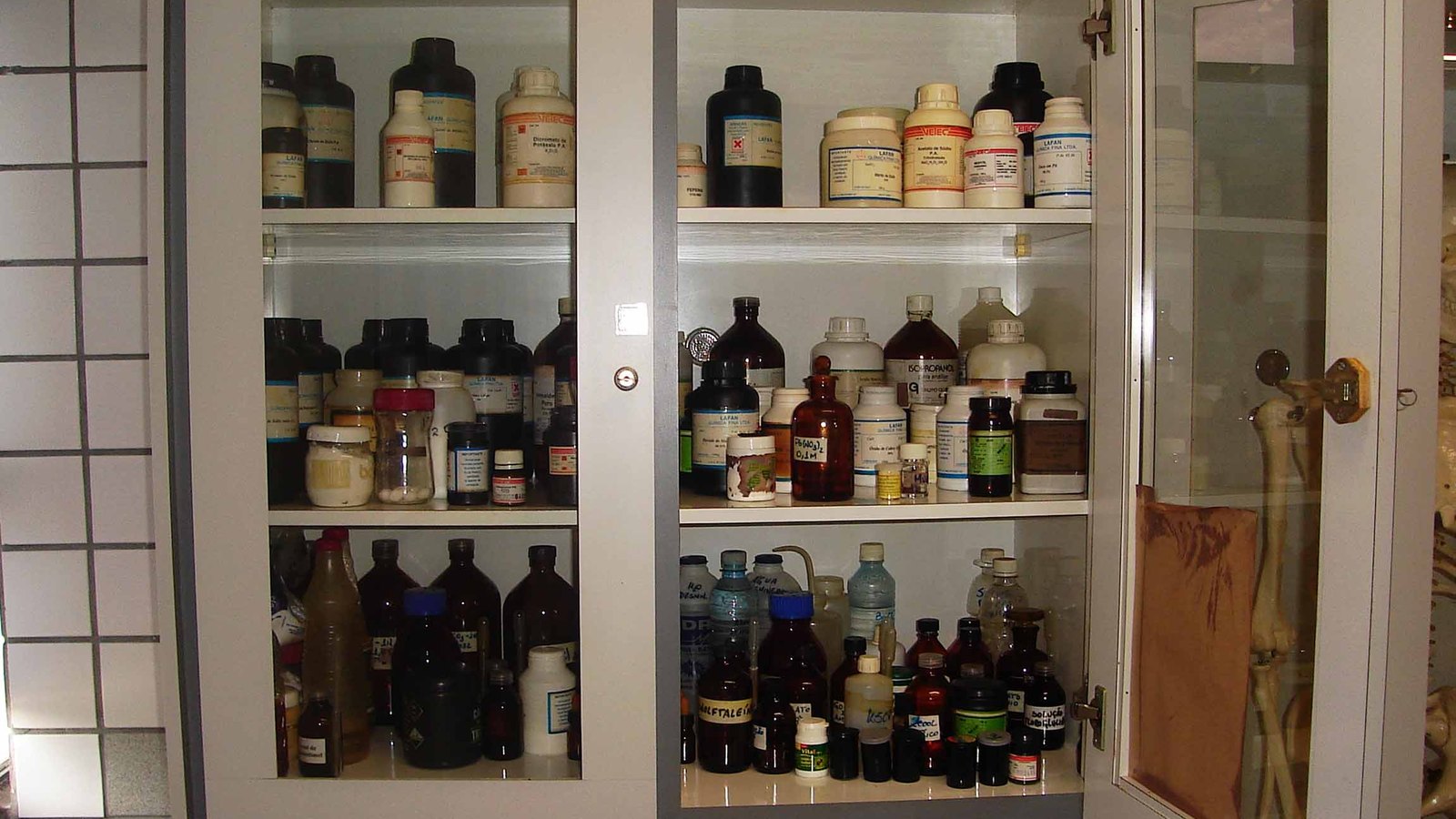
On November 25, 2026, the U.S. International Trade Commission filed public inspection determinations finding that imports of chromium trioxide from India and Turkey materially injure domestic industry. The affirmative ruling clears the path for binding federal antidumping and countervailing duty orders, creating immediate cost and supply-chain implications for university chemistry departments, materials testing facilities, and academic research laboratories sourcing high-purity chromic reagents.
USITC Final Injury Determinations for India and Turkey
The U.S. International Trade Commission (USITC) concluded its final injury investigations concerning chromium trioxide imported from India and Turkey under Investigation Nos. 701-TA-779 and 731-TA-1765–1766. Under the Tariff Act of 1930, the Commission determined that an established domestic manufacturing industry is materially injured by subject imports sold at less than fair value (LTFV) from both nations, alongside subsidized imports from India.
The determinations were formally completed and issued on November 23, 2026, and entered the public inspection docket on November 25, 2026, prior to scheduled Federal Register publication on November 27, 2026. Commissioner Samuel Negatu did not participate in the determination. The Commission factual findings and economic analysis will appear in USITC Publication 5811, titled Chromium Trioxide from India and Turkey: Investigation Nos. 701-TA-779 and 731-TA-1765–1766 (Final).
According to the Commission formal vote record and injury determination, this decision completes the statutory injury phase required under U.S. trade remedy law. Following affirmative dumping and subsidy determinations by the U.S. Department of Commerce, the USITC vote satisfies all legal prerequisites for the imposition of formal tariff orders.
Investigation Scope, Tariff Classifications, and Procedural History
The product subject to these investigations is chromium trioxide, widely known as chromic acid, chromic anhydride, or chromium(VI) oxide, having the chemical formula CrO3 and Chemical Abstracts Service (CAS) registry number 1333-82-0. Chromium trioxide is an inorganic compound appearing as dark red flakes, crystals, or prills, valued in chemical synthesis, metallurgy, and finishing operations for its powerful oxidising characteristics.
The subject merchandise enters under subheading 2819.10.00 of the Harmonized Tariff Schedule of the United States (HTSUS). The regulatory review followed petitions filed on September 29, 2025, by domestic producer American Chrome & Chemicals, Inc. (ACC), located in Canonsburg, Pennsylvania. The table below outlines key administrative parameters and procedural milestones.
| Investigation Parameter | India Proceeding | Turkey Proceeding |
|---|---|---|
| USITC Investigation Number | 701-TA-779 (CVD) and 731-TA-1765 (AD) | 731-TA-1766 (AD) |
| Tariff Classification | HTSUS 2819.10.00 | HTSUS 2819.10.00 |
| Chemical Scope and Formula | Chromium Trioxide (CrO3, CAS 1333-82-0) | Chromium Trioxide (CrO3, CAS 1333-82-0) |
| Commerce Preliminary Findings | Subsidized (91 FR 64335); LTFV (91 FR 64349) | LTFV (91 FR 64351) |
| USITC Final Determination | Material Injury Confirmed | Material Injury Confirmed |
| USITC Report Citation | Publication 5811 (November 2026) | Publication 5811 (November 2026) |
| Docket Filing Date | November 25, 2026 (Doc. 2026-24053) | November 25, 2026 (Doc. 2026-24053) |
The Commission instituted the final phase of its investigations following preliminary Commerce determinations in October 2026. A public hearing was held on September 29, 2026, allowing domestic producers, foreign exporters, and trade representatives to present factual testimony.
Market Dynamics and the Strategic Role of Chromic Reagents
Chromium trioxide is an essential industrial chemical and specialty laboratory reagent. In commercial manufacturing, it is the primary precursor for hard and decorative chromium electroplating, producing durable, corrosion-resistant coatings on aircraft landing gear, hydraulic cylinders, and turbine components. It is also utilised in chromic acid anodising and specialised catalyst manufacturing.
In academic laboratories, analytical-grade CrO3 is utilised across synthetic organic chemistry for alcohol oxidations (such as the Jones reagent) and across materials science departments for electrolytic etching, microstructural characterisation, and passivating oxide evaluation under standardised ASTM corrosion testing protocols.
Domestic chemical manufacturing has faced severe financial strain from low-priced imports. In its submissions, the petitioner documented that foreign producers in India and Turkey expanded U.S. market presence through aggressive pricing supported by foreign government programs. The Commission determined that these lower-priced import volumes directly undercut domestic market pricing and harmed domestic plant operations.
Industry Petitions and Regulatory Evidence
The investigations were initiated by American Chrome & Chemicals, Inc., the sole remaining U.S. producer of basic chromium chemicals. ACC argued that subsidized and dumped foreign imports threatened the survival of domestic manufacturing, risking domestic reliance on overseas suppliers for critical industrial and research inputs.
Throughout the proceedings, domestic representatives presented economic data demonstrating market share losses and operational margin erosion resulting from foreign price undercutting. Countervailing duty filings detailed government subsidy schemes and export benefits in India that lowered production costs below competitive market rates.
While foreign respondents argued that imported material addressed domestic supply gaps and specialty customer specifications, the Commission found that domestic production possessed adequate capability to supply commercial demand and that import volumes caused demonstrable material injury.
Implications for University Laboratories, Procurement Offices, and Facility Safety
Although trade remedies focus on commercial import volumes, the resulting tariffs affect institutional procurement budgets, reagent distributors, and campus laboratory protocols. University research administrators and laboratory directors must address several key operational priorities.
Academic procurement offices should prepare for cost adjustments and surcharges on high-purity chromium trioxide crystals and prepared chromic solutions. Distributors sourcing raw material from impacted international suppliers will pass duty expenses downstream. Procurement specialists should implement supplier risk assessment workflows to verify vendor inventory stability and identify alternative domestic supply lines.
In addition, facilities handling hexavalent chromium reagents must maintain strict environmental health and safety compliance. Under chromic acid SDS safety standards, chromium trioxide is recognised as a powerful oxidiser, severe corrosive, and human carcinogen. Academic laboratories must adhere strictly to the OSHA hexavalent chromium standard (29 CFR 1910.1026), which mandates an action level of 2.5 micrograms per cubic meter and an eight-hour permissible exposure limit of 5 micrograms per cubic meter.
To ensure researcher protection, all manual handling, dispensing, and weighing of crystalline CrO3 must take place in certified laboratory fume hoods with verified face velocities. Departmental safety officers should also update institutional chemical inventory management systems to monitor container weights, verify secondary containment, and enforce segregation from flammable organics and reducing chemicals.
Implementation Timeline and Forthcoming Trade Duty Orders
Following the public inspection release of Document 2026-24053 on November 25, 2026, the official notice will appear in the Federal Register on November 27, 2026. The Commission will formally transmit its final determination to the Department of Commerce.
Under the Tariff Act of 1930, Commerce must issue final antidumping and countervailing duty orders within seven business days of receiving the Commission transmittal. The orders will be published through official Department of Commerce case announcements and recorded in the Federal Register.
Once published, U.S. Customs and Border Protection will collect cash duty deposits on all subsequent entries of subject chromium trioxide, based on specific duty margins established by Commerce. Affected commercial parties have thirty days from publication to file appeals before the U.S. Court of International Trade.
Sources
- Federal Register: Public Inspection: Investigations; Determinations, Modifications, and Rulings, etc.: Chromium Trioxide from India and Turkey, checked 2026-11-25
- U.S. International Trade Commission: Chromium Trioxide from India and Turkey, checked 2026-11-25
- International Trade Administration: EC ADCVD Case Announcements, checked 2026-11-25
- Occupational Safety and Health Administration: 1910.1026 – Chromium (VI). | Occupational Safety and Health Administration, checked 2026-11-25






