
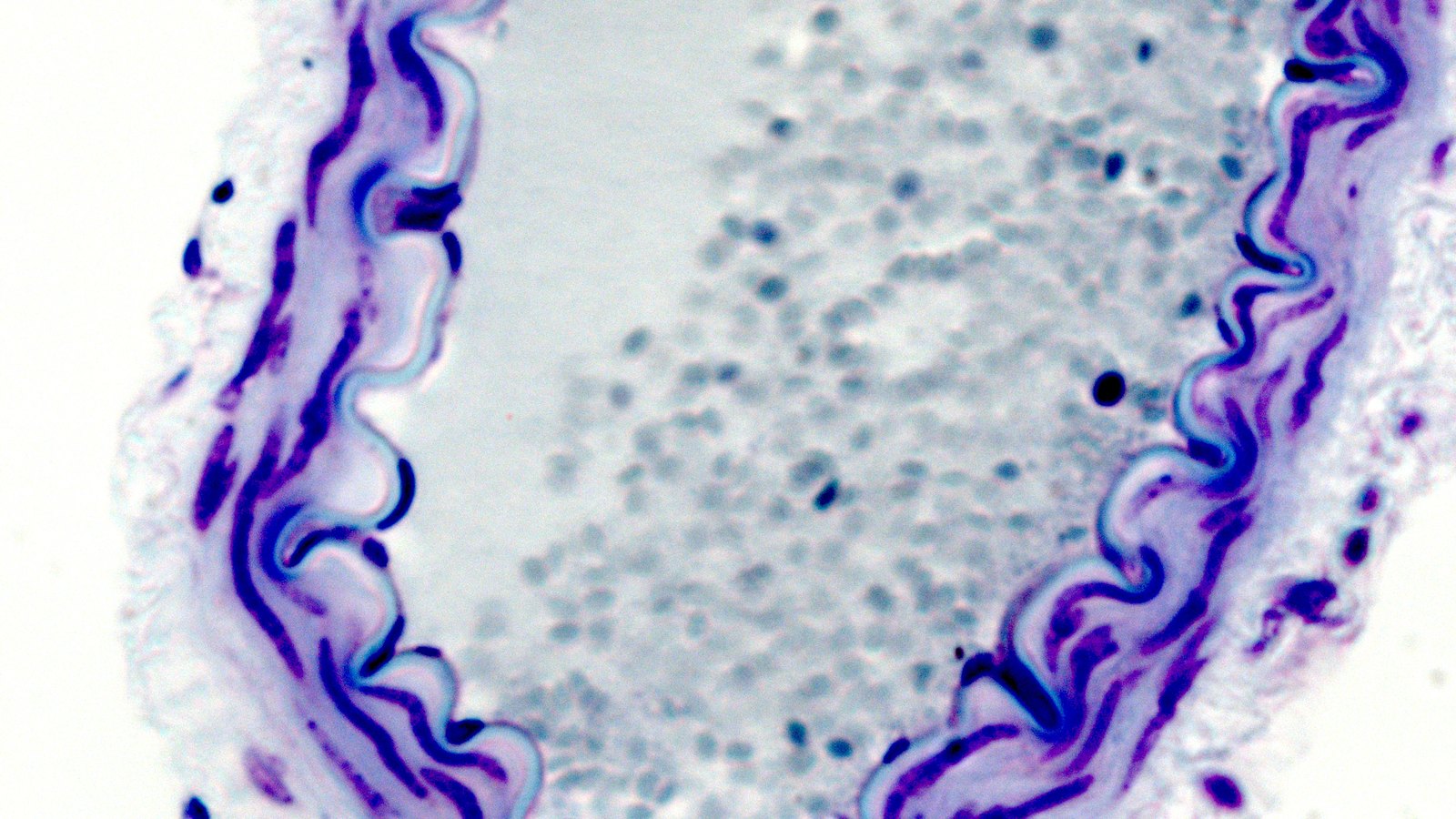
On November 25, 2026, researchers at Washington University School of Medicine in St. Louis published a study in Nature mapping how inherited noncoding genetic variants alter gene regulation in human coronary arteries, according to an official research announcement from WashU Medicine. The undertaking creates a single-cell variant-to-enhancer-to-gene catalog that links noncoding risk loci to distinct vascular cell types, providing university laboratories and cardiovascular investigators with validated molecular targets for coronary artery disease therapies.
This article was medically reviewed by Dr. Diana Nieves Castro, MD. It describes experimental laboratory research and molecular genetics, and does not provide clinical or personal medical advice.
What happened
The study, published in Nature on November 25, 2026 under the title “Single-cell variant-to-enhancer-to-gene map for coronary artery disease” (DOI: 10.1038/s41586-026-11275-z), addresses a long-standing challenge in translating genome-wide association findings into biological mechanisms. The research effort was led by senior author Nathan O. Stitziel, MD, PhD, professor of medicine and genetics at Washington University School of Medicine in St. Louis, alongside first author J. M. Amrute and an international consortium of clinical and basic science investigators.
To establish direct biological connections between inherited variants and vascular pathology, the investigators analyzed 44 coronary artery tissue specimens recovered from patients undergoing heart transplantation at Barnes-Jewish Hospital in St. Louis. Approximately half of the tissue donors experienced heart failure resulting from severe coronary artery obstruction and ischemic damage, whereas the remaining donors underwent transplantation for non-ischemic cardiomyopathies, providing a balanced physiological comparison across diseased human coronary tissues.
By leveraging single-nucleus chromatin accessibility profiling and transcriptomic sequencing, the team systematically mapped the regulatory landscapes of four primary vascular cell populations within the arterial wall. The resulting catalog directly connects more than 350 inherited genetic changes previously discovered through genome-wide association studies to their physical enhancer elements and downstream protein-coding target genes, creating a functional blueprint of coronary atherosclerosis.
Key details of the cellular map
The investigation evaluated the functional contributions of four major cell types within the human coronary artery:
- Vascular smooth muscle cells (VSMCs): Contractile mural cells that regulate vessel diameter, tone, and structural compliance within the medial layer of the arterial wall.
- Endothelial cells: The specialized inner cellular monolayer lining the arterial lumen that governs barrier function, vascular permeability, and local signaling.
- Adventitial fibroblasts: Structural connective tissue cells that maintain the surrounding extracellular matrix and participate in adventitial remodeling.
- Immune cells: Resident and recruited leukocytes, including tissue macrophages and T cells, that orchestrate inflammatory signaling and respond to vascular lipid deposition.
A central finding of the research is that heritable coronary artery disease risk is overwhelmingly concentrated in noncoding regulatory elements active within arterial wall cells, with vascular smooth muscle cells carrying the predominant functional burden. Rather than altering circulating lipid metabolism or endothelial activation, numerous noncoding risk variants modified regulatory enhancers that control smooth muscle phenotypic plasticity.
In specific experimental demonstrations, noncoding variants prompted smooth muscle cells to downregulate essential contractile machinery and transition toward a dedifferentiated, stiffer, and pro-inflammatory phenotype. This phenotypic switching compromises the ability of coronary vessels to maintain physiological compliance and accelerates plaque vulnerability.
| Vascular Cell Type | Anatomical Location | Primary Function | Observed Noncoding Risk Enrichment | Key Biological Consequence |
|---|---|---|---|---|
| Vascular Smooth Muscle Cells | Tunica media | Regulation of vascular tone and arterial elasticity | High (predominant heritable risk enrichment) | Loss of contractile protein expression, increased wall stiffness, and pro-inflammatory remodeling |
| Endothelial Cells | Tunica intima | Maintenance of barrier integrity and antithrombotic surface | Moderate (localized regulatory clusters) | Altered permeability and localized endothelial stress responses |
| Adventitial Fibroblasts | Tunica adventitia | Extracellular matrix collagen deposition and structural support | Low to moderate | Perivascular fibrosis and adventitial matrix reorganization |
| Infiltrating Immune Cells | Intima and adventitia | Response to lipid infiltration and inflammatory injury | Moderate (subset-specific enhancers) | Foam cell differentiation and inflammatory cytokine amplification |
Background and context
Coronary heart disease remains the leading cause of mortality worldwide. As detailed in clinical overviews published by the National Heart, Lung, and Blood Institute, coronary artery disease arises when cholesterol plaques progressively narrow the arteries delivering oxygenated blood to the heart muscle, culminating in angina, acute myocardial infarction, or chronic heart failure.
Over the past two decades, international genomic consortia have cataloged hundreds of statistical associations between single nucleotide polymorphisms and cardiovascular traits, as curated in the EMBL-EBI GWAS Catalog coronary artery disease repository. However, translating these associations into practical therapies encountered a fundamental obstacle: more than 90 percent of the identified risk variants reside in noncoding regions of the genome that do not code for proteins.
Unlike coding mutations that directly disrupt amino acid sequences, noncoding variants typically alter regulatory elements such as enhancers, promoters, and silencers. Because an enhancer can regulate distant genes across hundreds of kilobases through chromatin looping, statistical association alone cannot determine which gene is impacted, nor can it pinpoint the specific cell type in which the variant operates. Modern functional genomics depends on reference frameworks, including the Ensembl genome platform and population variant archives such as the gnomAD database, to annotate noncoding genomic regions.
Furthermore, because tissue-specific chromatin conformations govern enhancer accessibility, studying human surgical specimens is essential. Translational discovery requires tissue governance through institutional biobank repositories and adherence to metadata standards promoted by the Global Alliance for Genomics and Health to ensure that functional genomic catalogs can be integrated across academic centers.
Reaction and independent perspectives
Senior author Nathan O. Stitziel emphasized the translational utility and generalizability of the single-cell mapping framework:
“We now have a map that connects noncoding genetic variants associated with coronary artery disease to the protein-coding genes and cell types they impact, paving the way for possible new therapeutics,” said Stitziel. “And because the gene mapping approach we employed could be applied to any complex disease, we think this study could be highly impactful for the field of human genetics broadly.”
Independent analysis published by Eurasia Review on the WashU heart disease study underscored that mapping variant effects directly to human artery specimens overcomes historical reliance on simplified animal models or artificial cell lines that frequently fail to recapitulate human arterial biology. By demonstrating that inherited risk operates prominently through smooth muscle cell dysregulation rather than circulating risk factors alone, the catalog provides a rationale for developing therapies that directly target arterial wall stability.
What it means for researchers, universities and research offices
The publication of this single-cell catalog carries concrete operational implications for academic medical centers, grant administrators, and cardiovascular research laboratories:
- NIH grant application alignment: Grant proposals submitted to the National Heart, Lung, and Blood Institute (NHLBI) and the National Human Genome Research Institute (NHGRI) increasingly require functional validation beyond statistical association. Principal investigators can cite this framework when proposing single-cell epigenomic and CRISPR perturbation experiments for complex disease mechanisms.
- Surgical tissue collection protocols: Generating high-resolution primary tissue maps requires rapid access to intact human vascular specimens. University research offices and hospital pathology departments must maintain active Institutional Review Board (IRB) protocols, chain-of-custody tracking, and explicit donor consent mechanisms for single-cell sequencing.
- Academic technology transfer: University intellectual property offices can evaluate therapeutic targets emerging from the catalog. Because the study identifies specific genes driving smooth muscle phenotypic switching, academic technology transfer teams can pursue target-validation partnerships and sponsored research agreements with biotechnology sponsors.
- Data management compliance: Research teams generating single-cell functional genomics datasets must structure data release plans to comply with the NIH Data Management and Sharing Policy, depositing raw sequencing metrics and processed count matrices into controlled-access public repositories.
What happens next
Following publication of the Nature catalog, Stitziel and his laboratory at Washington University School of Medicine are investigating several prioritized target genes identified in the screen to evaluate their potential as therapeutic targets for coronary artery disease. These preclinical studies aim to identify molecular interventions capable of helping vascular smooth muscle cells maintain their healthy contractile phenotype and resist inflammatory degeneration.
The investigators are also collecting and processing additional human coronary artery specimens to expand the catalog. Future iterations of the map will incorporate larger donor cohorts to evaluate the influence of ancestral genetic diversity, patient sex, and clinical comorbidities on cell-type-specific regulatory networks.
Beyond cardiovascular disease, academic consortia are preparing to apply this single-cell variant-to-enhancer-to-gene methodology to other chronic conditions characterized by extensive noncoding polygenic risk, including type 2 diabetes, chronic kidney disease, metabolic disorders, and pulmonary conditions.
Sources
- WashU Medicine: Genetic study of heart disease reveals new routes to therapies, checked 2026-11-26
- Eurasia Review: Genetic Study Of Heart Disease Reveals New Routes To Therapies, checked 2026-11-26
- EMBL-EBI: GWAS Catalog – Coronary Artery Disease (EFO_0001645), checked 2026-11-26
- NHLBI, NIH: Coronary Heart Disease – What Is Coronary Heart Disease?, checked 2026-11-26






