
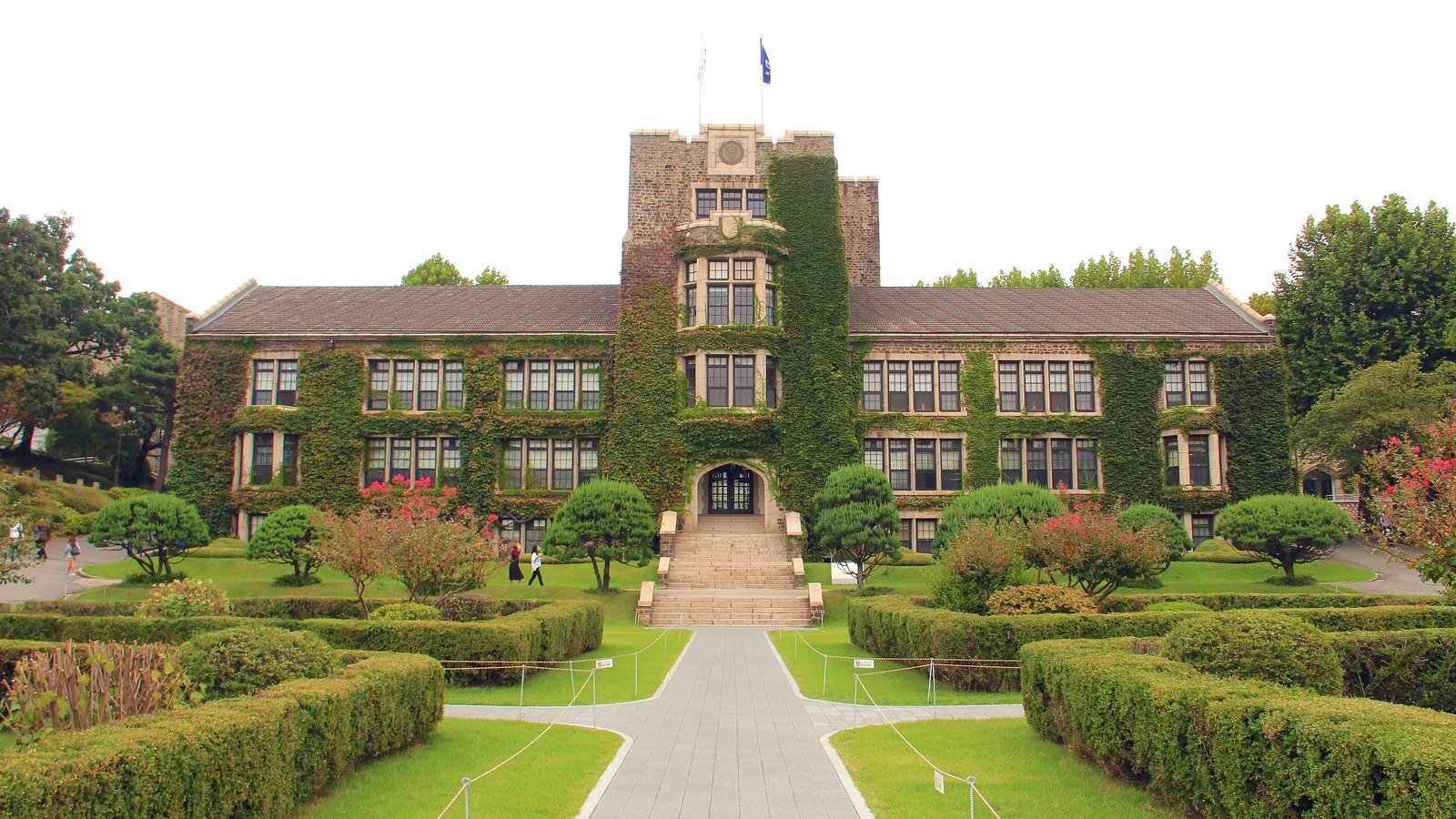
On 27 November 2026, Yonsei University in Seoul unveiled an eight-year, 130 billion won ($97.4 million) transformation initiative to establish a human-centered artificial intelligence campus across its Sinchon and Songdo International locations. The strategy reallocates capital toward research compute clusters, unified multi-model foundation platforms, and a mandatory undergraduate verification curriculum designed to audit machine-generated scholarship.
Campus Overhaul and Strategic Vision
At a ceremony on 27 November 2026 at the Sinchon campus in Seoul, Yonsei University President Yoon Dong-sup introduced ‘Truth that Frees, Intelligence that Serves’ as the institutional mandate for the coming decade. As reported by The Korea Times, the slogan adapts Yonsei’s founding motto—’The truth will set you free’—for the foundation model era.
President Yoon argued that as generative engines provide immediate answers, the traditional role of universities as repositories of codified knowledge faces obsolescence. In defining what is artificial intelligence within higher learning, leadership emphasized that academic freedom requires students and investigators to actively question, audit, and evaluate algorithmic outputs rather than accept automated conclusions passively.
‘Knowledge can be acquired anywhere, but it is only on campus that people come together, communicate, exercise judgment collectively and take responsibility,’ Yoon stated. The eight-year initiative treats machine intelligence as an institutional transformation demanding restructured pedagogy, specialized computing infrastructure, and verification workflows across every department.
Mandatory Critical AI Verification Curriculum
A central pillar of the 130 billion won commitment is a fundamental reorganization of undergraduate general education. Rather than prohibiting algorithmic tools, Yonsei is introducing a dedicated 16-week liberal arts course titled ‘Artificial Intelligence and Contemporary Society.’ The course will debut as a pilot during the 2027 academic year before expanding into a mandatory graduation requirement for all incoming undergraduate students in 2028, regardless of major.
According to reporting from The Chosun Daily, the mandatory syllabus departs from conventional coding classes. Instead of focusing solely on programming syntax, the curriculum instructs matriculants in generative architecture mechanics, socio-ethical vulnerabilities, algorithmic bias, copyright boundaries, and systematic fact-checking protocols. Curricular standards align closely with higher education benchmarks developed in AAAI academic working groups, emphasizing responsible integration alongside empirical verification.
Yonsei’s academic senate is also redesigning student assessment criteria. Instead of grading students on final written essays or finished code artifacts, instructors will evaluate problem formulation, structured prompt engineering methodologies, primary literature cross-referencing, and synthetic hallucination detection. At the postgraduate level, the university is establishing a shared research validation course, equipping master’s and doctoral candidates to integrate machine learning workflows while auditing model limitations and data provenance.
Key Infrastructure Investments and Operational Architecture
To support computational inquiry, Yonsei is expanding its on-premises data center footprint and deploying institutional foundation model gateways. Coverage by The Korea Herald confirmed that the university currently operates four dedicated AI data centers across its Sinchon campus and will finance a fifth high-density facility in 2027, alongside specialized compute nodes maintained by its affiliated medical center.
Undergraduate, postgraduate, and faculty researchers will access hardware resources through an integrated multi-model software platform. By subsidizing access credits centrally, the university eliminates individual subscription fees for commercial models, ensuring equitable access while routing experimental queries through secure institutional interfaces that safeguard intellectual property and clinical data. Researchers assessing computational throughput can benchmark capacity using standard compute FLOPS estimate frameworks across GPU nodes.
The capital plan also accelerates interdisciplinary convergence through the Institute for AI and Social Innovation, established with a 25 billion won multi-year endowment from Hyundai Motor and Kia. The institute has deployed 87 cross-faculty research initiatives selected from 293 proposals across the humanities, engineering, and clinical medicine. Concurrently, Severance Hospital has opened an anonymized clinical dataset containing 70,000 longitudinal patient records to external university researchers, establishing secure testbeds for diagnostic algorithms and therapeutic discovery.
Comparative Strategic Overview of Yonsei AI Campus Plan
The eight-year capital initiative establishes specific programmatic benchmarks across infrastructure, academic instruction, research convergence, and administrative automation:
| Strategic Domain | Target Metric / Milestone | Implementation Horizon | Operational Focus |
|---|---|---|---|
| Capital Commitment | 130 billion KRW ($97.4M) | 2026–2034 (8 Years) | Compute clusters, software licensing, multi-LLM campus credits, faculty endowments |
| Undergraduate Curriculum | Mandatory core course | 2027 pilot; 2028 mandatory | Critical verification, output auditing, bias detection, algorithmic ethics for all majors |
| Data Center Expansion | 5th AI Data Center | Commissioning in 2027 | High-density GPU clusters at Sinchon campus supplementing 4 existing campus hubs |
| Corporate Research Endowment | 25 billion KRW (5B/yr) | 2025–2030 (5 Years) | Hyundai Motor and Kia endowment funding 87 cross-disciplinary research projects |
| Interdisciplinary Major | 60 majors / 17,000 enrollments | Active baseline (2026) | AI Convergence Concentration Major spanning humanities, sciences, and medicine |
| Clinical Research Asset | 70,000 patient records | Open research access (2026) | Severance Hospital de-identified medical data repository for AI health models |
| Administrative Systems | Intelligent IR platform | Deployment by 2029 | Predictive simulation, policy impact forecasting, workflow automation |
National AI Infrastructure Context
Yonsei’s localized capital program reflects a coordinated national mobilization across South Korea to secure sovereign computing capacity and counter dependence on offshore technology ecosystems. As detailed by the Ministry of Science and ICT, the central government is constructing the National AI Computing Center in Haenam as part of a national ‘AI Highway’ initiative, distributing high-performance GPU allocations to domestic universities and industrial research consortiums.
While national initiatives provide access to centralized clusters comparable to international frontier supercomputer installations, Yonsei’s on-campus strategy addresses the immediate institutional tier of compute delivery. By combining localized Sinchon data centers with shared national resources and experimental hybrid quantum-AI testbeds, the university aims to eliminate computing bottlenecks for laboratory investigators while training domain specialists to run complex scientific workloads locally.
Implications for University Researchers and Academic Administration
The campus transformation introduces concrete governance, research integrity, and operational changes for principal investigators, postdoctoral fellows, and university administrative units:
- Research Governance and Attribution: Investigators and graduate candidates face standardized requirements to disclose computational model usage, prompt architectures, and training parameter configurations in publications and grant submissions, establishing audit trails against unverified synthetic claims.
- Intellectual Property and Data Isolation: The centralized multi-model gateway guarantees that laboratory research data, unpublished experimental manuscripts, and proprietary collaboration datasets remain isolated from public commercial model training sets.
- Interdisciplinary Graduate Co-Listing: Graduate school course offerings will expand cross-departmental integration; institutional records indicate that 61.4% of AI graduate courses are currently cross-listed across external departments, up from 14.3% in 2023.
- Administrative Predictive Modeling: Beginning in 2029, the university will launch an intelligent institutional research platform that uses predictive simulations to analyze student enrollment patterns, optimize faculty teaching allocations, and automate compliance workflows.
Upcoming Rollout Schedule and Implementation Milestones
The eight-year roadmap proceeds through clearly demarcated operational phases between 2026 and 2034:
- 2026 (Vision Launch and Capital Allocation): Promulgation of the ‘Truth that Frees, Intelligence that Serves’ vision, baseline funding disbursement for the Institute for AI and Social Innovation, and release of the Severance clinical data asset.
- 2027 (Infrastructure Commissioning and Curricular Pilot): Activation of the fifth Sinchon AI data center; deployment of the centralized multi-LLM campus gateway with student credit quotas; rollout of the pilot general education course ‘Artificial Intelligence and Contemporary Society.’
- 2028 (Universal Undergraduate Mandate): Full mandatory enforcement of the 16-week critical verification course for all incoming undergraduate students; establishment of mandatory AI research verification modules across graduate schools.
- 2029 (Intelligent Administration Deployment): Operational launch of the university-wide intelligent institutional research platform, integrating administrative simulation tools and automated resource optimization.
- 2034 (Eight-Year Horizon Completion): Final review of the 130 billion won capital program, establishing self-sustaining hybrid quantum-AI research clusters and permanent interdisciplinary laboratories across the Sinchon and Songdo campuses.
Sources
- The Korea Times: Yonsei University unveils $97.4 mil. plan for human-centered AI campus, checked 2026-11-27
- The Korea Herald: Yonsei to invest W130b in AI-driven university overhaul, checked 2026-11-27
- The Chosun Daily: Yonsei University Mandates AI Courses for New Students from 2028, checked 2026-11-27
- Ministry of Science and ICT: MSIT to Establish the National AI Computing Center as a “Catalyst for Genuine Growth in AI”, checked 2026-11-27






