
On 27 November 2026, the UK Animal and Plant Health Agency and Defra updated surveillance and movement guidance on the bluetongue latest situation, reporting 3,598 cumulative premises confirmed with Bluetongue virus serotype 3 across Great Britain. The guidance maintains country-wide restricted zones and tightens germinal product licensing, introducing direct compliance obligations for university livestock facilities and agricultural research trials.
Cumulative Incursion Metrics and National Zone Controls
The 27 November 2026 epidemiological register published by APHA and Defra records 3,598 cumulative confirmed premises across Great Britain for the 2026–2027 vector season. Defined as holdings with infection verified via laboratory diagnostics or clinical signs, cases comprise 3,009 premises in England, 528 in Wales, and 61 in Scotland, while Northern Ireland remains disease-free. In the weekly reporting window from 20 November to 26 November 2026, reference laboratories confirmed 28 new cases in England (25 BTV-3 premises, spanning 22 cattle and 3 sheep holdings, plus 3 clinical confirmations) and 12 in Wales, while Scotland reported zero new detections.
Regional density in England remains concentrated across southwestern agricultural hubs, led by Devon with 1,314 cumulative premises, Cornwall with 383, and Somerset with 356, alongside northern clusters in Lancashire (244) and Cumbria (90). Welsh cases are centered in Powys (88 premises), Carmarthenshire (87), and Pembrokeshire (79), while 48 of Scotland’s 61 cases reside in Dumfries and Galloway. Susceptible species testing positive since 1 July 2026 include cattle, sheep, goats, camelids, deer, and bison. APHA confirmed that no cases of Bluetongue virus serotype 8 have emerged this season.
Surveillance Diagnostics, Transmission Vectors, and Licensing Frameworks
Statutory controls operate under The Bluetongue Regulations 2008, granting veterinary inspectors legal authority to establish restriction zones and restrict animal movements. Contiguous Bluetongue Restricted Zones now cover all of England, Wales (declared 10 November 2025), and Scotland (expanded country-wide on 3 October 2026). Livestock can move freely within England and bilaterally between England and Wales without individual licenses or mandatory pre-movement blood testing. However, strict restrictions govern germinal products: keepers require a specific licence from APHA to collect, freeze, or market semen, ova, or embryos, and donor animals must undergo pre- and post-collection testing at keeper expense.
Initial field detection across Great Britain stemmed primarily from notifications of suspicious clinical signs (3,458 premises), alongside pre-movement testing (32 premises) and germinal screening (26 premises). Reference testing follows an established veterinary standard operating procedure (SOP) to ensure diagnostic consistency. Each diagnostic biosample is analyzed via real-time reverse transcription polymerase chain reaction (RT-PCR) and competitive ELISA serology at APHA Weybridge and partner reference laboratories.
The table below summarizes the jurisdictional surveillance metrics and regulatory frameworks across the United Kingdom:
| Jurisdiction | Confirmed Premises (2026–2027) | Restricted Zone Scope | Livestock Movement Licensing | Germinal Product Restrictions |
|---|---|---|---|---|
| England | 3,009 premises | Country-wide (100% of counties) | Free movement within England; no pre-movement test required | Specific licence mandatory for freezing; donor PCR/ELISA required |
| Wales | 528 premises | Country-wide (All-Wales zone) | Free movement within Wales and to/from England without licence | Mandatory donor testing before freezing or marketing semen/ova |
| Scotland | 61 premises | Country-wide (All-Scotland zone) | Movement controls on animals; licence required where specified | Licence and testing mandatory for germinal products and moves |
| Northern Ireland | 0 premises | Disease-free status | Prohibited imports from GB restricted zones without derogation | Strict pre-import certification and post-movement quarantine testing |
Epidemiological Context and Vector Incursion Dynamics
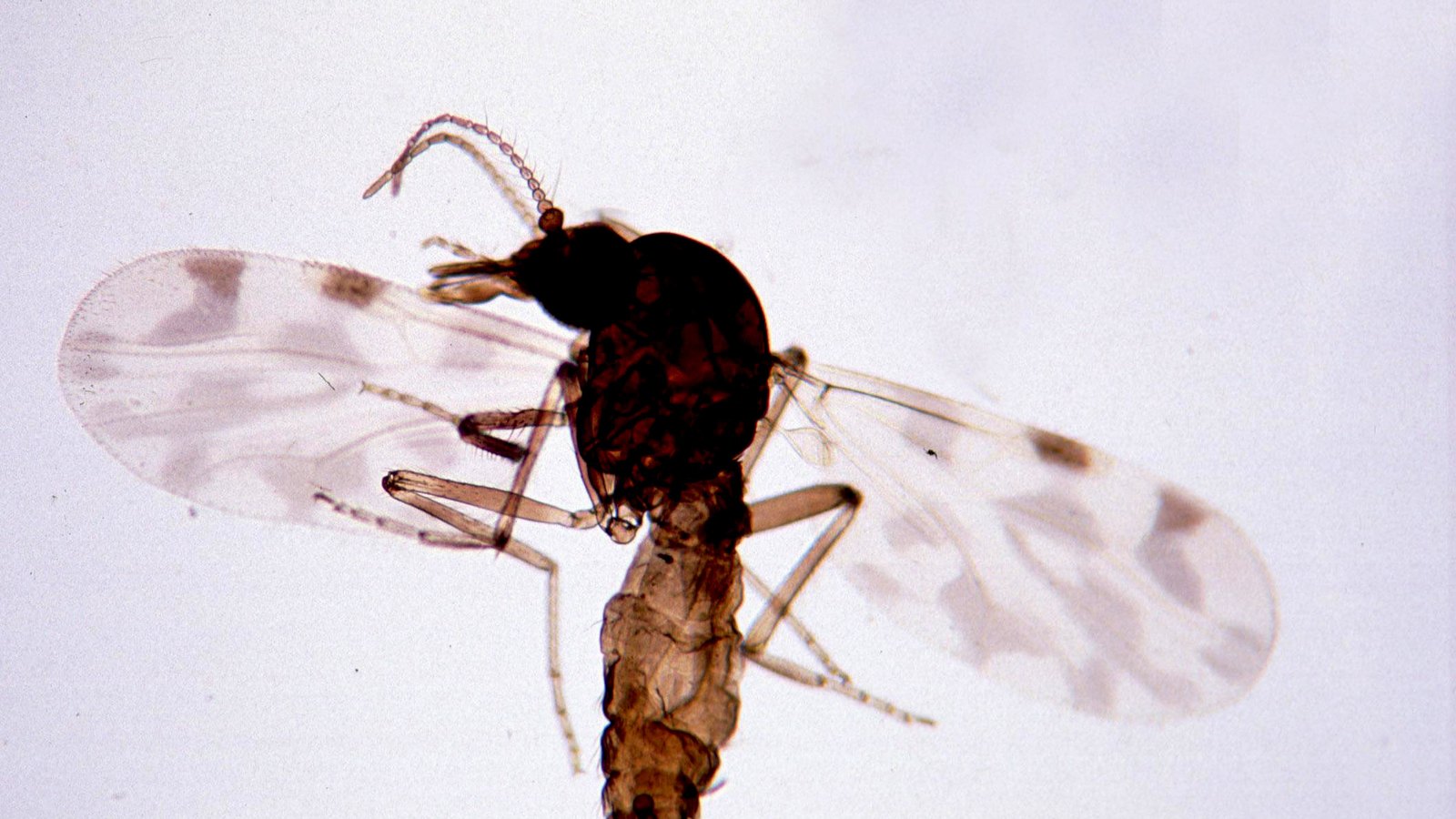
Bluetongue virus is an arbovirus of the genus Orbivirus (family Reoviridae) transmitted biologically by biting midges of the genus Culicoides, primarily the Culicoides obsoletus complex in northern Europe. The pathogen is non-contagious through physical contact between animals, depending entirely upon insect vectors that ingest viremic blood meals. Extrinsic incubation within the midge vector requires ambient temperatures above approximately 12°C to facilitate viral replication within insect salivary glands.
The 2026–2027 outbreak represents the largest wave since BTV-3 entered England in November 2023, following previous incursions of 126 cases in 2023–2024, 163 cases in 2024–2025, and 348 cases in 2025–2026. Vector flight resumed on 31 March 2026, sustaining onward transmission through summer and autumn. International standards codified by the World Organisation for Animal Health govern vector-free periods and regional trade zoning, while surveillance programs track neutralizing antibody levels to evaluate humoral protection across exposed ruminant populations.
Sector Response and Veterinary Reference Laboratory Analysis
Diagnostic confirmation and genomic tracing are led by The Pirbright Institute, the UK National Reference Laboratory for Bluetongue. Strategically funded by the Biotechnology and Biological Sciences Research Council (BBSRC), Pirbright performs high-containment diagnostics, whole-genome sequencing of circulating BTV-3 field strains, and vector competence modeling to monitor overwintering risks.
Farming and veterinary groups, including the National Farmers’ Union and British Veterinary Association, have highlighted severe production losses in sheep flocks, which exhibit acute facial oedema and mortality, while cattle frequently serve as prolonged, mildly symptomatic viral reservoirs. Sector leaders have advocated for wider uptake of BTV-3 vaccines authorized under emergency permits by the Veterinary Medicines Directorate. Defra officials note that while emergency vaccines significantly reduce clinical signs and mortality, they do not confer sterile immunity or halt onward vector transmission.
Implications for University Herds, Field Trials, and Arbovirology Researchers
The expanded surveillance zone and tightened guidance impose concrete operational and compliance requirements for university veterinary departments and agricultural research trials:
- Research Herd Movements: University experimental farms in England, Wales, and Scotland must comply with general licensing conditions. Live animal transit into Northern Ireland or international research facilities requires pre-movement isolation and negative RT-PCR clearance.
- Germplasm and Reproductive Biology: Animal breeding and cryopreservation research involving bull semen or ram embryos requires specific APHA permits, alongside compulsory 28-day post-collection donor PCR and serology.
- Vector Trapping Compliance: Entomology research groups running suction light trap networks for midge surveillance must notify statutory veterinary authorities immediately if BTV-positive insect pools are discovered.
- Laboratory Biocontainment: Diagnostic laboratories handling live BTV-3 specimens must adhere to Specified Animal Pathogens Order (SAPO) 4 containment, ensuring vector-screened facilities and sealed waste autoclaving.
- Trial Budgeting: Principal investigators must account for compulsory private veterinary sampling and reference testing charges, which Defra mandates must be funded directly by holding institutions.
Vector Inactivity Windows and Forthcoming Regulatory Milestones
APHA and the Met Office are monitoring ambient winter temperatures to determine the start of the seasonal low-vector-activity period across Great Britain. Formally declared when daily mean temperatures suppress Culicoides biting activity below statutory thresholds, this seasonally vector-free window provides temporary regulatory flexibility for certain low-risk livestock movements.
In early 2027, Defra, APHA, and Pirbright will publish a post-epidemic evaluation assessing vaccine field efficacy and genomic phylodynamics. The review will determine whether licensing rules or movement restrictions require revisions before spring 2027, when rising temperatures will reactivate overwintered midge vectors across Great Britain.
Sources
- Animal and Plant Health Agency and Department for Environment, Food & Rural Affairs: Bluetongue: latest situation, checked 2026-11-28
- UK Statutory Instruments: The Bluetongue Regulations 2008, checked 2026-11-28
- World Organisation for Animal Health: Bluetongue, checked 2026-11-28
- The Pirbright Institute: Bluetongue virus, checked 2026-11-28






