
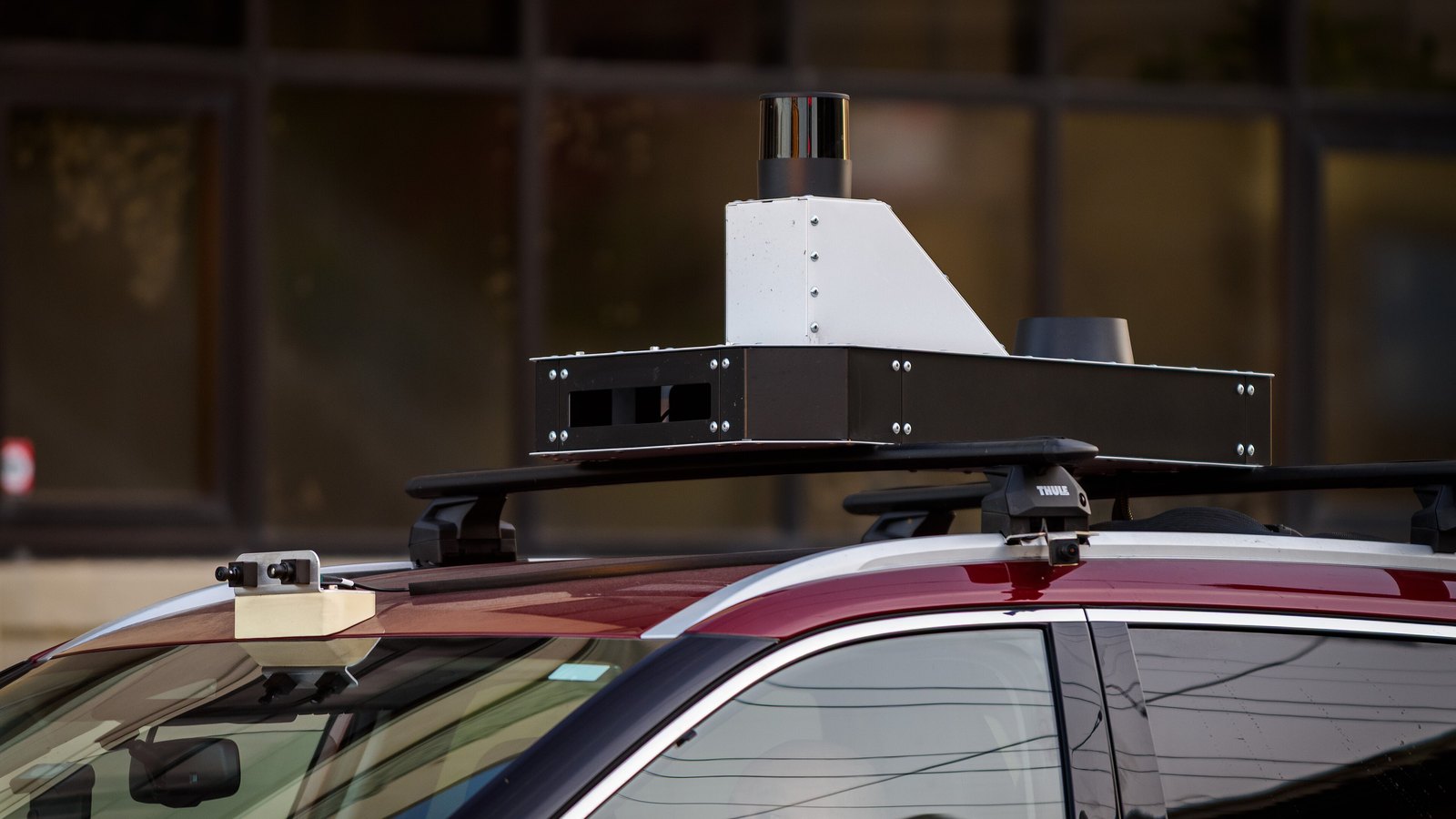
On November 25, 2026, the National Highway Traffic Safety Administration issued a notice of proposed rulemaking in Federal Register Document 2026-24140 to amend Federal Motor Vehicle Safety Standard No. 127, proposing a two-year compliance delay and refined test procedures for light vehicle automatic emergency braking. The decision reshapes research timelines for university transportation institutes, automotive engineering centers, and campus fleet operations evaluating sensor validation and crash avoidance benchmarks.
What happened
In a filing released for public inspection on November 25, 2026, the National Highway Traffic Safety Administration (NHTSA) opened rulemaking Docket No. NHTSA-2026-2476 (RIN 2127-AM69). The notice proposes substantial amendments to Federal Motor Vehicle Safety Standard (FMVSS) No. 127, codified at 49 CFR Part 571, which mandates forward collision warning (FCW), automatic emergency braking (AEB), and pedestrian automatic emergency braking (PAEB) on all light vehicles under 4,536 kg (10,000 lbs) gross vehicle weight rating.
NHTSA proposed postponing mandatory compliance dates by two years across the manufacturing sector. Standard light vehicle production must comply starting September 1, 2031, delayed from September 1, 2029. Small-volume manufacturers, final-stage builders, and vehicle alterers receive a corresponding extension to September 1, 2032, deferred from September 1, 2030.
The proposal also establishes standardized electrical disconnect test procedures for the malfunction indicator telltale, clarifies testing speed tolerances, and solicits empirical feedback on environmental testing boundaries. NHTSA cited preliminary New Car Assessment Program (NCAP) evaluations across ten Model Year 2025 production vehicles, finding that crash avoidance systems have not progressed at the uniform pace anticipated when the standard was finalized in May 2024.
Key details
FMVSS No. 127 establishes demanding multi-condition performance criteria. The standard requires light vehicles to deliver auditory and visual alerts and automatically apply braking across designated velocity ranges: 10 km/h (6.2 mph) to 145 km/h (90 mph) for lead vehicle scenarios, and 10 km/h (6.2 mph) to 73 km/h (45.3 mph) for pedestrian encounters. Vehicles must achieve complete collision avoidance against stationary targets up to 100 km/h (62 mph) and detect pedestrians in both daylight and darkness.
The proposed rule introduces three major technical clarifications:
- Malfunction Telltale Verification: NHTSA proposes objective laboratory tests simulating electrical faults by disconnecting power or data lines to AEB components. The system must illuminate an optical telltale within 15 seconds during driving above 10 km/h, retain the warning across vehicle restarts, and deactivate within 15 seconds once connections are restored.
- Bounded Speed Tolerances: The agency clarified that the ±1.6 km/h (1.0 mph) test tolerance will not expand operational evaluations beyond the specified 10 km/h floor or 145 km/h ceiling.
- False-Activation Assurance: The standard maintains two defined track tests to ensure systems do not brake erratically in the absence of true hazards.
The key timeline changes and technical specifications are compared below:
| Provision Parameter | 2024 Final Rule Benchmark | NPRM 2026-24140 Amendment | Regulatory Authority |
|---|---|---|---|
| Primary Fleet Compliance Date | September 1, 2029 | September 1, 2031 (Two-Year Delay) | 49 CFR § 571.127, S4(a) |
| Small-Volume and Alterer Deadline | September 1, 2030 | September 1, 2032 (Two-Year Delay) | 49 CFR § 571.127, S4(b) |
| Lead Vehicle AEB Speed Range | 10 to 145 km/h (6.2 to 90 mph) | Maintained; test speed tolerance capped | 49 CFR § 571.127, S5.1 |
| Malfunction Telltale Protocol | General notification requirement | Standardized electrical fault disconnection trials | 49 CFR § 571.127, S5.4 |
| Pedestrian Darkness AEB | Avoidance with lower-beam headlights | Retained; comment sought on beam specifications | 49 CFR § 571.127, S5.2 |
Background and context
Congress mandated federal crash avoidance standards in Section 24208 of the Infrastructure Investment and Jobs Act of 2021. Building on a 2016 voluntary automaker agreement, NHTSA finalized FMVSS No. 127 on May 9, 2024 (89 FR 39686). The rule established some of the most stringent vehicle stopping requirements in the world, mandating complete crash avoidance at high highway speeds and nocturnal pedestrian detection under low-beam headlamps. On November 26, 2024 (89 FR 93199), NHTSA made minor clarifications while reaffirming core performance mandates.
In response, the Alliance for Automotive Innovation petitioned the U.S. Court of Appeals for the D.C. Circuit in January 2025, arguing that stopping completely without contact at 62 mph exceeded technical capabilities and risked severe phantom braking. Independent crash avoidance research published through IIHS test methodologies confirmed that while daytime lead-vehicle braking is well established, pedestrian detection in nocturnal environments presents persistent sensor integration challenges across production platforms.
Reaction and stakeholder perspective
NHTSA emphasized that the compliance extension reflects practical engineering constraints rather than reduced safety ambition, noting that “overly aggressive, technology-forcing standards can lead to consumer rejection or even negative safety consequences.” NCAP testing of ten Model Year 2025 vehicles—including the Chevrolet Equinox, Ford Expedition, Hyundai Santa Fe, Jeep Grand Cherokee, Kia K4, Nissan Rogue, Subaru Forester, Toyota 4Runner, Volkswagen Tiguan, and Volvo XC40—demonstrated that no single production model avoided collision across all mandated trials.
Automakers supported the proposed relief, stating that the additional two years will enable engineers to refine sensor fusion algorithms, minimize phantom braking, and validate next-generation radar and vision hardware. Concurrently, safety researchers monitoring advanced driver assistance highlighted that roughly 77 percent of front-impact pedestrian fatalities happen in darkness, affirming that nocturnal AEB requirements must remain central to federal standards.
What it means for researchers, universities and research offices
The proposed rulemaking has practical implications for academic transportation research, institutional fleet management, and laboratory compliance:
- Autonomous Systems Laboratories: Academic engineering teams developing automated perception systems must incorporate NHTSA’s standardized electrical fault injection procedures into testing workflows. Research protocols should follow rigorous sensor calibration methodologies to ensure metrological traceability during multi-sensor track trials.
- Institutional Fleet Management: University fleet managers supervising maintenance vehicles, campus shuttles, and light utility trucks gain two years of budgetary predictability before mandatory AEB certification affects vehicle supply and base purchase prices.
- Proving Ground SOPs: University transportation centers conducting contracted automotive safety testing should formalize track protocols under a documented standard operating procedure, ensuring consistent pavement friction and ambient light measurements.
- Perception Data Governance: Computer vision and machine learning groups training collision avoidance algorithms must adopt robust standards reflecting data governance requirements, ensuring datasets account for edge cases like low-contrast pedestrians and glare.
- Test Data Provenance: University-industry research partnerships must maintain transparent records through structured metadata, applying principles from data provenance frameworks to verify evaluation repeatability.
What happens next
Following official publication in the Federal Register on November 27, 2026, NHTSA will accept public comments for 60 days on Docket No. NHTSA-2026-2476 via Regulations.gov. The agency is soliciting technical data on the 15-second telltale response window, road surface temperatures, and obstructed pedestrian test geometry. After reviewing public submissions, NHTSA expects to finalize the revised compliance dates of September 1, 2031 for major fleets and September 1, 2032 for small-volume builders.
Sources
- Federal Register: Public Inspection: Federal Motor Vehicle Safety Standards: Automatic Emergency Braking Systems for Light Vehicles, checked 2026-11-26
- Electronic Code of Federal Regulations: 49 CFR Part 571 — Federal Motor Vehicle Safety Standards, checked 2026-11-26
- U.S. Government Publishing Office: 49 CFR § 571.127 – Standard No. 127; Automatic emergency braking systems for light vehicles, checked 2026-11-26
- Insurance Institute for Highway Safety: About our tests, checked 2026-11-26
- Insurance Institute for Highway Safety: Advanced driver assistance, checked 2026-11-26






