
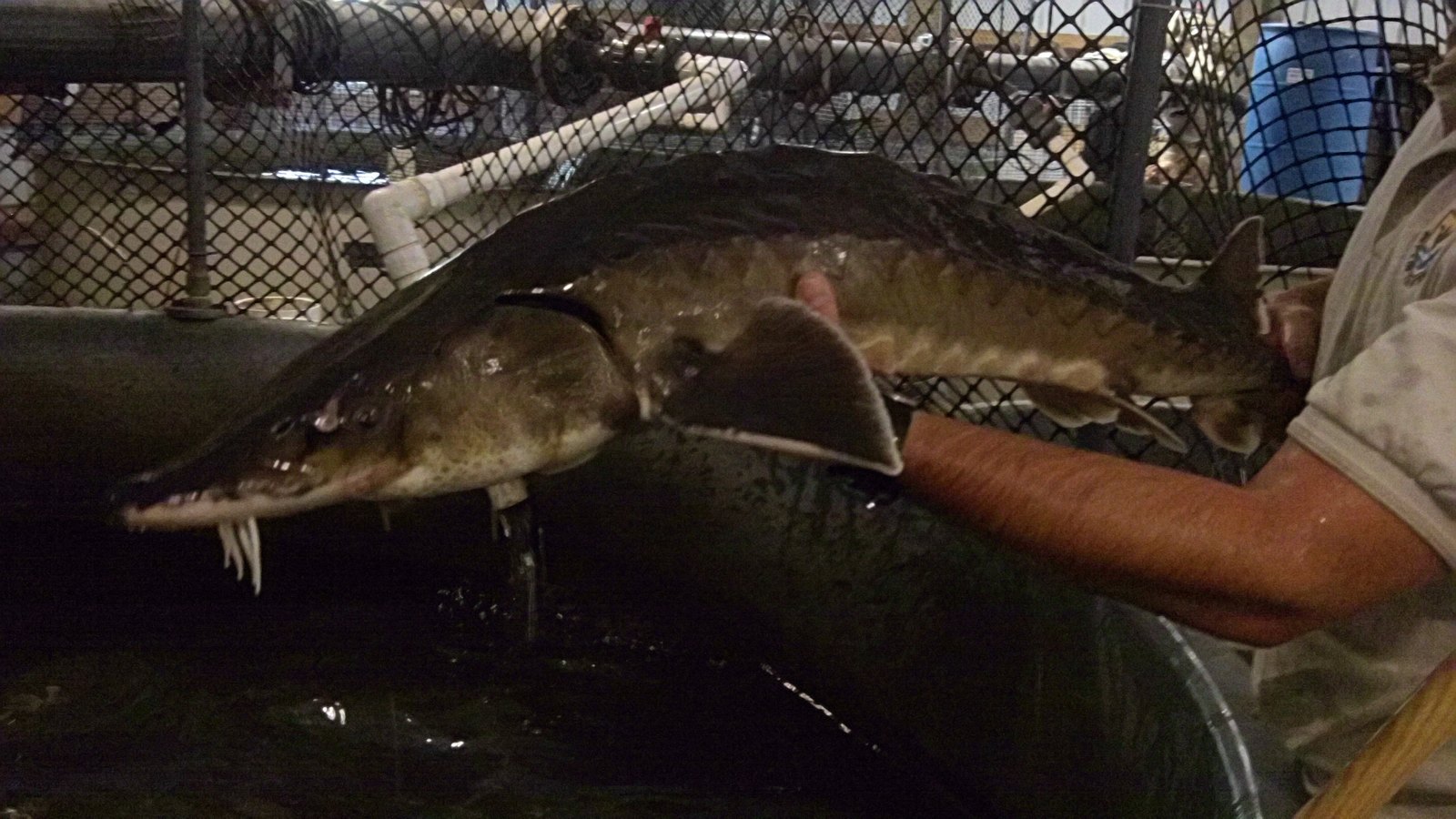
On November 25, 2026, NOAA Fisheries opened public comment on three major scientific research permit applications under the Endangered Species Act through official filings in the Federal Register, initiating formal scrutiny of biological sampling, surgical telemetry implantation, and population monitoring for protected sturgeon. The action, detailed in Federal Register Public Inspection Document 2026-24136 alongside companion notices 2026-24138 and 2026-24139, establishes binding operational benchmarks for university researchers, state conservation agencies, and federal biologists.
What happened
The National Marine Fisheries Service (NMFS), an agency of the National Oceanic and Atmospheric Administration (NOAA) within the Department of Commerce, formally published notices of receipt for three scientific research permit applications: File No. 29913 submitted by the New Jersey Department of Environmental Protection, File No. 29910 from the Connecticut Department of Energy and Environmental Protection, and File No. 29909 from the U.S. Fish and Wildlife Service Maryland Fish and Wildlife Conservation Office. Each application seeks multi-year authorizations under Section 10(a)(1)(A) of the Endangered Species Act (ESA) to capture, handle, sample, and track Atlantic sturgeon (Acipenser oxyrinchus) and shortnose sturgeon (Acipenser brevirostrum).
Signed on November 24, 2026, by Nature McGinn, Chief of the Permits and Conservation Division in the NOAA Fisheries Office of Protected Resources, the notices establish a 30-day public comment window running through late December 2026. Because both sturgeon species are federally listed as endangered or threatened, any intrusive investigation—including netting, handling, tissue biopsies, gastric lavage, or transmitter implantation—constitutes a prohibited take under ESA Section 9 unless granted an explicit federal research exemption.
Key details and research permit scopes
Under governing federal regulations in 50 CFR Part 222, research permit applicants must define annual take numbers, capture methods, biological sampling protocols, and animal welfare safeguards.
In File No. 29913 (RTID 0648-XG200), the New Jersey Department of Environmental Protection, led by responsible party Jeffrey Brust in Port Republic, New Jersey, requests a 5-year permit to study Atlantic sturgeon captured during the New Jersey Ocean Trawl Survey. Up to 21 adult or subadult and 4 juvenile Atlantic sturgeon will be anesthetized, weighed, and fitted with internal acoustic and external dart tags annually prior to release in Mid-Atlantic Bight waters.
In File No. 29910 (RTID 0648-XG209), the Connecticut Department of Energy and Environmental Protection, directed by Jacqueline Benway Roberts in Old Lyme, Connecticut, requests a 10-year authorization covering Connecticut rivers and Long Island Sound. Up to 1,010 Atlantic sturgeon and 1,325 shortnose sturgeon would be captured annually using gill nets and trawls, tagged with passive integrated transponders (PIT), biologically sampled via fin clips, and weighed. A subset will undergo anesthesia, surgical transmitter implantation, fin ray aging, and gastric lavage. Early life stages will be monitored using egg mats, with an annual incidental mortality allowance of one adult or subadult and one juvenile per species.
In File No. 29909 (RTID 0648-XG208), the U.S. Fish and Wildlife Service Maryland Fish and Wildlife Conservation Office, led by Michael Mangold in Annapolis, Maryland, seeks a 10-year permit across seven Chesapeake Bay tributaries, including the James, York, and Potomac Rivers. Researchers will apply dart and PIT tags, take genetic fin clips, surgically implant acoustic tags under anesthesia, and sample early life stages with egg mats and D-frame nets. The application requests incidental mortality caps of one adult and two juveniles annually, not to exceed 10 juveniles over the permit duration.
| Permit File | Applicant Organisation | Target Species | Study Waters | Permit Term | Annual Take Scope | Mortality Thresholds |
|---|---|---|---|---|---|---|
| File No. 29913 | New Jersey Department of Environmental Protection | Atlantic sturgeon | New Jersey coastal waters and Mid-Atlantic Bight | 5 Years | 21 adults/subadults, 4 juveniles (acoustic and dart tags) | Zero lethal take requested |
| File No. 29910 | Connecticut Department of Energy and Environmental Protection | Atlantic and shortnose sturgeon | Connecticut rivers and Long Island Sound | 10 Years | 1,010 Atlantic, 1,325 shortnose (PIT tags, fin clips, lavage) | Up to 1 adult and 1 juvenile per species annually |
| File No. 29909 | U.S. Fish and Wildlife Service (Maryland FWCO) | Atlantic and shortnose sturgeon | Chesapeake Bay tributaries (James, York, Potomac) | 10 Years | Adults, subadults, juveniles (dart, PIT, acoustic tags, fin clips) | Up to 1 adult and 2 juveniles annually (max 10 total) |
Background and regulatory framework
The statutory basis for scientific research exemptions is established under 16 U.S. Code § 1539 (Section 10 of the ESA), which authorizes permits for scientific research that enhances the survival of listed species. Shortnose sturgeon have held federal endangered status since 1967, while Atlantic sturgeon distinct population segments were listed as endangered or threatened in 2012 following historic declines caused by overfishing, dams, and habitat loss.
Modern permit administration is managed electronically through the NOAA Fisheries Authorizations and Permits for Protected Species (APPS) platform. The system centralizes application records, scientific justifications, and public comments, replacing legacy paper filings and standardizing compliance oversight across marine research institutions.
Stakeholder perspectives and scientific coordination
NOAA Fisheries Division Chief Nature McGinn emphasized that rigorous scientific take authorizations are necessary to evaluate biological recovery benchmarks. Telemetry tracking data generated through these permits feed directly into regional marine networks, including the Atlantic Cooperative Telemetry Network, enabling multi-state monitoring of migration pathways, estuarine residency, and commercial shipping interactions.
Independent fisheries scientists and animal care committees monitor these permit applications closely because procedures such as intracoelomic transmitter surgery and gastric lavage require specialized handling protocols to avoid physiological stress or unintended mortality in threatened fish populations.
What it means for researchers, universities and research offices
The publication of these permit notices carries concrete operational and regulatory implications for research administrators and academic scientists:
- Authorized Personnel Rosters: University investigators collaborating with state or federal teams must be formally listed as co-investigators or authorized agents in the APPS system; institutional affiliation alone does not confer take authorization.
- Protocol Synchronization: Institutional Animal Care and Use Committees (IACUCs) must verify that institutional research protocols match federal permit conditions precisely. Any alteration to surgical anesthesia or biopsy depth requires permit amendments and verified IACUC training for all personnel.
- Mortality Incident Controls: Compliance offices must enforce an institutional IACUC adverse event and unanticipated outcome plan to halt fieldwork and immediately notify NMFS if accidental mortality limits are approached.
- Grant Assurances: Investigators submitting federal proposals must document adherence to animal research ethics and detail vertebrate handling within the Vertebrate Animals Section of grant applications.
- Data Stewardship: Academic teams must plan for long-term acoustic telemetry archiving, ensuring tracking data are shared with regional observation networks while shielding sensitive spawning grounds from exploitation.
What happens next
Notices 2026-24136, 2026-24138, and 2026-24139 are scheduled for formal Federal Register publication on November 27, 2026, with public comments accepted through December 28, 2026. Permit applications and supporting environmental documents are accessible through the NOAA APPS portal or via written request to the Office of Protected Resources.
Submissions citing File Nos. 29913, 29910, or 29909 must be delivered by email to NMFS review coordinators Erin Markin, Ph.D., Jennifer Skidmore, or Shasta McClenahan, Ph.D. Requests for public hearings must state substantive grounds. NMFS analysts will complete biological evaluations under ESA Section 7, with final permit determinations expected in early 2027 ahead of spring migrations.
Sources
- Office of the Federal Register: Permits; Applications, Issuances, etc.: Endangered Species; File No. 29913, checked 2026-11-26
- Electronic Code of Federal Regulations: 50 CFR Part 222 — General Endangered and Threatened Marine Species, checked 2026-11-26
- Legal Information Institute: 16 U.S. Code § 1539 — Exceptions (Endangered Species Act Section 10), checked 2026-11-26
- NOAA Fisheries: Authorizations and Permits for Protected Species (APPS), checked 2026-11-26






