
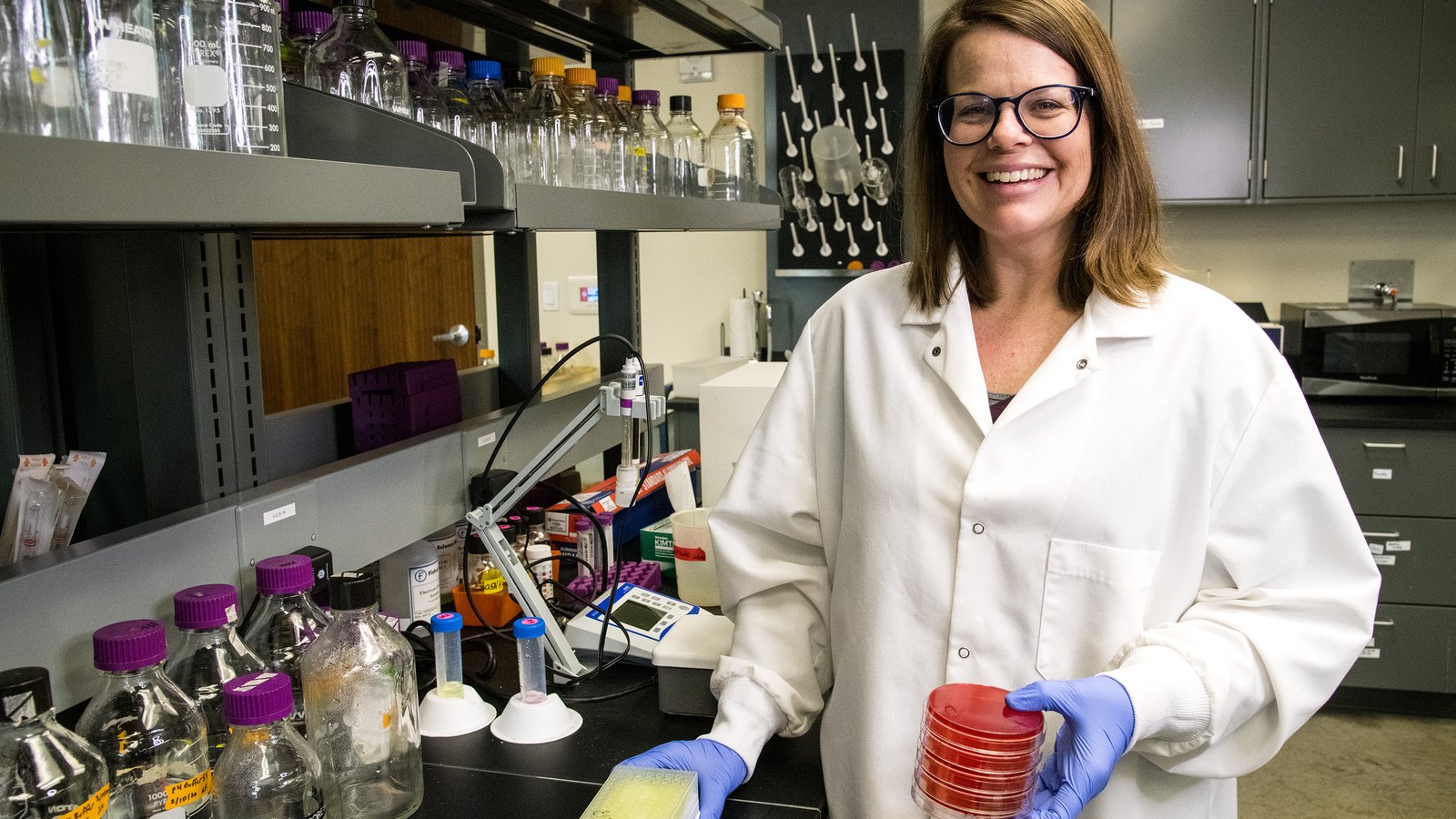
On 19 November 2026, Central State University unveiled two new agricultural research facilities at its campus in Wilberforce, Ohio, establishing dedicated laboratories for artificial intelligence in precision farming, advanced molecular biology, and a three-stage containment facility for food safety testing. The opening represents a major expansion of the historically Black 1890 land-grant university’s research enterprise, supported by federal capacity funding from the U.S. Department of Agriculture.
What happened at the Central State University ribbon-cutting
University leadership, federal officials, and regional agricultural partners gathered on 19 November 2026 across from Central State University’s main campus on U.S. Route 42 in Wilberforce, Greene County, Ohio, to commemorate the grand opening of the institution’s new Research and Demonstration Complex. The development encompasses two capital facilities: a 40,000-square-foot, two-level research building valued at approximately $40 million, alongside a 24,000-square-foot farm operations and equipment demonstration facility located on the university’s 100-acre Land-Grant Demonstration and Research Farm.
The ceremony featured Central State University President Dr. Morakinyo Kuti and Devon Westhill, Assistant Secretary for Civil Rights at the U.S. Department of Agriculture (USDA). Westhill toured the scientific suites as part of an official USDA national tour assessing infrastructure investments at 1890 land-grant institutions. President Kuti, who previously directed the university’s land-grant programs and led its Division of Research and Economic Development during the project’s planning phases, noted that the complex transitions the university from an emerging research center into an advanced technical hub addressing agricultural, environmental, and public health priorities.
Key details of the laboratories and facility specifications
The 40,000-square-foot research building houses four core laboratory suites alongside customizable commercialization space, while the adjacent 24,000-square-foot operations building supports field machinery and grower education:
- Precision Technology and Artificial Intelligence Laboratory: Utilizes machine learning models, computer vision systems, and autonomous sensor-equipped aerial drones to optimize crop management. Researchers analyze canopy health, soil moisture, and nutrient distribution to develop precision farming protocols that conserve water and fertilizer for regional producers.
- Food Safety and Security Laboratory: Operates under a specialized three-chamber cleanroom workflow engineered to eliminate cross-contamination during foodborne pathogen testing. Agricultural commodities enter an initial sample processing room, advance to a separate chamber for genomic DNA extraction and molecular amplification, and finish in an isolated cleanroom chamber protecting DNA integrity from harvest to consumer plate.
- Soil and Water Research Testing Laboratory: Conducts chemical and physical analyses of environmental samples to monitor clean water supplies, assess soil health, and study the mitigation of agriculturally induced harmful algal blooms and microcystin cyanotoxins in regional watersheds.
- Molecular Biology and Tissue Culture Laboratory: Dedicated to plant genetics, tissue culture propagation, disease resistance breeding, and cellular disease biology.
- Commercial Shell Space: The upper level of the main facility reserves flexible shell space dedicated to corporate collaborations, public-private research partnerships, and regional technology transfer ventures.
- Farm Operations and Storage Facility: Spanning 24,000 square feet, this building houses field machinery, research plots maintenance operations, and demonstration bays for grower extension workshops.
The following table details the functional components, physical dimensions, and scientific focus areas of the newly commissioned research facilities:
| Facility Component | Footprint & Scope | Core Instrumentation | Primary Research Focus |
|---|---|---|---|
| Research Facility Building | 40,000 sq ft (two levels) | Central HVAC cleanrooms, analytical benches, fume hoods | Multidisciplinary agricultural, environmental, and genomic research |
| Precision Technology & AI Lab | Dedicated research suite | Autonomous multispectral drones, edge AI computing hardware | Resource-conserving agronomic mapping and precision crop management |
| Food Safety & Security Lab | Three-room containment suite | PCR thermocyclers, DNA extractors, biosafety cabinets | Farm-to-plate pathogen surveillance and molecular food security testing |
| Soil & Water Testing Lab | Dedicated analytical suite | Spectrophotometers, chromatography units, nutrient analyzers | Watershed runoff monitoring and algal cyanotoxin mitigation |
| Farm Operations & Storage | 24,000 sq ft facility | Tractors, harvesters, seed sorters, workshop bays | Equipment maintenance, demonstration trials, and grower extension |
Background and context on 1890 land-grant capacity funding
The development of Central State University’s Research and Demonstration Complex builds on its federal designation as an 1890 land-grant institution under the 2014 Farm Bill (Agricultural Act of 2014). Chartered in 1887 as Ohio’s sole public Historically Black University, Central State joined the nation’s network of 1890 land-grant universities established under the Second Morrill Act of 1890.
Land-grant status unlocked annual formula-funded research allocations from the USDA National Institute of Food and Agriculture (NIFA), primarily through the Evans-Allen Research Program and the 1890 Facilities Grant Program. Matched by state capital appropriations from Ohio, these funding streams enabled the university to construct modern scientific infrastructure on campus.
Over the past decade, Central State expanded its external research funding, surpassing $50 million in annual sponsored awards during recent fiscal cycles. This portfolio supports competitive awards utilizing the new laboratories, including a $10 million USDA grant for sustainable hemp-based aquaculture feeds and awards addressing watershed microcystin mitigation. Permanent equipment acquisitions under these federal programs must comply with federal capitalization thresholds for equipment under 2 CFR 200.1.
Reaction from university leadership, federal officials, and regional agriculture
Stakeholders from government, academia, and regional agriculture highlighted the facility’s role in expanding agricultural research capacity during the opening ceremonies. Speaking at the ribbon-cutting, Central State University President Dr. Morakinyo Kuti emphasized the practical impact of the investment: “As a land grant university, we’re actually contributing to improving the lives of individuals, their families and communities around us,” noting that the facility directly connects university research with Ohio producers.
USDA Assistant Secretary for Civil Rights Devon Westhill affirmed federal backing during his tour of the new laboratories: “They’re opening up an amazing new research and extension facility, which USDA wanted to be a part of. The funds that they’re getting, they’re using them for exactly what the USDA and other partners want to see. I see research here. I see amazing facilities here.”
Regional agricultural producers and elected officials, including U.S. Representative Mike Turner during a recent campus visit, also commended the expansion. Growers noted that the operations building and the university’s 100-acre research plots—which host active field trials for industrial hemp, specialty corn varieties, beekeeping, and high-tunnel horticulture—provide essential agronomic data tailored to regional growing conditions.
What it means for researchers, universities and research offices
The commissioning of the complex highlights administrative and operational considerations for research offices managing expanded research infrastructure at land-grant and emerging institutions.
First, launching capital-intensive laboratories alters an institution’s indirect cost profile. Research administrators must account for physical plant depreciation, specialized utility loads, and maintenance when calculating indirect costs, which directly affects how to calculate indirect costs and negotiating an updated NICRA agreement with federal cognizant agencies.
Second, operating containment suites and high-throughput molecular testing laboratories requires robust data governance. Managing traceability across three-room food safety testing workflows and environmental assays benefits from deploying a validated scientific data management system (SDMS) to maintain chain-of-custody documentation and auditable records.
Third, deploying artificial intelligence, autonomous drone fleets, and biotechnology under federal grants requires compliance with federal security frameworks. Research offices must ensure that investigators and technical staff complete mandatory USDA research security training requirements alongside standard federal aviation certifications for agricultural drone operations.
What happens next for the complex and research operations
Central State has begun phased laboratory commissioning, with research faculty, post-doctoral scholars, and graduate students in the School of Agricultural Education and Food Science scheduled to occupy the precision technology, molecular biology, and food safety suites in early 2027.
CSU Extension will roll out its 2027 series of producer workshops at the operations facility, demonstrating drone-assisted field mapping, soil diagnostics, and harvest safety. Simultaneously, the Division of Research and Economic Development is engaging corporate agritech partners to negotiate commercial tenancy for the upper-level shell space, supporting the university’s long-term research trajectory under the Carnegie classification framework.
Sources
- Central State University: How to enhance capabilities of new Research and Demonstration Complex, checked 2026-11-20
- WHIO TV 7: Central State University opens new research buildings, checked 2026-11-20
- Farm and Dairy: Central State building two new facilities thanks to USDA support, checked 2026-11-20
- Vegetable Growers News: Research facility groundbreaking at Ohio’s Central State University scheduled, checked 2026-11-20
- USDA National Institute of Food and Agriculture: 1890 Land-grant Institutions Programs, checked 2026-11-20
- The Xenia Gazette: Turner visits Central State, checked 2026-11-20


