
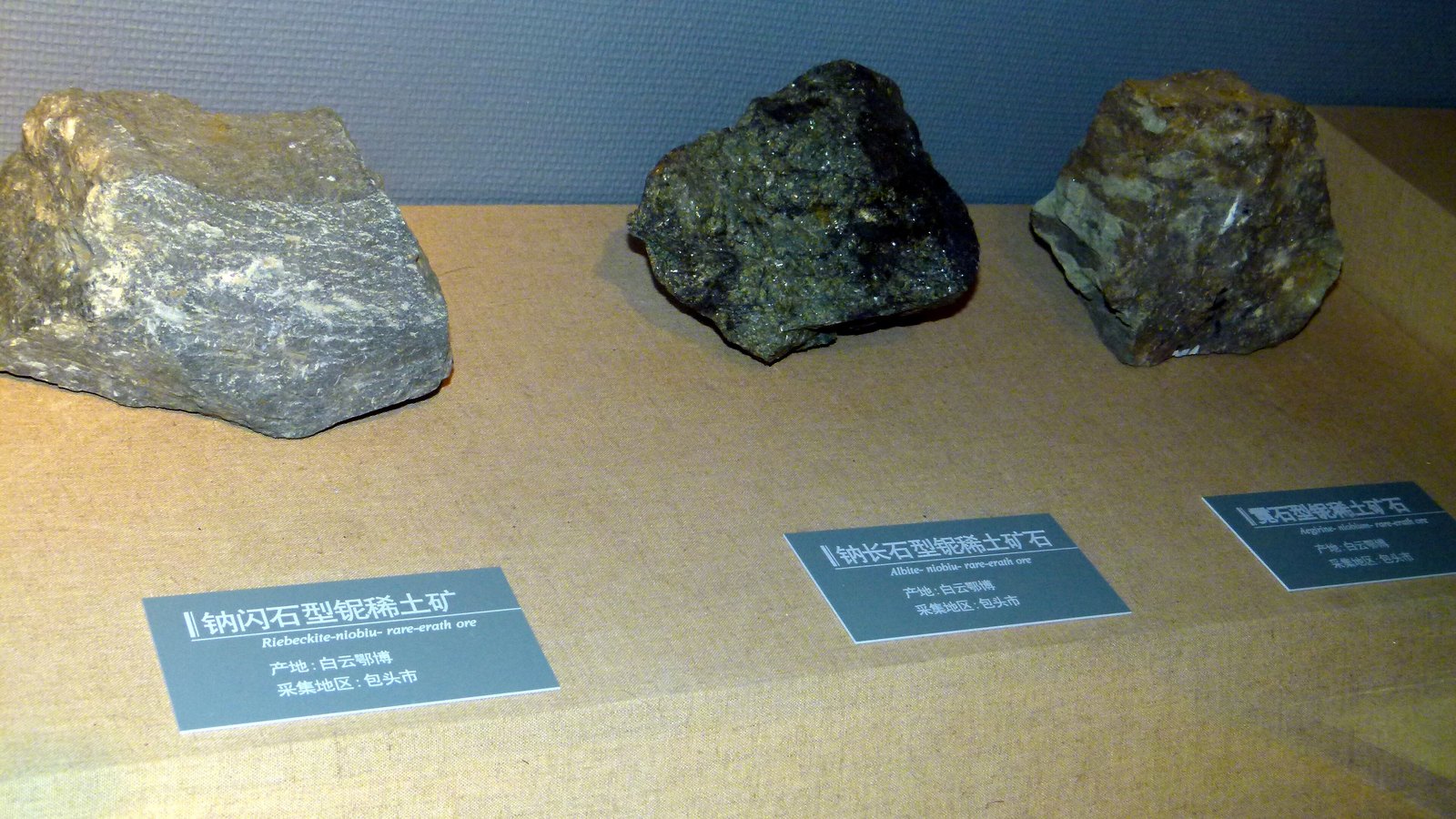
In November 2026, the U.S. National Science Foundation (NSF) announced the formal launch of a four-year, $6 million Focused EPSCoR Collaborations research grant awarded to an interdisciplinary consortium led by the University of Alaska Anchorage, dedicated to developing microbial biotechnology and artificial intelligence models that extract critical minerals and rare-earth elements from domestic coal refuse and coal ash deposits.
Consortium Mobilises $6 Million for Microbial and Computational Extraction
The National Science Foundation investment is funded through the Established Program to Stimulate Competitive Research (EPSCoR) Research Infrastructure Improvement Program under its Focused EPSCoR Collaborations (FEC) track. As the NSF announced in its $39.9 million national infrastructure portfolio, the four-year cooperative initiative spans multiple EPSCoR jurisdictions to build enduring scientific infrastructure while targeting national technological priorities.
The consortium project, titled “Transformative Bioprocessing and AI-Driven Frameworks for Sustainable Critical Mineral Recovery,” runs through August 31, 2030. The collaborative effort is anchored at the University of Alaska Anchorage (UAA), where Dr. Brandon Briggs, professor of biological sciences, serves as lead principal investigator. The UAA leadership team also includes Dr. Subhabrata Dev, assistant professor of chemical engineering, and Dr. Masoumeh Heidari Kapourchali, assistant professor of electrical engineering, alongside Dr. Mohammad Heidari Kapourchali. According to the University of Alaska Anchorage project announcement, the initiative unites regional research strengths across Alaska, Wyoming, and Montana to commercialise biological mineral separation technologies.
Consortium partner institutions contribute specialised experimental, computational, and geological capabilities. The University of Alaska Fairbanks (UAF) Institute of Northern Engineering joins the project under the leadership of Dr. Srijan Aggarwal, professor of environmental engineering. As detailed in the University of Alaska Fairbanks Institute of Northern Engineering report, UAF will execute nearly $913,000 of the total award to develop advanced environmental engineering workflows and bioprocess characterisation. The University of Wyoming School of Energy Resources leads mineralogical profiling and economic assessments, while Montana Technological University oversees metallurgical separation testing.
Consortium Structure and Grant Allocations
The collaborative grant allocates federal capital and institutional infrastructure across four public research institutions, pairing academic laboratories directly with mineral processing facilities. The table below outlines the core parameters, leadership personnel, and institutional divisions established under the NSF EPSCoR award.
| Institution | Lead Investigator | Primary Consortium Responsibility | Jurisdiction Role |
|---|---|---|---|
| University of Alaska Anchorage (UAA) | Dr. Brandon Briggs | Consortium administration, microbial bioprocess discovery, and predictive AI model development | Lead Awardee (Alaska EPSCoR) |
| University of Alaska Fairbanks (UAF) | Dr. Srijan Aggarwal | Environmental bioreactor design, bioleaching kinetics, and water quality lifecycle controls | Partner Institution ($913,000 sub-allocation) |
| University of Wyoming (UW) | Tyler Brown | Coal refuse characterisation, mineral composition analysis, and techno-economic modelling | Subaward Institution (Wyoming EPSCoR) |
| Montana Technological University | Dr. Robin Bullock and Dr. Courtney Young | Hydrometallurgical validation, downstream precipitation, and pilot materials engineering | Subaward Institution (Montana EPSCoR) |
Understanding institutional governance within the NSF grants overview provides useful context for how collaborative awards navigate compliance across multi-state university systems. Because this initiative operates under federal capacity-building mandates, institutions must align their administrative milestones with broader research infrastructure funding standards established by federal agencies.
Biomining Mechanisms and Predictive AI Control Systems
Conventional production of rare-earth elements (REEs)—a set of 17 chemically similar elements including neodymium, dysprosium, terbium, europium, and yttrium—historically relies on open-pit mining, energy-intensive roasting, and aggressive acid leaching. Traditional chemical processing involves hundreds of solvent extraction stages using concentrated acids that generate substantial volumes of hazardous wastewater. The Alaska-led consortium is replacing these corrosive pathways with environmentally benign geomicrobiological reactions.
The biochemical platform deploys naturally occurring bacteria, including extremophilic strains harvested from cold glacial environments in Alaska, as well as electrochemically active bacteria such as Shewanella oneidensis. These microorganisms interact with powdered coal refuse and fly ash, releasing organic acids and transferring electrons across mineral surfaces to selectively dissolve targeted lanthanides. Dr. Briggs indicated that by replacing multi-stage solvent circuits with biological processing, his team anticipates condensing traditional mineral recovery sequences into four or five streamlined operations.
Scaling bioleaching from small bench flasks to commercial throughput has historically faced kinetic bottlenecks and feedstock variability. To resolve this hurdle, UAA electrical engineering researchers are integrating reinforcement learning and deep neural networks into bioreactor control architectures. Sensors tracking pH, oxidation-reduction potential, dissolved oxygen, and metal ions continuously feed operational telemetry into predictive models. The AI engine forecasts bioreactor performance and rapidly flags suboptimal feedstock samples, allowing researchers to adjust microbial nutrient feeds dynamically without conducting months of empirical trials.
Geopolitical Pressures and Domestic Supply Chain Resilience
Securing domestic critical mineral reserves has emerged as an urgent priority for U.S. industrial policy and energy security. Telecommunications, electric vehicle motors, wind turbines, and defense avionics require continuous supplies of refined rare earths. Currently, the United States imports more than 70 percent of its processed rare earths from foreign suppliers, leaving domestic manufacturing exposed to export restrictions, geopolitical embargoes, and supply chain shocks.
Although the United States possesses vast mineral deposits, low natural ore grades frequently make conventional mining cost-prohibitive. Coal refuse and fly ash offer an alternative domestic supply. Over more than a century of intensive coal mining and power generation, American energy producers accumulated hundreds of millions of tons of coal preparation waste and combustion residuals in storage impoundments across Alaska, the Powder River Basin in Wyoming, and Appalachian basins.
Extracting critical minerals from coal waste addresses two challenges simultaneously: generating high-value domestic feedstocks while remediating legacy industrial waste sites. Reprocessing existing surface impoundments eliminates the necessity of opening new open-cast mines.
Consortium Reaction and Multidisciplinary Collaboration
Consortium researchers emphasised that combining computational intelligence with environmental microbiology represents a necessary paradigm shift for domestic mineral security. Dr. Brandon Briggs reflected on the sustained laboratory work underpinning the award, stating that the project represents the culmination of a decade of research to develop biotechnology capable of scaling into a viable multi-state enterprise.
Dr. Srijan Aggarwal highlighted the necessity of cross-institutional expertise, observing that no individual institution could assemble the requisite breadth of skills independently. Aggarwal noted that linking environmental engineering with geomicrobiology, mineral processing, and automated machine learning establishes a holistic engineering platform capable of addressing complex resource recovery challenges.
At the University of Wyoming, researchers noted that the regional partnership is structured to bridge the gap between basic microbiological discovery and industrial deployment. As documented by the University of Wyoming School of Energy Resources announcement, university scientists will focus on granular characterisation of coal refuse matrices. In an interview with Wyoming Public Media environmental coverage, Tyler Brown explained that microbial biorecovery has already proven economical at micro scales, and the consortium’s primary objective is establishing the commercial viability and material characterisation necessary to extract usable resources from what would otherwise remain industrial waste.
Implications for University Research Offices and Compliance
For sponsored programs administrators, university research offices, and compliance officers, the four-year EPSCoR collaboration provides a case study in managing complex, multi-jurisdictional federal cooperative agreements. Lead institutions issuing subawards must observe the pass-through entity monitoring mandates outlined in Uniform Guidance 2 CFR 200, ensuring consistent cost accounting, property management for specialised bioreactor hardware, and timely reporting of project metrics across state lines.
University sponsored programs personnel must also manage rigorous inter-institutional contracting. Subrecipient monitoring protocols require structured statements of work, pre-negotiated intellectual property allocations, and clear milestones, as detailed in institutional best practices for subaward agreement negotiation. Because critical minerals research interfaces directly with federal dual-use technology priorities and supply chain security initiatives, research compliance officers must maintain active export control screening and secure scientific data management protocols throughout the award lifecycle.
Project Milestones and Scaling Pathway Through 2030
The consortium has scheduled a phased development pathway spanning the full four-year award period ending in late 2030. During the initial 18 months, investigators will collect and catalogue representative coal refuse and ash samples from Alaskan mines and Wyoming coal basins, performing comprehensive spectroscopic profiling, particle-size distribution analyses, and metagenomic sequencing of native bacterial communities.
In the intermediate phase running through 2028, researchers will construct continuous-flow benchtop bioreactors coupled with edge-computing AI models. These pilot systems will refine reinforcement-learning control loops to maximise extraction kinetics while minimising reagent consumption. In the final two years through August 2030, the consortium plans to assemble a modular biorefinery demonstration unit capable of processing multi-kilogram coal refuse batches on site, generating quantitative techno-economic lifecycle assessments for commercial mining and energy utility partners.
Sources
- National Science Foundation: NSF announces $39.9M in NSF EPSCoR awards to strengthen research capacity across 16 jurisdictions, checked 2026-11-21
- University of Alaska Anchorage: Briggs Lab awarded $6M NSF grant for biomining, AI project, checked 2026-11-21
- University of Alaska Fairbanks: UAF joins $6M NSF critical minerals effort, checked 2026-11-21
- University of Wyoming School of Energy Resources: UW SER Begins Work on $6 Million NSF EPSCoR Grant with University of Alaska on Sustainable Critical Mineral Recovery, checked 2026-11-21
- Wyoming Public Media: $6M grant funds University of Wyoming research to expand rare earth energy, checked 2026-11-21


