
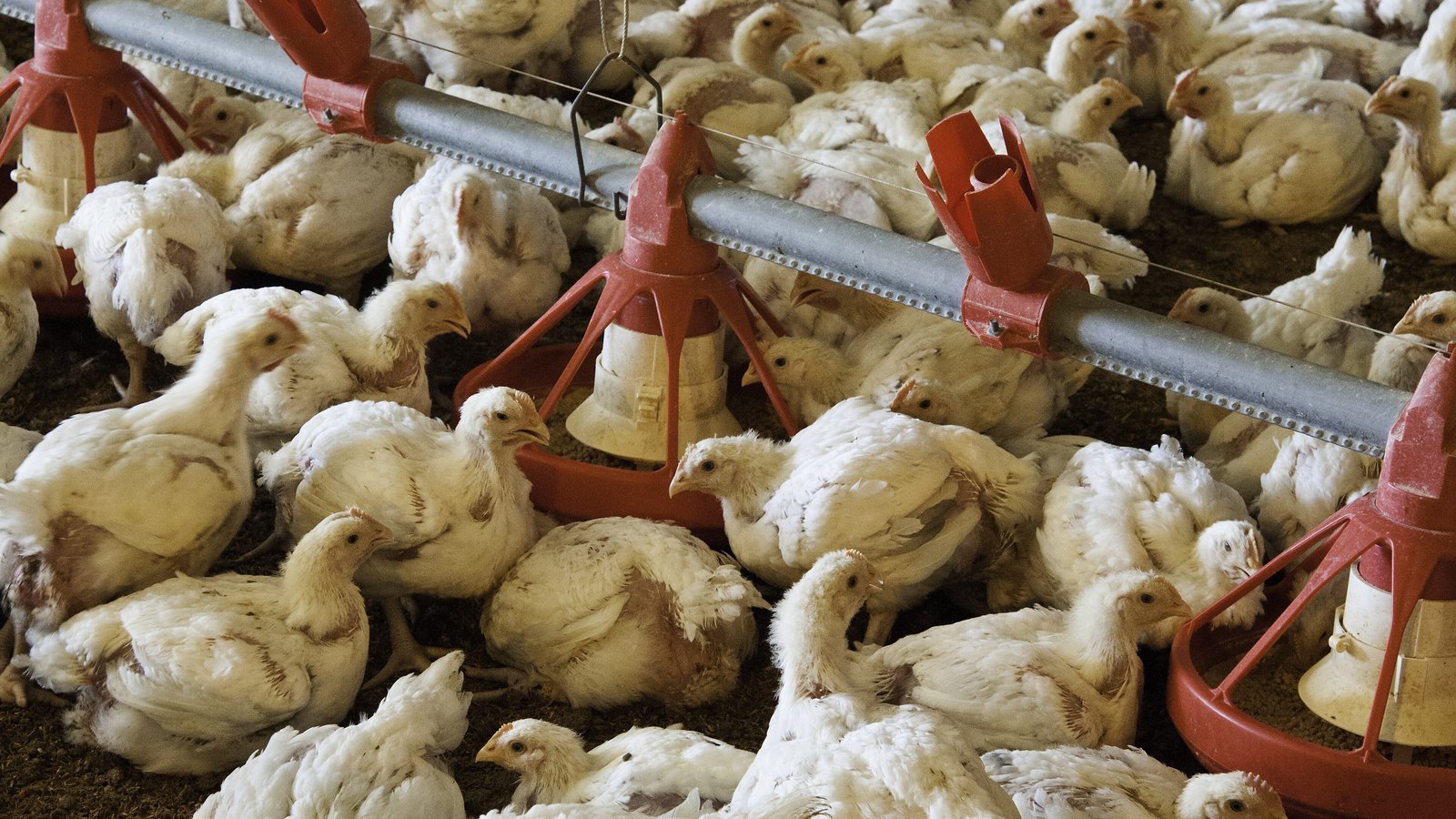
Following published surveillance on wild bird findings, the UK Department for Environment, Food and Rural Affairs (Defra) and the Animal and Plant Health Agency (APHA) released an updated statutory avian disease control zone schedule on 27 November 2026, establishing 3-kilometre Protection Zones and 10-kilometre Surveillance Zones around confirmed H5N1 poultry outbreaks in Herefordshire and Lancashire that alter movement licences and biosafety protocols across academic agricultural research facilities.
Statutory Declarations in Lancashire and Herefordshire
The revised ministerial register documents disease control boundaries and estimated earliest infection dates following two outbreaks of highly pathogenic avian influenza (HPAI) H5N1 in commercial poultry holdings. The first declaration stems from case AIV2026/35, formally confirmed on 25 November 2026 at a commercial poultry holding near Leominster in Herefordshire, detailed in official Herefordshire disease case records. Because of the site’s proximity to the Welsh border, veterinary authorities coordinated with Welsh agricultural officials, extending portions of the surrounding 10-kilometre surveillance perimeter into Powys.
Twenty-four hours later, on 26 November 2026, APHA laboratory confirmation triggered a second declaration, recorded under case AIV2026/37 near Wesham, Fylde, Lancashire, accessible through statutory Lancashire disease case declarations. At both premises, veterinary inspectors invoked mandatory humane culling of all resident poultry to arrest further viral replication, followed by rigorous containment and carcass disposal procedures. The national register published by Defra and APHA integrates these outbreaks into England’s master control schedule, providing precise timestamps required by animal health authorities, academic epidemiologists, and commercial supply chain operators.
Key Operational Parameters and Zone Architecture
Under the statutory framework established by statutory disease control orders governing avian influenza in England, control zones follow a structured two-stage containment perimeter around each confirmed infected holding. The inner circle forms a 3-kilometre Protection Zone, while the outer ring creates a 10-kilometre Surveillance Zone. The durations of these zones are governed by strict statutory milestones tied directly to veterinary inspection and disinfection.
A Protection Zone must remain active for a minimum of 21 days following the formal sign-off of preliminary cleansing and disinfection (C and D) by an official veterinary inspector. Once all mandatory epidemiological tracing and premises inspections within that 3-kilometre zone are complete, the Protection Zone is formally revoked and merged into the encompassing Surveillance Zone. The Surveillance Zone must then persist for at least 30 days after preliminary cleansing and disinfection. Commercial producers and research units operating under the Poultry Health Scheme (PHS) must comply with rigorous biosecurity mandates, including daily mortality logging, closed housing protocols, vehicle wheel washes, and strict segregation of domestic poultry from wild waterbirds.
| Metric and Regulatory Condition | 3-Kilometre Protection Zone | 10-Kilometre Surveillance Zone | National Prevention Zone (AIPZ) |
|---|---|---|---|
| Minimum Duration Post Preliminary C and D | 21 days before revocation | 30 days before revocation | Seasonal / continuous baseline |
| Poultry and Egg Movement Licensing | Prohibited except by specific licence | Restricted under general licence | Standard commercial transport permitted |
| Holding Census and Veterinary Inspection | 100 percent of premises inspected | Representative statistical sampling | Passive surveillance and self-audit |
| Bird Housing Mandate | Compulsory strict indoor housing | Compulsory indoor housing | Mandatory biosecurity audit protocols |
| Carcass and Manure Disposal | Designated rendering under permit | Approved disposal under tracking | Standard commercial agronomic rules |
Epidemiological Context and European Disease Trends
The confirmation of cases AIV2026/35 and AIV2026/37 aligns with heightened viral transmission observed across northern Europe during autumn migratory cycles. International guidance from the World Organisation for Animal Health emphasizes that autumn movements of wild Anseriformes along the East Atlantic Flyway repeatedly introduce virulent strains into coastal wetlands and inland river corridors. The Fylde plain in Lancashire and the River Lugg basin in Herefordshire represent areas with substantial wild waterfowl congregations, creating environmental reservoirs adjacent to high-density commercial poultry operations.
Epidemiological surveillance synthesised by the European Food Safety Authority confirms sustained circulation of H5N1 clade 2.3.4.4b variants across western European maritime borders. Veterinary researchers track these patterns using quantitative spatial epidemiology methods, calculating spatial autocorrelation and point-pattern kernels to evaluate local premises vulnerability. To model transmission risk effectively, spatial researchers ingest vector boundary layers and environmental covariates published in open formats, applying standard frameworks documented in CASRAI guides on geospatial data infrastructure.
Stakeholder Assessment and Veterinary Analysis
Veterinary epidemiologists at APHA point out that the prompt imposition of statutory perimeters remains the most effective intervention to stop secondary lateral spread between holdings. When ambient temperatures decline, avian influenza viruses exhibit extended environmental persistence in organic matter, standing water, and poultry litter. The publication of standardized key date tables allows private veterinarians, farming cooperatives, and independent analysts to anticipate licensing windows with precision.
Biosecurity specialists emphasize that containment success depends heavily on operational compliance at the farm gate. High-level containment principles, detailed in standards for biosafety and biosecurity, require continuous barrier maintenance, dedicated staff footwear, and the elimination of standing surface water accessible to captive flocks. Independent agricultural analysts note that while regionalised control zones limit the geographic scope of international export bans, local restrictions place significant logistical burdens on egg grading stations, processing plants, and breeding operations operating within the 10-kilometre boundaries.
Implications for University Farms and Research Laboratories
For university agricultural departments, veterinary teaching hospitals, and experimental poultry research stations, the updated control zone schedule imposes immediate statutory obligations. Research offices and compliance officers must verify whether any institutional facilities, field trial plots, or partner farms fall within the newly defined Leominster or Wesham perimeters. Any university flock situated inside a 10-kilometre Surveillance Zone must be registered on the GB Poultry Register, with records made immediately accessible to APHA inspectors.
Active research projects involving avian physiology, nutrition, or behavioural genetics face immediate operational constraints. Experimental bird transfers, egg collections, and litter movements are halted unless granted specific statutory movement licences by Defra. Research laboratories handling biological tissues or diagnostic swabs derived from avian species must verify that transport chains comply with dangerous goods shipping regulations and APHA animal health orders. Research administrators should document all project delays associated with zone quarantines to support project extension requests submitted to funding bodies.
Regulatory Schedule and Next Steps
The master schedule maintained by Defra and APHA will undergo rolling revisions as veterinary teams advance through preliminary and secondary containment phases. At the Leominster premises (AIV2026/35), following the completion of culling, veterinary officers oversee preliminary disinfection before starting the 21-day countdown toward the earliest potential revocation of the 3-kilometre Protection Zone. That evaluation cannot conclude prior to mid-December 2026, assuming clinical visits across surrounding holdings confirm no secondary transmission.
At the Wesham holding (AIV2026/37), culling and disposal protocols proceed alongside comprehensive contact tracing of feed delivery vehicles, egg collection crates, and veterinary personnel who entered the premises during the estimated exposure window. Keepers within both 10-kilometre zones must maintain enhanced biosecurity logs and report any abnormal mortality or drop in egg production immediately to the APHA rural services helpline. Defra will update the public key dates publication whenever zone statuses change or restrictions are lifted.
Sources
- GOV.UK: Bird flu: table of key dates for when control zones are declared, checked 2026-11-28
- GOV.UK: Bird flu: near Wesham, Fylde, Lancashire (AIV2026/37), checked 2026-11-28
- GOV.UK: Bird flu: near Leominster, Herefordshire, Herefordshire (AIV2026/35), checked 2026-11-28
- UK Legislation: The Avian Influenza and Influenza of Avian Origin in Mammals (England) Order 2006 (revoked), checked 2026-11-28
- World Organisation for Animal Health: Avian Influenza, checked 2026-11-28
- European Food Safety Authority: Avian influenza, checked 2026-11-28






