
On 26 November 2026, the UK Department for Environment, Food and Rural Affairs (DEFRA) published the United Kingdom Food Security Digest 2026, presenting official national statistics on domestic agricultural production, global food trade dependencies, input cost pressures, and household economic access. For academic researchers, university departments, and research administrative offices working across sustainable agriculture, food economics, and environmental sciences, the new release establishes vital baseline benchmarks for modeling climate shocks, tracking supply chain vulnerability, and structuring UKRI grant proposals.
The 2026 Digest serves as an interim statistical evaluation designed to bridge the data monitoring gap between the statutory triennial UK Food Security Reports. According to the official release, the UK food production-to-supply ratio—widely monitored as the national self-sufficiency metric—reached 60% for all food commodities in 2025, down from 65% in 2024. For indigenous-type food crops that can be commercially cultivated within Great Britain and Northern Ireland, the ratio was estimated at 72% in 2025 compared to 77% in the previous year. DEFRA statistical analysts noted that this annual contraction was primarily driven by sharp global price inflation for non-indigenous imported agricultural commodities, including price increases of 56% for cocoa and 35% for coffee, alongside a 29% rise in beef and veal values, rather than a broad-based structural collapse in domestic agricultural capacity.
Trade data compiled within the digest indicates that the overall UK trade deficit in Food, Feed, and Drink expanded by 8.6% between 2024 and 2025 to reach £42.0 billion in 2025 constant prices. DEFRA highlighted that national self-sufficiency alone does not insulate the domestic food system from global price volatilities, emphasizing that supply chain resilience requires maintaining a balanced equilibrium between reliable domestic output and geographically diversified overseas trading partners. Approximately 18% of all UK food and drink imports continue to transit through the Short Straits maritime corridor, underscoring logistical vulnerabilities to cross-channel shipping disruptions and European transshipment bottlenecks.
Agri-Food Production Indicators and 2026 Supply Metrics
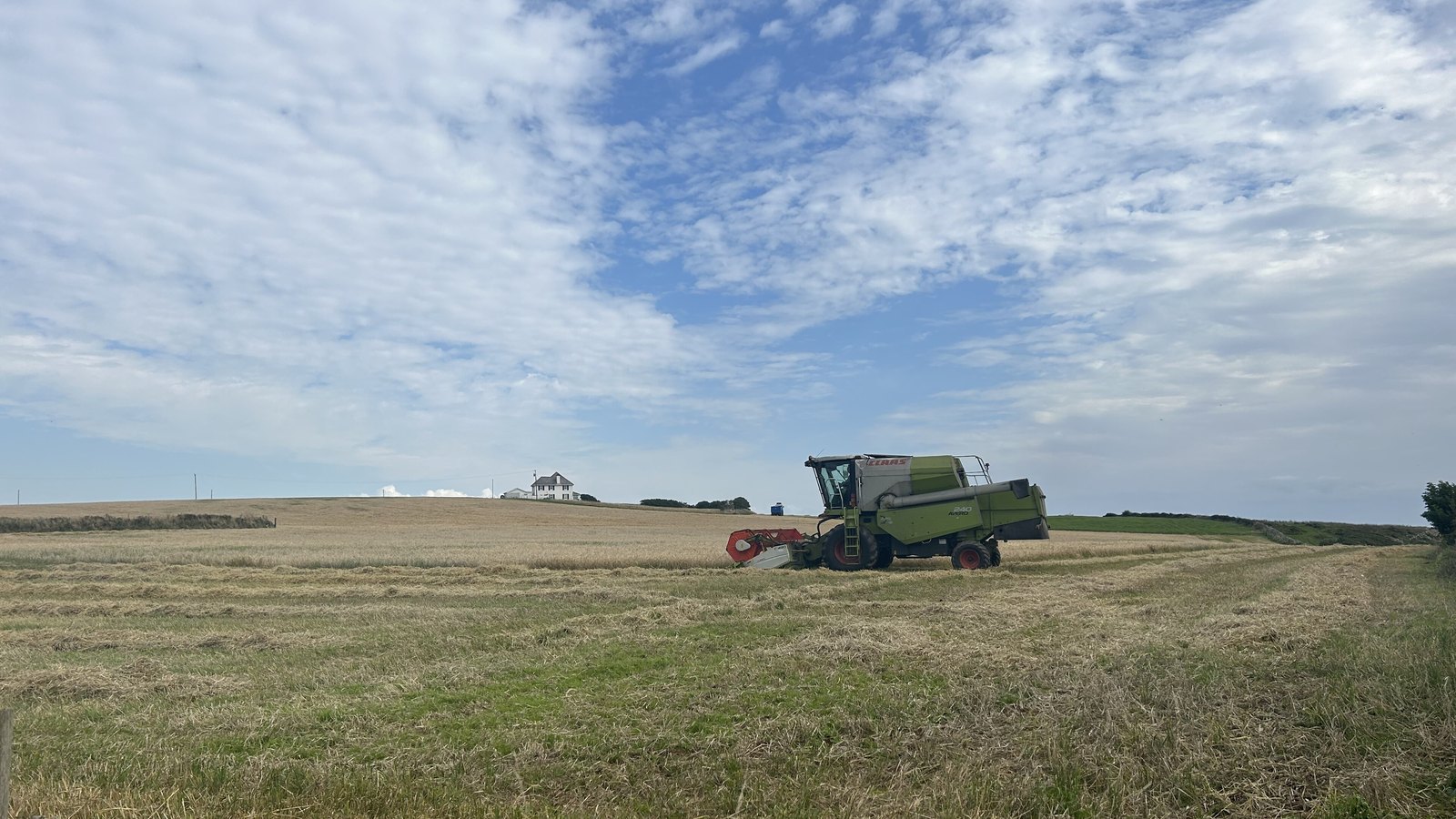
The digest incorporates provisional 2026 crop harvest data for England, highlighting regional yield divergences shaped by compounding climatic volatility. Persistent record-setting winter precipitation across early 2026 impeded seasonal field cultivations and damaged overwintered root crops such as carrots and parsnips. However, total English wheat yields rebounded by 2.7% in 2026 to reach 7.2 tonnes per hectare (t/ha), led by exceptional regional yields of 8.4 t/ha across the North East. Conversely, spring barley yields declined by 8.0%, and total oat production fell by 11% to 4.1 t/ha. Oilseed rape registered an estimated 5.9% yield increase to 3.8 t/ha.
| Agricultural Indicator | 2024 Baseline | 2025 Recorded Level | 2026 Provisional Direction |
|---|---|---|---|
| Food Production-to-Supply Ratio (All Food) | 65% | 60% | Constrained by global import prices |
| Indigenous Food Production-to-Supply Ratio | 77% | 72% | Stable domestic core production |
| Food, Feed and Drink Trade Deficit (2025 prices) | £38.7 billion | £42.0 billion | Expanding trade gap (+8.6%) |
| English Wheat Yield (tonnes per hectare) | 7.0 t/ha | 7.0 t/ha | 7.2 t/ha (+2.7% increase) |
| Agri-Food Sector Total Workforce | 4.15 million | 4.10 million | Agricultural labour down 1.5% to 446,196 |
| Nitrogen (Urea) Fertilizer Benchmark | Baseline | Moderate inflation | Price doubled February–April 2026 |
Upstream agricultural input markets faced acute instability during 2026 following geopolitical escalation in the Middle East and maritime disruption near the Strait of Hormuz. Crude oil prices in August 2026 stood 23.1% higher than twelve months prior, generating substantial cost inflation across fuel and electricity. Because synthetic nitrogen manufacture depends heavily on natural gas feedstock, spot prices for urea nearly doubled between February and April 2026. These escalating input costs placed significant financial strain on farmgate operating margins across arable and livestock sectors.
Policy Evolution and the Triennial Statutory Framework
The publication of national food security statistics is grounded in Section 19 of the Agriculture Act 2020, which placed a statutory duty on UK ministers to lay an exhaustive food security review before Parliament at least once every three years. The foundational UK Food Security Report was published in December 2021, establishing five primary themes: global food availability, UK food supply sources, supply chain resilience, household food security, and food safety and consumer confidence.
To prevent data obsolescence during the three-year interim periods, DEFRA established the annual Food Security Digest as a targeted statistical bridge. The 2026 Digest provides continuity following the 2024 and 2025 releases. Crucially, DEFRA confirmed that because the next major statutory triennial UK Food Security Report will be published in 2027, the next subsequent edition of the interim Digest will be deferred until 2028. Academic investigators compiling research data must align their longitudinal models with this alternating publication architecture.
Sector Reactions and Independent Supply Chain Analysis
Independent food policy institutes and international governance bodies have highlighted the structural socio-economic vulnerabilities outlined in the DEFRA digest. In its national dietary analysis, the non-profit research organisation The Food Foundation published The Broken Plate 2026, which documented how household dietary inequality persists across the UK income distribution. While DEFRA reported that the proportion of households using food banks over a twelve-month period eased slightly from 3.6% in financial year ending (FYE) 2024 to 3.5% in FYE 2025, the lowest income quintile spent 15.2% of total expenditure on food, compared to an average of 10.9% across all UK households.
On the global dimension, the United Nations Food and Agriculture Organization emphasized in its Food Outlook Biannual Report that international food markets face compounding operational risks from geopolitical conflicts, shipping choke points, and climate variability. Complementing these findings, the European Union’s earth observation agency published an extensive analysis titled European Summer 2026: Records, Extremes and Context, confirming that the summer of 2026 was provisionally the hottest on record in the UK, generating regional soil moisture deficits that curtailed vegetable production.
The digest also examined food safety and microbiological resilience across the food supply chain. National epidemiological surveillance referenced methodological protocols from the Infectious Intestinal Disease in the Community (IID2) Study, which estimated that infectious intestinal diseases generate up to 17 million community cases annually in the UK. The Food Standards Agency reported that surveillance threshold alerts for Campylobacter and non-typhoidal Salmonella species were exceeded in June 2026, prompting heightened veterinary and environmental tracing.
Implications for Agricultural Researchers and University Research Offices
The publication of the 2026 Digest carries direct implications for research leaders, university agricultural departments, and sponsored research administrators. Principal investigators preparing grant proposals under the Biotechnology and Biological Sciences Research Council (BBSRC) and the Natural Environment Research Council (NERC) must incorporate these updated 2025–2026 baseline metrics into their project rationales. Review panels increasingly scrutinize whether crop science and soil health proposals reflect the reality of escalating weather extremes and volatile fertilizer economics.
For university research offices managing institutional compliance, projects handling agricultural yield surveys, food testing data, and supply chain telemetry should establish a robust data management plan that satisfies funder mandates. Administrators must ensure compliance with the UKRI data management plan standard, designating certified institutional archives for open research access. Applying FAIR data principles ensures that longitudinal agronomic observations can be integrated into regional climate adaptation frameworks, allowing researchers to formalize each curated statistical collection as a citable dataset as output with persistent digital identifiers.
Next Steps in National Food Monitoring and Research Milestones
Following the release of the 2026 Digest, UK governmental statistical teams will transition their analytical resources toward assembling the comprehensive 2027 UK Food Security Report. Throughout 2027, DEFRA will conduct formal stakeholder consultations and academic peer reviews to update the national food system risk register. Interim quarterly updates will continue through the Food Statistics in Your Pocket pocketbook series and the comprehensive Agriculture in the United Kingdom compendium.
University research teams specializing in agri-tech, food safety surveillance, and agricultural economics should align their longitudinal publications with the upcoming 2027 triennial review. Research offices should assist faculty in registering datasets with national data repositories, ensuring that academic findings contribute directly to evidence-based policymaking ahead of the next Food Security Digest scheduled for publication in 2028.
Sources
- Department for Environment, Food and Rural Affairs: United Kingdom Food Security Digest 2026, checked 2026-11-26
- The Food Foundation: The Broken Plate 2026, checked 2026-11-26
- Food and Agriculture Organization: Food Outlook – Biannual Report on Global Food Markets, checked 2026-11-26
- Copernicus Climate Change Service: European Summer 2026 – Records, Extremes and Context, checked 2026-11-26
- BMC Medical Research Methodology: Methods for Determining Disease Burden and Calibrating National Surveillance Data in the United Kingdom (IID2 Study), checked 2026-11-26






