
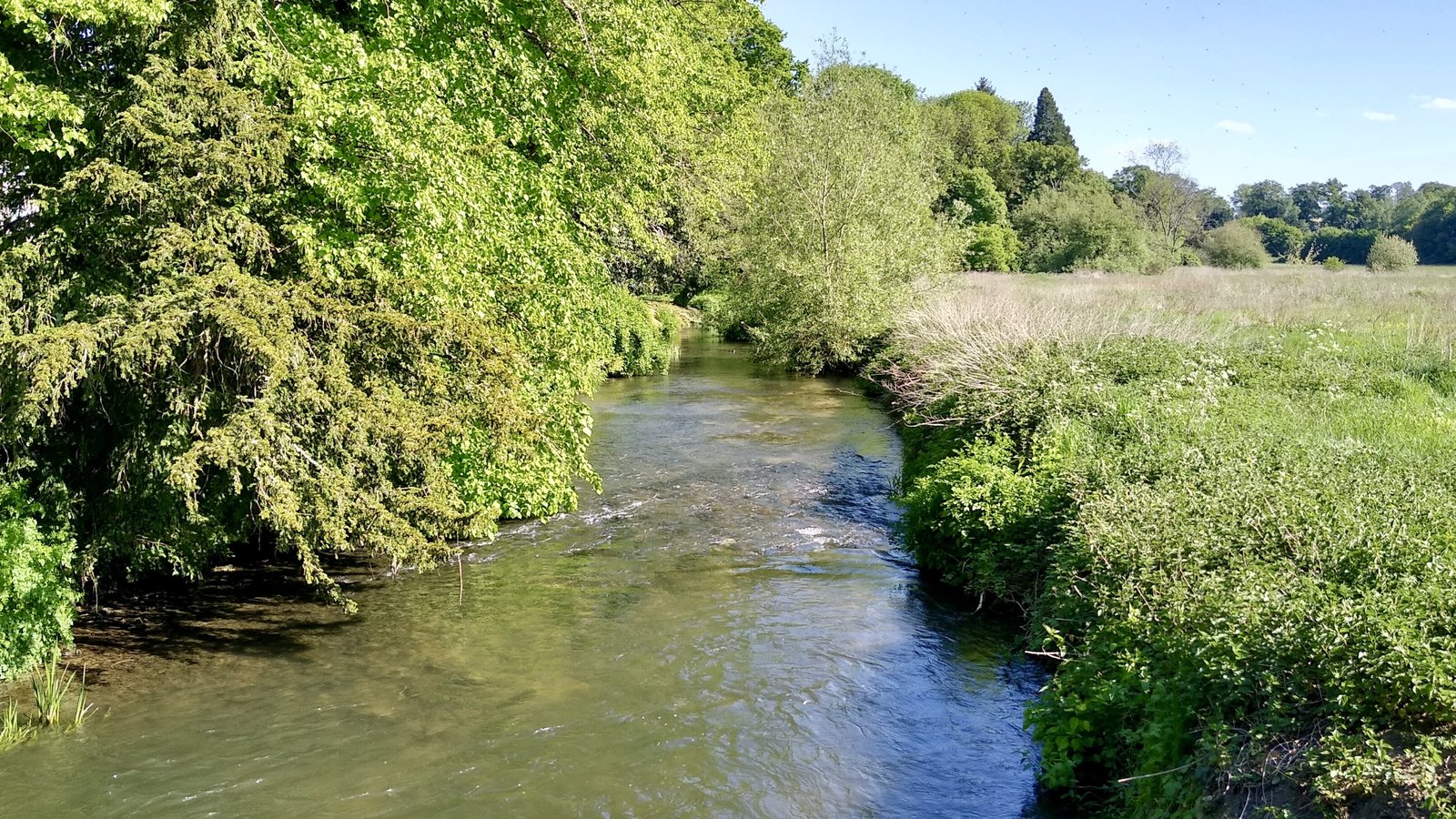
On 28 November 2026, the UK Department for Environment, Food and Rural Affairs (Defra announced that millions in water company environmental fines will be channelled directly into local river clean-up, catchment restoration, and wildlife recovery projects across England. Following Defra’s earlier morning allocation of the Water Environment Improvement Fund, the statutory initiative directs penalty revenue into more than 300 catchment partnerships, establishing new baseline monitoring protocols and co-funding requirements for university freshwater research groups.
Ring-Fenced Enforcement Penalties Channelled to River Catchments
The newly announced funding package totals over £11 million distributed across more than 300 targeted local projects throughout England under the Water Environment Improvement Fund (WEIF). Crucially, the portfolio incorporates almost £6 million derived directly from financial penalties and enforcement fines imposed on commercial water and sewerage companies. This operationalises the polluter-pays principle, returning capital directly to degraded freshwater ecosystems.
Under the administrative oversight of the Environment Agency, the funded schemes are projected to achieve substantial landscape-scale remediation. Defra confirmed that the collective portfolio will improve water quality across more than 1,300 kilometres of English rivers, support the planting of over 100,000 riparian trees, and create or restore more than 800 hectares of natural habitat.
Environment Secretary Dame Angela Eagle emphasised the structural shift, stating that water companies have repeatedly compromised the natural environment while raising customer bills. Eagle noted that redirecting penalty proceeds into local waterways ensures that polluters directly compensate the communities and catchments they harmed. Environment Agency Chief Executive Philip Duffy added that local conservation bodies and research partnerships possess the granular catchment knowledge required to deploy remediation funding effectively, affirming that regulatory enforcement will continue holding polluters accountable.
Target Allocations and Catchment Showcase Projects
The portfolio funds nature-based solutions, biosecurity interventions, and hydro-morphological enhancements. Defra highlighted three flagship catchment initiatives delivering measurable ecological recovery:
- River Wey (Surrey) — Species Recovery and Biomonitoring: The National Trust was awarded £49,000 for the Wey Water Vole Recovery project across the 87-mile river catchment. Building on three years of preparation across 83 partner organisations and 3,000 volunteer hours, the project has restored 140 kilometres of riverbank. Following captive breeding with Derek Gow Consultancy and the release of 190 water voles across six sites on the South Wey near Haslemere, the new grant funds ongoing surveillance using environmental DNA (eDNA) water analysis and camera traps to track population dispersal.
- River Tyne (Newcastle upon Tyne) — Estuarine Saltmarsh Creation: Groundwork North East & Cumbria received £165,000 for the Newburn Estuary Edge Improvements project on the River Tyne. Jointly supported by NatWest Group, the initiative installs a 230-metre natural brushwood bundle barrier along the riverbank to attenuate wave action, slow currents, and allow mud to settle, establishing intertidal saltmarsh habitat for juvenile fish and wildlife.
- River Frome (Gloucestershire) — Migratory Fish Passage: The Severn Vale Catchment Partnership secured £60,000 for the Wilder Frome project. The scheme tackles barriers on the River Frome so that migratory salmon and eels can move freely, while creating wetland habitat and collaborating with farmers to reduce sediment and nutrient runoff.
The table below summarizes key specifications across these featured catchment restoration projects:
| Catchment & Location | Lead Organisation | Grant Value | Primary Environmental Objective | Monitoring Method |
|---|---|---|---|---|
| River Wey (Surrey) | National Trust | £49,000 | Water vole reintroduction across 140km restored river | eDNA water sampling and trail cameras |
| River Tyne (Newcastle upon Tyne) | Groundwork North East & Cumbria | £165,000 | 230m brushwood barrier for intertidal saltmarsh creation | Sediment accretion pins and fish surveys |
| River Frome (Gloucestershire) | Severn Vale Catchment Partnership | £60,000 | Fish barrier removal and agricultural runoff mitigation | Acoustic telemetry and turbidity tracking |
| England-wide Portfolio (300+ Projects) | Catchment Partnerships & Trusts | £11,000,000+ | 1,300km river improvements, 100,000 trees, 800ha habitat | Water Framework Directive biological monitoring |
Statutory and Regulatory Framework for Environmental Penalties
Directing water utility enforcement fines into environmental restoration represents a major evolution in UK regulatory practice. Previously, financial penalties levied by courts or through Environment Agency enforcement undertakings were paid into HM Treasury’s Consolidated Fund, separating fines from local remediation. Statutory provisions reinforced under the Environment Act 2021 enabled ministers and regulators to ring-fence penalty revenue into dedicated environmental restoration funds.
This mechanism aligns with broader reforms under the Water Bill, including the creation of Regional Water Councils. These statutory bodies will allow community advocates, researchers, and local authorities to set regional priorities and hold water companies directly to account for local pollution incidents.
Catchment Partnerships and Sector Perspective
Environmental non-governmental organisations, rivers trusts, and academic bodies in the national Catchment Based Approach (CaBA) welcomed the dedicated funding. David Elliott, National Trust Countryside Manager for South Downs West, highlighted that species recovery on the River Wey required collective action across landowners, volunteers, and scientific partners.
Hellen Hornby of Groundwork North East & Cumbria noted that co-financing from partners such as NatWest Group enables nature-based solutions to deliver lasting carbon capture and flood resilience. George MacDonald-Clark, Programme Manager for the Lower Severn region, observed that the Water Environment Improvement Fund provides essential support that turns shared ambitions into measurable river health improvements.
For the research sector, the investments complement priorities set by the Natural Environment Research Council (NERC), which funds scientific investigation into freshwater ecology, hydrological resilience, and pollution mitigation.
Implications for University Grants Offices and Freshwater Researchers
The expansion of penalty-derived catchment funding carries direct operational implications for university research offices and environmental scientists. While non-profit trusts or councils often lead local projects, universities frequently serve as scientific monitoring partners, laboratory evaluators, and ecological analysts.
Research offices and principal investigators should prepare for three key operational requirements:
- Collaboration Agreements and Subaward Management: University teams acting as scientific partners must put in place clear formal research contracting and collaboration agreements. Contracts must define data ownership, sample custody, intellectual property, and publication rights when working alongside non-academic lead partners.
- Baseline Biomonitoring Protocols: Projects must demonstrate measurable ecological improvement. Academic teams deploying genomic techniques such as eDNA sampling or continuous chemical monitoring should align their workflows with standard long-term ecological research frameworks to ensure data interoperability.
- Match-Funding and Financial Accounting: Where catchment projects incorporate corporate co-funding or commercial contributions, institutional grants officers must track mandatory cost-share requirements and ensure that expenditure records comply with audit standards under institutional grants management.
Next Steps and Future Allocation Cycles
Project delivery under the latest awards will commence across the winter 2026 and spring 2027 seasons, beginning with tree planting and riparian habitat preparation. In-channel engineering works, including weir modifications on the River Frome and estuarine brushwood installations on the River Tyne, will follow during favorable hydrological windows in 2027.
Concurrently, Defra will progress legislation establishing Regional Water Councils. As additional regulatory investigations and civil sanctions conclude, further penalty revenues will be channelled into future funding rounds to sustain ongoing river restoration across England.
Sources
- UK Department for Environment, Food & Rural Affairs: Millions in water company fines to go to water clean-up projects across the country, checked 2026-11-28
- Environment Agency: About the Environment Agency and environmental regulation responsibilities, checked 2026-11-28
- Natural Environment Research Council: Council remit, environmental science research, and freshwater priorities, checked 2026-11-28
- Catchment Based Approach: About CaBA and cross-sector catchment partnerships, checked 2026-11-28
- The National Archives: Environment Act 2021 legislative framework, checked 2026-11-28






