
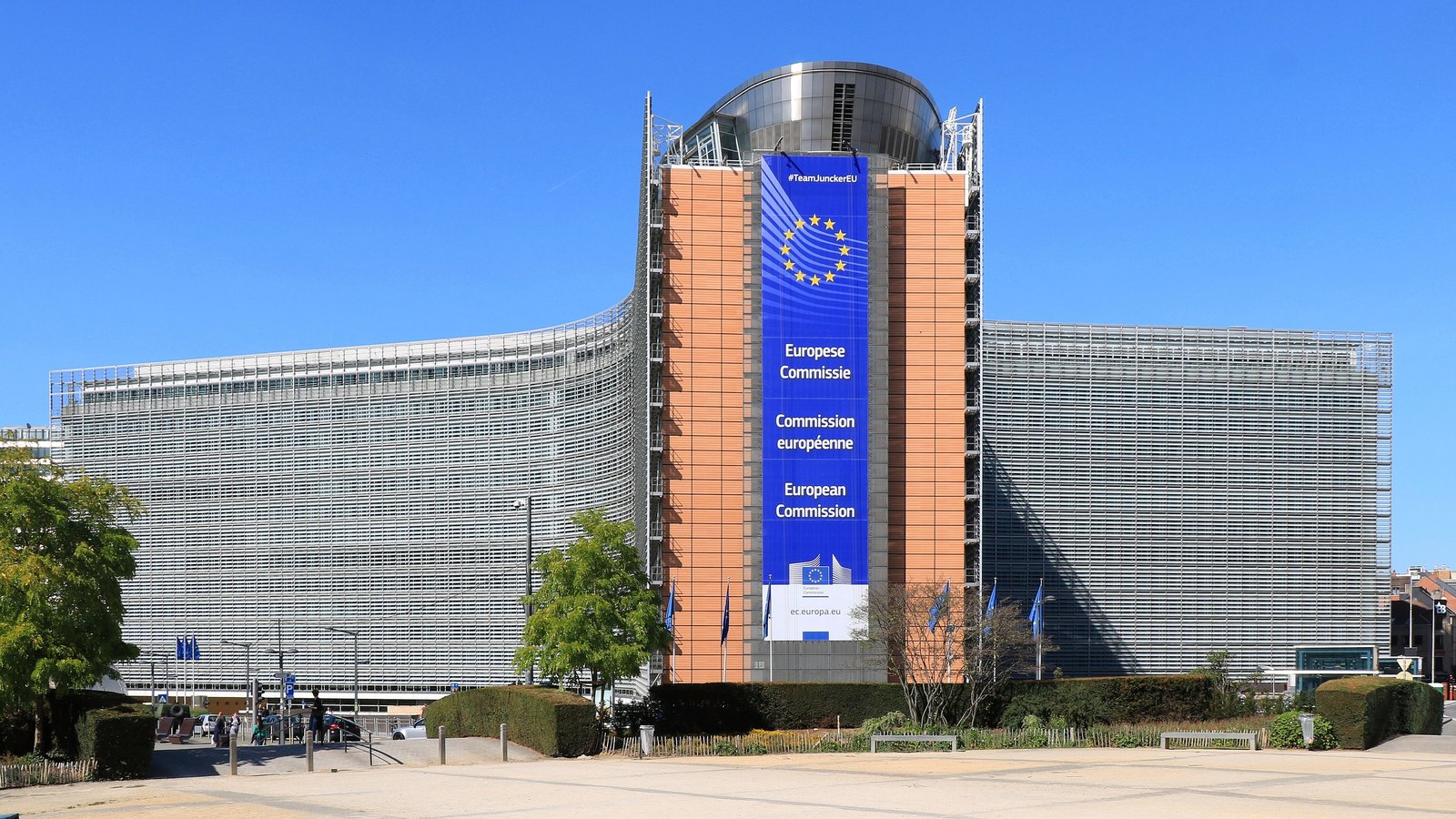
Speaking in Brussels at the Neth-ER Annual Network Conference on 18 November 2026, European Commission Director-General for Research and Innovation Marc Lemaître urged European Union member states to pool national research budgets toward joint European strategic programmes, warning that twenty-seven fragmented national R&D systems leave the continent structurally incapable of competing globally in critical frontier technologies.
What happened at the Neth-ER conference
Addressing research leaders, university rectors, and government officials at the Royal Flemish Academy of Belgium for Science and the Arts, Director-General Marc Lemaître presented an unvarnished assessment of the European research funding architecture. Speaking alongside Feite Hofman, Director-General at the Dutch Ministry of Education, Culture and Science, during a dialogue co-chaired under the auspices of the European Research Area and Innovation Committee (ERAC), Lemaître outlined the core structural impediment constraining European scientific productivity: extreme national fragmentation.
Currently, approximately 90% of all public research and development spending across the European Union is managed, allocated, and disbursed strictly at the national level by individual member states, while only 10% is pooled collectively through EU-level instruments such as Horizon Europe. Lemaître warned that preserving twenty-seven disconnected national strategies prevents the bloc from attaining the critical mass necessary to lead in capital-intensive disciplines, including artificial intelligence, semiconductor fabrication, clean energy systems, and advanced materials for Europe.
According to coverage by Science|Business, Lemaître argued that the forthcoming 10th Framework Programme (FP10) cannot fulfill its economic mandate if it continues to function merely as an auxiliary top-up to twenty-seven unaligned national research portfolios. Instead, he called on national governments to break historical precedent by committing a dedicated share of their domestic public research funding directly into joint, pan-European competitive missions.
Key funding figures and budget proposals
The call to pool domestic resources arrives as EU institutions and national finance ministries debate the financial scale of the post-2027 Multiannual Financial Framework (MFF). European Commission expert evaluations have repeatedly underscored that the current Horizon Europe budget of 95.5 billion euros remains heavily oversubscribed, rejecting thousands of high-scoring proposals each funding cycle due to capital constraints.
In October 2024, the European Commission Expert Group on the Interim Evaluation of Horizon Europe, chaired by former Portuguese science minister Manuel Heitor, published its landmark report titled Align, act, accelerate: Research, technology and innovation to boost European competitiveness. The Heitor report urged the European Commission to establish a ring-fenced 220 billion euro budget for FP10, establishing dedicated councils for industrial technology and societal challenges while expanding foundational research.
| Strategic Framework | Budget Scale | National Coordination Level | Key Mechanism |
|---|---|---|---|
| Horizon Europe (2021–2027) | 95.5 billion euros | Voluntary ERA actions; co-funded partnerships | Shared management calls and direct ERC/MSCA grants |
| Heitor Report FP10 Proposal | 220 billion euros (recommended) | Coordinated national pools; European Competitiveness Technology Council | Ring-fenced budget; dual-track excellence and scale-up |
| Draghi Competitiveness Blueprint | Expanded joint borrowing / funding | Harmonised industrial strategy; joint R&D procurement | European Competitiveness Fund across priority value chains |
| Lemaître Neth-ER Proposal | FP10 + dedicated pooled national allocations | Mandatory or incentivised national budget pooling | Joint European strategic priority calls beyond the 10% EU baseline |
Lemaître emphasized that reaching global competitiveness parity with the United States and China does not solely depend on expanding the centralized EU budget; it requires coordinating the broader 90% of public spending that national treasuries currently deploy in uncoordinated domestic calls.
Background: from Horizon Europe to FP10
The tension between national sovereignty and centralised European research coordination has persisted since the inception of the Framework Programmes in 1984. While European Research Area (ERA) policy agendas have encouraged member states to align domestic research roadmaps and invest 3% of gross domestic product in R&D, only a handful of member states consistently meet that investment target.
Under Horizon Europe, the European Commission introduced several mechanisms to bridge national and EU funding, including institutionalised European Partnerships and co-funded instruments. However, these frameworks often introduced complex administrative layers, requiring research organisations to navigate conflicting national accounting standards and disparate grant timelines. To ease project participation across borders, the Commission expanded the lump-sum grant model to remove real-cost financial reporting requirements.
In multinational collaborative proposals, academic institutions and industrial consortia rely on standardized work package structures and meticulous person-months allocations to demonstrate workload feasibility across participating member states. When national funding agencies set misaligned priorities or divergent funding eligibility rules, assembling balanced multinational research teams becomes exceedingly challenging for academic coordinators.
Reaction from research universities and stakeholders
The prospect of pooling national budgets into EU-level mechanisms has generated intense debate among university alliances, national research councils, and European parliamentarians. While academic associations strongly support greater coordination, they express concern that pooling could siphon funds away from curiosity-driven domestic grants or compromise the autonomy of national research agencies.
The League of European Research Universities (LERU) welcomed the Heitor report’s strategic ambitions and endorsed calls for a 200 billion euro FP10 budget, but cautioned against restructuring initiatives that could subordinate scientific excellence to short-term industrial policy. LERU has argued that basic research supported by the European Research Council (ERC) must remain fully independent and insulated from sectoral restructuring.
Similarly, The Guild of European Research-Intensive Universities (The Guild) noted in its FP10 position analysis that any mechanism aimed at pooling resources must maintain scientific excellence as its primary selection criterion. University leaders warn that if national contributions to joint European pools are tied to strict geographic return principles—such as juste retour—the core European value of funding the best science regardless of borders will be compromised.
At the Neth-ER conference, Christian Ehler, Member of the European Parliament and rapporteur for FP10 in the Committee on Industry, Research and Energy (ITRE), reaffirmed Parliament’s stance that FP10 must remain an independent, self-standing programme governed by its own regulation, resisting any attempt by the Commission to dissolve research funding into a generic European Competitiveness Fund.
What it means for researchers, universities and research offices
For higher education institutions, principal investigators, and university research administrations, Lemaître’s push toward pooled national budgets signals significant structural shifts in how future research proposals will be conceived, funded, and managed:
- Joint National-European Partnership Alignment: University research development officers will need to monitor bilateral and multilateral funding agreements between their national funding agencies and DG RTD. Calls launched under pooled funding models may require researchers to assemble consortia that satisfy both European strategic requirements and national co-funding criteria.
- Administrative and Compliance Integration: Research support offices must prepare for unified compliance benchmarks. If national budgets merge into joint FP10 calls, project managers can anticipate standardisation around European rules, reducing the need to maintain parallel compliance frameworks across domestic and European grants.
- Strategic Orientation toward Deep Tech: Proposals in priority fields such as advanced materials, photonics, and artificial intelligence will face heightened scrutiny regarding their contribution to European industrial autonomy, requiring research teams to clearly articulate translation and technology-readiness trajectories.
- Heightened Research Security Screening: As collaborative funding concentrates on sensitive strategic capabilities, university compliance offices must enforce stringent institutional research security measures, including foreign collaboration screening, export control verifications, and dual-use risk assessments.
What happens next in the FP10 legislative roadmap
The debate over national budget pooling and FP10 design will intensify through 2025 and 2026 across European institutions and national capitals:
- ERAC Strategic Deliberations (Late 2024–Early 2025): The European Research Area and Innovation Committee will continue discussions among member state science ministries to assess domestic appetite for pooled funding mechanisms and draft formal council recommendations.
- Commission MFF Proposal (Mid-2025): The European Commission is scheduled to present its formal legislative proposal for the 2028–2034 Multiannual Financial Framework, which will define the proposed budget envelope for FP10 and clarify the relationship between research funding and the proposed European Competitiveness Fund.
- Interinstitutional Negotiations (2026): The European Parliament and the Council of the European Union will negotiate the final regulation for FP10 through interinstitutional trilogues, debating governance structures, national matching requirements, and total budget allocations.
- Work Programme Adoption and Launch (2027–2028): DG RTD and executive agencies will finalise initial work programmes and call texts, with FP10 formally commencing operations on 1 January 2028.
Sources
- Neth-ER: Register Now: Neth-ER Network Conference 2026, checked 2026-11-21
- Publications Office of the EU: Align, act, accelerate – Research, technology and innovation to boost European competitiveness, checked 2026-11-21
- Science|Business: Governments should pool more research funding to meet EU goals, says Commission, checked 2026-11-21
- LERU: LERU welcomes ‘Heitor report’ on Framework Programmes Horizon Europe & FP10, checked 2026-11-21
- The Guild: Heitor report is most compelling vision yet for EU’s post-Horizon future, checked 2026-11-21
- European Commission: Advanced materials for Europe – Research and innovation, checked 2026-11-21


