
On 27 November 2026, the UK Foreign, Commonwealth & Development Office published Minister of State for International Development Kirsty McNeill’s address to the 14th Session of the South Africa–UK Bilateral Forum, outlining expanded bilateral cooperation in climate adaptation, clean energy transition, radio astronomy, and equitable scientific research partnerships. The bilateral agreement marks an operational transition for universities, funding agencies, and sponsored research offices managing co-funded international research programmes across the two nations.
Bilateral Forum Formalises Strategic Science and Development Priorities
The 14th Session of the South Africa–United Kingdom Bilateral Forum convened in London on 26 November 2026, bringing together senior ministerial delegations to review bilateral relations and establish forward cooperation frameworks. Discussions were led by South African Minister of International Relations and Cooperation Ronald Lamola and UK Cabinet ministers, marking a strategic renewal of bilateral engagements spanning trade, environmental sustainability, high-technology industry, and academic research.
In official statements released by South Africa’s Department of International Relations and Cooperation, Minister Lamola noted that two-way trade in goods and services between the nations grew by more than 20% over the preceding year to reach nearly £14 billion, underpinned by a UK foreign direct investment stock in South Africa valued at £26 billion. Minister Lamola emphasised that economic growth must be anchored by collaborative research, knowledge transfer, and industrial innovation.
Minister Kirsty McNeill delivered the keynote reception address at the Anti-Apartheid Legacy: Centre of Memory and Learning—the historic London headquarters of the African National Congress between 1978 and 1994. McNeill highlighted that the modern UK-South Africa bilateral partnership has evolved from historic solidarity into an equitable, forward-looking alliance focused on shared global challenges, including gender-based violence prevention, clean energy deployment, and collaborative science.
Key Programme Frameworks and Collaborative Research Allocations
Bilateral science and technology cooperation between the UK and South Africa operates across several structured multilateral and bilateral instruments. Prime among these is the UK’s International Science Partnerships Fund (ISPF), overseen by the Department for Science, Innovation and Technology (DSIT) to support research excellence and sustainable development globally.
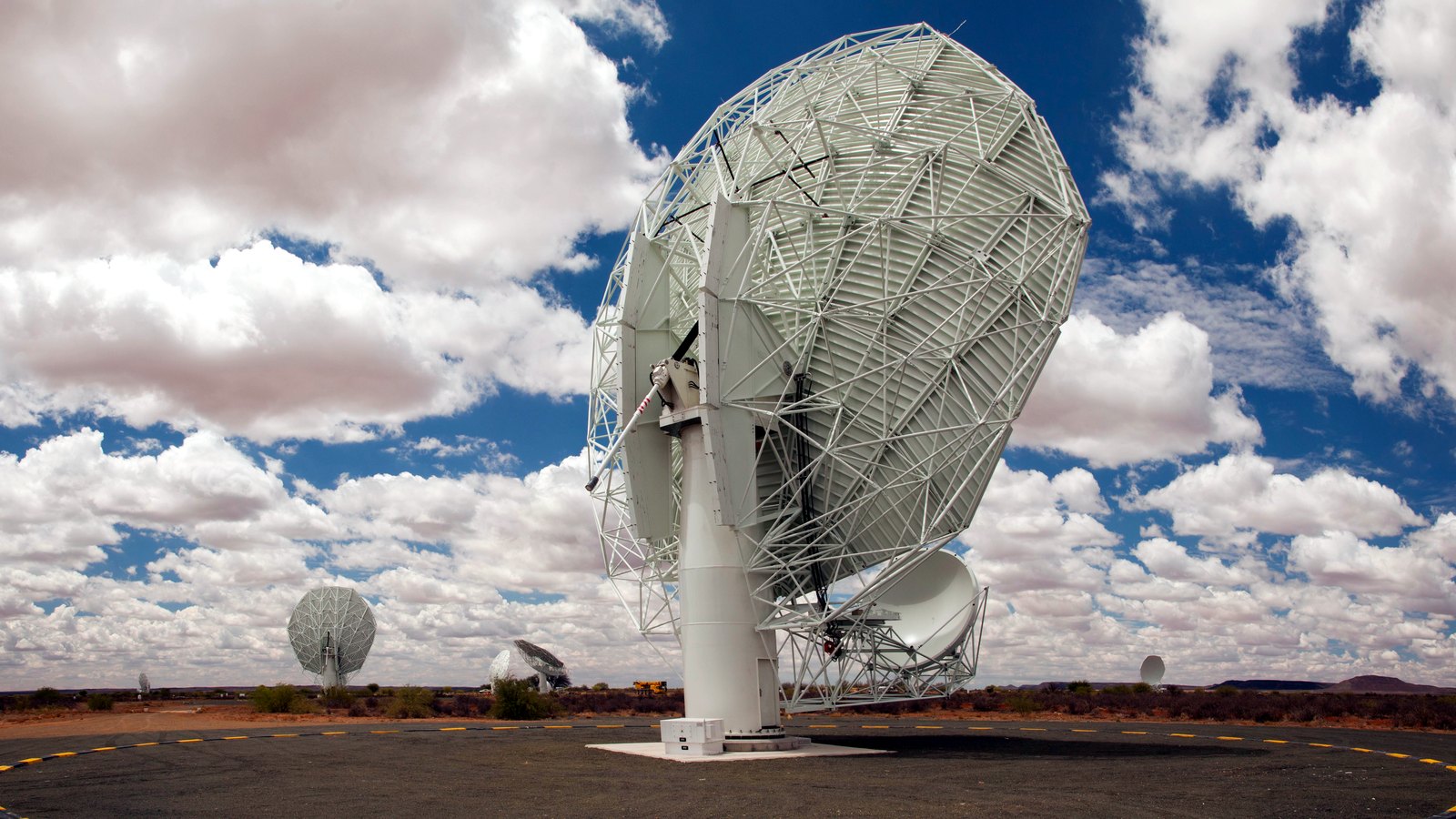
The fund is delivered through major UK research bodies, including UK Research and Innovation (UKRI) and national research academies, working in direct co-design with South Africa’s Department of Science, Technology and Innovation (DSTI) and the National Research Foundation (NRF). Flagship scientific priorities include the Square Kilometre Array Observatory (SKAO), where the MeerKAT array in the Karoo desert serves as a cornerstone for international astrophysics and high-performance data processing.
In parallel, the UK Foreign, Commonwealth & Development Office has deployed the Science and Technology Accelerator—Systems (STA-S) Southern Africa Programme, committing £2.5 million through March 2030 to dismantle systemic barriers to research commercialisation, artificial intelligence governance, and digital inclusion across South Africa and the wider region.
| Programme / Facility | Lead UK & RSA Entities | Priority Scientific Domains | Funding & Governance Model |
|---|---|---|---|
| International Science Partnerships Fund (ISPF) | DSIT, UKRI, Royal Society & DSTI, NRF | Planetary health, clean energy, bio-economy, AI | Matched bilateral funding, co-designed calls |
| Square Kilometre Array Observatory (SKAO) | UKRI STFC & SARAO, NRF | Radio astronomy, petascale data engineering, physics | Intergovernmental treaty organisation, shared infrastructure |
| Science and Technology Accelerator (STA-S) | FCDO Southern Africa & Regional Hubs | Emerging tech policy, AI governance, public health | Targeted multi-year development grants through 2030 |
| Just Energy Transition Partnership (JETP) | DESNZ, FCDO & Presidential Climate Commission | Grid decarbonisation, green hydrogen, economic modeling | Multilateral donor coordination, applied technical assistance |
Evolution From Development Assistance to Equitable Co-Funded Research
The agreements formalised at the 14th Bilateral Forum reflect a systemic realignment in how international research between the UK and South Africa is financed and administered. Historically, international academic engagements frequently operated under traditional Official Development Assistance (ODA) parameters, such as the former Newton Fund, which often placed primary administrative control within Northern institutions.
Under the ISPF framework and modern DSTI-UKRI bilateral arrangements, research funding has transitioned towards genuine co-investment and mutual ownership. Bilateral projects now require matched resource commitments, joint peer review protocols, and equitable intellectual property governance. This structural shift ensures that African research priorities, community benefits, and local data sovereignty remain central to grant formulation.
This restructuring builds directly on the outcomes of the 13th Bilateral Forum held in Cape Town in November 2024 and the UK-South Africa Science and Innovation Joint Committee meeting convened in October 2025. Co-chaired by DSTI Deputy Director-General Daan du Toit and FCDO Chief Scientific Adviser Professor Sir John Edmunds, that committee established strategic 2026–2028 action plans across artificial intelligence governance, space science, and critical minerals research.
Sector Perspectives on Institutional Partnerships and Grant Governance
Stakeholders across the higher education and research policy sectors have welcomed the bilateral forum’s commitment to predictable, co-designed funding pipelines. Academic leaders note that long-term funding certainty is essential for maintaining major scientific infrastructure, supporting graduate research pipelines, and conducting longitudinal environmental field studies.
In his forum address, Minister Ronald Lamola stressed that bilateral cooperation must deliver tangible scientific and economic outcomes for South African institutions, fostering domestic capability rather than purely extractive research relationships. Lamola highlighted ongoing partnerships in high-technology manufacturing, green hydrogen innovation, and joint university research centres.
Independent scientific bodies have echoed this focus on sustainable research capacity. Delivery partners such as The Royal Society, through its International Collaboration Awards supported by the ISPF, have structured grants providing up to £300,000 over three years to pair early-career researchers in the UK and South Africa, emphasising human capacity building, laboratory exchanges, and mutual knowledge generation.
What It Means for Researchers, Universities, and Research Offices
For sponsored project administrators, pre-award teams, and principal investigators, the deepening UK-South Africa research corridor introduces specific procedural requirements across grant lifecycle management:
- Co-Funding and Matched-Resource Compliance: Institutional grant administrators must prepare for formal co-funding and matching-funds requirements, ensuring institutional cost-share documentation and in-kind commitments comply simultaneously with UKRI and South African NRF guidelines.
- Funding Discovery and Pipeline Planning: University research development teams should monitor specialized funding opportunity databases and academic grant monitoring engines such as Grant Forward to track upcoming bilateral funding windows and consortium call notices.
- Financial Reporting and Research Data Standards: Awardees must align with rigorous research funding data standards to harmonise cross-border financial reconciliation, currency risk hedging between GBP and ZAR, and open data deposition requirements.
- Regulatory and Dual-Governance Oversight: Projects involving environmental samples, biodiversity research, or dual-use data must navigate South African National Environmental Management legislation, the Nagoya Protocol on access and benefit-sharing, and UK Export Control Joint Unit export licensing frameworks.
Milestones and Implementation Timeline for 2026 to 2028
Implementation of the bilateral science and development priorities agreed at the forum will progress across a defined multi-year roadmap:
- December 2026: Bilateral technical working groups will review operational guidelines for the second tranche of ISPF collaborative award calls and finalise joint peer-review panels.
- First Quarter 2027: Launch of competitive call windows for collaborative consortia in clean energy, climate adaptation, and infectious disease surveillance co-funded by UKRI and NRF.
- Mid-2027: Delivery milestone review for the Science and Technology Accelerator (STA-S) Southern Africa Programme, evaluating progress on regional AI governance toolkits and digital capacity initiatives.
- Late 2028: Convening of the 15th Session of the South Africa–United Kingdom Bilateral Forum in South Africa to evaluate 2026–2028 research outputs and renew long-term partnership pacts.
Sources
- UK Foreign, Commonwealth & Development Office: Minister of State for International Development speech at the RSA-UK Bilateral Forum Reception, checked 2026-11-28
- UK Department for Science, Innovation and Technology: International Science Partnerships Fund (ISPF), checked 2026-11-28
- Department of International Relations and Cooperation: Opening Remarks by the Minister of International Relations and Cooperation, Ronald O Lamola on the occasion of the 14th Session of the South Africa–United Kingdom Bilateral Forum, London, the United Kingdom, 26 November 2026, checked 2026-11-28
- UK Research and Innovation: International Science Partnerships Fund, checked 2026-11-28
- The Royal Society: International Collaboration Awards, checked 2026-11-28






