
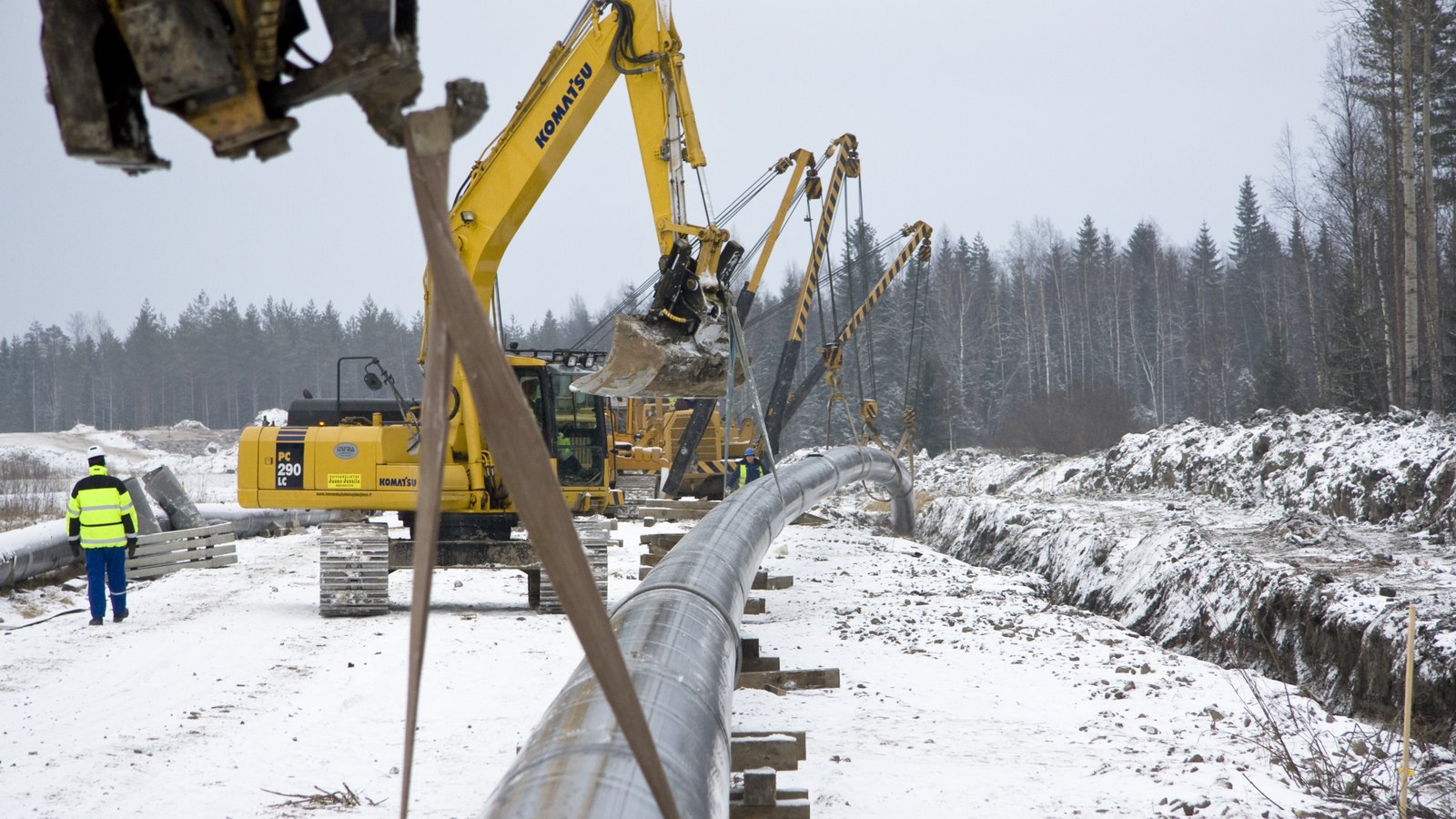
On November 27, 2026, the Federal Energy Regulatory Commission issued a notice of availability in the Federal Register for an environmental assessment evaluating WBI Energy Transmission’s Line Section 32 Expansion Project in North Dakota. The regulatory review establishes environmental findings and technical parameters for 17.2 miles of interstate natural gas pipeline, setting an administrative precedent that offers academic researchers, environmental economists, and university legal clinics critical baseline data on federal infrastructure permitting.
Federal Environmental Review and Proposed Pipeline Scope
The Federal Energy Regulatory Commission (FERC) announced the completion and electronic availability of staff’s environmental assessment for Docket No. CP26-158-000 under the statutory mandates of the Natural Gas Act of 1938 and the National Environmental Policy Act. WBI Energy Transmission, Inc., an interstate natural gas pipeline operator headquartered in Bismarck, North Dakota, filed the certificate application seeking federal authorization to construct, install, and operate natural gas transmission lateral facilities in Williams and McKenzie Counties.
The primary project driver is the delivery of up to 190,000 dekatherms per day of incremental firm natural gas transportation capacity to Basin Electric Power Cooperative’s planned Bison Generation Station. The regional electric generation facility requires natural gas delivery to support grid reliability across rural electric cooperatives operating throughout the Upper Midwest. FERC staff concluded in the environmental review that authorizing the proposed expansion facilities with staff-recommended mitigation measures would not constitute a major federal action significantly affecting the quality of the human environment, recommending a formal Finding of No Significant Impact.
Technical Specifications and Infrastructure Components
The infrastructure configuration detailed in the Commission’s filing involves both greenfield pipeline lateral construction and the reconfiguration of existing interconnections between major interstate transmission systems. The planned capital additions connect upstream supply basins with the new power generation facility while maintaining pressure safety margins across interconnecting networks.
| Project Facility Component | County Location | Engineering Specifications | Operational Function |
|---|---|---|---|
| Lateral Pipeline Section | Williams County, ND | 17.2 miles, 24-inch diameter steel pipe | Firm transmission delivery to Bison Generation Station |
| System Pipeline Interconnect | Williams County, ND | High-pressure tie-in assembly | Integration with existing WBI Energy transmission network |
| Northern Border Interconnect | McKenzie County, ND | Bidirectional flow and overpressure protection | System flexibility and inter-pipeline pressure control |
| Delivery Meter Station | Williams County, ND | Ultrasonic custody transfer meter skid | Measurement and delivery tracking for power station |
| Capacity Allocation | Interstate Network | 190,000 dekatherms per day | Firm natural gas supply for regional power generation |
To construct and place these facilities into service, interstate natural gas pipeline companies must secure a Certificate of Public Convenience and Necessity under Section 7(c) of the Natural Gas Act. The certificate proceeding requires FERC to balance commercial public necessity, market demand contracts, and potential land disturbance against the project’s cumulative environmental footprint.
NEPA Assessment Framework and Cumulative Impact Analysis
Federal reviews for interstate natural gas facilities proceed under Commission regulations implementing environmental policy mandates codified in 18 CFR Part 380. These standards govern how agency staff evaluate soil erosion, prairie ecosystem disruption, aquifer crossing safeguards, greenhouse gas emissions, and cultural resources. The administrative record tracks the environmental review under NEPA document identification number EAXX-019-20-000-1778150426, establishing an empirical dossier of staff engineering calculations and interagency consultations.
The Line Section 32 review adheres to procedural requirements aligned with the broader National Environmental Policy Act compliance framework, which dictates whether an agency must undertake a full environmental impact statement or can satisfy statutory disclosure through a concise environmental assessment. Staff analyzed construction disturbance footprints, agricultural topsoil segregation practices, horizontal directional drilling protocols across sensitive watercourses, and operational emissions. In evaluating indirect and cumulative effects, FERC staff assessed greenhouse gas emissions associated with both pipeline compressor operations and upstream resource extraction, applying methodologies that inform modern academic debates on federal life-cycle emissions accounting.
Federal agency coordination also incorporates standards maintained under broader environmental statutes. Pipeline sponsors must comply with the Environmental Protection Agency NEPA review guidance, ensuring that public comments and interagency oversight address air quality attainment thresholds, stormwater permitting, and species conservation across western North Dakota. These analyses increasingly intersect with corporate disclosure standards, where utilities and transmission operators align infrastructure reporting with emerging corporate sustainability reporting standards.
Public Participation, Intervenor Status, and Administrative Deadlines
The Commission established an active public comment period ending at 5:00 p.m. Eastern Time on December 23, 2026. Public stakeholders, landowners, tribal authorities, and academic research institutions may submit comments focused on staff’s environmental analysis, alternatives development, or proposed environmental mitigation measures through three distinct procedural pathways:
- Electronic Comment (eComment): A simplified portal on the FERC Online interface designed for short, text-only comments from community members and individual analysts.
- Electronic Filing (eFiling): A comprehensive filing platform allowing registered users to upload formal legal briefs, technical affidavits, geospatial exhibits, and referenced empirical reports.
- Postal Mail Submission: Hard-copy submissions addressed to Commission Secretary Debbie-Anne A. Reese at FERC headquarters in Washington, D.C., or via express courier to the Commission’s receiving facility in Rockville, Maryland.
While environmental comments are formally integrated into the public record, filing comments does not grant a stakeholder intervenor status. Under certificate application rules outlined in 18 CFR Part 157, party status is required to request formal agency rehearing or seek judicial review before the United States Court of Appeals. Because the deadline for timely interventions in Docket No. CP26-158-000 has already expired, any research institution, landowner, or non-governmental organization seeking party status must submit a motion for out-of-time intervention pursuant to 18 CFR 385.214(b)(3) and (d), demonstrating good cause for the delayed appearance.
Implications for University Researchers and Energy Policy Analysts
The release of the Line Section 32 Environmental Assessment provides university departments, regulatory economists, and environmental policy scholars with a timely case study on energy infrastructure transitions in natural-gas producing basins. Researchers tracking federal administrative decisions can extract granular project datasets, hydraulic modeling figures, and regional air emissions estimates directly from the Commission’s eLibrary system.
For academic researchers investigating regulatory compliance and spatial planning, comparing docket-level environmental filings against public monitoring repositories like EPA Envirofacts open data systems provides empirical grounding for statistical modeling of industrial permitting timelines. Scholars publishing in the environmental impact assessment literature frequently examine whether FERC staff mitigation prescriptions effectively minimize long-term ecological fragmentation along utility rights-of-way.
University legal clinics and public policy centers also analyze this docket to evaluate procedural barriers confronting non-commercial intervenors. The stringent application of intervention deadlines highlights the administrative hurdles surrounding public interest participation in federal utility proceedings. Faculty tracking federal energy governance can use the docket filings to instruct students on the mechanics of building an administrative record, submitting technical testimony, and evaluating the evidentiary weight assigned to agency environmental staff findings.
Administrative Milestones and Upcoming Procedural Schedule
Following the closure of the public comment window on December 23, 2026, FERC environmental staff will review the filed technical submissions, citizen critiques, and agency correspondence. Staff will prepare responses to substantive environmental arguments for consideration by the Commissioners in their final certificate order.
The Commission will subsequently issue a formal order determining whether the project satisfies the statutory criteria of public convenience and necessity under Section 7 of the Natural Gas Act. If approved, the order will establish binding environmental conditions that WBI Energy must fulfill before receiving formal notice to proceed with ground disturbance and pipeline construction in Williams and McKenzie Counties.
Sources
- Federal Energy Regulatory Commission: WBI Energy Transmission, Inc.; Notice of Availability of the Environmental Assessment for the Proposed Line Section 32 Expansion Project (Docket No. CP26-158-000, 91 FR 76762), checked 2026-11-28
- Legal Information Institute: 15 U.S.C. 717f — Construction, Extension, or Abandonment of Facilities Under the Natural Gas Act, checked 2026-11-28
- Electronic Code of Federal Regulations: 18 CFR Part 380 — Regulations Implementing the National Environmental Policy Act, checked 2026-11-28
- Electronic Code of Federal Regulations: 18 CFR Part 157 — Applications for Certificates of Public Convenience and Necessity, checked 2026-11-28
- U.S. Environmental Protection Agency: National Environmental Policy Act Review Process, checked 2026-11-28






