
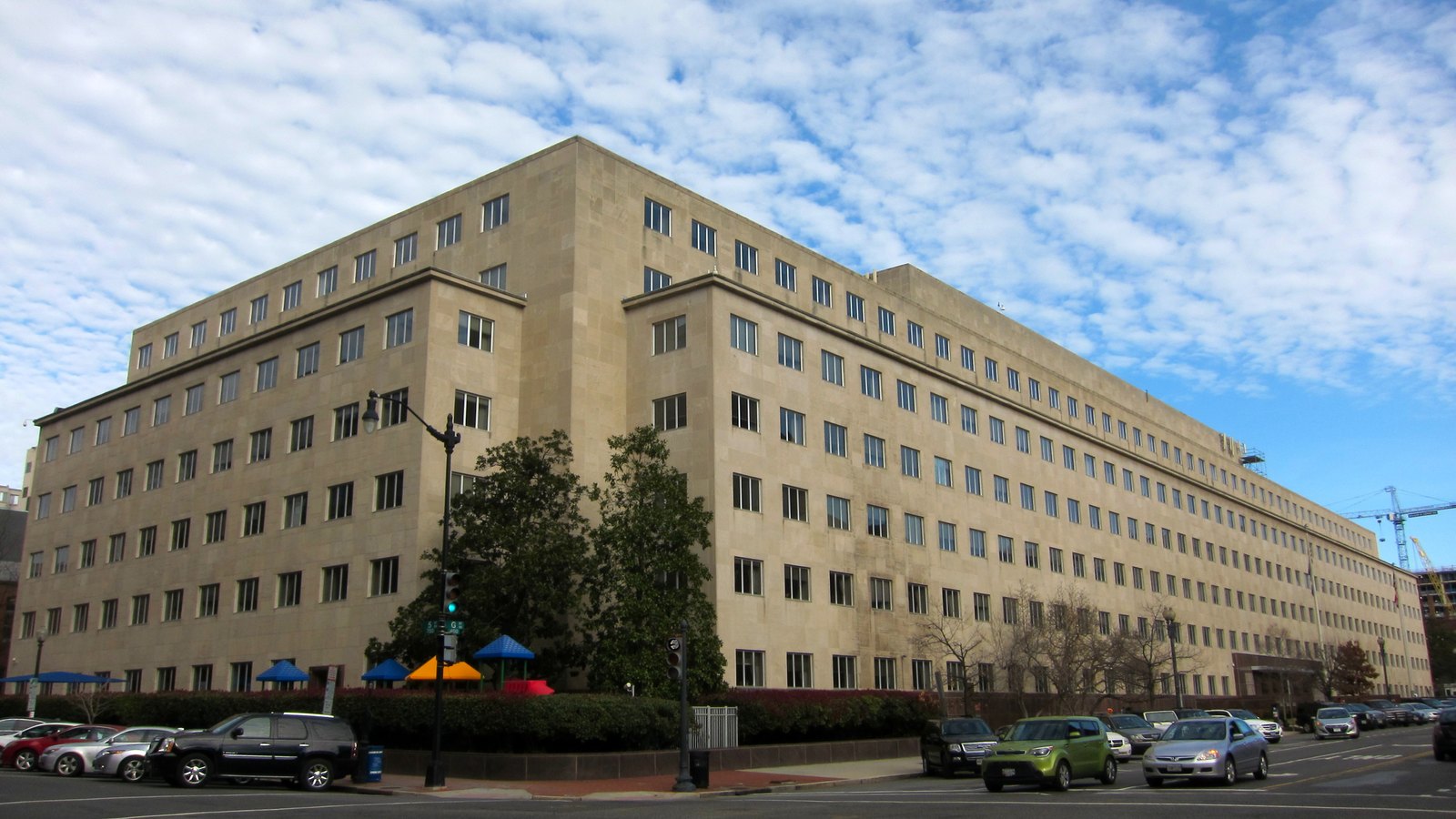
A November 19, 2026 report from the U.S. Government Accountability Office revealed stark disparities in how federal research agencies evaluate foreign ownership, control, and influence risks in small business innovation awards. While the National Institutes of Health denied every flagged proposal, other agencies approved awards with mitigation plans, creating an uneven compliance landscape for university spinouts and technology transfer offices nationwide.
GAO Audit Reveals Disparate Agency Handling of Flagged Proposals
The comprehensive review, published as GAO-27-108923, examined due diligence activities across five major federal research funders during fiscal years 2024 and 2025: the Air Force, the Department of Energy (DOE), the National Aeronautics and Space Administration (NASA), the National Institutes of Health (NIH), and the National Science Foundation (NSF). Together, these five participating agencies award the vast majority of federal seed funding distributed through the Small Business Innovation Research (SBIR) and Small Business Technology Transfer programs.
Across the two-year evaluation period, the five agencies performed specialized research security due diligence screening on more than 28,000 SBIR and STTR proposals. Agency reviewers identified 1,712 proposals presenting potential foreign risks, including undisclosed foreign business entities, foreign venture ownership, and key personnel holding concurrent appointments at overseas institutions in countries of concern. Reviewers also identified more than 11,000 non-foreign risks, primarily encompassing cybersecurity vulnerabilities and patent ownership defects.
However, the audit documented that agency responses diverged dramatically. Rather than applying a harmonised standard, agencies adopted contradictory evaluation philosophies, ranging from automatic rejections to permissive approvals with or without formal risk-mitigation covenants.
Agency-by-Agency Due Diligence Outcomes for FY 2024 and FY 2025
The disparities uncovered by GAO demonstrate that the fate of a small business proposal flagged for foreign affiliation depends heavily on which agency receives the application. The operational numbers recorded in the audit show distinct agency-level pathways across the 1,712 flagged submissions, as highlighted in independent reporting by OrangeSlices AI.
| Agency / Component | Flagged Proposals | Approved (No Mitigation) | Approved (With Mitigation) | Denied Funding |
|---|---|---|---|---|
| National Institutes of Health (NIH) | 382 | 0 | 0 | 382 |
| Air Force (Department of Defense) | 469 | 415 | 15 | 39 |
| Department of Energy (DOE) | 179 | 158 | 7 | 14 |
| National Aeronautics and Space Administration (NASA) | 124 | 20 | 88 | 16 |
| National Science Foundation (NSF) | 37 | 35 | 0 | 2 |
At NIH, officials enforced a strict zero-tolerance posture, outright denying 100 percent of the 382 proposals flagged for foreign ownership or employee affiliation concerns. In contrast, the Air Force approved 430 flagged proposals, issuing 415 of those awards without formal risk-mitigation requirements after internal assessments concluded operational risks were acceptable. The Air Force denied 39 proposals where foreign entanglements could not be resolved.
NASA placed the heaviest reliance on formal risk mitigation, approving 88 proposals subject to binding contractual conditions while denying 16 applications. NASA mitigation plans typically mandated that small businesses restrict foreign national personnel from accessing proprietary project data or eliminate specific foreign subaward relationships. DOE approved 165 proposals, requiring formal mitigation plans on seven awards while denying 14. NSF screened applicants through direct engagement and company self-certifications, denying two awards out of 37 flagged cases.
The Statutory Framework and Evolution of Federal Vetting Rules
The federal mandate to screen small business applicants for foreign influence stems from the SBIR and STTR Extension Act of 2022 (Public Law 117-183). Enacted amid bipartisan concern over state-sponsored technology transfer, the statute required all participating grantmakers to institute due diligence programs to evaluate national security risks before disbursing federal funds.
The law specifically targets technology transfer and intellectual property theft directed by foreign countries of concern, defined by statute as China, Russia, Iran, and North Korea. Under Small Business Administration (SBA) guidance, agencies instituted a common foreign disclosure form requiring applicant businesses to declare cap table ownership, foreign investors, foreign loans, foreign parent corporations, and employee affiliations.
As documented in a compliance analysis by the CITI Program, early implementations revealed operational gaps. Prior GAO evaluations found that agencies lacked uniform criteria for defining covered individuals, maintained divergent cybersecurity baselines, and applied inconsistent intelligence coordination workflows. The November 2026 audit confirms that these ambiguities have produced unequal award outcomes across civilian and military sponsors.
The requirements also intersect with the federal Small Business Technology Transfer (STTR) mechanism, which requires small businesses to partner formally with non-profit research institutions. STTR partnerships bridge university laboratories and commercial enterprise, exposing academic collaborators directly to federal export control regulations and foreign-risk vetting matrices.
Agency Explanations and Community Reaction
Agencies defended their divergent philosophies by pointing to distinct technological risk profiles. NIH leadership explained that biomedical research and clinical health data present unique intellectual property vulnerabilities, determining that early-stage biotechnology startups maintaining undisclosed foreign ties present non-mitigable risks to research integrity.
Conversely, defense and aerospace administrators argued that an outright ban on companies with foreign connections would inadvertently restrict commercial innovation. Air Force and NASA officials noted that early-stage technology ventures often rely on global venture capital and international engineering talent. By employing targeted mitigations, such as data segmentation and firewalled server environments, these agencies asserted they could protect federal interests without disqualifying promising technologies.
However, technology transfer professionals have raised concerns regarding the lack of predictability. An industry analysis from BW and CO Consulting noted that startups frequently cross-apply to multiple agencies, submitting identical core technologies to both NIH and NSF or the military. Facing automatic disqualification at one agency while receiving funding at another creates severe strategic confusion for emerging technology founders and their academic licensors.
What University Spinouts and Tech Transfer Offices Must Verify
For campus technology transfer officers, sponsored programs administrators, and academic entrepreneurs, the GAO findings signal a clear need to formalise pre-submission vetting. Because federal due diligence tools rapidly cross-reference commercial databases and foreign patent filings, any failure to disclose foreign ties is routinely interpreted as deliberate concealment, leading to immediate rejection.
Academic spinouts preparing federal proposals must establish rigorous verification across three critical domains:
- Cap Table and Investment Due Diligence: Review all equity holders, convertible promissory notes, SAFE agreements, and venture debt. Any equity percentage held by foreign entities, overseas holding companies, or funds with foreign limited partners must be fully catalogued and disclosed on the SBA foreign disclosure form prior to submission.
- Faculty and Personnel Disclosures: Ensure that all covered researchers, faculty founders, and graduate research assistants have fully documented their international appointments, visiting professorships, foreign talent recruitment memberships, and overseas consulting agreements under university conflict of commitment policies.
- Research Subcontracts and Subawards: In STTR applications, the university and the small business partner must align compliance records. Technology transfer personnel managing the university technology transfer process should verify that academic lab personnel performing subcontracted work do not hold undisclosed obligations to foreign state institutions.
Institutions that fail to synchronise internal conflict disclosures with federal filings risk severe administrative penalties, including False Claims Act scrutiny and programmatic debarment.
Next Steps for Harmonisation and Federal Oversight
The publication of GAO-27-108923 arrives ahead of anticipated congressional hearings regarding the future reauthorisation of the SBIR and STTR programs. Key congressional committees on small business and science have signalled that closing interagency vetting disparities will be a legislative priority.
GAO recommended that participating agencies establish formalised, written procedures governing due diligence workflows and standardise how foreign risk data is tracked and categorised. Currently, agencies track due diligence outcomes using disparate methods, ranging from custom enterprise software to internal spreadsheets, inhibiting government-wide oversight.
Moving into 2027, the National Science and Technology Council and the Small Business Administration are expected to issue updated interagency guidance to harmonise risk-mitigation standards across civilian grantmakers and defence procurement offices. Until standardisation is enacted, research institutions and small businesses must navigate an agency-dependent vetting gauntlet.
Sources
- U.S. Government Accountability Office: Small Business Research Programs: Selected Agencies Address Foreign Risks and Take Various Approaches to Track Data (GAO-27-108923), checked 2026-11-20
- OrangeSlices AI: GAO Details Significant Differences in How Agencies Address SBIR/STTR Foreign Risks, checked 2026-11-20
- CITI Program: GAO Report Highlights Foreign Risk in SBIR/STTR Programs, checked 2026-11-20
- BW and CO Consulting: SBIR/STTR Foreign Risk Review 2026: Red Flags and Checklist, checked 2026-11-20


