
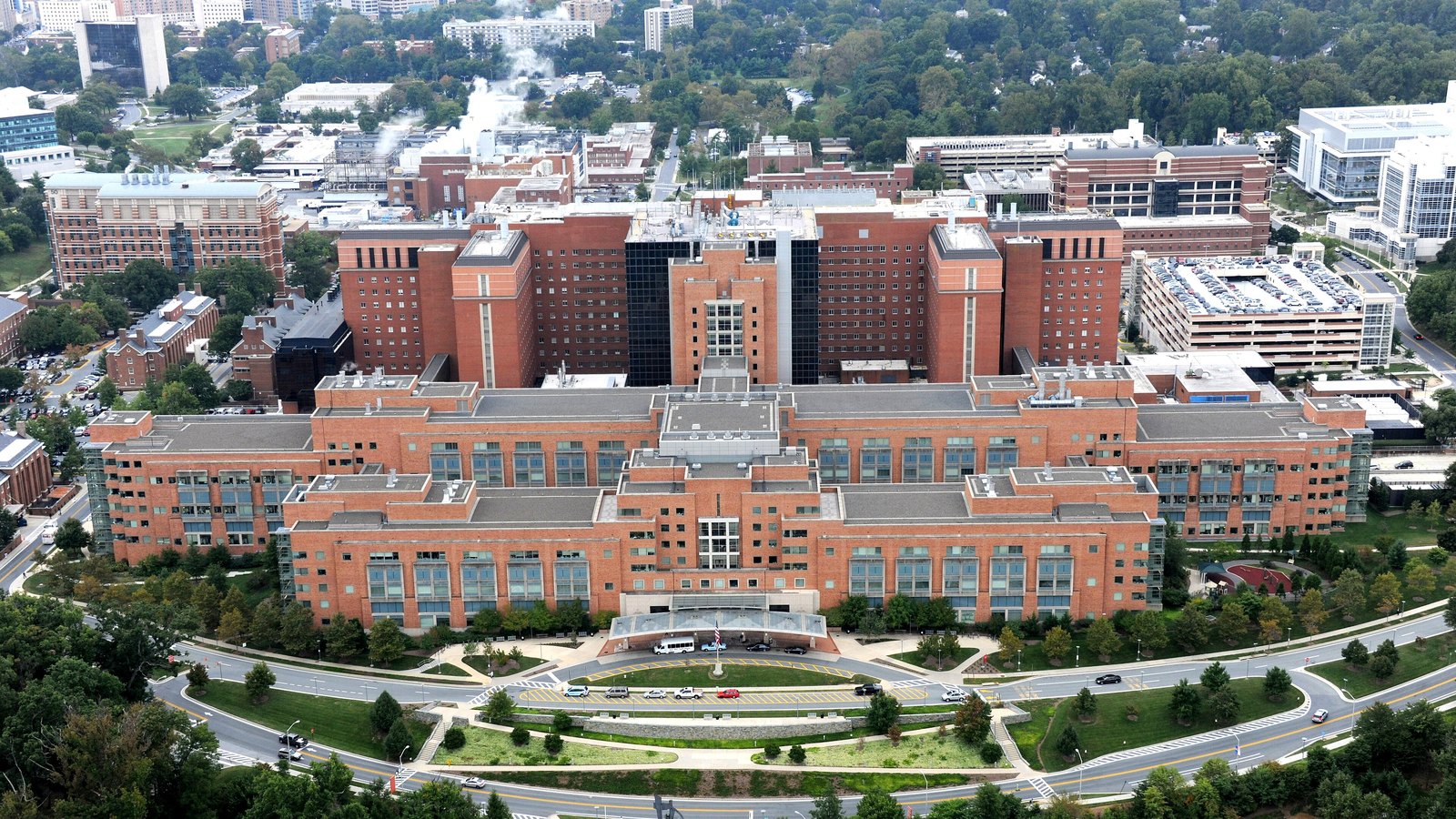
Attorneys representing biomedical researchers and civil liberties groups urged a federal court in November 2026 to grant a preliminary injunction blocking the National Institutes of Health from screening grant awards against a blacklist of more than 200 disfavored terms. The class-action hearing in Salles v. NIH tests whether federal agencies can condition scientific research funding on the removal of politically sensitive terminology.
Court Arguments Over NIH Screening of Disfavored Grant Terms
In November 2026, oral arguments took place before U.S. District Judge Vince Chhabria in the U.S. District Court for the Northern District of California in San Francisco regarding the federal government’s systematic review of biomedical research funding. The class-action lawsuit, Salles, et al. v. National Institutes of Health, et al. (Case No. 3:26-cv-10510), was filed by fourteen biomedical and clinical investigators represented by the American Civil Liberties Union, the ACLU Foundation of Northern California, Protect Democracy, the Center for Science in the Public Interest, and Jacobson Lawyers Group PLLC. The plaintiffs asked the court to certify two nationwide plaintiff classes and issue a preliminary injunction halting keyword-screening and grant termination directives enforced by the National Institutes of Health and the U.S. Department of Health and Human Services.
During the hearing, ACLU attorney Vera Eidelman argued that while the federal government is under no general obligation to subsidize private scientific research, the First Amendment strictly constrains its actions once funding programs are created. “The government is not a private funder that gets to say these views are the ones I want to hear. Instead, the government is governed by the First Amendment,” Eidelman told the court. Counsel maintained that conditioning research funding on the scrubbing of scientific words constitutes impermissible viewpoint discrimination that distorts private academic speech.
Judge Chhabria distinguished between policing scientific terminology and setting agency funding priorities. Chhabria agreed with plaintiffs that an acute First Amendment problem arises when federal officials dictate which specific terms researchers may use to describe their investigations. While the judge voiced preliminary skepticism that canceling grants based on executive policy preferences alone violates free speech, he acknowledged that his personal perspective was subordinate to controlling Ninth Circuit precedent in Thakur v. Trump. Referencing Thakur, Chhabria stated he was tentatively inclined to hold that the challenged grant terminations and screening directives violate constitutional and administrative standards, signaling he would likely grant class certification for researchers whose active awards were terminated.
Key Legal Claims, Keyword Filters, and Procedural Details
The lawsuit challenges an administrative framework within NIH and HHS that screens grant applications and existing research awards against a centralized list of more than 200 flagged terms. The disfavored vocabulary covers standard medical, epidemiological, and public health terms, including “gender,” “diverse,” “equity,” “climate change,” “sexual harassment,” and “LGBTQ+.” When algorithmic or manual reviews flag these terms, investigators are instructed to remove the language and adopt administration-favored substitutes—such as replacing “climate change” with “extreme heat”—as a prerequisite for receiving funding or avoiding award revocation.
The plaintiffs asserted ten claims under the First Amendment and the Administrative Procedure Act. Under constitutional law, the researchers argue that coercing language revisions violates the unconstitutional conditions doctrine, compels ideological adherence, and penalizes scientific perspectives on disparities. Under the APA (5 U.S.C. § 706), plaintiffs assert that NIH acted arbitrarily and capriciously by disregarding statutory peer review mandates and conditioning public research support on ideological conformity rather than merit.
| Parameter | Details in Salles v. NIH Litigation |
|---|---|
| Civil Action Docket | Case No. 3:26-cv-10510 (U.S. District Court for the Northern District of California) |
| Presiding Judge | U.S. District Judge Vince Chhabria |
| Lead Plaintiff | Dr. Arghavan Salles, Stanford University clinical researcher and surgeon |
| Legal Counsel for Plaintiffs | ACLU, ACLU of Northern California, Protect Democracy, CSPI, Jacobson Lawyers Group |
| Challenged Mechanism | Algorithmic and manual screening of over 200 disfavored terms across grant records |
| Targeted Terminology Examples | Gender, diverse, equity, climate change, sexual harassment, systemic disparities |
| Primary Legal Grounds | First Amendment (Viewpoint Discrimination, Compelled Speech) and APA (5 U.S.C. § 706) |
| Putative Class 1 | Investigators whose active NIH research grants were terminated under ideological screening |
| Putative Class 2 | Researchers with existing or prospective awards subjected to keyword-based modification |
| Interim Relief Requested | Preliminary injunction enjoining keyword screening and vacating grant terminations |
Background: Precedent in Thakur v. Trump and Agency Screening Policies
The dispute in Salles v. NIH arose after executive directives mandated the removal of diversity, equity, and inclusion initiatives across executive branch grant-making agencies. Under traditional NIH procedures, an investigator seeking an R01 NIH Research Project Grant submits a proposal evaluated by scientific review groups convened by the NIH Center for Scientific Review. Scientific rigor, methodological validity, and experimental feasibility are scored through independent, two-tiered peer review governed by the Public Health Service Act. Under the screening rules, administrative filters inspect the project abstract, specific aims, and research plans outside the peer review framework.
Judicial evaluation of federal grant cancellations is governed by Thakur v. Trump, where a federal district court ruled that cancelling research grants over diversity and equity concepts likely violated the First Amendment and granted a preliminary injunction vacating the terminations. The Ninth Circuit denied the government’s emergency stay request, and the Supreme Court declined review. In the Salles hearing, Judge Chhabria emphasized that Thakur serves as binding precedent, observing that while he personally questioned whether defunding structural racism studies constitutes a First Amendment infraction, it clearly does under established Ninth Circuit law.
Agency Arguments and Scientific Community Reaction
Department of Justice attorney Jordan Hulseberg defended the screening policies, conceding that certain unilateral terminations conflict with Thakur while maintaining that current operational guidance remains lawful. Hulseberg argued that screening criteria reflect scientific prioritization rather than viewpoint discrimination. With limited congressional appropriations, the government argued, NIH must prioritize research that maximally benefits the public, such as treatments for chronic diseases, while describing research into structural disparities as amorphous.
The government further defended mandatory phrasing changes as precision enhancements, contending that requiring terms like “extreme heat” instead of “climate change” strips away political controversy and focuses inquiry on direct physical phenomena. Scientific societies, academic medical centres, and public health organizations rejected that rationale. Clinical researchers noted that biological sex, demographic variables, and environmental factors represent empirical determinants of health. The Center for Science in the Public Interest underscored that pressuring investigators to sanitize grant language compromises scientific integrity and distorts clinical evidence.
Impact on University Sponsored Projects Offices and Principal Investigators
The litigation carries significant operational consequences for university sponsored projects offices, pre-award teams, and principal investigators. Research administrators face mounting friction during proposal development, confronting difficult calculations over whether to alter scientific language to clear automated filters or preserve precise terminology at the risk of administrative screening delays before scientific review.
Sponsored research administrators must also manage compliance vulnerabilities across existing awards governed by NIH activity codes. When multi-year grants reach annual continuation milestones, keyword flags can trigger informal requests from agency personnel seeking revised project summaries. Institutional compliance leaders advise investigators against modifying scientific scopes of work without institutional endorsement. Sponsored projects offices are establishing tracking procedures to log agency inquiries regarding flagged vocabulary, creating administrative records should formal award disputes or class relief arise.
Next Steps in the Litigation and Expected Timelines
At the conclusion of oral argument, Judge Chhabria took the motions under submission and indicated that a written ruling would likely be issued before the end of 2026. A preliminary injunction would prohibit NIH and HHS from applying algorithmic keyword filters to active grants and incoming proposals, providing immediate nationwide relief to academic institutions.
Judge Chhabria signaled he was inclined to grant class certification to investigators whose grants were terminated, while indicating he would likely deny certification for the prospective applicant class as moot if agency policies are stayed nationwide. Given the constitutional questions surrounding federal research spending conditions, any preliminary injunction issued by the district court is expected to be appealed to the Ninth Circuit.
Sources
- Courthouse News Service: Health researchers seek to block grant cuts based on terms like ‘gender’ and ‘climate change’, checked 2026-11-20
- Protect Democracy: Protecting researchers from illegal viewpoint discrimination by the government, checked 2026-11-20
- ACLU of Northern California: Salles, et al. v. National Institutes of Health, et al., checked 2026-11-20
- Center for Science in the Public Interest: Salles v. NIH Complaint, checked 2026-11-20
- Civil Rights Litigation Clearinghouse: Salles v. National Institutes of Health (Case No. 3:26-cv-10510), checked 2026-11-20


