
George M. Whitesides, the Harvard chemist whose work on self-assembled monolayers, soft lithography and microfluidics reshaped how laboratories make small structures and low-cost diagnostic devices, died on 19 November 2026 at age 87, Nature reported on 23 November. The University of Twente announced his death on 21 November.
What happened
Whitesides died on 19 November 2026, according to Nature’s news obituary by Lauren Wolf, which gave his age as 87. The report says his son George, a US congressman for California, announced the death on X and said he died at home surrounded by family.
On 21 November the University of Twente’s Faculty of Science and Technology published an in-memoriam notice describing him as a leading chemist and an honorary doctor of the university. The notice said the faculty was saddened by his passing and called him “an exceptional, inspiring scientist whose work has had a major influence on chemistry and nanotechnology.” It also described him as a kind, enthusiastic person and an inspiring mentor who stayed active in science late in life and kept in touch with Twente colleagues and alumni, and it closed with the words “We will miss him, both as a scientist and as a person.”
The Harvard Gazette’s profile of Whitesides, published as an interview in May 2024, now carries a note giving the same date and age.
Key details of his scientific work
Nature describes Whitesides as a towering figure in chemistry who pushed chemists to cross boundaries to solve global problems. Several strands of his research are named across the sources:
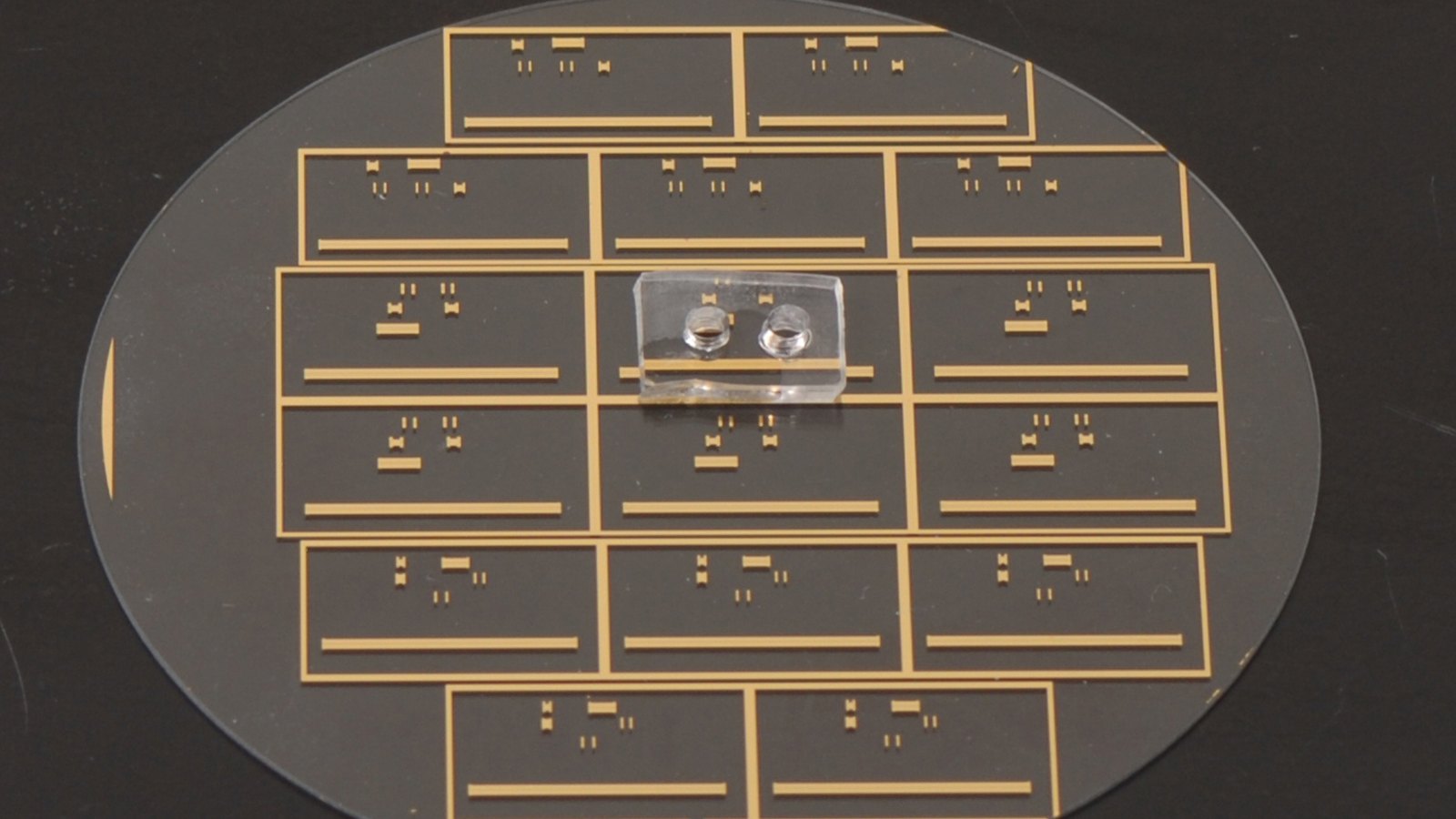
- Self-assembled monolayers. These are tightly packed, single-molecule-thick coatings that form spontaneously. Nature reports that he used them to create patterned surfaces more easily and cheaply than traditional lithography. The Harvard Gazette describes a low-cost method that uses gold films dipped in solution to make nanoscale structures accessible to non-specialists.
- Soft lithography. Nature credits him with inventing soft lithography, which uses polymer stamps to transfer micro- and nanoscale molecular patterns. The Kavli Prize biography says that in the early 1990s his group at Harvard laid the foundation for soft lithography and microcontact printing.
- Microfluidics and lab-on-a-chip devices. Nature reports that his work enabled lab-on-a-chip diagnostics, three-dimensional nanostructures and microfluidics, and that his group pioneered low-cost, paper-based microfluidic devices.
Nature adds that these methods democratised surface-patterning research by removing the need for cleanroom facilities and complex etching. For research offices, that point matters: it moved a class of fabrication work out of specialised, expensive facilities and into ordinary chemistry laboratories.
Background and career
According to Nature, Whitesides was born in Louisville, Kentucky, in 1939. As a teenager he cleaned glassware at his father’s chemical engineering firm. He earned a bachelor’s degree in chemistry at Harvard and a PhD at Caltech, where he worked on Grignard reagents, then joined the faculty at MIT in 1963. The Kavli Prize biography lists his Caltech mentor as John D. Roberts and says he was an independent scientist at MIT until 1982.
At Harvard he held the title of Woodford L. and Ann A. Flowers University Research Professor, and the Harvard Gazette says he spent more than four decades as a researcher and teacher there. The Gazette also records that he published more than 1,200 scientific articles and holds more than 100 patents, and that discoveries from his group were spun into companies, including Genzyme, which Sanofi bought in 2011.
His honours included the 2022 Kavli Prize in Nanoscience. The US National Science Foundation lists his National Medal of Science in 1998, citing “innovative and far-ranging research in chemistry, biology, biochemistry and material science” and his “extensive involvement with teaching, government and industry.” The Kavli biography also names the ACS Award in Pure Chemistry, the Priestley Medal and the Industrial Research Institute Medal, and lists membership of the National Academy of Sciences, the National Academy of Engineering and the American Philosophical Society.
In the Gazette interview, he offered research advice. “If somebody else is working on something, don’t work on it,” he said, and he advised doing “things that are easy to do rather than things that are complicated.” He also said “the scientist is not in the business of following instructions.” On failure, he said it was useful for instruction and noted that some of his companies failed because of a poor grasp of how the market worked.
Reaction
Nature quotes colleagues and former trainees. John Rogers of Northwestern University, who was a postdoctoral researcher under Whitesides at Harvard, called his tools “enabling.” Zhenan Bao of Stanford University wrote on LinkedIn of being “so saddened” and said Whitesides showed the most important problems cross disciplinary lines. Joseph DeSimone, also at Stanford, said Whitesides made it acceptable, and even exciting, to step outside one’s field in a traditional chemistry department.
The University of Twente emphasised the overlap between his work and its own research strengths in microfluidics, self-assembled monolayers, supramolecular chemistry and lab-on-a-chip technology.
What it means for researchers, universities and research offices
The record of Whitesides’s career offers several concrete points for research administrators and laboratory leaders.
- Training as an output. Nature reports that he trained hundreds of scientists, first at MIT and then at Harvard, and the Harvard Gazette describes students as the lab’s main product, many of whom go on to academic jobs of their own. Universities that evaluate research groups by papers and patents alone miss this contribution; our definition of a mentor and the overview of the National Research Mentoring Network describe how training and mentoring are recognised in research practice.
- Methods that lower the cost of entry. Soft lithography and paper-based devices spread because they did not require cleanrooms. Research offices planning shared facilities can read his work as a case for methods that widen access to fabrication, an idea developed in our guides to the microfluidic chip and nanotechnology research areas.
- Diagnostics at the point of care. Low-cost, paper-based microfluidic devices belong to the same family of tools discussed in our explainer on point-of-care testing.
- Technology transfer. The Gazette’s account of patents and company formation, including the Genzyme example, and his own remark that some ventures failed on market understanding, illustrate the commercialisation pathway that university technology transfer offices manage.
Sources
- University of Twente, “In memoriam: Professor George M. Whitesides”, 21 November 2026
- Nature, “Chemistry giant George Whitesides dies: one of the most influential researchers of his generation”, Lauren Wolf, 23 November 2026
- Harvard Gazette, “George Whitesides became giant of chemistry by keeping it simple”, May 2024 (updated with his death)
- The Kavli Prize, biography of George M. Whitesides
- US National Science Foundation, National Medal of Science recipient page for George M. Whitesides






